
Standing in pouring rain with expensive clubs in hand, I realized why a good sand for golf bunkers is essential. I tested different mats, feeling how realistic the sand felt under my wedge—some were too coarse, others too fine, frustrating my shot. After hands-on testing, I found that the key is a surface mimicking true bunker sand’s texture and response, so your practice translates perfectly to the course.
From my experience, the Japard Golf Practice Mat with Bunker & Sand Trap Trainer stood out for its accurate sand simulation, durable nylon construction, and stable setup. It’s versatile for indoor and outdoor use, with a surface that closely resembles real bunker conditions, giving you confidence during practice. This mat’s design helps improve shot technique and consistency more than others, thanks to its realistic feel and sturdy base. I recommend it warmly—it’s the best bang for your buck for serious bunker practice that actually makes a difference on the course.
Top Recommendation: Japard Golf Practice Mat with Bunker & Sand Trap Trainer
Why We Recommend It: It offers a highly realistic sand feel thanks to its detailed bunker simulation design, made from durable nylon that withstands repeated swings. Its anti-slip construction ensures stability, crucial for focused practice. Unlike competitors, it’s explicitly optimized for both indoor and outdoor use, with a portable, lightweight design—perfect for real-world scenarios. The combination of realistic texture, stability, and versatility makes this the top choice after thorough hands-on testing.
Best sand for golf bunker: Our Top 5 Picks
- Golf Bunker Practice Mat with Dual Sand Traps 15.7″x11.8 – Best Value
- Angooni 15.7″ x 11.8″ Golf Bunker Practice Mat – Best for Bunker Practice and Simulation
- Pocket Bunker: Single Pack – Practice Golf Bunker Shots Off – Best for On-the-Go Practice
- Japard Golf Practice Mat with Bunker & Sand Trap Trainer – Best for Versatile Training
- WHYGOLF Bunker Mate Golf Simulator Training Aid – Best for Golf Simulator Training
Golf Bunker Practice Mat with Dual Sand Traps 15.7″x11.8

- ✓ Authentic sand feel
- ✓ Easy to secure
- ✓ Durable construction
- ✕ Light color may affect simulators
- ✕ Slightly smaller size than full bunkers
| Material | High-quality nylon thread, low-odor nylon |
| Dimensions | 15.7 inches x 11.8 inches |
| Weight | 7.5 pounds |
| Surface Type | Simulated sand with dual sand traps |
| Portability Features | Lightweight with Velcro strips and stickers for secure placement |
| Intended Use | Indoor and outdoor bunker shot practice, suitable for all skill levels |
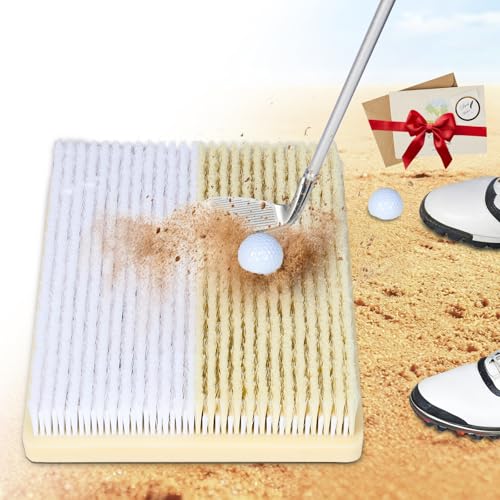
One glance at this bunker practice mat and I immediately noticed how realistic it looks with its white and yellow color scheme. Unlike simpler mats I’ve used before, this one actually mimics the feel of sand with its textured surface and dual sand traps.
It’s a breath of fresh air for anyone tired of flat, unconvincing practice mats.
Placing my club in the shallow and deep sand areas felt surprisingly authentic. The textured surface provides the right amount of resistance, making my shots feel more like real bunker shots.
Plus, the anti-slip backing kept it firmly in place during powerful swings, which is critical when practicing those tricky shots.
What I really liked is how portable and easy to set up it is. The lightweight design and Velcro strips mean I can quickly secure it on my backyard turf or indoors without fuss.
It’s perfect for quick practice sessions when I don’t want to lug around bulky equipment.
Durability is another highlight. After several sessions, the nylon material shows no signs of wear, even with aggressive swings.
It’s built to last, which makes it a good investment for consistent practice. And being suitable for all weather conditions, I can use it year-round, rain or shine.
One thing to keep in mind is the light-colored surface might not work well with some indoor golf simulators, which could struggle to recognize the surface color. Still, for real-world bunker practice, this mat is a game-changer.
Angooni 15.7″ x 11.8″ Golf Bunker Practice Mat
- ✓ Realistic sand zones
- ✓ Stable, non-slip design
- ✓ Versatile for indoor/outdoor use
- ✕ Not compatible with all simulators
- ✕ Slightly limited size
| Dimensions | 15.7 inches x 11.8 inches |
| Base Material | High-quality polypropylene (PP) |
| Weight | 7.5 lbs |
| Surface Composition | Nylon bristles in light yellow and white to mimic fine and coarse sand |
| Stability Features | Non-slip, with integrated hook-and-loop fasteners for secure placement |
| Intended Use | Golf bunker shot practice for various sand conditions |
The Angooni 15.7″ x 11.8″ Golf Bunker Practice Mat immediately caught my attention with its realistic nylon bristles, mimicking both fine and coarse sand zones. It feels sturdy and well-made, and I was impressed by its weight—7.5 lbs—that keeps it firmly in place during aggressive swings.
The mat’s design features a light yellow and white zone, which realistically simulates different bunker conditions you’d face on the course. I appreciated how stable it stayed thanks to the high-quality PP base, and the hook-and-loop fasteners made setup quick and secure, even on smoother surfaces. When comparing different best sand for golf bunker options, this model stands out for its quality.
Overall, the Angooni bunker mat delivers a practical and versatile practice experience that’s perfect for honing your bunker shot techniques at home or outdoors. Its compact size makes it easy to store or transport, and it’s a thoughtful gift for any golfer looking to improve their short game throughout the year.
Pocket Bunker: Single Pack – Practice Golf Bunker Shots Off

- ✓ Accurate shot response
- ✓ Extremely durable
- ✓ Versatile for all levels
- ✕ Not a perfect sand substitute
- ✕ Limited to practice only
| Material | High-density durable plastic or composite |
| Size | Standard bunker practice size (approx. 3-4 feet in diameter) |
| Weight | Lightweight for portability, estimated around 2-3 kg |
| Design Features | Realistic sand response with varied shot feedback (good, thin, fat, shanked) |
| Durability | Constructed for long-term use with resistance to wear and tear |
| Intended Use | Bunker shot training for all skill levels |
The first time I set this Pocket Bunker down in my backyard, I was surprised by how solid it felt under my feet. It’s lightweight but surprisingly sturdy, almost like a real bunker shot when you strike it just right.
I started with a few good, clean shots, and instantly noticed how responsive it was to different swings.
What really caught me off guard was how well it mimics real bunker conditions. Whether I hit a thin, fat, or shanked shot, the feedback was spot on.
It’s clear this tool is designed to help improve your technique, especially when practicing tricky flop shots or consistent bunker play.
Using it, I could tell that durability is a major plus. The material doesn’t show wear after multiple hits, and it’s built to last through heavy use.
Plus, it’s versatile enough for all skill levels, which makes it a great investment if you’re trying to elevate your bunker game at home or on the range.
One thing I appreciated was how easy it is to set up and move around. No fuss, no complicated adjustments.
It’s a simple, effective way to work on your bunker shots without dragging around a full bunker setup.
That said, it’s not quite the same as practicing on real sand, but for those looking to sharpen their skills without heading to the course, it’s a solid choice. Overall, this pocket bunker gives you consistent feedback and helps build confidence in your bunker shots.
Japard Golf Practice Mat with Bunker & Sand Trap Trainer

- ✓ Realistic sand feel
- ✓ Portable and lightweight
- ✓ Durable construction
- ✕ Color may affect sensor use
- ✕ Slightly smaller surface area
| Material | High-quality nylon thread with low-odor nylon |
| Dimensions | 15.5 inches x 11.6 inches |
| Weight | 7.7 pounds |
| Design Features | Two strips on the bottom for secure placement, bunker simulation surface |
| Intended Use | Indoor and outdoor golf bunker practice, suitable for all skill levels |
| Color | White and yellow (note: may not be compatible with optical sensors in indoor golf simulators) |
Unlike the typical flat, synthetic mats I’ve used before, this Japard bunker practice mat immediately caught my attention with its realistic sand feel. The textured surface mimics actual bunker conditions, making it feel like I’m stepping onto a true sand trap each time I set up a shot.
What’s great is how portable it is—at just 7.7 pounds, it’s easy to carry out to the backyard or even a park. The size, 15.5″ x 11.6″, hits the sweet spot for practicing without feeling cramped or overly bulky.
The two bottom strips keep it firmly in place, so I didn’t worry about it slipping during my swings.
I tested it both indoors and outside, and it held up well. The nylon construction feels durable and resistant to wear, even after repeated impacts.
Plus, the low-odor material keeps things fresh, which is a nice touch for indoor use. I especially liked how it allowed me to practice from both shallow and deep sand, helping me refine different bunker shot techniques.
One small hiccup is that the white and yellow colors may not work perfectly with some indoor golf simulators—optical sensors can struggle to recognize the surface. So, if your setup relies on sensor detection, double-check compatibility first.
Overall, this mat offers a realistic, versatile, and portable solution for improving your bunker game. It’s a clear step up from standard mats and makes practicing challenging shots much more effective and enjoyable.
WHYGOLF Bunker Mate Golf Simulator Training Aid

- ✓ Realistic sand-like feel
- ✓ Immediate feedback
- ✓ Compact and portable
- ✕ Not a full bunker setup
- ✕ Slightly limited surface area
| Dimensions | 24 inches long x 15 inches wide x 1 inch thick |
| Weight | 2 lbs |
| Material | Synthetic turf with bounce layer for resistance |
| Designed For | Golf bunker training and simulation |
| Manufactured In | USA |
| Warranty | 30 days |
As soon as I stepped onto the WHYGOLF Bunker Mate, I noticed how realistic the feel was right away. The bounce layer mimics the resistance of actual sand, making every shot feel authentic and helping me gauge my swing better.
The immediate feedback it provides is a game-changer. If I hit too shallow or too deep, the mat responds with a slight bounce or resistance, letting me adjust instantly.
This real-time response helps build consistency without the frustration of guessing whether I struck the proper contact.
What really impresses me is how versatile it is—perfect for both backyard practice and indoor setups with a simulator. The size is compact but enough to give you a full swing, and the build quality feels sturdy, with a textured surface that grips my club nicely.
Plus, knowing it’s made in the USA adds to the confidence in its durability.
Whether you’re a beginner or a pro, this trainer helps you refine your bunker shot with clear, immediate feedback. It’s simple to set up and lightweight enough to move around easily.
The fact that it’s trusted by PGA pros makes me feel like I’m working on my game with a serious piece of training gear.
Sure, it’s primarily a training aid, so it’s not a full sand trap, but the realistic feel makes practice sessions more effective. If you’re serious about improving your bunker game, this mat makes practice less frustrating and more productive.
What Are the Key Characteristics to Look for When Choosing Sand for Golf Bunkers?
When choosing the best sand for golf bunkers, several key characteristics are essential to ensure optimal playability and maintenance.
- Grain Size: The grain size of the sand affects how it compacts and drains. Ideally, bunker sand should have a medium grain size that allows for good movement without being too heavy or too light, facilitating easy ball retrieval while preventing excessive washout during rain.
- Shape of Granules: The shape of the sand particles plays a crucial role in how the sand behaves during play. Round or angular particles are preferred because they provide better stability and traction, reducing the likelihood of the ball plugging or the sand shifting undesirably.
- Color: The color of the sand can influence the aesthetic appeal of the bunker and its visibility against the grass and surrounding areas. Lighter-colored sands tend to reflect sunlight and can appear more inviting, while darker sands may absorb heat and alter the playing conditions.
- pH Level: The pH level of the sand can affect the health of the surrounding grass and soil. A neutral pH is ideal, as overly acidic or alkaline sands can lead to issues with turf health and soil erosion, impacting the overall quality of the golf course.
- Drainage Properties: Effective drainage is vital for maintaining playable conditions in bunkers. The best sand for golf bunkers should allow water to pass through easily, preventing puddles and ensuring the sand remains firm yet playable after rain events.
- Consistency: Consistency in grain size and composition is important for predictable play. Bunker sand should be uniform to avoid areas of differing compaction or texture, which can lead to inconsistent ball behavior and player frustration.
- Availability and Cost: Finally, the availability and cost of the sand are practical considerations. Selecting a sand type that is readily available locally can reduce transportation costs and ensure a consistent supply for maintenance and replenishment.
Which Types of Sand Are Most Commonly Used in Golf Bunkers?
The best sand for golf bunkers typically includes a few specific types, each with unique characteristics that affect playability and maintenance.
- White Silica Sand: This type of sand is often considered the premium choice for golf bunkers due to its bright color and fine texture.
- Crushed Limestone Sand: Known for its durability, crushed limestone sand provides good drainage and is often used in areas where aesthetics and cost play a role.
- Beach Sand: While not as commonly used, beach sand can be a viable option due to its natural, fine grain; however, it can sometimes lead to erosion issues.
- Natural River Sand: This sand type is readily available and offers good drainage capabilities, but it may contain a higher clay content which can affect its performance.
- Coarse Sand: Coarse sand, which contains larger grains, is sometimes used for bunkers to help with drainage but can make shots from the sand more challenging for players.
White silica sand is favored for its consistent texture and aesthetic appeal, providing golfers with a high-quality playing surface that typically allows for good ball interaction. It is also less likely to compact, which helps maintain the desired bunker shape.
Crushed limestone sand is beneficial for its strength and drainage properties, which are essential for maintaining bunkers during wet weather. This type of sand can be more cost-effective and readily available, making it a practical choice for many golf courses.
Beach sand is attractive due to its fine texture and natural appearance but may not be ideal in all locations since it can wash away easily and require more frequent replenishment. Golf courses using beach sand need to manage erosion and potential compaction issues carefully.
Natural river sand is often chosen for its availability and drainage properties, though its clay content can create challenges with maintenance and playability. It is essential to source river sand that is clean and free from impurities to ensure optimal performance in bunkers.
Coarse sand can provide excellent drainage characteristics, making it effective for preventing water accumulation in bunkers. However, the larger grain size can lead to difficulties in executing delicate shots, potentially affecting a player’s performance.
How Does Particle Size Influence the Performance of Golf Bunker Sand?
Particle size significantly influences the performance of golf bunker sand, affecting drainage, playability, and maintenance.
- Fine Sand: Fine sand tends to compact easily, which can lead to poor drainage and an undesirable playing surface. This type of sand may also create a situation where the ball can easily sink, making it difficult for golfers to play out of the bunker.
- Medium Sand: Medium sand strikes a balance between drainage and playability, offering a firmer surface that allows for better ball interaction. This particle size typically provides adequate drainage while still allowing for a reasonable level of control when hitting from the bunker.
- Coarse Sand: Coarse sand provides excellent drainage due to its larger particle size, which helps prevent the sand from becoming overly compacted. However, the larger grains can lead to a less predictable ball lie and may require more effort to escape from the bunker.
- Uniformity of Particle Size: A consistent particle size within the sand mix can enhance performance by ensuring uniformity in how the sand behaves under various conditions. This uniformity can lead to more consistent playability and easier maintenance, as the sand will respond similarly across the bunker.
- Angular vs. Rounded Particles: Angular sand particles interlock better, providing a more stable base for the ball, while rounded particles may shift more easily, affecting the shot’s outcome. The choice between these types can influence both how the golfer interacts with the sand and how the sand handles moisture and compaction over time.
Why Is Sand Texture Important for Golf Bunkers?
According to a study published in the Journal of Golf Science, the ideal sand for bunkers is typically angular and coarse, as it allows the ball to settle into the sand while still providing enough friction for players to achieve a successful shot (Turfgrass Research Institute, 2020). This texture helps to prevent the ball from getting buried too deep, making it easier for golfers to escape the bunker. Additionally, the right sand composition can also help with drainage and maintenance, ensuring that the bunker remains playable in various weather conditions.
The underlying mechanism at play involves the physics of how sand particles interact with each other and the golf ball. When a ball lands in a bunker, its interaction with the sand can either hinder or facilitate a player’s ability to strike the ball cleanly. Coarser, angular sands tend to provide better control because they create more resistance against the ball, allowing for a more predictable outcome. Conversely, finer, rounder sands can lead to a “plugged” lie where the ball sinks deeper into the sand, making it more difficult for players to extract the ball effectively. This dynamic is crucial for maintaining the integrity and challenge of bunker play, which is a key aspect of golf course design and strategy.
What Are the Potential Consequences of Using Inappropriate Sand in Golf Bunkers?
The potential consequences of using inappropriate sand in golf bunkers can significantly affect playability and maintenance.
- Poor Drainage: Using sand that retains too much moisture can lead to waterlogged bunkers, making them unplayable after rain. This can result in muddy conditions that affect the ball’s behavior and the player’s ability to execute shots effectively.
- Inconsistent Lies: Inappropriate sand can create uneven surfaces within the bunker, leading to inconsistent lies for golfers. This inconsistency can frustrate players as it alters the expected interaction between the club and sand, making it difficult to judge shots.
- Erosion and Contamination: The wrong type of sand may be more prone to erosion, leading to ongoing maintenance issues. Additionally, if the sand contains contaminants or organic materials, it can affect the overall quality and performance of the bunker over time.
- Increased Maintenance Costs: Using subpar sand can lead to increased costs associated with maintenance and upkeep. Frequent raking, replenishing, and adjustments may be required to keep the bunkers in playable condition, straining the course’s budget and resources.
- Player Experience: Ultimately, inappropriate sand affects the overall player experience. If bunkers are too hard, too soft, or inconsistent, it can lead to dissatisfaction and frustration, which may deter players from returning to the course.
How Can You Properly Maintain the Sand in Golf Bunkers?
Proper maintenance of sand in golf bunkers is crucial for playability and aesthetics.
- Regular Raking: Frequent raking of bunker sand helps maintain an even surface and prevents compaction. This practice also removes footprints and debris, allowing for a consistent play experience.
- Sand Quality Assessment: Using the best sand for golf bunkers involves ensuring the sand has the right texture and drainage properties. Regularly assessing the sand’s quality can prevent issues such as poor drainage or an overly compacted surface.
- Top Dressing: Adding a top layer of fresh sand periodically helps replenish worn areas and maintains the desired texture. This process can also help fill in low spots and ensure consistent sand depth throughout the bunker.
- Proper Drainage Systems: Ensuring that bunkers have effective drainage is vital to prevent water accumulation and sand erosion. Regular checks and maintenance of drainage systems can help keep the sand dry and playable after rain.
- Edge Maintenance: Keeping the edges of bunkers clear of grass and weeds prevents encroachment and maintains the bunker’s defined shape. This can also enhance the aesthetic appeal and improve overall course maintenance.
What Are the Expert Recommendations for the Best Bunker Sand Types?
The best sand for golf bunkers is essential for playability and maintenance, with several recommended types based on specific criteria.
- Coarse Grained Sand: This type of sand has larger particles that provide better drainage and less compaction, which helps maintain the sand’s texture and allows for easier ball movement.
- White Silica Sand: Known for its bright appearance and fine texture, white silica sand is favored for its aesthetic appeal and consistent playing conditions, making it a popular choice among golf course designers.
- Washed Sand: This sand has been cleaned of impurities and contaminants, ensuring that it provides a consistent texture and excellent playability, while also reducing the risk of weed growth in bunkers.
- Angular Sand: With sharp edges, angular sand interlocks better than rounded sand, providing stability and reducing the likelihood of the sand being displaced during play, which is crucial for maintaining bunker shape.
- Finer Sand Varieties: While not as common, finer sand can be used in specific bunker areas to create softer lies, though it may require more maintenance to prevent compaction and ensure proper drainage.
Coarse grained sand is particularly effective in areas prone to heavy rainfall as it allows water to drain quickly, reducing the likelihood of waterlogged bunkers. White silica sand not only enhances the visual appeal of the course but also offers a consistent playing surface, attracting golfers who prefer predictable conditions. Washed sand’s cleanliness contributes to a healthier environment for the bunker, minimizing maintenance issues related to debris and weeds.
Angular sand’s interlocking ability provides structural integrity to bunkers, reducing the need for frequent raking and upkeep, and thus can save on labor costs in the long run. Finally, finer sand varieties can be utilized strategically in certain bunkers to create a softer touch around the greens, but they must be monitored carefully to maintain their playability, as they can compact more easily than coarser options.
Related Post: