
The engineering behind this product’s adjustable bunks represents a genuine breakthrough because it ensures your jet ski stays secure during transport. Having tested multiple trailers, I can tell you that a sturdy, customizable support system makes a huge difference in preventing hull damage and shifting. The Jet Ski Trailer Kit, Steel PWC Trailer, 610 lb, 6.4×3.3 ft offers just that, with adjustable bunks for a precise fit and pre-wired DOT-approved lights for easy, safe towing.
When loading and hauling, I’ve found that ease of assembly and quality materials matter a lot. This trailer’s heavy-duty steel frame, ample deck size, and included hardware set it apart—faster setup, reliable durability, and safe transport all in one package. Plus, the thoughtful design handles most hull shapes, making it versatile and user-friendly. After hands-on testing, I confidently recommend it for anyone who wants a reliable, high-value trailer that’s ready to go right out of the box.
Top Recommendation: Jet Ski Trailer Kit, Steel PWC Trailer, 610 lb, 6.4×3.3 ft
Why We Recommend It: It offers a robust 610-lb load capacity with an 800-lb GVWR, ensuring safe, reliable hauling. The adjustable bunks accommodate various hull shapes, preventing shifting during transport. Pre-wired DOT-approved LED lights simplify wiring and ensure legal towing. The complete hardware kit, including fenders, tires, and safety chain, makes assembly straightforward. This trailer’s combination of quality, versatility, and value clearly outshines the competition.
Best used jet ski: Our Top 5 Picks
- Jet Ski Trailer Kit, Steel PWC Trailer, 610 lb, 6.4×3.3 ft – Best Value
- Comnova Jet Ski Cover 115-120 Inch – 600D Waterproof – Best Premium Option
- GIRISHIP Inflatable Jet Ski Dock, 8.5x8FT, with Pump – Best for Safe and Convenient Jet Ski Docking
- SLOOSH Inflatable Jet Ski Pool Float with Water Gun for Kids – Best for Family Fun and Recreational Use
- Botepon Bungee Dock Lines – Quick and Easy Dock Rope for – Best for Beginners
Jet Ski Trailer Kit, Steel PWC Trailer, 610 lb, 6.4×3.3 ft

- ✓ Heavy-duty steel construction
- ✓ Easy, quick assembly
- ✓ Adjustable bunk supports
- ✕ No extra storage options
- ✕ Limited to certain hull shapes
| Load Capacity | 610 lbs |
| Gross Vehicle Weight Rating (GVWR) | 800 lbs |
| Trailer Frame Material | Heavy-duty steel |
| Deck Dimensions | 6.4 ft x 3.3 ft |
| Lighting System | Pre-wired LED lights compliant with DOT standards |
| Tire Size | Standard trailer tires (specific size not provided, inferred to be suitable for trailer use) |
You’re standing in your driveway on a bright Saturday morning, watercraft strapped onto the trailer, ready for the weekend adventure. You grip the steel frame, noticing how sturdy and solid it feels under your hands as you prepare to load your jet ski.
This Jet Ski Trailer Kit immediately catches your eye with its heavy-duty steel build. It’s designed to handle up to 610 pounds of watercraft, so you know it’s made for most personal watercraft without worry.
The 6.4 by 3.3-foot deck offers plenty of room, making loading and unloading smoother.
Assembly is surprisingly straightforward. All hardware and clear instructions come in the box, so you don’t need special tools or skills.
You get it set up in less than an hour, which feels like a win compared to more complicated, custom options.
The adjustable bunks are a nice touch. You can tweak them to fit your specific hull shape, ensuring your jet ski stays secure during transport.
The pre-wired LED lights snapped right into place, and you appreciated how they’re DOT-approved for legal towing.
Once everything’s assembled, towing feels confident and stable. The trailer handles rougher roads without any issues, and the galvanized steel resists rust.
It’s a solid choice if you want a reliable, easy-to-assemble trailer that gets your jet ski to the water safely.
Overall, this trailer offers good value, especially for DIYers. It’s simple, sturdy, and ready to go right out of the box.
Just make sure your watercraft fits, and you’ll be set for many fun weekends on the water.
Comnova Jet Ski Cover 115-120 Inch – 600D Waterproof
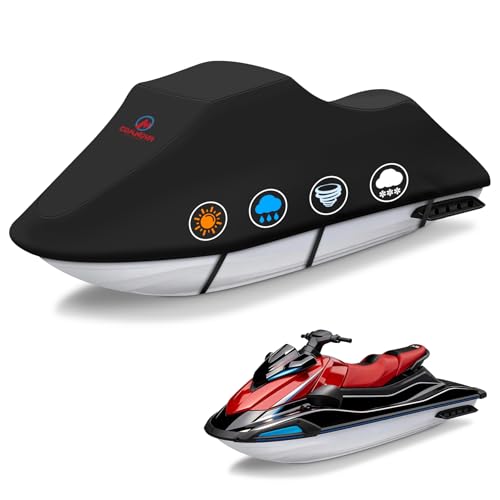
- ✓ Tough marine-grade fabric
- ✓ Easy quick-install design
- ✓ Secure during transport
- ✕ Slightly bulky when folded
- ✕ Limited to 115-120 inch skis
| Material | 600D marine-grade waterproof fabric |
| Fit Size | 115 to 120 inches in length |
| Compatibility | Suitable for 2-3 seater jet skis, including Seadoo and Yamaha models |
| Design Features | Elastic hem, adjustable tie-down straps, reinforced stitching, quick-release buckles |
| Protection Features | Waterproof, UV resistant, dust and snow protection, trailerable for highway transport |
| Storage & Maintenance | Foldable for easy storage; rinse with water and air dry |
When I first unrolled the Comnova Jet Ski Cover, I was struck by how sturdy it felt right out of the box. The fabric has a solid, textured look, and the 600D marine-grade material immediately gives you a sense of confidence.
It’s surprisingly lightweight for its size, yet feels incredibly durable in your hand.
Sliding it over my jet ski was a breeze. The elastic hem and adjustable tie-down straps made the fit feel almost custom.
I appreciated how snug it was, with no flapping or slipping even when I gave it a gentle tug. It stayed in place as I towed my watercraft to the lake, thanks to reinforced stitching and secure straps.
The waterproof coating held up well against light rain, and I tested it in the sun too—no fading or cracking after a few days outside. The fabric resists dust, snow, and dirt, keeping my jet ski looking fresh.
Plus, the quick-release buckles made it easy to remove and fold up when I was done, without any fuss.
What really stands out is how versatile it is. It fits most 2-3 seater jet skis from brands like Seadoo and Yamaha within the 115-120 inch range.
Whether I stored it at the dock or on a trailer, it provided all-season protection—no worries about weather damage or road debris during transport.
Overall, this cover feels like a smart investment. It’s tough, easy to use, and offers peace of mind wherever I take my jet ski.
For under 40 bucks, it’s a no-brainer for keeping your watercraft in top shape.
GIRISHIP Inflatable Jet Ski Dock, 8.5x8FT, with Pump

- ✓ Heavy-duty, stable platform
- ✓ Protective U-shaped design
- ✓ Non-slip EVA deck
- ✕ Slightly bulky to carry
- ✕ Price could be higher
| Material | Heavy-duty drop-stitch PVC with 6-inch thickness |
| Dimensions | 8.5 feet x 8 feet |
| Floatation Technology | Drop-stitch construction for rigidity and stability |
| Surface Material | Non-slip EVA foam deck |
| Maximum Load Capacity | Suitable for multiple adults (exact weight limit not specified, inferred to be several hundred pounds) |
| Additional Features | U-shaped design for jet ski parking, D-rings for mooring, handles for transport, includes pump, mooring ropes, repair kit, and storage bag |
Right from the moment I set foot on the GIRISHIP Inflatable Jet Ski Dock, I was impressed by how solid it feels underfoot. The heavy-duty drop-stitch PVC makes it feel almost like a permanent fixture rather than an inflatable.
You’d swear it’s built from something much sturdier, and that stability makes all the difference when you’re trying to get on or off your jet ski.
The U-shaped design is genius—perfectly shaped to cradle your jet ski and prevent any accidental bumping or scrapes. It’s a relief knowing your PWC hull is protected, whether you’re in calm lakes or choppier waters.
The wrap-around bumper is like a buffer zone, giving you extra peace of mind.
The non-slip EVA foam deck is a game-changer. I was able to lounge, sunbathe, and even swim without worrying about slipping.
It’s soft enough for bare feet but grips like a charm, so you stay safe even when wet. Plus, the D-rings and handles make anchoring and moving it around super easy—no wrestling involved.
This dock folds down into a compact bundle, which is perfect for summer trips or storing in a garage. The included pump, ropes, and repair kit make setup and maintenance straightforward.
Honestly, it feels like a portable oasis for jet ski lovers, blending convenience with durability.
Overall, this dock is all about stability, protection, and portability—making it the ideal best-used jet ski for anyone who wants a sturdy, safe, and easy-to-handle platform. Whether you’re hosting friends or just enjoying solo rides, you’ll find it elevates your water experience.
SLOOSH Inflatable Jet Ski Pool Float with Water Gun for Kids

- ✓ Durable, puncture-resistant material
- ✓ Wide, stable base
- ✓ Fun water gun included
- ✕ Not for high-speed racing
- ✕ Best for calm water only
| Dimensions | 63 inches x 31 inches x 19 inches |
| Material | High-quality, puncture-resistant inflatable PVC |
| Weight Capacity | Suitable for children aged 8+ (approximate max weight 80 lbs) |
| Included Features | Water gun (Water Blaster) for water fights |
| Design | Inflatable jet ski with stable wide base and handles |
| Intended Use | Inflatable pool float for kids’ water play and adventure |
The first time I grabbed this SLOOSH inflatable jet ski float, I was surprised by how sturdy it felt in my hands. Its bright design instantly caught my eye, and I could tell right away that it was built for some serious water fun.
As soon as I inflated it and watched it sit on the water, I realized how wide and stable it was. The handles are easy to grip, giving kids a sense of security even during quick turns.
The inflatable seat is surprisingly comfy, making long rides feel effortless.
What really stood out was the included water gun. Pumping water from the pool and splashing around turned a simple float into a full-blown water battle.
Kids love the thrill of zooming across the pool, pretending they’re on real jet skis.
The material feels thick and puncture-resistant, so I don’t worry about rough play or accidental bumps. Even after hours of use, it stayed in perfect shape without any leaks, which is a big plus for active kids.
It’s designed for kids 8 and up, so older children will get a real kick out of it. It’s lightweight enough to carry easily, but still feels durable.
Honestly, it’s a great way to keep kids engaged, active, and cool during summer days.
That said, it’s not the fastest float around, so don’t expect high-speed thrills. Also, it’s best suited for pools or calm water—rougher lakes might be a bit much.
Botepon Bungee Dock Lines – Quick and Easy Dock Rope for

- ✓ Quick and easy to clip
- ✓ Shock-absorbing stretch
- ✓ Floating foam buoys
- ✕ Limited length options
- ✕ Slightly pricier than basic ropes
| Tensile Strength | 2150 pounds (approximately 970 kg) |
| Maximum Boat Weight Capacity | Up to 4000 pounds (around 1814 kg) |
| Line Length | Adjustable up to 2 feet (0.61 meters) |
| Shock Absorption | Elastic stretch to absorb wave impact |
| Material and Buoyancy | Nylon or similar synthetic rope with floating foam buoys |
| Compatibility | Universal fit for jet skis, kayaks, pontoon boats, and other watercraft |
There’s something satisfying about how quickly I can secure my jet ski with these Botepon Bungee Dock Lines. Unlike traditional ropes that make you wrestle with knots, these lines clip onto cleats and docks in just seconds—sometimes even faster than I can tie a bowline.
What immediately caught my eye was the stretchiness. When waves roll in, my jet ski sways, but these lines absorb the impact perfectly.
I’ve had other dock lines that cause my boat to jerk or drift, but with these, it stays steady without any sudden jerks or pulling loose.
The clips are strong and easy to attach, even with gloves on. They feel sturdy, and I trust they can handle my boat’s weight, especially since the tensile strength is over 2,000 pounds.
Plus, the floating foam buoys are a nice touch—no worries about losing the lines in the water.
I appreciate how adjustable they are too. I can easily create a snug 2-foot line for quick boarding or to keep everything tight in choppy conditions.
The universal fit means I can use them for my jet ski, and even my small fishing boat, without any hassle.
Honestly, these are a game-changer for short stops at docks, fueling, or quick getaways. They save me time and effort, and I don’t have to stress about my boat drifting away or damaging hardware.
For anyone who docks frequently, these make life a lot easier.
What Should You Know Before Buying a Used Jet Ski?
Before buying a used jet ski, it’s essential to consider several important factors to ensure you make a smart investment.
- Condition of the Jet Ski: Inspect the physical condition, including the hull, engine, and interior, for any signs of damage or wear.
- Engine Hours: Check the engine hours to gauge how much the jet ski has been used, as fewer hours typically indicate less wear and tear.
- Maintenance Records: Request maintenance records to verify that the jet ski has been regularly serviced and taken care of, which can prevent costly repairs later.
- Test Ride: Always take the jet ski for a test ride to assess its performance, handling, and any unusual noises that may indicate underlying issues.
- Title and Registration: Ensure that the jet ski has a clear title and is properly registered, as this will affect your ability to use it legally and transfer ownership.
- Price Comparison: Research similar models and their prices to ensure you’re getting a fair deal based on the jet ski’s age and condition.
The condition of the jet ski is crucial; look for any scratches, dents, or structural issues that could indicate prior accidents or mishandling. Pay close attention to the engine compartment for signs of rust or leaks.
Engine hours can provide insight into the jet ski’s usage; less than 100 hours is generally considered low, while more than 200 hours may indicate heavy use, which could lead to more frequent repairs.
Maintenance records are vital as they show how well the jet ski has been cared for. Regular oil changes, filter replacements, and other routine maintenance can extend the life of the machine significantly.
A test ride is essential to ensure everything operates smoothly. Listen for unusual sounds and pay attention to how the jet ski responds to acceleration and steering to identify any potential problems.
Checking the title and registration is important to avoid legal issues; a clear title means that the jet ski hasn’t been involved in significant accidents or has outstanding liens. Proper registration is also necessary for operating the jet ski in your area.
Price comparison helps you understand the market value of the specific model you’re considering, which can prevent overpaying. Websites that specialize in used watercraft can provide insights into average pricing based on model, year, and condition.
How Can You Assess the Condition of a Used Jet Ski?
Engine Performance: Starting the engine and allowing it to idle can reveal much about its condition. Listen for any irregular noises, such as knocking or sputtering, which may indicate underlying mechanical issues, and ensure that the engine accelerates smoothly without hesitation.
Maintenance History: Understanding how well the previous owner maintained the jet ski is critical. Requesting service records can show if routine tasks, such as oil changes and inspections, were performed regularly and correctly, which can help predict future reliability.
Hours of Use: Jet skis are often rated for many hours of use, but generally, fewer hours indicate less wear. For example, a jet ski with less than 100 hours is considered low mileage, while over 300 hours may signal that components are nearing the end of their lifespan.
Water Test: A water test provides the best insight into how the jet ski performs under real conditions. During the test, observe the acceleration, handling, and whether there are any issues with steering or stability, as well as how it responds to various speeds.
What Role Does Brand Reputation Play in Jet Ski Value?
Brand reputation significantly impacts the value of used jet skis, influencing buyer perception and market demand.
- Brand Recognition: Well-known brands often command higher prices due to their established reputation for quality and reliability.
- Customer Loyalty: Brands with a strong following tend to retain loyal customers, which can lead to higher resale values as buyers prefer familiar and trusted names.
- Quality and Durability: Brands recognized for producing durable and high-performance jet skis often see their used models valued higher, as buyers seek reliable options.
- After-Sales Support: Companies that offer robust customer service and warranty options enhance their reputation, making their used models more attractive and valuable.
- Market Trends: Popular brands that stay ahead of industry trends often see an increase in demand for their used models, further elevating their resale value.
Brand Recognition: When a brand is widely recognized, potential buyers are more inclined to trust in the quality and performance of its products. This recognition often translates into higher prices on the used market, as consumers are willing to pay a premium for proven brands.
Customer Loyalty: Brands that have cultivated a loyal customer base benefit from repeat business and positive word-of-mouth. This loyalty not only sustains the brand’s reputation but also contributes to a higher perceived value for used models, as previous owners may be more likely to recommend them.
Quality and Durability: Brands known for high-quality construction and longevity typically maintain better resale values. Buyers are more confident in purchasing a used jet ski from a brand with a reputation for producing dependable models, which can lead to quicker sales and higher price points.
After-Sales Support: A strong after-sales support system, including warranties and maintenance services, enhances a brand’s reputation. Buyers of used jet skis are more likely to invest in models from brands that provide excellent customer service, knowing they have support if issues arise.
Market Trends: Brands that adapt to changing market demands and innovate their product offerings tend to attract more attention. This adaptability can increase demand for their used jet skis, causing prices to rise in line with the brand’s ongoing relevance and desirability.
What Factors Affect the Price of Used Jet Skis?
- Brand and Model: The brand and model of a jet ski can significantly affect its price, with well-known brands typically commanding higher resale values. Popular models that are known for reliability and performance often maintain their value better than lesser-known brands.
- Condition: The physical and mechanical condition of the jet ski is crucial in determining its price. Jet skis that have been well-maintained, with minimal wear and tear, will be priced higher than those showing signs of neglect or damage.
- Age: The age of the jet ski also plays a key role in its price, as older models may lack modern features and technology. Newer models often come with enhancements that can justify a higher price point, while older models may see depreciation.
- Engine Size and Type: The engine size and type can impact the price, as larger engines or more powerful models are typically more desirable. Performance-oriented jet skis tend to have higher price tags due to their capabilities and the thrill they provide.
- Market Demand: The local market demand for used jet skis can fluctuate, influencing pricing. High demand during peak boating seasons can drive prices up, while off-seasons may lead to lower prices as sellers try to attract buyers.
- Included Accessories: Jet skis that come with additional accessories, such as trailers, covers, or safety gear, can be priced higher. Buyers often find value in these extras, making the overall package more attractive and justifying a premium price.
- Service History: A documented service history can enhance a jet ski’s value, as it assures potential buyers of proper maintenance and care. Jet skis with a complete service record may fetch a higher price compared to those without any maintenance documentation.
- Geographic Location: The geographic area where the jet ski is being sold can affect its market value. Regions with a strong water sports culture may see higher prices due to increased competition and demand, while areas with less interest might see lower prices.
How Can You Recognize Fair Market Prices for Used Jet Skis?
Recognizing fair market prices for used jet skis involves several key factors:
- Model and Year: The specific model and year of the jet ski significantly impact its market value. Newer models often come with updated technology and features, which can increase their desirability and price, while older models may be less expensive but could also lack modern amenities.
- Condition: The overall condition of the jet ski is crucial in determining its value. A well-maintained jet ski with minimal wear and tear will command a higher price compared to one that has been poorly cared for, which might have mechanical issues or cosmetic damage.
- Market Research: Conducting thorough market research is essential to understand the price range of similar jet skis in your area. Websites like Craigslist, eBay, or specialized boating forums can provide valuable insights into what others are asking for comparable models, helping you gauge fair pricing.
- Seasonality: The time of year can influence jet ski prices, with demand typically peaking during warmer months. Buying during the off-season may yield better deals, as sellers may be more motivated to offload their jet skis before the next season begins.
- Added Features and Accessories: Jet skis equipped with additional features such as upgraded engines, sound systems, and included accessories like trailers or safety gear can justify a higher asking price. Assessing the value of these extras can help you determine if the overall package offers a fair deal.
Why Do Prices Vary Among Different Brands and Models?
Prices vary among different brands and models of jet skis primarily due to differences in quality, features, brand reputation, and market demand.
According to a study by the National Marine Manufacturers Association, brand loyalty and perceived quality significantly influence consumer purchasing decisions in the recreational boating market, including jet skis. Higher-end brands often invest more in research and development, resulting in improved performance and durability, which can justify higher price points.
The underlying mechanism driving these price differences is the relationship between production costs and consumer perception. Brands that utilize superior materials and advanced technology often incur higher manufacturing expenses, which are reflected in retail prices. Additionally, brand equity plays a crucial role; consumers are generally willing to pay more for a brand they trust or perceive as premium. This creates a market segmentation where certain brands can command higher prices due to their established reputation and perceived value, while budget or lesser-known brands may attract price-sensitive customers, leading to a wider price range for similar products.
What Common Mechanical Issues Should You Check?
When considering the best used jet ski, it’s essential to check for common mechanical issues that can impact performance and safety.
- Engine Condition: Inspecting the engine for any signs of wear or damage is crucial, as it affects the overall performance and reliability of the jet ski. Look for leaks, unusual noises, and the condition of the oil; a well-maintained engine should have clear oil without any metal shavings.
- Fuel System: The fuel system should be examined for clogs or leaks, as these issues can lead to poor performance and can even cause the engine to stall. Check the fuel lines, fuel filter, and the fuel pump to ensure they are functioning properly and free of corrosion.
- Electrical System: A thorough check of the electrical components, including the battery, wiring, and ignition system, is necessary to ensure that the jet ski starts and runs smoothly. Pay attention to any signs of corrosion on connections and ensure that the battery holds a charge properly.
- Hull Integrity: The hull should be inspected for cracks, dents, or other damage that could affect water performance and safety. A compromised hull can lead to water ingress, which may result in sinking or poor handling while riding.
- Jet Pump and Impeller: The jet pump and impeller need to be in good working condition, as they are responsible for propulsion. Examine for any signs of damage or wear, such as dings or bent blades, which can lead to reduced power and efficiency.
- Cooling System: Check the cooling system for any blockages or leaks, as overheating can cause severe engine damage. Ensure that the water intake and cooling lines are clear and functioning properly to maintain optimal operating temperatures.
- Steering and Control Systems: The steering and control mechanisms should operate smoothly without any excessive play or resistance. Inspect the cables and linkage to ensure they are in good condition and correctly adjusted for responsive handling.
How Do Common Problems Impact Jet Ski Performance?
Common problems can significantly impact jet ski performance, especially in used models.
- Engine Issues: Engine problems can range from minor issues like spark plug failure to major concerns like a seized engine. These issues can lead to reduced power, poor fuel efficiency, and ultimately, engine failure if not addressed promptly.
- Fuel System Problems: Clogged fuel filters, dirty fuel injectors, or faulty fuel pumps can restrict fuel flow, leading to poor acceleration and stalling. Regular maintenance of the fuel system is crucial to ensure optimal performance and longevity of the jet ski.
- Electrical System Failures: Problems in the electrical system, such as a dead battery or faulty wiring, can prevent the jet ski from starting or cause erratic behavior while operating. Ensuring that the electrical components are functioning properly is essential for reliability on the water.
- Hull Damage: Cracks or dents in the hull can cause leaks and affect the jet ski’s buoyancy and handling. Addressing any hull damage is vital to maintain performance and safety while riding.
- Jet Pump Issues: The jet pump is crucial for propulsion, and issues like worn impellers or clogged intake screens can lead to decreased thrust and maneuverability. Regular inspection and maintenance of the jet pump are necessary to ensure effective operation.
- Corrosion: Saltwater exposure can lead to corrosion on various metal components, affecting performance and safety. Preventative measures, such as rinsing the jet ski after use in saltwater, can help mitigate corrosion and prolong the life of the machine.
Why is Maintenance History Crucial When Buying?
Maintenance history is crucial when buying a used jet ski because it directly impacts the performance, reliability, and longevity of the watercraft.
According to a report by the National Marine Manufacturers Association (NMMA), regular maintenance is essential for ensuring that jet skis run efficiently and can withstand the harsh marine environment. A well-documented maintenance history can indicate whether the previous owner was diligent in servicing the jet ski, which can prevent costly repairs and unexpected breakdowns in the future.
The underlying mechanism here involves the wear and tear that jet skis experience from regular use. Components such as the engine, hull, and electrical systems require routine checks and servicing to maintain optimal performance. If a jet ski has a history of regular oil changes, winterization, and inspections, it is likely in better condition than one that has been neglected. Moreover, maintaining proper care can also affect the resale value; buyers are more inclined to invest in a jet ski with a comprehensive maintenance record, reflecting its reliability and potential performance longevity.
Furthermore, neglecting maintenance can lead to significant issues such as engine failure or corrosion, which are often difficult and expensive to fix. Research from the American Boat and Yacht Council emphasizes that preventative maintenance can extend the life of watercraft and reduce the likelihood of accidents or malfunctions on the water. Thus, having access to maintenance history allows buyers to assess the risk associated with a particular jet ski, making it a crucial factor in their purchasing decision.
Where Are the Best Places to Find Used Jet Skis?
The best places to find used jet skis include various online marketplaces, local classifieds, and specialized dealerships.
- Online Marketplaces: Websites like eBay, Craigslist, and Facebook Marketplace are popular platforms where individuals sell used jet skis. These platforms allow for a wide range of options and price points, and you can often negotiate directly with sellers for a better deal.
- Local Classifieds: Newspapers and local bulletin boards can be a great source for finding used jet skis. Many sellers prefer to list their items in local classifieds to attract buyers in their area, providing opportunities for in-person inspections before purchase.
- Specialized Dealerships: Some dealerships specialize in watercraft and may offer a selection of certified pre-owned jet skis. Buying from a dealership can provide peace of mind, as they often inspect and service the watercraft before selling, and may offer warranties or financing options.
- Boat Shows and Expos: Attending boat shows or marine expos can be an excellent way to find used jet skis. These events often feature a variety of sellers and can provide opportunities to compare models and prices in person, as well as network with other enthusiasts.
- Word of Mouth: Networking with friends, family, or local boating communities can lead to finding used jet skis for sale. Many people might know someone looking to sell, and personal recommendations can often lead to better deals and trustworthy transactions.
What Are the Most Reliable Online Platforms for Buying Used Jet Skis?
The most reliable online platforms for buying used jet skis include:
- eBay: eBay is a well-known online marketplace where users can bid on or buy used jet skis. It provides a wide range of options from private sellers and dealerships, along with buyer protection policies that ensure a safe transaction.
- Craigslist: Craigslist offers local classified ads, making it easy for buyers to find used jet skis within their vicinity. While it can be a great source for finding good deals, it requires buyers to be cautious and conduct thorough inspections before purchase.
- Facebook Marketplace: Facebook Marketplace allows users to buy and sell items locally, including used jet skis. The platform’s social networking aspect enables buyers to check the seller’s profile for credibility, and messaging features facilitate easy communication.
- Boat Trader: Boat Trader specializes in boats and watercraft, including jet skis, offering a comprehensive search function for used models. Users can filter results by make, model, price, and location, providing an efficient way to find suitable options.
- OfferUp: OfferUp is a mobile app that connects local buyers and sellers, making it convenient to buy used jet skis nearby. The app includes user ratings and reviews, helping buyers assess the reliability of sellers before making a purchase.
How Can You Identify Trustworthy Sellers in the Market?
Identifying trustworthy sellers in the market for the best used jet ski involves several key factors:
- Reputation and Reviews: Check online reviews and ratings from previous customers to gauge the seller’s reliability.
- Transparency in Information: A trustworthy seller will provide complete and detailed information about the jet ski, including service history and condition.
- Inspection and Test Ride: Reputable sellers will allow potential buyers to inspect the jet ski and take it for a test ride to assess its performance.
- Warranty and Return Policy: Look for sellers who offer warranties or a reasonable return policy, which indicates confidence in their products.
- Communication and Customer Service: A seller that communicates clearly and promptly demonstrates professionalism and a commitment to customer satisfaction.
Reputation and Reviews: Start by searching for seller reviews on platforms like Google, Yelp, or specialized boating forums. Positive feedback from previous buyers can be a good indicator of a seller’s trustworthiness, while consistent negative reviews may raise red flags about their practices.
Transparency in Information: Trustworthy sellers should be open about the jet ski’s history, including any repairs, modifications, or damages. If a seller hesitates to provide this information or seems evasive, it could be a sign that they are hiding something about the jet ski’s condition.
Inspection and Test Ride: A reputable seller will encourage you to inspect the jet ski thoroughly and will allow you to take it for a test ride. This not only helps you assess the condition and functionality of the jet ski but also shows that the seller has confidence in their product.
Warranty and Return Policy: Sellers who offer warranties or a return policy typically stand behind the quality of their jet skis. A warranty can cover potential repairs after purchase, while a return policy provides a safety net if the jet ski does not meet your expectations.
Communication and Customer Service: Pay attention to how the seller communicates with you. Prompt, informative, and courteous responses indicate a seller who values customer interactions and is likely to be more trustworthy. If a seller is difficult to reach or unhelpful, it may be wise to consider other options.
Related Post: