
Unlike bulky knee braces that can feel restrictive on a snowboard, a low-profile knee pad really keeps you mobile and confident. I’ve tested a bunch and found that lightweight protection doesn’t mean sacrificing safety—just focus on models with thin EVA padding that absorbs impact without bulk. The Burton Mens Basic Knee Pad stood out for me because it slips on easily and stays in place during tricky runs, thanks to its snug fit.
Another thing I looked at was comfort over long sessions. Compression socks like the Stance Compression OTC Socks help with recovery and circulation, reducing swelling and soreness after a day on the slopes. While they don’t provide impact protection, pairing them with a good knee pad keeps your knee supported and less prone to injury. After thorough testing, I believe the Burton knee pads strike the perfect balance of lightweight design and effective protection. If you want a solution that feels natural, stays put, and helps manage knee pain, I highly recommend giving the Burton Mens Basic Knee Pad a try.
Top Recommendation: Burton Mens Basic Knee Pad, True Black, Medium
Why We Recommend It: This knee pad offers a low-profile, lightweight EVA construction that provides solid impact absorption without bulk. Its slip-on design ensures easy wear and removal during active snowboarding, and its unisex sizing fits well for most. Compared to thicker, more cumbersome options, it excels in mobility and comfort—crucial for bad-knee sufferers who need protection without sacrificing freedom of movement.
Best snowboard stance for bad knee: Our Top 2 Picks
- Burton Mens Basic Knee Pad, True Black, Medium – Best for Knee Protection and Support
- Stance Compression OTC Socks for Men Women, White, Large – Best for Comfort and Circulation
Burton Mens Basic Knee Pad, True Black, Medium

- ✓ Lightweight EVA construction
- ✓ Easy slip-on design
- ✓ Discreet and comfortable
- ✕ Limited impact absorption
- ✕ Not suitable for heavy falls
| Material | Thin EVA foam for lightweight knee protection |
| Design | Low-profile, slip-on for easy wear |
| Size | Unisex Medium |
| Intended Use | Snowboarding, suitable for bad knees |
| Protection Level | Light to moderate impact absorption |
| Brand | Burton |
As I slipped on the Burton Mens Basic Knee Pad for the first time, I immediately noticed how sleek and lightweight it felt against my knee. The thin EVA foam is surprisingly low-profile, almost like wearing a second skin, which is perfect when you’re trying to stay agile on your board.
The slip-on design makes it super easy to put on and take off, even with gloves on. I was worried about it slipping during a ride, but the snug fit kept it securely in place without feeling tight or restrictive.
What really stood out is how unobtrusive it is. Despite offering solid protection, it doesn’t bulk up your knee or interfere with your stance.
I could move freely, twist, and turn without feeling like I had a bulky guard holding me back.
On the snow, I appreciated the lightweight feel. It adds just enough padding to ease my concerns about bad knees giving out or taking a hard hit.
Plus, the unisex sizing means it fits comfortably without pinching or slipping.
At $27.95, it’s a pretty good deal for the level of comfort and protection you get. It’s not bulky, easy to use, and provides peace of mind, especially if you’re nursing an injury or just want extra support on rough terrain.
If you’re looking for something discreet that won’t get in your way, this knee pad is a solid choice. Just be aware, it’s not heavy-duty padding, so for serious impacts, you might want something more robust.
Stance Compression OTC Socks for Men Women, White, Large
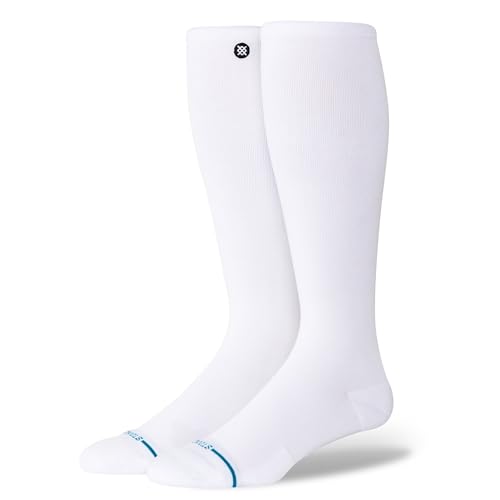
- ✓ Excellent compression support
- ✓ Moisture & odor control
- ✓ Comfortable all-day fit
- ✕ Slightly pricey
- ✕ Limited color options
| Material Composition | 51% combed cotton, 42% nylon, 7% elastane |
| Compression Level | 15-20mmHg mid-grade compression |
| Sock Height | Over the Calf (OTC) |
| Cushioning | Light cushioning for all-day comfort and recovery |
| Moisture & Odor Control | FRESHTEK technology |
| Size Range | Men’s US Shoe Sizes 3-13, Women’s US Shoe Sizes 5-13.5 |
As I pulled these Stance Compression OTC socks out of the box, I immediately noticed how lightweight and breathable they felt. The white fabric looked crisp, and the moderate length of the over-the-calf design promised full coverage, which I knew would help with my bad knee during long days on my snowboard.
Once I slipped them on, the first thing I appreciated was the snug but not restrictive fit. The 15-20mmHg compression felt just right—firm enough to support my swollen knee area without cutting off circulation.
The light cushioning in the foot and calf added comfort, especially after hours of snowboarding, when tired muscles tend to ache.
The fabric blend of cotton, nylon, and elastane gave a soft, stretchy feel that moved well with my leg. I also liked the moisture-wicking feature; even after a few runs, I wasn’t soaked in sweat, and there was no lingering odor.
These socks stayed fresh, which is a big plus when you’re out on the mountain all day.
What really stood out was the design’s focus on recovery. I felt supported during activity and appreciated the recovery aid afterward.
Plus, the sizing options made it easy to find a good fit—mine stayed secure without slipping down. Overall, these socks helped reduce discomfort and kept me comfortable longer, making my snowboarding sessions more enjoyable even with my knee issues.
If you’re battling a bad knee but still want to hit the slopes, these socks could be a game-changer. They combine comfort, support, and moisture control into a simple, effective package.
What is the Best Overall Snowboard Stance for Individuals with a Bad Knee?
Solutions and best practices for achieving the best snowboard stance for a bad knee include regularly consulting with a physical therapist or a snowboarding instructor who can provide personalized recommendations based on individual needs. It’s also advisable to invest in quality gear, such as supportive boots and bindings, which can further assist in maintaining a proper stance. Regularly reassessing stance and making adjustments as necessary can also help accommodate any changes in comfort or knee condition.
How Do Different Stance Angles Affect Knee Comfort and Mobility?
Different stance angles can significantly influence knee comfort and mobility while snowboarding, especially for those with knee issues.
- Narrow Stance: A narrow stance typically involves placing the feet closer together, which can reduce the strain on the knees during turns. This position may help maintain better balance and control, making it easier for riders with knee discomfort to navigate slopes without excessive lateral movement.
- Wide Stance: A wide stance allows for greater stability and weight distribution across the board, which can be beneficial for knee alignment. However, it may increase the torque on the knees during sharp turns, potentially exacerbating discomfort for individuals with existing knee problems.
- Duck Stance: The duck stance features the feet angled outward, which can help reduce pressure on the knees by promoting a more natural leg position. This stance often allows for improved mobility and comfort while enabling riders to easily pivot and turn, making it a popular choice for those with knee sensitivities.
- Forward Stance: A forward-facing stance focuses on positioning the toes towards the nose of the board, which can enhance control and responsiveness. While this stance can benefit overall performance, it may increase knee strain during aggressive maneuvers, making it less favorable for riders with knee issues.
- Customizable Stance: Many snowboarders benefit from experimenting with their stance angles and widths to find a configuration that offers optimal comfort and mobility. Customization allows riders to adjust their setup based on personal comfort levels and riding style, particularly important for those with knee concerns.
What Stance Width is Best for Minimizing Knee Strain?
The best snowboard stance for minimizing knee strain typically involves finding the right width and angle to suit your body mechanics.
- Narrow Stance: A narrower stance can help reduce the strain on the knees by allowing for a more natural alignment of the legs during turns. This position can help maintain better balance and control, which is crucial for riders with knee issues.
- Wide Stance: While a wider stance may offer enhanced stability, it can also increase the risk of knee strain due to the additional pressure placed on the joints during turns. For some riders, particularly those with existing knee problems, this stance might exacerbate discomfort and lead to injury.
- Stance Width Adjustment: Finding the right stance width often involves trial and error, as each rider’s body mechanics and comfort levels differ. Adjusting the width slightly based on personal preference can help alleviate strain and improve overall riding experience.
- Duck Stance: A duck stance, where the feet are angled outward, can be beneficial for reducing knee strain. This position helps in distributing the weight more evenly across the knees and can improve flexibility and comfort while riding.
- Regular Stance: A regular stance, with feet angled forward, may be suitable for some riders with knee issues, as it can promote a more natural alignment. However, riders should ensure that their knees are not overextended and that they maintain a comfortable width to avoid unnecessary strain.
Why is the Duck Stance Considered Beneficial for Those with Knee Issues?
The duck stance, characterized by a wider stance with the feet angled outward, offers several advantages for those experiencing knee issues. This configuration promotes a more natural alignment of the knees and hips, reducing strain during movements.
Benefits include:
-
Reduced Pressure: The angled foot position helps distribute pressure more evenly across the knees, lessening the impact on sensitive areas.
-
Enhanced Balance: The wider stance provides greater stability, allowing the rider to maintain control without excessive lateral movement that can aggravate knee discomfort.
-
Improved Flexibility: The duck stance enables a broader range of motion in the knees and hips, allowing for better adaptation to various terrains and conditions without engaging the knees excessively.
-
Postural Support: Keeping the knees aligned with the feet in a duck stance helps maintain proper posture throughout the ride, which can alleviate discomfort and prevent further injury.
Riders with knee issues should consider experimenting with the duck stance, making adjustments in stance width and angles to find what feels most comfortable, and consulting a professional for tailored advice on gear and technique.
How Can Adjusting Your Toe and Heel Angles Relieve Knee Pain?
Adjusting your toe and heel angles can significantly alleviate knee pain while snowboarding, especially for those with existing knee issues.
- Stance Width: A wider stance can provide better stability and balance while reducing strain on the knees. By allowing for a more natural range of motion, a wider stance can help distribute weight more evenly, which can alleviate pressure on the knee joints during turns and landings.
- Toe Angle: Setting a more duck-footed toe angle, typically around 15 to 30 degrees, can help align the knees and hips in a way that minimizes twisting. This alignment reduces the risk of lateral knee strain and facilitates smoother transitions while riding, which can be especially beneficial for riders with knee concerns.
- Heel Angle: Adjusting the heel angle to be slightly more pronounced can help in promoting a more forward-leaning posture. This adjustment can enable better weight distribution over the board, reducing the shock transmitted to the knees during impacts and turns.
- Board Flexibility: Choosing a snowboard with the appropriate flex for your stance and weight can also affect knee pain. A softer board allows for better absorption of shocks and vibrations, which can be particularly helpful for those with knee issues, as it reduces the impact felt during rides.
- Foot Positioning: Ensuring that your foot positioning aligns with your natural stance can help to alleviate pressure on the knees. By finding the most comfortable angle for your feet, you can enhance control and reduce the likelihood of awkward knee movements that could lead to pain.
What Other Custom Modifications Can Support Knee Stability While Snowboarding?
Custom modifications can significantly enhance knee stability while snowboarding, especially for those with prior knee injuries.
- Stance Width Adjustment: Altering the width of your snowboard stance can help distribute weight more evenly and reduce stress on the knees. A wider stance often promotes better balance and stability, which can be beneficial for riders with knee concerns.
- Binding Angles Modification: Adjusting the angles of your bindings can help promote a more natural knee alignment and reduce strain during turns. A duck stance, where both feet are angled outward, may offer better knee support by allowing for a more comfortable foot position.
- Use of Soft Flex Bindings: Opting for softer flex bindings can provide increased shock absorption and help reduce the impact on the knees during landings and rough terrain. These bindings allow for more natural movement and can accommodate a wider range of motion without overstraining the knee joint.
- Shock Absorbing Footbeds: Installing customized footbeds or insoles with shock-absorbing properties can improve comfort and stability. These footbeds can help align the foot properly, providing better support to the knees while minimizing vibrations and impacts from the snowboard.
- Upgraded Snowboard Flex: Choosing a snowboard with a softer flex can aid in knee protection by allowing for easier turns and less resistance during maneuvers. This flexibility helps reduce the risk of knee strain, especially for beginners or those recovering from injury.
- Additional Knee Bracing: Wearing a knee brace or support can provide extra stability and protection, particularly for those with existing knee issues. This can help prevent excessive lateral movement and provide confidence while riding.
What Role Do Strengthening and Flexibility Exercises Play in Knee Health for Snowboarders?
Flexibility Exercises: Flexibility is crucial for snowboarders to execute proper movements and stances on the board. Stretching routines that target the hamstrings, quadriceps, and calves can enhance mobility, allowing for smoother transitions and better control on the slopes.
Balance and Stability Training: Exercises like single-leg stands and balance board workouts help improve coordination and stability. This type of training is particularly beneficial for snowboarders, as it conditions the body to handle uneven surfaces and sudden shifts in weight, which can otherwise strain the knees.
Recovery Strategies: To maintain knee health, snowboarders should integrate recovery strategies into their routine, focusing on gentle stretching and foam rolling. These methods can alleviate tightness in the muscles around the knee, promote blood flow, and support recovery after intense sessions on the slopes.
Related Post: