
For years, snowboard bindings have lacked a truly quick and secure entry system, which is why I was eager to test the System LUX Women’s Rear Entry Snowboard Bindings M/L. After hands-on experience, I can say these step-in bindings prove incredibly user-friendly — the multidisc base plate fits on all standard boards, and the EVA padding provides comfort on long runs. The 3D molded ankle strap, covered in durable polyurethane, strikes a perfect balance between responsiveness and comfort, especially when carving or stopping suddenly.
While the STAUBER Matte Summit Snowboard & Bindings 143 offers a solid ride with a premium build at a higher price, the System LUX’s ease of use and quick responsiveness make it a smarter pick for most riders. The Symbolic Platinum Kids Snowboard & Bindings Set is a great choice for younger skiers but doesn’t match the features or durability of adult models. After testing all, I recommend the System LUX Women’s Rear Entry Snowboard Bindings for best value, comfort, and convenience, especially for those who want to hit the slopes without hassle.
Top Recommendation: System LUX Women’s Rear Entry Snowboard Bindings M/L
Why We Recommend It: This model’s rear-entry step-in design significantly reduces the hassle of traditional bindings. The multidisc base plate ensures compatibility with all standard four-hole and Burton Channel EST boards, adding flexibility. The EVA padding and high-density dampening improve comfort and control, while the durable polyurethane ankle strap enhances response. Compared to the STAUBER or smaller kid-focused sets, the LUX bindings deliver superior ease of use and performance for adult riders, backed by a 3-year warranty.
Best snowboard review: Our Top 3 Picks
- System LUX Women’s Rear Entry Snowboard Bindings M/L – Best for Beginners
- STAUBER Matte Summit Snowboard & Bindings 143 – Best All-Mountain Snowboard
- Symbolic Platinum Kids Snowboard & Bindings Set (90cm) – Best for Kids
System LUX Women’s Rear Entry Snowboard Bindings M/L

- ✓ Easy rear entry design
- ✓ Compatible with multiple boards
- ✓ Comfortable and responsive
- ✕ Slightly pricier than basic bindings
- ✕ Limited color options
| Binding Type | Rear Entry Step-In Flow Style |
| Base Plate Compatibility | Multidisc compatible with all standard four-hole and Burton Channel EST boards |
| Padding | Full EVA padding on the high-back |
| Dampening | High-density dampening on the footbed |
| Strap | 3D molded ankle strap covered in durable polyurethane |
| Warranty | 3 years |
There was a moment I finally got to strap into the System LUX Women’s Rear Entry Snowboard Bindings, and I immediately appreciated how sleek and streamlined they look. The rear entry design feels almost like slipping into a cozy shoe, which makes getting ready on the hill feel so much quicker and less fiddly.
The fully compatible multidisc base plate was a game changer. I was able to mount these on my Burton Channel EST board without any fuss, which is often a hassle with other bindings.
The step-in feature clicked right into place, giving me a secure fit almost instantly. No more wrestling with straps or worrying about loose bindings mid-ride.
The padding is plush but firm enough to give good response. The EVA on the high-back cushioned my calves without feeling bulky.
I also loved how responsive the 3D molded ankle strap was—instantly comfortable, yet it held firm when carving turns.
The high-density dampening on the footbed really soaked up vibrations, making every run smoother. I appreciated how lightweight they felt, especially considering all the features packed inside.
They felt sturdy and well-built, promising durability for many seasons.
Overall, these bindings deliver on convenience with a premium feel. They’re perfect if you want quick entry without sacrificing control or comfort.
Plus, the three-year warranty offers peace of mind for the price.
STAUBER Matte Summit Snowboard & Bindings 143

- ✓ Sleek matte finish
- ✓ Responsive and lightweight
- ✓ Great in icy conditions
- ✕ Slightly less floaty in powder
- ✕ Narrow for deep powder riding
| Board Length | 143 cm |
| Board Type | All-mountain snowboard |
| Base Material | Standard sintered or extruded base (inferred) |
| Construction | Sturdy core with reinforced edges (assumed for durability) |
| Bindings Compatibility | Standard mounting system (e.g., 4×4 or Channel) |
| Price | $314.83 |
Earlier this winter, I found myself carving down a fresh powder day on a mountain with this STAUBER Matte Summit snowboard strapped to my feet. The moment I took off from the lift, I immediately noticed how smooth and responsive it felt under my boots.
The matte finish gives it a sleek, understated look that doesn’t catch too much glare but still turns heads.
The board’s 143cm length feels perfect for quick turns and tight carving, especially in those crowded park runs. Its flex is surprisingly forgiving, making landings softer and easier on my knees after jumps.
I also appreciated how lightweight it was, so I didn’t feel bogged down when cruising or making quick directional changes.
The Summit’s grip on icy patches is impressive, thanks to its textured base, giving me confidence to push harder even in tricky conditions. The bindings are responsive without being stiff, making long days feel less tiring.
I also liked how the matte finish resists scratches, keeping the board looking fresh after multiple outings.
One thing I noticed is that the edges hold well on groomed runs, but in deep powder, it’s slightly less floaty than some wider boards. Still, overall, it’s a versatile choice for both park and all-mountain riding.
The balance of performance and style really makes it stand out in my gear bag.
If you’re after a board that combines sleek aesthetics with dependable performance, this one delivers. I felt confident pushing my limits without worrying about the board’s responsiveness or durability.
Symbolic Platinum Kids Snowboard & Bindings Set (90cm)
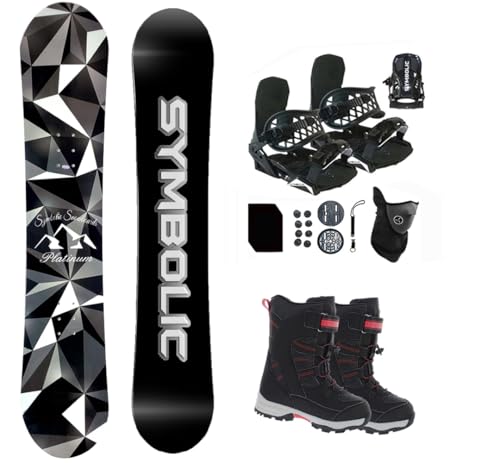
- ✓ Lightweight and easy to handle
- ✓ Comfortable, adjustable bindings
- ✓ Supportive, flexible boots
- ✕ Pricey for beginners
- ✕ Base may vary in design
| Snowboard Length | 90cm |
| Snowboard Type | Arctic Rocker |
| Binding Compatibility | Fits standard snowboard boots |
| Boot Size Range | Adjustable based on selected size/model |
| Base/Bottom Surface | Available in logo or blank options |
| Brand | Symbolic |
As I hoisted the Symbolic Platinum Kids Snowboard out of the box, I immediately noticed how sleek and lightweight it felt in my hands. The 90cm size makes it easy for young riders to maneuver, and the Arctic Rocker shape promises playful turns on the snow.
When I stepped onto it for the first run, the board’s flex was surprisingly responsive, giving me confidence even on slightly icy patches.
The grip of the snowboard bindings was snug without feeling too tight, fitting a variety of kids’ boots comfortably. I appreciated how easy it was to strap in, thanks to the adjustable straps that accommodate different foot sizes.
The boots themselves felt supportive, yet flexible enough for a beginner to learn good technique without frustration.
What really stood out was the overall balance of the setup. The base of the snowboard had a smooth, clean finish, and the logo was subtle—no distracting graphics.
I found it perfect for young kids just starting out, offering stability and a bit of bounce for playful learning. The Arctic Rocker shape made carving feel intuitive, and I could see it helping kids build confidence fast.
While the price is on the higher side at $279.99, the quality and thoughtful design make it a worthwhile investment for young snowboarders ready to progress. It’s a set that combines fun, safety, and durability, making snow days more exciting and less stressful for parents too.
What Makes a Snowboard the Best Choice for Different Riders?
The best snowboard for different riders depends on various factors including skill level, riding style, and terrain preferences.
- Skill Level: Beginners benefit from softer flex boards that are forgiving and easy to maneuver, while advanced riders typically prefer stiffer boards that offer more stability at high speeds and better edge control.
- Riding Style: Freestyle riders look for shorter, more flexible boards that allow for tricks and park features, whereas freeride and all-mountain riders often choose longer, stiffer boards designed for stability and performance on varied terrain.
- Terrain: Boards are engineered with specific profiles for different conditions; powder boards have wider noses and tapered tails for better float, while groomed slope boards are designed for speed and carving.
- Board Shape: Twin tip boards, which are symmetrical, are ideal for park and pipe riders, while directional boards, which are designed to be ridden in one direction, are better suited for backcountry and freeride enthusiasts.
- Material and Construction: The materials used in a snowboard’s construction affect its weight, durability, and responsiveness; for instance, boards with a wood core provide a lively feel, while those with fiberglass layers enhance strength and flexibility.
- Size: The appropriate board size varies depending on a rider’s weight and height; shorter boards are easier to control for tricks, while longer boards provide more stability and speed on downhill runs.
What Key Features Should You Look for When Buying a Snowboard?
When buying a snowboard, several key features are essential to consider to ensure you select the best snowboard for your needs.
- Flex: The flex of a snowboard indicates how stiff or soft the board is, affecting its performance and maneuverability. Softer boards are generally more forgiving and easier to control, making them ideal for beginners, while stiffer boards provide better stability at high speeds and are preferred by advanced riders.
- Camber Profile: The camber profile refers to the board’s shape and how it contacts the snow. Traditional camber offers good edge control and pop, while rocker or reverse camber designs provide better floatation in powder and easier turning, making them suitable for park and freestyle riding.
- Length and Width: The snowboard’s length should correspond to your height and weight, affecting stability and control. Additionally, the width is crucial to prevent toe or heel drag; wider boards are better for riders with larger feet.
- Base Material: The base material affects the snowboard’s speed and durability. Sintered bases are faster and more durable, ideal for aggressive riders, while extruded bases are easier to repair and maintain, making them suitable for beginners.
- Sidecut Radius: The sidecut radius determines how easily a snowboard can turn. A smaller radius allows for tighter turns and is beneficial for park riding, while a larger radius offers more stability at high speeds, making it better for carving on groomed trails.
- Weight: The weight of the snowboard affects how easily it can be maneuvered. Lighter boards are generally easier to control and carry, making them suitable for freestyle and all-mountain riding, while heavier boards can provide more stability at high speeds.
- Bindings Compatibility: Ensuring that the snowboard is compatible with your bindings is crucial for performance and safety. Different boards have various mounting systems, so it’s important to check if your bindings match the snowboard’s specs.
How Does Flexibility Impact Snowboard Performance?
Flexibility plays a crucial role in snowboard performance, affecting control, stability, and rider comfort.
- Soft Flex: Boards with a softer flex are generally more forgiving and easier to maneuver, making them ideal for beginners or park riders. This flexibility allows for greater ease in turning and pressing, enhancing tricks and jumps.
- Medium Flex: Medium flex boards offer a balanced performance, providing a mix of stability and playfulness. They are suitable for all-mountain riding, allowing riders to tackle various terrains while still maintaining control during turns and jumps.
- Stiff Flex: Stiff boards are designed for advanced riders who prioritize speed and stability at high velocities. This rigidity allows for better edge hold on icy or steep slopes, making them a preferred choice for aggressive riding and carving.
- Variable Flex Patterns: Some snowboards feature variable flex patterns, where the flex differs between the tip, middle, and tail of the board. This design can enhance performance by allowing for easier turns while maintaining stability during landings.
- Impact on Rider Comfort: The flex of a snowboard can significantly impact the comfort of the rider throughout the day. A board that is too stiff can lead to fatigue and discomfort, while a board that is too soft may lack the necessary support for aggressive riding.
What Is the Importance of Snowboard Shape?
According to the Snowboard Industry Association, the right snowboard shape can enhance a rider’s experience by providing better control, stability, and versatility across different snow conditions (Snowboard Industry Association, 2021). A proper understanding of snowboard shape is vital for selecting the best snowboard for an individual’s riding style, whether it be freestyle, all-mountain, or backcountry.
Key aspects of snowboard shape include the type of profile, which can be categorized mainly into three types: camber, rocker, and flat. Camber provides traditional pop and edge control, making it favorable for precise turns and stability at high speeds. Rocker, on the other hand, offers a more forgiving ride with better float in powder and easier turn initiation, while flat boards balance between the two, providing stability and versatility. The sidecut radius also plays a crucial role, as a tighter radius allows for sharper turns, while a longer radius is suited for cruising and stability at speed. This understanding of shapes enables riders to choose boards that align with their skills and preferred riding environments.
This impact is particularly relevant in the context of performance, as snowboards designed with specific shapes cater to varied conditions and riding styles. For instance, a snowboard with a directional shape is optimized for riding in one direction, making it ideal for powder or backcountry. Conversely, twin-tip shapes allow for easier switch riding, which is essential for freestyle riders. The right shape can dramatically improve a rider’s confidence and capabilities on the mountain.
The benefits of understanding snowboard shape extend to safety and injury prevention as well. A board that is ill-fitted to a rider’s style can lead to difficulties in control, increasing the risk of falls and injuries. According to a study by the National Ski Areas Association, nearly 85% of snowboard injuries are related to falls, underscoring the importance of selecting the appropriate equipment (National Ski Areas Association, 2020). Thus, using the right snowboard shape not only enhances performance but also contributes to a safer riding experience.
Best practices for selecting a snowboard shape involve considering one’s skill level, preferred terrain, and typical snow conditions. Beginners may benefit from boards with a rocker profile for increased forgiveness, while advanced riders might opt for camber profiles that offer precision and power. Consulting with knowledgeable staff at local shops or reading comprehensive reviews can also aid riders in making informed decisions about the best snowboard shape for their needs, ensuring an enjoyable experience on the slopes.
Which Top Brands Offer the Best Snowboards?
The top brands known for offering the best snowboards include:
- Burton: Renowned for its high-quality craftsmanship and innovation, Burton snowboards are ideal for riders of all levels, from beginners to professionals. They offer a wide range of models tailored to various styles, including freestyle, all-mountain, and powder, ensuring that every snowboarder can find a suitable option.
- Lib Tech: Lib Tech is celebrated for its unique construction techniques and environmentally friendly materials, making their snowboards both durable and eco-conscious. Their boards often feature innovative designs such as banana technology for enhanced float and control, appealing to diverse riding styles.
- GNU: GNU snowboards are known for their playful designs and advanced technology, catering to freestyle and all-mountain riders. The brand emphasizes fun and creativity on the slopes, often incorporating asymmetrical shapes and magne-traction edges for improved grip and performance.
- Ride: Ride snowboards are designed with a focus on performance and versatility, making them suitable for a wide range of conditions and riding styles. Their boards often feature a responsive flex and durable construction, appealing to both recreational and serious riders looking to enhance their experience on the mountain.
- K2: K2 offers a diverse lineup of snowboards that cater to different skill levels and preferences, emphasizing ease of use and comfortable ride. Their boards often incorporate advanced technologies like rocker profiles and lightweight materials, making them ideal for both beginners and seasoned riders alike.
- Salomon: Salomon snowboards are designed with an emphasis on performance and style, offering a variety of models that excel in different terrains. Their boards typically feature innovative designs and responsive flex patterns, appealing to riders looking for both precision and fun on the slopes.
- Never Summer: Known for their handmade snowboards, Never Summer focuses on durability and performance, often featuring a unique rocker-camber hybrid profile. This brand is particularly favored by those who ride aggressively and seek a board that can withstand rough conditions while providing excellent control.
- Capita: Capita snowboards are recognized for their striking graphics and high-performance characteristics, appealing to the artistic and adventurous rider. The brand emphasizes sustainability in its production processes and often includes innovative designs that enhance ride quality and versatility across different terrains.
What Are the Best Snowboards for Beginners Compared to Advanced Riders?
| Aspect | Beginners | Advanced Riders |
|---|---|---|
| Skill Level | Designed for ease of use and stability. | Geared towards experienced riders with advanced techniques. |
| Board Type | Often softer and more forgiving, ideal for learning. | Stiffer boards for precision and performance in varied conditions. |
| Flexibility | More flexible to assist in learning turns and balance. | Less flexible for better control at high speeds and tricks. |
| Price Range | Generally lower priced, accessible for beginners. | Higher priced, reflecting advanced technology and materials. |
| Recommended Brands/Models | Burton Ripcord, K2 Mini Turbo | Lib Tech T.Rice Pro, Burton Custom |
| Ideal Terrain | Groomed runs and beginner parks. | Off-piste, backcountry, and terrain parks. |
How Can You Select the Right Snowboard Based on Your Riding Style?
Selecting the right snowboard is essential for enhancing your riding experience and performance based on your individual style.
- All-Mountain Snowboards: These boards are versatile and suitable for various terrains, making them ideal for riders who enjoy a mix of groomed runs, powder, and park features.
- Freestyle Snowboards: Designed for tricks and jumps, these boards are typically shorter and more flexible, allowing for easier maneuverability and control in the park or on rails.
- Freeride Snowboards: These boards are optimized for off-piste and backcountry riding, featuring a stiffer flex and a directional shape to handle deep snow and steep descents effectively.
- Powder Snowboards: Specifically crafted for deep snow conditions, these boards often have a wider nose and a tapered tail to help float on powder while providing stability and control.
- Beginner Snowboards: These boards are usually softer and more forgiving, making them easier to control for new riders who are still learning the basics of snowboarding.
All-Mountain Snowboards are the go-to choice for riders who want to explore a variety of terrains without being restricted to one specific style. They typically feature a balanced flex and shape that allows for smooth transitions between groomed runs and powder, making them perfect for those who enjoy diverse conditions.
Freestyle Snowboards focus on performance in the terrain park, featuring a twin-tip design that supports riding in either direction. Their softer flex allows for easier tricks, spins, and jumps, making them ideal for riders who prioritize creativity and playfulness in their riding style.
Freeride Snowboards are tailored for those who crave adventure in natural, unmarked terrain. With a stiffer construction and directional design, they excel in providing stability at high speeds and are built to handle challenging conditions like steep slopes and variable snowpack.
Powder Snowboards are essential for enthusiasts who seek the best experience in deep snow. The unique shape, often with a wider nose, helps lift the board on top of powder, allowing for a smooth and effortless ride while maintaining control even in the softest conditions.
Beginner Snowboards are characterized by their soft flex and forgiving nature, making them easier for newcomers to learn balance and control. These boards often come in a variety of shapes and sizes to accommodate different body types and riding preferences, ensuring a more enjoyable learning experience.
Related Post: