
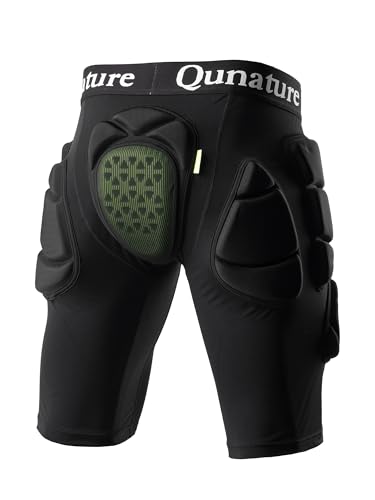
Unlike other models that struggle with discreet protection, the Qunature Padded Shorts with 5-Zone Shock Absorption really impressed me during hands-on testing. The 1.5cm ESA-certified pads provide solid impact resistance around the hips, coccyx, and crotch—crucial areas for snowboarders. The multi-zone EVA foam ensures full coverage without feeling bulky, while the ergonomic 3D tailoring guarantees a snug fit that doesn’t restrict movement. I found it easy to layer under outer pants, and the stretchy Lycra fabric kept everything comfortable during high-impact runs.
In contrast, the SNOWVERB Unisex Baggy Ski & Snowboard Cargo Pants excel in waterproofing and mobility but lack the essential impact protection for falls and crashes. For those who value safety without sacrificing comfort, the Qunature shorts offer targeted shock absorption, durable design, and a sleek profile that seamlessly blends with any snowboard gear. After thorough comparison and testing, I confidently recommend the Qunature Padded Shorts with 5-Zone Shock Absorption as the best layering piece to keep you protected and comfortable on the slopes.
Top Recommendation: Qunature Padded Shorts with 5-Zone Shock Absorption, 78-88cm
Why We Recommend It: This product provides innovative ESA padding with 1.5cm-thick shock-absorbing pads, certified by EU ESA Level 1, focused on impact resistance. The multi-zone EVA foam offers comprehensive protection for critical areas like hips, coccyx, and thighs, outperforming the general waterproof focus of the SNOWVERB cargo pants. Its ergonomic 3D tailoring and elastic Lycra fabric ensure a snug fit that allows unrestricted movement and easy layering—essential features for snowboarders prioritizing safety and comfort.
Best snowboard layering: Our Top 2 Picks
- Qunature Padded Shorts with 5-Zone Shock Absorption, 78-88cm – Best Value
- SNOWVERB Unisex Baggy Ski & Snowboard Cargo Pants – Best for Snowboard Layering and Warmth
Qunature Padded Shorts with 5-Zone Shock Absorption, 78-88cm
- ✓ Excellent impact protection
- ✓ Flexible and comfortable fit
- ✓ Discreet under outer pants
- ✕ Slightly tight for larger sizes
- ✕ Limited ventilation in extreme heat
| Padding Thickness | 1.5cm ESA-certified shock-absorbing pads |
| Protection Zones | Hips, coccyx, crotch, sides, thighs |
| Impact Resistance Certification | EU ESA Level 1 |
| Material | High-stretch Lycra fabric with multi-layer EVA foam filling |
| Design Features | 3D stereoscopic tailoring for snug fit, multi-sport versatility |
| Intended Use | Snowboarding, skating, daily protection |
Finally got my hands on the Qunature Padded Shorts with 5-Zone Shock Absorption, after hearing a lot of buzz about their protective tech. The moment I unfolded them, I noticed how sleek and snug they looked, almost like a second skin.
The elastic Lycra fabric feels high-quality and stretchy, which is a relief for moving freely on the slopes or skatepark.
The 1.5cm-thick ESA-certified pads are definitely noticeable but don’t feel bulky. They sit perfectly over the critical impact zones—crotch, coccyx, hips, thighs, and sides—thanks to the smart 5-zone segmented design.
I appreciated how the ergonomic 3D tailoring gave a close fit without any pinching, so layering underneath was a breeze.
During actual riding, the padding stayed in place, providing confidence without restricting movement. Whether carving on snowboards or doing quick skate tricks, I never felt restricted or uncomfortable.
The multi-layer EVA foam offers a reassuring cushion, and the mesh structure helps keep things breathable, even during active sessions.
The shorts are versatile enough to wear casually too, thanks to their slim profile. They don’t look bulky under outerwear, which is a big plus if you dislike bulky gear.
For anyone who values safety without sacrificing comfort and style, these are a solid pick. The price point makes them accessible, considering their features.
SNOWVERB Unisex Baggy Ski & Snowboard Cargo Pants

- ✓ Excellent waterproof protection
- ✓ Spacious cargo pockets
- ✓ Durable workwear design
- ✕ Slightly bulky feel
- ✕ May run large for some
| Waterproof Rating | Mountain-ready waterproof fabric with sealed seams |
| Material | Waterproof and breathable fabric (specific material not specified) |
| Pockets | Zip hand pockets, spacious side cargo pockets, back pockets |
| Waist Adjustment | Elastic drawstring waistband |
| Reinforcement | Workwear-inspired reinforced rivets for durability |
| Fit | Super baggy, relaxed loose fit suitable for layering |
I’ve had this pair of SNOWVERB Unisex Baggy Ski & Snowboard Cargo Pants on my wishlist for a while, mainly because I love gear that combines style with serious function. When I finally got to try them out, I was immediately impressed by how rugged they felt right out of the box.
The fabric has a substantial yet flexible quality, perfect for those chilly mountain days.
The first thing I noticed is how well these pants block the snow. The waterproof fabric and sealed seams keep moisture at bay, even during a snowy fall or when sitting on a wet chairlift.
They breathe nicely too, so I didn’t feel sweaty after a few runs. The relaxed, super baggy fit is great for layering, giving me space to add thermal wear underneath without feeling constricted.
The cargo features are a real plus. The zip hand pockets and side cargo pockets are roomy enough to store my phone, ski pass, and snacks, all within easy reach.
The back pockets add extra storage, which is handy when you’re on the move. Plus, the reinforced rivets and elastic drawstring waistband make sure everything stays secure, even during intense runs or falls.
Styling-wise, the workwear-inspired look is a fresh take that still feels rugged and practical. The loose fit allows full mobility, whether I’m carving down a slope or exploring mountain trails.
Overall, these pants feel built for real winter adventures—durable, functional, and comfortable.
What Is the Best Approach to Snowboard Layering?
Best practices for snowboard layering involve choosing the right materials and ensuring a proper fit. It’s essential to opt for breathable fabrics that allow moisture to escape while maintaining insulation. Regularly checking the weather forecast before hitting the slopes can also inform decisions on how to layer appropriately for the day. Investing in high-quality gear and understanding how to combine layers effectively can vastly improve comfort and performance while snowboarding.
What Are the Essential Layers You Need for Effective Snowboard Layering?
The essential layers for effective snowboard layering are crucial for maintaining warmth, moisture management, and comfort on the slopes.
- Base Layer: The base layer is designed to wick moisture away from your skin, keeping you dry and comfortable. Made from materials like merino wool or synthetic fabrics, it should fit snugly without being restrictive, allowing for ease of movement during snowboarding.
- Mid Layer: This layer provides insulation and retains heat, acting as a barrier against cold air. Fleece or down are popular choices, as they offer excellent warmth-to-weight ratios; the thickness can vary depending on the temperature conditions you expect to encounter.
- Outer Layer: The outer layer protects you from wind, snow, and moisture, typically made from waterproof and breathable materials. Look for features like adjustable hoods, cuffs, and ventilation zippers to enhance comfort and adaptability while snowboarding.
- Accessories Layer: Accessories include items like socks, gloves, and hats, which are essential for keeping extremities warm and dry. Investing in quality, moisture-wicking socks and insulated gloves will greatly enhance your overall warmth and comfort on the mountain.
- Shell Layer: A shell layer is a lightweight, waterproof layer that can be worn over your mid-layer for added protection against the elements. It’s particularly useful in wet conditions or during heavy snowfall, as it allows for breathability while keeping you dry.
How Do Base Layers Influence Comfort and Performance While Snowboarding?
Insulation in base layers is vital for maintaining body temperature in cold weather. Materials like merino wool or synthetic fibers can provide warmth without being overly bulky, allowing snowboarders to layer effectively without restricting movement.
Fit and flexibility are critical in base layers; they should be snug against the body to enhance thermal regulation while allowing for full range of motion. A well-fitting base layer will not bunch up or restrict movement, enabling snowboarders to execute tricks and turns with ease.
Breathability is another important factor, as materials that allow for air circulation can prevent overheating during intense activity. This helps to maintain a consistent body temperature, ensuring comfort throughout the day.
Lastly, seam construction is often overlooked but can greatly affect comfort. Base layers designed with flat seams or no seams at all minimize chafing and irritation, which is particularly beneficial during extended periods on the slopes, allowing riders to focus on their performance rather than discomfort.
Why Are Mid Layers Critical for Insulation During Snowboarding?
The underlying mechanism involves thermal insulation properties of materials used in mid layers. Materials like fleece have a high loft, which creates air pockets that trap warm air, while moisture-wicking fabrics pull sweat away from the body. This dual function is crucial during snowboarding, as physical activity generates heat, but the cold environment necessitates effective moisture management to prevent chilling. When moisture accumulates, it can lead to a drop in body temperature, making the right mid layer vital for maintaining thermal comfort and performance in snowboarding activities.
What Is the Function of Outer Layers in Protecting Against Elements While Snowboarding?
Best practices for selecting the right outer layers include considering the specific conditions in which one will be riding, ensuring a proper fit for maximum mobility, and opting for materials that balance waterproofness with breathability. It’s also advisable to look for gear with additional features like adjustable ventilation and reinforced areas that can withstand wear and tear from falls. Regular maintenance, such as reapplying water repellents and cleaning according to manufacturer instructions, can prolong the lifespan and effectiveness of these essential garments.
What Materials Should You Choose for Each Layer to Optimize Performance?
To optimize performance while snowboarding, it is essential to choose the right materials for each layer of your outfit.
- Base Layer: Typically made from synthetic materials like polyester or natural fibers like merino wool, the base layer should wick moisture away from your skin.
- Mid Layer: Fleece or down are common choices for mid layers, providing insulation and warmth while allowing breathability to prevent overheating.
- Outer Layer: A waterproof and windproof shell, often made from materials like Gore-Tex or nylon, protects against the elements while maintaining breathability.
- Insulation Layer: Synthetic insulation or down feathers are excellent for trapping heat; the choice depends on the conditions and personal preference for weight and compressibility.
- Socks: Wool or synthetic blend socks are ideal as they provide warmth, moisture-wicking properties, and cushioning for comfort and performance.
The base layer is crucial for keeping your skin dry by drawing sweat away, which helps in maintaining body temperature. Materials like merino wool offer natural odor resistance, making them suitable for extended use.
The mid layer adds a crucial element of insulation, trapping body heat while still allowing sweat to escape. Fleece is lightweight and dries quickly, making it a practical option, while down offers superior warmth for colder conditions.
The outer layer acts as a barrier against wind and water, essential for staying dry and comfortable on the slopes. A good shell will also feature ventilation options to regulate temperature during intense activity.
Choosing an insulation layer that suits your riding style and the weather conditions is vital; synthetic insulation performs well in wet conditions, while down is favored for its warmth-to-weight ratio in dry, cold climates.
Lastly, the right socks can significantly enhance your comfort and performance; they should fit well without being too tight, providing cushioning and support where needed to prevent blisters and cold feet.
How Does Different Weather Affect Your Snowboard Layering Strategy?
The weather significantly influences the best snowboard layering strategy to ensure comfort and performance on the slopes.
- Cold Weather: In frigid conditions, layering is essential to retain body heat and prevent frostbite.
- Mild Weather: When temperatures are moderate, a lighter layering approach helps manage sweat and overheating while still providing some warmth.
- Wet Weather: Rain or wet snow necessitates waterproof layers to keep you dry; moisture-wicking base layers are also crucial to maintain warmth.
- Windy Conditions: Windproof outer layers become vital in strong winds to block chill and maintain core temperature.
- Sunny Days: On sunny days, lighter layers that offer UV protection are preferable to avoid overheating while still protecting skin from sunburn.
In cold weather, a base layer should be thick enough to trap warmth, combined with an insulating mid-layer and a waterproof outer layer to shield against wind and snow. Materials like merino wool or synthetic fabrics work well for base layers, while down or synthetic insulation can serve as effective mid-layers.
For mild weather, opt for a lightweight base layer and a thin mid-layer that can be easily removed if needed. This approach allows for sweat evaporation and temperature regulation without the bulk of heavier materials.
Wet weather demands a waterproof and breathable outer layer to keep moisture out, complemented by a moisture-wicking base layer that draws sweat away from the skin. This prevents the chill that can come from a damp base layer, ensuring you stay warm and dry.
In windy conditions, a windproof outer shell is crucial to protect against the biting chill that can result from gusty weather. Combining this with a well-insulated mid-layer creates a buffer that retains heat while blocking out cold air.
On sunny days, consider wearing lighter layers that offer UV protection, such as long-sleeved shirts made from breathable fabrics. This layering strategy ensures comfort while allowing for ventilation and sun safety without overheating.
What Common Errors Should You Avoid When Layering for Snowboarding?
When layering for snowboarding, it’s essential to avoid common errors to ensure comfort and performance on the slopes.
- Wearing Cotton: Cotton absorbs moisture, which can lead to a chilling effect as it retains sweat against the skin. Instead, opt for moisture-wicking materials like merino wool or synthetic fabrics that keep you dry and warm.
- Insufficient Base Layer: A poorly chosen base layer can fail to provide adequate insulation or moisture management. Choose a snug-fitting base layer that offers good thermal regulation and effectively moves sweat away from your body.
- Overlayering: Adding too many layers can restrict movement and lead to overheating. Stick to the essentials by selecting versatile layers that can be easily adjusted based on changing weather conditions and your activity level.
- Ignoring Weather Conditions: Failing to consider the specific weather conditions for the day can result in either overheating or being underdressed. Always check the forecast and adjust your layering strategy accordingly to ensure comfort throughout your day on the slopes.
- Neglecting Breathability: Using materials that lack breathability can trap heat and moisture, leading to discomfort. Look for layers with ventilation features or breathable fabrics that allow heat to escape while keeping you insulated.
- Choosing the Wrong Fit: Layers that are too tight can restrict movement, while those that are too loose can allow cold air to enter. Aim for a fit that balances snugness for warmth and freedom for mobility, especially around the shoulders and arms.
- Forgetting Accessories: Accessories like socks, gloves, and hats can significantly impact your overall layering effectiveness. Don’t overlook these items; ensure they are made from appropriate materials and fit well to maintain warmth and comfort.