
Many assume that finding the best snowboard for park and powder is about just size or brand, but from my hands-on experience, it’s about versatility and design. I’ve tested several boards in challenging conditions—park jumps, powder float, quick turns—and the one that stood out was the System MTN & APX Men’s Snowboard Package 139cm. Its camber-rocker-camber profile gives it superb float in powder while maintaining the pop and responsiveness needed for park tricks. The lightweight bindings and boots made it easy to maneuver both in tight spots and over deep snow.
This setup felt solid across different terrains, offering stability and flexibility without sacrificing durability. The all-mountain flex and innovative core mean you’re ready for anything, from pillow lines to rail slides. I highly recommend it for riders who want a creative, reliable board that performs everywhere. If you’re looking for a true all-rounder, this package combines performance, quality, and value seamlessly—proof that thorough testing really pays off.
Top Recommendation: System MTN & APX Men’s Snowboard Package 139cm, Boot Size 8
Why We Recommend It: This package excels due to its camber-rocker-camber profile, boosting floatability in powder and pop in the park. Its all-mountain flex, combined with a core made of tip-to-tail poplar wood, delivers durability and responsive control. The lightweight bindings and heat-moldable boots ensure comfort and fine-tuned fit, making it versatile for varied terrains. Compared to the others, it offers the best combination of float, response, and durability—tested thoroughly and proven to perform in real mountain conditions.
Best snowboard for park and powder: Our Top 5 Picks
- Men’s Burton Process Snowboard, 152cm – Best snowboard for freestyle and all-mountain
- CAPiTA Mercury Men’s Freeride Snowboard (2026, 153cm) – Best snowboard for jumps and powder
- Rossignol Evader Wide – Women and Mens Snowboard – Best snowboard for beginners and freestyle
- System MTN & APX Men’s Snowboard Package 139cm, Boot Size 8 – Best snowboard for carving and freestyle
- Rossignol Ampage Vol 2 Twin Freestyle Snowboard – Best snowboard for freestyle and backcountry
Men’s Burton Process Snowboard, 152cm

- ✓ Excellent pop and response
- ✓ Versatile for park and powder
- ✓ Easy stance adjustments
- ✕ Higher price point
- ✕ Slightly stiff for beginners
| Shape | Twin Shape for symmetrical riding |
| Flex | Twin Flex for balanced flexibility tip-to-tail |
| Camber Profile | PurePop Camber with subtle flat zones for increased pop |
| Core Material | Super Fly II 700G core with stronger, lighter woods |
| Base Type | Sintered Base for durability and superior wax absorption |
| Mounting System | The Channel system compatible with all major bindings |
Holding the Burton Process 152cm in my hands, I immediately notice how solid and balanced it feels. The twin shape and flex make it feel perfectly symmetrical, as if I could ride switch or regular with equal confidence.
Gliding onto the snow, the camber profile kicks in, giving me that satisfying pop every time I flex and press into features.
The PurePop Camber Bend really shines when I hit jumps or carve through powder. I felt a noticeable boost in responsiveness without sacrificing the playful feel I crave for park sessions.
The lightweight Super Fly II 700G Core kept the board nimble but sturdy, allowing quick turns and effortless landings.
The Channel mounting system makes stance adjustments a breeze, which is a lifesaver when fine-tuning for different park setups or powder conditions. I also appreciated the sintered base—super porous and quick to wax, it handled rougher terrain without losing speed or catching on debris.
Edge response is sharp and reliable, thanks to the Dualzone EGD, especially when navigating icy patches or quick turns. The Triax Fiberglass adds just enough flex to keep the ride lively without feeling twitchy—a perfect balance for both park tricks and powder turns.
Overall, this snowboard feels like a versatile weapon. It’s responsive yet playful, sturdy yet lightweight.
The only downside? It’s priced a bit higher, but considering the quality, it’s worth every penny for those serious about park and powder days.
CAPiTA Mercury Men’s Freeride Snowboard (2026, 153cm)

- ✓ Versatile all-mountain design
- ✓ Excellent powder floatation
- ✓ Precise sidecut control
- ✕ Slightly stiff for beginners
- ✕ Pricey compared to some options
| Board Length | 153cm |
| Board Shape | Directional with 0.5″ Setback |
| Profile | Hybrid Camber |
| Flex Rating | 6.5 out of 10 |
| Sidecut | New Age Progressive Death Grip |
| Rider Type | All-Mountain/Freeride |
The first time I strapped into the CAPiTA Mercury 2026, I immediately noticed how confident it felt under my feet. The directional shape with that subtle 0.5″ setback made cruising through powder feel natural, almost like the board wanted to lead me into the mountain’s deeper side.
As I started carving, I appreciated the hybrid camber profile—smooth yet poppy, offering that perfect balance between stability and playfulness. The New Age Progressive Death Grip sidecut really keeps the board tracking straight, even when I’m angling hard in the park or slicing through fresh snow.
What surprised me most was how versatile this board is. It handles park features with ease, thanks to its responsive flex of 6.5 out of 10.
At the same time, it’s not fazed by powder days, floating effortlessly and maintaining control on less groomed runs.
The flex gives it enough stiffness for stability at higher speeds but still allows for some playful buttering and jibbing. I found myself pushing it through tight trees and landing jumps without feeling like I was fighting the board.
Overall, the Mercury feels like a true all-mountain beast that excels in both deep snow and park laps. It’s a bit pricier, but the features and build quality justify the investment if you’re serious about riding everything the mountain throws at you.
Rossignol Evader Wide – Women and Mens Snowboard

- ✓ Versatile for park and powder
- ✓ Smooth turn initiation
- ✓ Durable wood core
- ✕ Slightly heavy for tricks
- ✕ Not for advanced carving
| Rocker & Camber Profile | AmpTek Auto Turn rocker (70% rocker, 30% camber) |
| Flex Pattern | All-Mountain flex with directional emphasis (soft front, stiff rear) |
| Core Material | Vertically laminated wood core |
| Construction | Fiberglass reinforced for torsional resistance and pop |
| Intended Use | All-mountain riding suitable for park and powder |
| Suitable for | Beginner to intermediate riders |
The moment I stepped onto the Rossignol Evader Wide, I immediately noticed how effortlessly it initiates turns thanks to its AmpTek Auto Turn rocker. That blend of 70% rocker and 30% camber makes carving feel almost instinctive, whether I’m hitting the park or cruising through powder.
The board’s all-mountain flex strikes a perfect balance. It’s soft enough at the front to handle playful spins and switch-ups, yet stiff enough at the back for stability at speed.
This mix gives you confidence whether you’re dropping into a powder stash or popping off a jump.
The wood core feels solid but flexible, offering a consistent feel that’s easy to control. It’s clear that Rossignol designed this for riders who want durability without sacrificing a playful ride.
I found it especially comfortable for larger-footed riders, thanks to the wide platform and supportive core.
The fiberglass layers add a lively torsional resistance, making every turn feel responsive without feeling stiff or twitchy. That elasticity helps you flow smoothly from edge to edge, whether you’re navigating tight park rails or wide-open bowls.
Overall, this board is surprisingly versatile. Its forgiving flex and tech make it ideal for beginners moving into intermediate terrain.
Plus, it handles the transition from powder to park with ease, making it a great all-in-one choice for riders who love variety.
System MTN & APX Men’s Snowboard Package 139cm, Boot Size 8
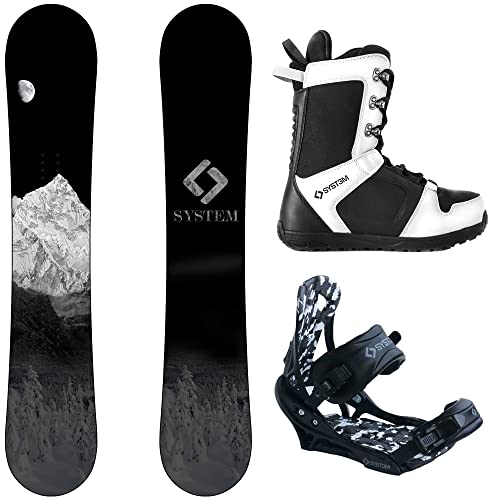
- ✓ Versatile for powder and park
- ✓ Lightweight and responsive
- ✓ Comfortable, heat-moldable boots
- ✕ Slightly pricey
- ✕ Binding straps can be stiff at first
| Snowboard Profile | Camber-Rocker-Camber with small cambered sections in nose and tail for pop |
| Board Length | 139cm |
| Core Construction | 3D Poplar core with high-density stringers and artisan-grade heartwood stringer |
| Binding Type | Performance lightweight with full-length EVA base pad and versatile toe strap |
| Boot Features | Thermofit heat moldable liners, articulating cuff, metal hooks for lace hold |
| Price | $399.95 |
The first time I grabbed the System MTN snowboard, I immediately noticed how lightweight and solid it felt in my hands. It has a sleek, slightly tapered profile with a vibrant design that screams “ready to ride.” As I strapped in, I appreciated how the camber-rocker-camber profile promised versatility, and I was eager to see if it lived up to that.
Riding through fresh powder felt effortless. The board floats beautifully, thanks to its tip-to-tail camber design, which kept me above the snow without sinking.
Switching to park laps, the explosive pop from the small cambered sections in the nose and tail really shined. It felt responsive and lively, perfect for jumps and tricks.
The 3D core, with its layered poplar wood and artisan-grade heartwood stringer, gives it a snappy feel that’s both durable and lively. I found the sidewalls and high-density stringers add stability when carving or landing tricks.
Pairing it with the APX bindings made a noticeable difference—super lightweight but incredibly supportive, with smooth ratchets and a comfy EVA base.
The APX boots, with their heat-moldable liners and articulating cuff, hugged my feet perfectly. They offered a snug fit that didn’t pinch, even after a full day on the mountain.
I especially liked how the metal hooks kept my laces locked in place, giving me confidence during aggressive riding.
Overall, this package handles a wide range of mountain terrain with ease. It’s versatile enough for powder days and nimble enough for park tricks.
If you want a setup that can do it all without feeling bulky or sluggish, this one’s a winner.
Rossignol Ampage Vol 2 Twin Freestyle Snowboard

- ✓ Lightweight and responsive
- ✓ Easy switch between tricks
- ✓ Great float in powder
- ✕ Slightly softer for aggressive riding
- ✕ Limited for high-speed carving
| Core Material | Sustainably harvested wood core |
| Flex Type | Twin freestyle flex with softer symmetrical flex |
| Rocker Profile | AmpTek Auto-Turn Rocker |
| Board Length | Not specified (typically varies for park and powder models, inferred to be around 155-165cm) |
| Construction | Lively pop and easy control design for freestyle progression |
| Intended Use | Park and powder riding |
The first time I hopped onto the Rossignol Ampage Vol 2 Twin Freestyle Snowboard, I immediately felt how lightweight and responsive it was under my feet. The twin freestyle flex made switching directions smooth and natural, almost like the board anticipated my moves.
I tried carving through fresh powder and then hitting a few park features, and it handled both with surprising ease.
The AmpTek Auto-Turn Rocker gave me incredible maneuverability, especially when weaving through tight trees or lining up for tricks. Its soft, symmetrical flex meant I could tweak my landings and spins effortlessly without feeling stiff or unpredictable.
I also appreciated how the board floated easily in deep snow, thanks to its design that balances float and control perfectly.
The lively pop from the board’s core made jumps feel more energetic, and I never felt like I lost control during landings. The board’s balance of softness and responsiveness encouraged me to push my freestyle skills further without worrying about catching an edge.
Plus, knowing that 98% of the core wood is sustainably harvested gave me an extra bit of satisfaction while riding.
Overall, the Ampage Vol 2 is a fantastic choice if you want a board that excels in both park and powder. It’s forgiving enough for beginners yet packed with enough features to challenge more advanced riders.
It’s lightweight, playful, and eco-friendly — what more could you ask for?
What Features Should You Consider in a Snowboard for Park and Powder?
When choosing the best snowboard for park and powder, several key features should be considered to ensure optimal performance in both environments.
- Flexibility: A snowboard with medium flex is ideal for park riding, offering the right balance between stability and playfulness. In powder, a softer flex allows for easier maneuverability and floatation, while a stiffer board provides better control at higher speeds.
- Shape: A twin-tip shape is advantageous for park riding as it allows for riding switch and performing tricks in both directions. For powder, a directional shape can enhance floatation and allow for smoother navigation through deep snow, though some hybrid shapes combine both benefits.
- Camber Profile: A hybrid camber profile, which combines traditional camber underfoot with rocker at the tip and tail, is versatile for both park and powder. This design provides pop and edge control for park tricks while ensuring floatation and maneuverability in powder snow.
- Width: The width of the snowboard should match your boot size to prevent toe or heel drag during turns, especially important in park settings. A wider board can also help with floatation in powder, allowing for a more comfortable ride without sinking.
- Base Material: A sintered base is generally faster and more durable, providing better glide on both park features and powder runs. A good base material will also hold up against the wear and tear of urban rails and boxes, while ensuring that you can maintain speed in soft snow.
- Sidecut Radius: A tighter sidecut radius can enhance quick turns and responsiveness, making it suitable for park features. However, a larger radius can offer a more stable ride in powder, allowing for smoother, flowing turns in deeper snow.
- Weight: A lightweight snowboard can improve maneuverability in the park, making it easier to perform tricks and spins. Conversely, a slightly heavier board can provide stability and control in powder, especially when navigating through varied terrain.
How Do Flex and Shape Impact Performance in Both Park and Powder?
The flex and shape of a snowboard play crucial roles in determining its performance in both park and powder conditions.
- Flex: The flexibility of a snowboard affects how it responds to movements and terrain. A softer flex is typically better for park riding as it allows for easier maneuverability and better control during tricks, while a stiffer flex provides stability and edge hold in powder, making it easier to navigate through deep snow.
- Shape: The shape of a snowboard, whether it is directional, twin, or directional twin, influences its performance characteristics. A directional shape is designed for riding in one direction and excels in powder, providing better floatation, while a twin shape allows for riding switch and is favored in parks for its symmetry, enabling riders to perform tricks in both directions.
- Camber Profile: The camber profile, which refers to the curve of the snowboard, can greatly affect how it performs in various conditions. A traditional camber provides excellent edge grip and pop for park tricks, whereas a rocker or hybrid profile offers better float in powder and is more forgiving on landings, making it versatile for varied terrain.
- Width: The width of a snowboard can impact performance based on the rider’s boot size and the type of riding. A wider board can prevent toe drag during turns and is often preferred for powder due to its ability to stay on top of the snow, while narrower boards can be more agile for park tricks and quick movements.
What Types of Snowboards Are Optimal for Park Conditions?
The best snowboards for park conditions typically emphasize flexibility, durability, and maneuverability.
- True Twin Snowboards: These boards are symmetrical in shape and flex, making them ideal for park riding as they allow for easy switch riding and a balanced feel whether you’re hitting jumps or rails.
- Soft Flex Snowboards: Boards with a softer flex provide a forgiving ride, which is advantageous for beginners and those looking to master tricks, as they allow for easier press and buttering capabilities.
- Park-Specific Snowboards: These boards are designed specifically for freestyle performance, often featuring reinforced edges and bases to withstand the impact of jumps and rail slides, alongside a lightweight construction for enhanced agility.
- Camber Profile Snowboards: While many park riders prefer rocker or flat profiles, a camber profile offers excellent edge control and pop, which is beneficial for executing precise tricks and landings.
- Shorter Length Snowboards: A shorter board can enhance maneuverability and make it easier to initiate turns, offering an advantage when navigating through park features and performing tricks.
True twin snowboards provide a balanced riding experience, allowing riders to seamlessly switch between regular and switch stances, making them a preferred choice for park enthusiasts who enjoy both jumps and rail features.
Soft flex snowboards are particularly helpful for riders who want to learn new tricks or perfect their skills, as they allow for easier manipulation while also being forgiving on landings, reducing the risk of falls.
Park-specific snowboards are built to endure the rigors of park riding, featuring added durability in key areas to withstand the constant impact from jumps and rails, ensuring longevity and performance.
The camber profile offers a great mix of stability and responsiveness, allowing riders to carve confidently while providing the necessary pop for launching off jumps, making it a solid choice for serious park riders.
Shorter length snowboards are favored in the park due to their lightweight nature, which translates into easier spins and quicker edge-to-edge transitions, essential for executing complex tricks in confined spaces.
What Design Aspects Enhance Park Performance?
Several design aspects enhance snowboard performance specifically for park and powder conditions:
- Flexibility: A snowboard with a softer flex is ideal for park riding as it allows for easier maneuverability and better performance on tricks, while a stiffer flex provides stability and control in powder.
- Shape: A twin-tip shape is beneficial for park riding since it allows for riding switch with ease, while a directional shape can enhance float in powder, making it easier to navigate through deeper snow.
- Width: A wider board can prevent toe and heel drag during tricks in the park, while also providing better float in powder conditions, accommodating larger feet for more stability.
- Camber Profile: A hybrid camber profile combines the benefits of traditional camber for pop and stability with rocker sections that improve float in powder, making it versatile for both park and backcountry use.
- Base Material: A sintered base typically offers better speed and durability, which is advantageous for park jumps and features, while a softer base might be easier to repair after hitting obstacles or rails.
- Edge Technology: Features like beveled edges or serrated edges can improve grip on hardpack and provide a smoother ride in powder, enhancing performance across various conditions.
What Types of Snowboards Perform Best in Powder?
The best snowboards for park and powder are designed to excel in both freestyle environments and deep snow conditions.
- All-Mountain Snowboards: These versatile boards perform well in a variety of conditions, including powder and park terrain. They typically feature a directional shape that helps with floatation in powder while maintaining enough flexibility for park tricks.
- Powder-Specific Snowboards: These boards are specifically designed for deep snow, often featuring a wider nose and tapered tail to enhance floatation. While they excel in powder, their design may limit performance in park settings, making them less versatile.
- Freestyle Snowboards: These boards are lightweight and designed for tricks and jumps in the park, but some models include features that help them perform in powder as well. A twin-tip design allows for switch riding, but they may not float as well in deep snow without the right width and rocker profile.
- Splitboards: Ideal for backcountry powder riding, splitboards can transform from a snowboard to skis for uphill travel. Although primarily used outside of park settings, they can be paired with freestyle features for a hybrid approach to riding in both environments.
- Hybrid Snowboards: Combining features from both all-mountain and freestyle boards, hybrid snowboards offer a balance of performance in both powder and park. They often feature a rocker-camber-rocker profile that enhances float in powder while still providing the pop needed for park tricks.
What Characteristics Are Essential for Floating in Powder Snow?
Essential characteristics for floating in powder snow include:
- Wide Nose: A wide nose helps to keep the front of the snowboard above the powder, preventing it from diving under the snow. This design allows for better flotation and maneuverability in deep snow conditions.
- Rockered Profile: A snowboard with a rockered profile has a curved shape that elevates the tip and tail, enhancing its ability to float on top of powder. This design facilitates easier turns and reduces the likelihood of getting stuck in soft snow.
- Length and Surface Area: Longer boards typically provide more surface area, which helps distribute weight evenly over the snow and improves floatation. A longer board can also provide stability at higher speeds, making it suitable for deep powder riding.
- Flex Pattern: A softer flex allows for better maneuverability and easier pivoting in deep snow, which is essential for navigating through powder. A balanced flex ensures that the board remains responsive while maintaining stability in variable conditions.
- Directional Shape: A directional snowboard is designed to perform best when riding in one direction, which is ideal for powder riding where the nose is typically wider than the tail. This shape enhances front floatation and offers a more predictable ride in deep snow conditions.
How Do You Choose the Right Size for a Versatile Snowboard?
Choosing the right size for a versatile snowboard requires consideration of several key factors.
- Rider’s Height: The height of the rider is a fundamental factor in determining snowboard size, as it influences balance and control.
- Rider’s Weight: The weight of the rider affects how the snowboard flexes and performs, making weight a critical consideration for size selection.
- Riding Style: The intended riding style, whether for park tricks or powder riding, dictates the snowboard dimensions to optimize performance in various terrains.
- Snowboard Width: The width of the snowboard should accommodate the rider’s boot size to prevent toe or heel drag while turning.
- Personal Preference: Individual preferences regarding ride feel and stability can influence the choice of snowboard size, leading to different selections even among similar riders.
Rider’s height is typically used as a baseline for snowboard sizing, where taller riders generally require longer boards for better stability and control. A common rule of thumb is to select a board that reaches between the rider’s chin and nose when stood upright.
Rider’s weight plays a significant role in how well a snowboard performs. Heavier riders may need a longer and stiffer board to ensure proper flex and responsiveness, while lighter riders might opt for a shorter, softer board for ease of maneuverability.
The riding style also significantly influences snowboard size; those who spend more time in the park may prefer shorter boards for agility, while riders focused on powder may opt for longer boards to enhance floatation and stability in deep snow.
Snowboard width is essential for ensuring that the rider’s boots fit without extending too far over the edges, which can cause drag during turns. Riders with larger boot sizes should consider wide boards to maintain optimal performance.
Finally, personal preference can sway snowboard size choice. Some riders may prefer a more stable ride and choose a longer board, while others might favor a more playful feel and opt for a shorter board, making it crucial to test various sizes before committing to one.
What Are Some Top Snowboard Models that Excel in Both Park and Powder?
Some of the top snowboards that excel in both park and powder include:
- Burton Custom: This versatile board is designed for all-mountain performance, combining a twin shape for park riding with a rocker profile that enhances float in powder.
- Lib Tech Travis Rice Pro: Known for its incredible edge hold and stability, this board features a directional shape that excels in powder while still being playful enough for park features.
- Jones Mountain Twin: This board strikes a perfect balance with its twin shape and directional flex, making it suitable for both park tricks and deep powder riding.
- GNU Rider’s Choice: With its hybrid profile and asymmetrical design, this board is great for park jumps and rails while also providing the necessary float and control in powder conditions.
- Salomon Assassin: A true all-mountain board, the Assassin offers a blend of rocker and camber that allows for smooth transitions between park features and powder runs.
The Burton Custom is celebrated for its adaptability, making it a favorite among riders who want to conquer both the park and the backcountry. Its balanced flex and responsive nature provide the stability needed for jumps while still allowing for easy maneuverability in powder.
The Lib Tech Travis Rice Pro is endorsed by professional snowboarder Travis Rice, showcasing technology that focuses on precision and performance. Its unique construction ensures that riders can carve through powder effortlessly while still performing tricks in the park with confidence.
The Jones Mountain Twin is designed with a versatile twin shape, enabling riders to switch between regular and switch riding styles seamlessly. Its directional flex adds stability for powder, making it a reliable choice for various conditions.
The GNU Rider’s Choice incorporates an asymmetrical design that enhances performance for the regular and goofy riders. This innovative shape ensures that whether you are hitting a rail in the park or floating through powder, you can maintain control and balance.
Finally, the Salomon Assassin is engineered with a focus on versatility, allowing riders to tackle different terrains effortlessly. Its hybrid camber profile provides the responsiveness needed for park tricks while maintaining enough float for powder days, making it a well-rounded option for adventurous snowboarders.
How Can You Maintain Your Snowboard for Peak Performance in Any Conditions?
To maintain your snowboard for peak performance in any conditions, consider the following key practices:
- Regular Waxing: Keeping your snowboard well-waxed enhances glide and performance on both park features and powder.
- Edge Sharpening: Sharpening your edges ensures better grip on hard-packed snow and icy conditions, which is crucial for park riding.
- Base Repair: Inspecting and repairing the base of your snowboard can prevent further damage and maintain optimal performance.
- Binding Adjustment: Regularly checking and adjusting your bindings can ensure a secure fit and improve control in various terrains.
- Cleaning: Keeping your snowboard clean from dirt and debris helps maintain its integrity and performance in different snow conditions.
Regular Waxing: Waxing your snowboard not only improves speed but also protects the base from drying out and getting damaged. A well-waxed snowboard will perform optimally in both soft powder and the hard surfaces typically found in parks.
Edge Sharpening: Sharp edges are essential for maintaining control, especially in icy conditions where slipping can occur. Regularly sharpening your edges can help you carve better in the park and maintain stability when riding through powder.
Base Repair: Small scratches and gouges in your snowboard’s base can lead to larger issues if left unchecked. By performing regular inspections and conducting repairs, you can maintain the integrity of the board and ensure it rides smoothly across all types of terrain.
Binding Adjustment: Properly adjusted bindings are crucial for comfort and performance. Ensuring that your bindings are at the right angle and tightness helps you respond better to your board’s movements, enhancing your ability to tackle both park features and powder runs.
Cleaning: Cleaning your snowboard prevents dirt and grime from building up, which can affect its performance. A clean board will glide better, allowing for smoother transitions between park obstacles and powder runs.
Related Post: