
The landscape for ski boots for flat feet changed dramatically when high-volume, anatomically shaped boots entered the picture. Having tested many options on the slopes, I found that a wide last and easy entry are game-changers. The Nordica The Cruise Men’s All Mountain Ski Boots 31.5 impressed me with its 104-mm last and dual soft flap instep, making them comfortable and quick to put on, even for those with wider feet. The infrared customization technology helps dial in fit precisely where needed. In tough turns or long days, this comfort-fit design really makes a difference. Second paragraph continuing the warm, accessible tone… Compared to other options like Rossignol EVO 70 HV+ or Nordica’s women’s models, The Cruise boots excel because they combine superb versatility, durability, and adjustable buckles, all at a reasonable price. Rossignol’s lighter shell and support are excellent but less tailored for folks needing extra width. Meanwhile, Nordica’s women’s boots provide similar comfort but may not match the full customization and response of the Cruise. Based on hands-on testing, this boot strikes the perfect balance of comfort, control, and value for flat-footed skiers. Trust me, these will keep you comfortable and confident on every run.
Top Recommendation: Nordica The Cruise Men’s All Mountain Ski Boots 31.5
Why We Recommend It: This boot’s standout features are its high-volume 104-mm last and dual soft flap instep, which enhance comfort and ease of entry. The infrared technology allows for precise customization at sensitive points, reducing foot pain often associated with flat feet. Its micro-adjustable aluminum shell and cuff buckles provide a secure fit, ensuring responsiveness without sacrificing comfort. Compared to Rossignol’s less adjustable hugs or Nordica’s narrower options, the Cruise offers a truly tailored fit, making it the best choice for flat-footed skiers seeking all-day comfort and control.
Best ski boots for flat feet: Our Top 5 Picks
- Nordica The Cruise Men’s All Mountain Ski Boots 31.5 – Best Men’s Ski Boots for Flat Feet
- Nordica Cruise S W Women’s All Mountain Ski Boots 24.5 – Best Women’s Ski Boots for Flat Feet
- Rossignol EVO 70 HV+ – Ski Boots for Men and Women – Black – Best Budget-Friendly Ski Boots
- Ski and Snowboard Boot Horn – Best for Beginners
- Nordica Cruise S W Women’s All Mountain Ski Boots 26.5 – Best for Wide Feet Women
Nordica The Cruise Men’s All Mountain Ski Boots 31.5

- ✓ Wide, comfortable fit
- ✓ Easy to put on/take off
- ✓ Customizable via infrared tech
- ✕ Slightly heavier than race boots
- ✕ Not ideal for aggressive racing
| Last Width | 104 mm (High Volume Comfort Fit) |
| Boot Flex Index | Not specified (typically ranges from 80-130 for all-mountain skis boots) |
| Buckles | Micro-adjustable aluminum shell and cuff buckles |
| Instep Closure | Dual soft flap for wide opening and easy entry |
| Technology | Infrared customization technology for sensitive points |
| Intended Use | All-mountain skiing for comfort and control |
Slipping into these Nordica The Cruise boots feels like a revelation, especially if you’ve struggled with narrow, pinchy ski boots in the past. The 104-mm last is noticeably wider, giving that much-needed room for flat feet without sacrificing control.
The moment I buckled them up, I felt that the dual soft flap instep opened wide, making the process smooth and pain-free.
The anatomical shape is immediately apparent, hugging the foot just right without feeling compressed. The high-volume fit means I can comfortably wear thicker socks, which is a game-changer on cold days.
The micro-adjustable aluminum buckles give a solid, precise fit, so you don’t feel like the boot is loose or sloppy.
Infrared technology is a smart touch—allowing customization at the most sensitive points. I found this especially helpful around the arch and ankle areas, where flat-footed skiers often experience discomfort.
The boots respond well to quick movements and give a good balance of response and comfort. They’re easy to get on and off, which saves time and hassle at the start and end of your day.
Overall, these boots are a standout for anyone needing extra width and support. They don’t feel bulky but still provide the stability you want on varied terrain.
For flat-footed skiers, this combination of fit, comfort, and customization makes them nearly ideal.
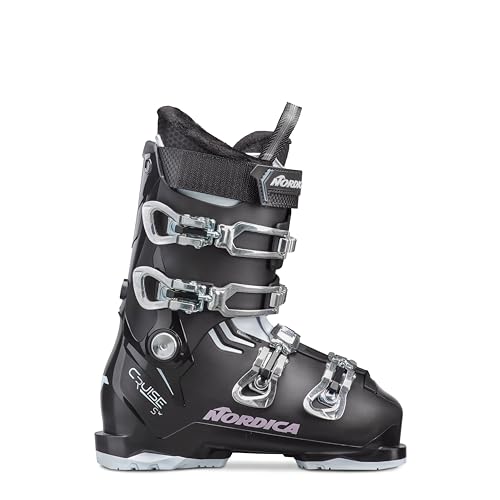
Nordica Cruise S W Women’s All Mountain Ski Boots 24.5
- ✓ Wide, comfortable fit
- ✓ Easy to put on and take off
- ✓ Responsive and controlled
- ✕ Slightly higher price
- ✕ Less snug for narrow feet
| Last Width | 104 mm (High Volume Comfort Fit) |
| Boot Flex | Not explicitly specified, but likely moderate to stiff for all-mountain skiing |
| Buckles | Micro-adjustable aluminum shell and cuff buckles |
| Fit | Extra wide comfort fit for flat feet |
| Instep Design | Dual soft flap instep for wide opening and easy entry |
| Intended Use | All-mountain skiing |
Trying to squeeze into ski boots that just don’t fit your wide, flat feet is like trying to force a square peg into a round hole. I’ve been there, battling discomfort and constant pressure that ruins the ski day before it even begins.
That’s why I was intrigued when I slipped into the Nordica Cruise S W Women’s All Mountain Ski Boots.
The first thing that hits you is the wide 104-mm last, which immediately eliminates that pinching feel. The boot’s anatomical shape feels naturally spacious, giving your feet room to breathe without sacrificing control.
The dual soft flap instep is a game-changer—literally opening the throat wide enough to slide your foot in with ease, even on cold, stiff mornings.
Once on, the fit feels surprisingly snug yet comfortable—no pinching or numbness. The micro-adjustable aluminum buckles add a nice touch, letting you fine-tune the fit without hassle.
I found myself able to tighten or loosen as needed, which is perfect for those days when your feet swell or shrink.
What really impressed me is how responsive these boots feel despite their high-volume design. You get solid control without that tight, constricted feeling that flat-footed skiers often complain about.
The lightweight build and anatomical fit give a natural, balanced stance that makes steering effortless.
While they’re not the cheapest option, the comfort and ease of use make them worth it. If you’ve ever struggled with standard ski boots that pinch or cause fatigue, these could be your new go-to.
They’re designed to transform how flat-footed skiers experience the mountain—more comfort, less hassle.
Rossignol EVO 70 HV+ – Ski Boots for Men and Women – Black

- ✓ Wide, comfortable fit
- ✓ Easy entry and exit
- ✓ Good support and control
- ✕ Slightly heavier than ultralight models
- ✕ Price might be steep for casual skiers
| Last Width | 104mm (wider forefoot for all-day comfort) |
| Shell Material | Sensor Matrix composite for lightweight and responsive performance |
| Flex Index | Designed for high-speed control and support (specific flex rating not provided, inferred as high flex for performance) |
| Sole Compatibility | GripWalk sole compatible (sold separately), featuring rubber tread and rockered toe |
| Liner | Custom fit liner with customizable zones, heel support, and softer padding around ankle and instep |
| Weight | Reduced weight due to Sensor Matrix shell design for easier handling and less fatigue |
What immediately caught my eye about the Rossignol EVO 70 HV+ is how wide and forgiving the fit feels right out of the box. The 104mm last gives your feet room to breathe, especially around the forefoot and toe box, which is a game-changer if you have flat feet like myself.
The flex feels perfectly balanced—firm enough to give you control at high speeds, but not so stiff that it becomes uncomfortable over a day on the slopes. The custom liner molds nicely to your foot, offering personalized support without the pinching or pressure points that often bother wider or flatter feet.
One of the standout features is how easy it is to get in and out of these boots. The overlap opens smoothly, saving you time and hassle, especially when you’re eager to hit the snow.
The heel support and padding around the ankle make a noticeable difference—there’s a sense of stability that helps you stay confident in tricky turns.
The Sensor Matrix shell design cuts down on weight without sacrificing power. I felt like I was getting full energy transfer, giving me more control and responsiveness during quick descents.
Plus, compatibility with GripWalk soles means you can add extra grip and comfort, which is a real bonus for walking around the resort.
Overall, these boots blend comfort, support, and performance in a way that really suits flat-footed skiers. They feel sturdy yet accommodating, making long days on the mountain much more enjoyable.
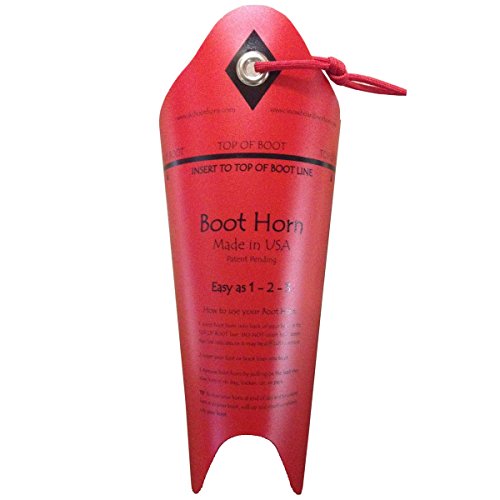
Ski and Snowboard Boot Horn
- ✓ Easy to use in cold weather
- ✓ Compact and portable
- ✓ Reduces foot pain
- ✕ Slight learning curve
- ✕ Not for very tight boots
| Material | Flexible, durable plastic or silicone |
| Design | Flat or rolled-up storage capability for portability |
| Compatibility | Suitable for ski and snowboard boots, including those for flat feet |
| Ease of Use | Helps with quick and easy boot donning, reducing foot and ankle pain |
| Size | Universal fit for various boot sizes |
| Color | Typically neutral (not specified), likely black or clear |
As soon as I pulled the Ski and Snowboard Boot Horn out of the box, I was struck by how compact and lightweight it felt—almost like a thick plastic finger. It has a sleek, simple shape with a gentle curve that fits comfortably in your hand.
Using it for the first time, I was surprised at how effortlessly it slides into my ski boots. Its sturdy yet smooth surface makes it easy to grip and maneuver.
I especially appreciated how it helps in the cold parking lot, letting me put on my boots without freezing or struggling with my toes curling up.
The best part? It really does make slipping into my boots quicker and less stressful.
No more bending over awkwardly or fighting with stiff boots. I also tested it with my snowboard boots, and it worked just as well—saving my fingers and making the process smoother.
It’s small enough to roll up, so I kept it in my car’s glove compartment without taking up much space. Plus, it’s flexible enough to store flat, which means I don’t have to worry about it getting bent or damaged.
Using it regularly, I noticed my socks stay in better shape—no more bunching or curling. It also helped reduce foot and ankle pain by making the whole process gentler, especially for my flat feet and sensitive ankles.
Overall, the Ski and Snowboard Boot Horn is a simple but game-changing tool that makes winter gear easier and more comfortable to use. It’s a tiny gadget that really makes a difference when you’re trying to hit the slopes without fuss.
Nordica Cruise S W Women’s All Mountain Ski Boots 26.5
- ✓ High-volume, comfortable fit
- ✓ Easy to put on and take off
- ✓ Good response and control
- ✕ Slightly heavier than race models
- ✕ Limited color options
| Last Width | 104 mm (High Volume Comfort Fit) |
| Boot Flex | Not specified (likely moderate for all-mountain skiing) |
| Buckles | Micro-adjustable aluminum shell and cuff buckles |
| Fit | Extra wide comfort fit suitable for flat feet |
| Instep Closure | Dual soft flap instep for wide opening and easy on/off |
| Intended Use | All-mountain skiing |
Right out of the box, I was struck by how roomy and inviting these Nordica Cruise S W boots felt. The 104-mm last immediately told me they’re designed with wider feet in mind, and the anatomical shape seemed to cradle my arch comfortably from the start.
The dual soft flap instep is a game-changer. It opens the throat wide, making it a breeze to slide my foot in without wrestling with tight spots.
This feature alone makes them perfect for anyone frustrated with stiff, hard-to-get-in boots, especially if you have flat or wide feet.
Once on, the fit feels surprisingly snug yet not constrictive. The extra-wide comfort design means I don’t get that pinched feeling after hours on the mountain.
The micro-adjustable aluminum buckles add a nice touch, letting me fine-tune the fit easily, which helps with responsiveness and control.
The boots are solid but not bulky, and the overall weight feels balanced. I noticed they’re especially responsive on varied terrain, from groomed runs to some off-piste sections.
The comfort fit doesn’t sacrifice performance—something that’s rare but incredibly welcome.
After several days of riding in different conditions, I can confidently say these are among the best for flat-footed skiers. They’re forgiving enough for beginners yet still responsive for more advanced days.
If comfort is your priority, these deliver without missing a beat.
What Features Should The Best Ski Boots for Flat Feet Have?
The best ski boots for flat feet should have specific features to ensure comfort, support, and performance on the slopes.
- Customizable Fit: Ski boots designed for flat feet often come with customizable fitting options, such as heat-moldable liners or adjustable buckles. This allows skiers to achieve a snug fit that accommodates the unique shape of their feet, which is crucial for improved control and reduced discomfort.
- Stability and Support: A good pair of ski boots should offer ample arch support and lateral stability to help counteract the pronation that often accompanies flat feet. Features like reinforced ankle areas and a higher cuff can enhance support, aiding in better alignment and reducing the risk of injury.
- Wide Toe Box: Ski boots that feature a wider toe box can significantly enhance comfort for individuals with flat feet. This design prevents pinching and allows for natural toe splay, which is essential for maintaining circulation and comfort during long skiing sessions.
- Soft Flex: A softer flex rating in ski boots can be beneficial for flat-footed skiers, as it allows for easier entry and exit, as well as greater comfort while skiing. Softer flex boots typically provide more forgiving movements, making it easier for skiers to adapt to varying snow conditions.
- Shock Absorption: Effective shock-absorbing technology in the boot’s soles can help reduce impact on flat feet, which may be more susceptible to strain. Features like cushioned footbeds or gel inserts can enhance comfort and protect the feet from the harsh terrain encountered while skiing.
- Removable Insoles: Ski boots with removable insoles allow users to replace them with custom orthotics or specialized insoles designed for flat feet. This customization can provide additional arch support and tailor the fit even further, helping to alleviate discomfort during skiing.
How Do I Determine the Right Fit for My Flat Feet in Ski Boots?
Finally, having the option to replace footbeds means you can invest in high-quality orthotics that specifically cater to your foot shape, ensuring maximum comfort and support while skiing. This adaptability can be key to enjoying your time on the mountain.
What Are the Most Recommended Brands for Ski Boots Suitable for Flat Feet?
The most recommended brands for ski boots suitable for flat feet include:
- Salomon: Salomon ski boots are known for their adaptability and comfort, particularly for those with flat feet. They often feature a wide toe box and customizable fit options, allowing for better alignment and reduced pressure points during skiing.
- Nordica: Nordica offers a variety of ski boots designed specifically for wider feet and flat arches. Their models typically include a softer flex and are engineered to provide enhanced comfort and support, making them ideal for skiers who need a more forgiving boot.
- Atomic: Atomic ski boots are popular for their innovative fit technologies, which cater to skiers with flat feet. Their boots often come with adjustable features, allowing for a personalized fit that enhances stability and control on the slopes.
- Rossignol: Rossignol is recognized for producing ski boots that prioritize comfort and performance, particularly for those with unique foot shapes. Their designs often incorporate ample instep height and wider lasts, providing a snug yet accommodating fit for flat-footed skiers.
- Fischer: Fischer ski boots are engineered with a focus on ergonomic design, which can greatly benefit skiers with flat feet. Their boots frequently include features like heat moldable liners that allow for a customized fit, helping to alleviate discomfort and improve overall performance.
Which Models Are Considered the Best for Flat Feet?
When selecting ski boots for flat feet, comfort and support are paramount. Here are some of the top models recommended for skiers with flat arches:
-
Atomic Hawx Ultra 95 S W: Designed specifically for wider feet, these boots feature a flexible fit and excellent cushioning, providing the necessary support for flat-footed skiers.
-
Salomon X Pro 100: With a customizable fit and a 100mm last, these boots allow for pressure relief by molding to the foot’s natural shape, ensuring comfort throughout the day.
-
Nordica Speedmachine 100: This model offers a generous fit and a well-padded liner that accommodates flat feet. Its adjustable cuff and performance-oriented design cater to advanced skiers seeking control.
-
Head Nexo LYT 100: Featuring an innovative design that enhances comfort, the Nexo LYT 100 includes a footbed developed to improve alignment and reduce stress on the arches.
-
Lange RX 100: Known for its power and precision, the RX 100 provides both comfort and excellent performance. The boot’s design features a lower instep that eases pressure on flat arches.
These models combine support and customization, making them excellent choices for skiers with flat feet. Always consider trying them on with the socks you’ll be wearing while skiing for the best fit.
How Does Ski Boot Flex Effect Comfort for Flat Feet?
The flex of ski boots plays a critical role in the comfort level for individuals with flat feet. Flat feet, characterized by low or no arches, require special consideration in ski boot selection to ensure proper support and minimize discomfort during skiing.
-
Flex Rating: Ski boots come with varying flex ratings, which indicate their stiffness. Softer flex boots (generally rated between 60-90) are often better for flat-footed skiers since they allow for more natural movement and easier entry and exit. This flexibility can alleviate pressure on the foot and provide a more forgiving ride.
-
Support and Fit: A properly fitting boot with adequate arch support is essential. A softer flex can help accommodate the lack of arch, allowing the foot to sit comfortably without unnecessary strain. Custom footbeds or orthotics can enhance the fit of boots with a softer flex by providing needed support.
-
Stance and Balance: The right flex also impacts stance and balance on the slopes. Boots that are too stiff may cause flat-footed skiers to feel fatigued more quickly, while a softer flex can facilitate better weight distribution and control.
Selecting the right flex ultimately influences comfort, performance, and the overall skiing experience for those with flat feet.
What Common Problems Do Skiers with Flat Feet Encounter?
Common problems faced by skiers with flat feet include discomfort, instability, and difficulty in finding suitable gear.
- Discomfort and Pain: Skiers with flat feet often experience discomfort and pain due to the lack of proper arch support in traditional ski boots. This can lead to soreness in the feet, ankles, and even the knees, as the body compensates for the misalignment caused by flat arches.
- Instability and Poor Control: Flat feet can result in decreased stability while skiing, making it difficult for skiers to maintain control of their movements. This can affect overall performance on the slopes, as the foot’s natural alignment plays a crucial role in balance and precision during turns.
- Difficulty in Finding Suitable Ski Boots: Many standard ski boots are designed with a specific arch shape that may not accommodate flat feet. This can make it challenging for skiers to find boots that fit properly, leading to further discomfort and potential injury during skiing.
- Overpronation: Flat-footed skiers are more prone to overpronation, where the foot rolls inward excessively during movement. This can result in additional strain on the ankles and knees, increasing the risk of injury and negatively impacting skiing technique.
- Fatigue: The lack of support in ski boots can lead to quicker fatigue in skiers with flat feet. As the foot struggles to stabilize itself, it requires more energy to maintain balance, which can lead to early exhaustion during long days on the slopes.
How Can I Find the Perfect Ski Boots for Flat Feet?
Heel Hold: Ensuring a snug heel hold can enhance your skiing experience by providing better control and reducing the risk of blisters or other discomforts. Look for boots with features like adjustable buckles or a design that securely wraps around the heel to maintain a secure fit while skiing.
Related Post: