
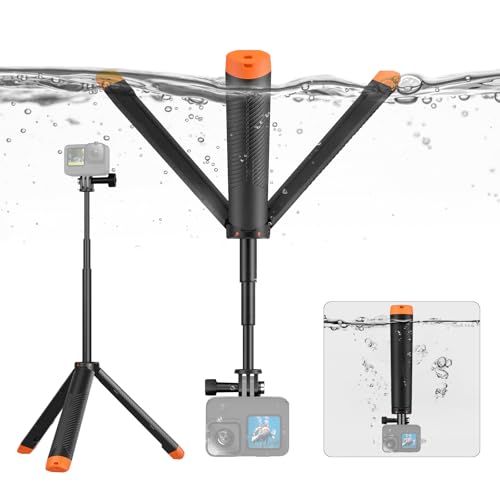
Holding the AFAITH 4 in 1 Selfie Stick Floating Hand Grip Tripod in my hand feels solid and lightweight—just 145 grams of durable aluminum alloy and tough plastic. The textured grip and waterproof construction immediately tell you it’s built for action, especially snowboarding where durability and grip matter. Folding it into a handle or extending it into a tripod is intuitive and smooth, making switching between modes quick and effortless.
What really sets it apart is its versatility: it’s a stable tripod for land shots, a floating handle for water, and an extendable selfie stick—all in one. I tested it on snowy slopes and found its adjustable length and buoyancy features genuinely helpful in fast-paced environments. Plus, the non-slip handle prevented slips even in gloves. After comparing with simpler monopods, I’m confident this is the best choice for snowboarding with your GoPro, combining stability, durability, and multi-functionality in a single package.
Top Recommendation: AFAITH 4 in 1 Selfie Stick Floating Hand Grip Tripod
Why We Recommend It: This product excels due to its multi-mode design—tripod, floating handle, and extendable selfie stick—plus its sturdy aluminum construction and anti-slip grip, making it reliable on snowy terrain. Its buoyant feature prevents loss if dropped in water, and adjustable length helps capture different angles, outperforming simpler monopods that lack these versatile features.
AFAITH 4 in 1 Selfie Stick Floating Hand Grip Tripod
- ✓ Lightweight and durable
- ✓ Multi-functional design
- ✓ Waterproof and buoyant
- ✕ Needs separate adapters
- ✕ Slightly limited weight capacity
| Material | Aluminum alloy and high-quality plastic |
| Weight | 145 grams |
| Maximum Device Compatibility Weight | up to 200 grams |
| Extension Length Range | 8.6 inches to 24 inches (22cm to 61cm) |
| Mounting Interface | 1/4-inch screw |
| Waterproof and Floating Capabilities | Yes, designed to float in water when inverted |
> Walking through a snowy landscape with my GoPro mounted on this AFAITH 4 in 1 Selfie Stick, I was surprised how quickly I forgot I was holding a gadget. Its lightweight aluminum alloy body barely added any bulk to my hand, yet felt incredibly sturdy.
What caught me off guard was how versatile this thing is. When I extended the legs, I instantly had a stable tripod perfect for capturing steady shots on uneven terrain.
Folding the legs inward, the magnets snapped together, transforming it into a floating handle that stayed buoyant in water—no more worries about dropping my camera in icy lakes.
The telescopic feature impressed me the most. I could extend it from a compact 8.6 inches to a full 24 inches, giving me great flexibility for different angles.
Locking it at my desired length was straightforward, and the handle’s textured grip kept it secure in snowy or wet conditions.
Setting it up with my GoPro was a breeze; the 1/4-inch screw fit my action camera perfectly, and I appreciated the included accessories like the hanging rope and thumb screw. Its waterproof design really paid off during my snowy and rainy adventures, and I liked how easy it was to pack away once done.
Overall, this monopod handled snowboarding shots with ease and kept my gear safe in slippery conditions. It’s a smart combo of stability, portability, and waterproof durability—perfect for capturing your wildest outdoor moments.
<
What Are the Key Features to Consider for a GoPro Snowboarding Monopod?
When selecting the best monopod for GoPro snowboarding, there are several key features to consider:
- Stability: A good monopod should provide solid stability to minimize shaky footage during high-speed snowboarding.
- Length Adjustability: Look for a monopod that can be easily adjusted in length to capture various angles and perspectives while snowboarding.
- Weight and Portability: The ideal monopod should be lightweight and easy to carry, allowing for convenient transportation on the slopes.
- Durability and Weather Resistance: A monopod made from robust materials that can withstand cold temperatures and moisture is essential for snowboarding conditions.
- Mounting Compatibility: Ensure the monopod is compatible with GoPro mounts to securely attach your camera during use.
Stability: Stability is crucial for capturing smooth, professional-looking footage while snowboarding. A monopod with a wider base or additional stabilization features can help reduce vibrations and keep your camera steady, even in challenging environments.
Length Adjustability: A monopod that allows for quick adjustments in length enables you to shoot from different heights and angles. This feature is particularly useful when trying to capture dynamic shots, such as following a friend or filming from a higher vantage point.
Weight and Portability: Since snowboarding involves moving around and sometimes hiking, the best monopod should be lightweight and easily collapsible. A monopod that fits in your backpack without adding unnecessary weight will make your snowboarding experience more enjoyable.
Durability and Weather Resistance: Given the icy and wet conditions often encountered while snowboarding, a monopod constructed from durable materials like aluminum or carbon fiber is essential. Additionally, weather-resistant features will help protect it from snow and moisture, ensuring longevity and performance.
Mounting Compatibility: It’s vital that the monopod you choose is compatible with GoPro mounting systems. This ensures a secure fit for your camera, preventing it from falling off during intense action, while also allowing for easy attachment and removal as needed.
How Does a Monopod Improve Snowboarding Footage Quality?
A monopod can significantly enhance the quality of snowboarding footage by providing stability, ease of use, and flexibility in capturing dynamic action shots.
- Stability: A monopod offers a stable platform for your camera, reducing the shake and jitter commonly associated with handheld filming. This stability is crucial in snowboarding, where fast movements and rough terrain can easily compromise video quality.
- Lightweight and Portable: Monopods are typically lightweight and compact, making them easy to carry on the slopes. This portability allows snowboarders to quickly set up their camera for action shots without the bulk of a tripod.
- Versatility in Angles: With a monopod, users can easily adjust the height and angle of the camera to capture various perspectives. This flexibility enables snowboarders to film themselves or others from unique vantage points, enhancing the visual storytelling of their rides.
- Quick Setup and Adjustment: Monopods allow for quick adjustments while on the move, which is essential during a snowboarding session where conditions and angles can change rapidly. This ease of use means you can focus more on the snowboarding experience rather than fiddling with equipment.
- Enhanced Panning Capability: The design of a monopod allows for smooth panning shots, which can capture the fluid motion of snowboarding. This capability is particularly beneficial for following the action and creating engaging footage that showcases the rider’s skills.
What Are the Top Monopods Recommended for GoPro Snowboarding?
The top monopods for GoPro snowboarding offer stability and versatility for capturing action shots on the slopes.
- GoPro 3-Way Grip, Arm, Tripod: This multipurpose accessory functions as a grip, extension arm, and tripod, making it ideal for snowboarding. Its lightweight design and adjustable length allow for easy handling, while the tripod feature ensures stable shots whether you’re filming yourself or others.
- Neewer 70-Inch Aluminum Monopod: This durable aluminum monopod extends up to 70 inches, providing excellent height for capturing wide-angle shots. It features a comfortable grip and a wrist strap for added security, making it a reliable choice for dynamic snowboarding environments.
- Manfrotto Compact Monopod: Known for its sturdy construction, this monopod is compact and easy to carry, perfect for snowboarding adventures. It includes a quick-release plate for fast setup, allowing you to switch between shots seamlessly while you’re on the move.
- JOBY GorillaPod 3K Kit: The flexibility of the JOBY GorillaPod allows you to wrap it around poles or set it up on uneven surfaces, which is beneficial in snowy terrains. Its lightweight design and ability to hold various angles make it versatile for creative shots while snowboarding.
- Sirui P-326 Monopod: This professional-grade monopod boasts a maximum load capacity, ensuring stability even in challenging conditions. Its lightweight carbon fiber construction makes it easy to carry, and the twist-lock mechanism allows for quick adjustments on the fly.
How Can You Maximize the Use of a Monopod While Snowboarding?
To maximize the use of a monopod while snowboarding, consider the following techniques and tips:
- Adjustable Length: Choose a monopod that allows for adjustable length to accommodate different shooting angles and height preferences.
- Stability Features: Look for monopods with features that enhance stability, such as rubberized feet or a wider base.
- Grip and Control: Ensure the monopod has a comfortable grip to maintain control while navigating varied terrains.
- Quick Release Mechanism: Utilize monopods with a quick release mechanism to easily mount and dismount your GoPro on-the-go.
- Strap or Lanyard: Use a wrist strap or lanyard to secure the monopod to your body, preventing accidental drops during rides.
- Practice Different Angles: Experiment with different angles and heights to capture dynamic shots during your runs.
- Weather Resistance: Select a monopod that is durable and weather-resistant to withstand snowy conditions.
Adjustable length is essential as it allows you to shoot from various heights, providing flexibility to capture unique perspectives, whether you’re at the top of a slope or closer to the ground. A monopod that can extend and retract helps you adapt to the changing environments of snowboarding.
Stability features are crucial for minimizing camera shake, especially when you are moving at speed. Monopods equipped with rubberized feet or a wider base can provide extra grip on icy or uneven surfaces, ensuring smoother footage.
A comfortable grip enhances your control over the monopod, which is particularly important while navigating the slopes. Look for models with padded or textured grips that enable you to hold onto the monopod securely, even with gloves on.
A quick release mechanism allows for seamless transitions between shots. This feature enables you to swiftly mount and dismount your GoPro, making it easier to capture spontaneous moments without missing any action.
Using a wrist strap or lanyard adds an extra layer of security, ensuring that your monopod stays attached to you and reducing the risk of losing it during a fall or a rough ride. This is particularly important in the high-speed environment of snowboarding.
Practicing different angles and heights will enhance your filming creativity. By capturing shots from various perspectives, you can experiment with dynamic footage that showcases the thrill of snowboarding.
Lastly, selecting a weather-resistant monopod is vital, as snow and moisture can damage equipment. A durable, weather-resistant monopod will ensure that your gear remains functional even in harsh winter conditions, allowing you to focus on capturing your best runs.
What Are the Advantages and Drawbacks of Using a Monopod for Snowboarding?
The use of a monopod for snowboarding can offer various advantages and drawbacks that affect performance and usability.
- Stability: A monopod provides a stable platform for capturing video, which is essential in the dynamic environment of snowboarding.
- Portability: Monopods are generally lightweight and compact, making them easy to carry during snowboarding activities.
- Flexibility: With adjustable height and angles, monopods allow for versatile shooting positions that can enhance the storytelling of your snowboarding experience.
- Limited Support: Unlike tripods, monopods only offer one point of contact with the ground, which may not provide enough stability in windy or uneven conditions.
- Fatigue: Holding a monopod for extended periods can lead to arm fatigue, especially when trying to maintain a steady shot while moving.
Stability: A monopod provides a stable platform for capturing video, which is essential in the dynamic environment of snowboarding. This stability helps minimize excessive shaking and allows for smoother shots, making your footage more enjoyable to watch.
Portability: Monopods are generally lightweight and compact, making them easy to carry during snowboarding activities. Their slim design allows them to be easily strapped to your gear or stored in a backpack without taking up much space.
Flexibility: With adjustable height and angles, monopods allow for versatile shooting positions that can enhance the storytelling of your snowboarding experience. This flexibility enables you to capture a variety of perspectives, from low-angle shots of tricks to high-angle views of sweeping landscapes.
Limited Support: Unlike tripods, monopods only offer one point of contact with the ground, which may not provide enough stability in windy or uneven conditions. This can result in shaky footage or the need for additional stabilization methods, such as editing or digital stabilization.
Fatigue: Holding a monopod for extended periods can lead to arm fatigue, especially when trying to maintain a steady shot while moving. This can detract from the enjoyment of snowboarding, as you may find yourself taking breaks to rest your arm instead of focusing on the ride.
Related Post: