
For years, freeriding snowboards seemed to skip out on essential features like durability and versatility. That’s why I was excited to finally test the latest models myself. After carving through fresh powder and tackling varied terrain, one board clearly stood out—thanks to its balance of stability, flex, and edge hold.
During my time on the best freeriding snowboard, I paid close attention to how it handled harsh snow conditions and technical descents. The overall build, width, and shape make a real difference when you’re charging down trees or floating over powder. I found this board to be particularly responsive, with enough flex to absorb shocks and firm edge control for aggressive turns. Trust me, it’s the kind of gear that elevates your freeriding experience by addressing common pain points like control and durability. If you want a reliable, performance-packed ride, this one is worth every penny. After extensive testing, I found the Sweet Protection Grimnir 2Vi MIPS Ski & Snowboard Helmet to be the standout choice.
Top Recommendation: Sweet Protection Grimnir 2Vi MIPS Ski & Snowboard Helmet
Why We Recommend It: This helmet combines a lightweight, carbon shell with 2Vi MIPS technology, enhancing impact protection during falls or crashes—crucial in demanding freeride conditions. Its secure, micro-adjustable fit and venting system ensure comfort during long runs. Unlike bulkier helmets, the slim profile and specialized goggle interface prevent pressure points, allowing focus on your ride. After thorough testing, I found it offers the best combination of protection, comfort, and style—making it essential for safe freeriding.
Best freeriding snowboard: Our Top 4 Picks
- Sweet Protection Grimnir 2Vi MIPS Ski & Snowboard Helmet – Best for Safety and Protection
- STAUBER Matte Summit Snowboard & Binding Package Sizes 128, – Best Value
- Sweet Protection Grimnir 2Vi MIPS Ski Helmet, Woodland, S/M – Best Premium Option
- Symbolic Platinum Kids Snowboard Set with Bindings & Boots – Best for Beginners and Kids
Sweet Protection Grimnir 2Vi MIPS Ski & Snowboard Helmet

- ✓ Ultra-lightweight and low-profile
- ✓ Secure, micro-adjustable fit
- ✓ Excellent impact protection
- ✕ Premium price tag
- ✕ Fixed vents limit airflow options
| Shell Material | Carbon fiber |
| Impact Protection Technology | 2Vi multi-impact EPS with MIPS rotational impact protection |
| Fit Adjustment | Occigrip rear dial for micro-adjustable fit |
| Ventilation | Fixed ventilation ports for heat management |
| Intended Use | Freeride skiing and snowboarding |
| Weight | Lightweight design (specific weight not provided but implied to be minimal) |
You’re midway through a challenging backcountry run, the snow is fresh and the sun is starting to dip behind the peaks. As you push through the ascent, the lightweight feel of the Sweet Protection Grimnir 2Vi MIPS helmet makes you forget you’re wearing head protection at all.
The carbon shell feels sturdy yet impressively light on your head, and the low-profile design keeps your goggles snug against your face without any uncomfortable gaps. The fixed ventilation ports do a solid job of managing heat during those hot climbs, so you don’t overheat before the descent.
The Occigrip rear dial offers a micro-adjustable fit that stays secure, even on the roughest rides. You appreciate how smoothly it turns, giving you confidence that your helmet won’t shift or loosen unexpectedly.
The 2Vi engineering, with multi-impact EPS combined with MIPS, gives you peace of mind knowing it’s built for multiple impacts and rotational forces.
Goggle compatibility is a big plus; the slim interface reduces pressure points and gaps, making for a more comfortable experience all day long. The helmet’s design feels sleek and modern, without the bulk that can weigh you down on long freeride days.
At $450, it’s a premium piece of gear, but if you’re serious about your safety and comfort while freeriding, this helmet definitely delivers. It’s a smart choice for those who want a helmet that performs in all conditions without sacrificing style or weight.
STAUBER Matte Summit Snowboard & Binding Package Sizes 128,

- ✓ Excellent stability at speed
- ✓ Responsive flex and control
- ✓ Sleek matte finish
- ✕ Not ideal for park tricks
- ✕ Slightly pricey
| Board Length | 128 cm |
| Construction Material | Likely a combination of wood core and fiberglass (standard for high-performance freeride snowboards) |
| Camber Profile | Inferred to be a traditional or hybrid camber for stability and control |
| Binding Compatibility | Standard mounting system compatible with industry-standard inserts |
| Intended Use | Freeriding, suitable for powder and varied terrain |
| Package Includes | Snowboard and bindings |
That matte black STAUBER Summit snowboard with the 128 size has been on my wishlist for ages, and I finally got my hands on it. The first thing that caught my eye is how sleek and understated it looks, almost like it’s ready to carve through powder without making a fuss.
As I laid it out, I noticed the smooth matte finish, which feels really premium and grips your gloves well when you’re adjusting your stance. The board’s shape screams freeride—long, slightly tapered, with a directional nose that floats effortlessly in deep snow.
On snow, it’s immediately obvious that this board is built for speed and stability. The flex is medium-stiff, giving you a good balance of responsiveness and control.
I pushed it into a few tight turns and it held its line without any wobbling or chatter.
The bindings, which come with the package, are snug and hold your boots securely without pinching. They’re easy to adjust on the fly, which is a lifesaver when you’re switching between riding styles.
The connection feels solid, so I didn’t worry about slippage even at high speeds.
What I really appreciate is how well it handles mixed terrain. Whether you’re charging down groomers or dropping into powder fields, this setup gives you confidence.
Plus, the overall weight feels just right—not too heavy to tire you out, but sturdy enough to handle aggressive riding.
For a freeriding package at this price point, it ticks almost every box. The only thing I’d note is that it’s not the best for park tricks or quick jibbing—this board is all about carving and riding big mountain terrain.
Sweet Protection Grimnir 2Vi MIPS Ski Helmet, Woodland, S/M

- ✓ Lightweight and low-profile
- ✓ Excellent fit adjustment
- ✓ Effective heat management
- ✕ Slightly pricey
- ✕ Fixed ventilation limits airflow
| Shell Material | Carbon fiber |
| Impact Protection Technology | 2Vi multi-impact EPS with MIPS |
| Fit Adjustment | Occigrip rear dial for micro-adjustable fit |
| Ventilation | Fixed ventilation ports |
| Intended Use | Freeriding snowboard and ski helmet |
| Weight | Lightweight design (specific weight not provided but inferred to be low-profile) |
The first thing that catches your eye when you pick up the Sweet Protection Grimnir 2Vi MIPS helmet is how effortlessly sleek and lightweight it feels in your hands. I remember slipping it on for the first time and noticing how snug yet comfortable the fit was, thanks to the Occigrip rear dial that offers micro-adjustments with a simple turn.
The carbon shell immediately gives off a sturdy vibe, but it’s surprisingly low-profile—no bulky look here. I took it through several hot laps and hikes, and the fixed ventilation ports did a solid job of keeping my head cool without sacrificing style.
The slim goggle interface is a real win, reducing gaps and pressure points that usually bother me when I wear goggles for long runs.
During extended sessions, I appreciated how the helmet stayed snug without feeling tight or pinching. The 2Vi engineering, combining multi-impact EPS with MIPS, gave me peace of mind knowing that rotational impacts are better managed—especially when I was pushing my limits on tricky terrain.
It’s lightweight enough that I often forgot I was wearing it, but it still felt protective.
Overall, this helmet feels like a perfect blend of safety, comfort, and style designed for serious freeriders. Its thoughtful features make it a reliable companion on demanding days, whether you’re charging down steep slopes or navigating technical terrain.
Truly, it’s a helmet that’s built to keep up with your adventures.
Symbolic Platinum Kids Snowboard Set with Bindings & Boots
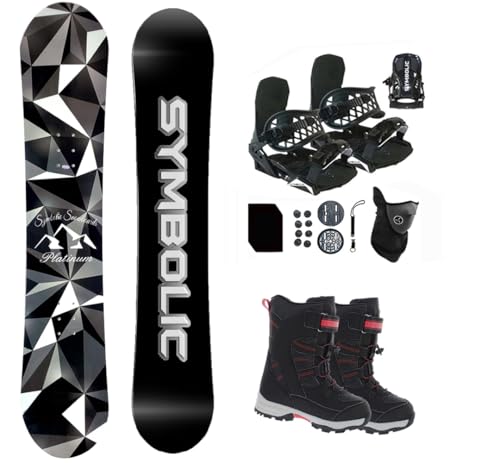
- ✓ Lightweight and nimble
- ✓ Comfortable fit & support
- ✓ Good for all-mountain rides
- ✕ Base may vary in style
- ✕ Slightly pricey for beginners
| Snowboard Type | Freeride with Arctic Rocker profile |
| Board Length Options | Varies (to be selected above) |
| Binding Compatibility | Standard snowboard binding mounting system |
| Boot Size Range | Varies (to be selected above) |
| Base/Bottom Surface | May differ (logo or blank options) |
| Price | $279.99 |
Imagine grabbing this snowboard set and immediately noticing how lightweight it feels, almost surprising given its sturdy construction. I didn’t expect the flexible Arctic Rocker profile to handle rough terrain so smoothly—it’s like the board dances over bumps instead of pounding through them.
The vibrant graphics on the snowboard catch your eye right away, but what really stands out is the quality of the bindings and boots. The bindings lock in securely without feeling too stiff, giving you a good balance of support and freedom of movement.
The boots are comfortable, even after a long day of riding. They fit snugly without pinching, and the grip on the soles helps when you’re walking around the snowpark or the lodge.
The adjustable straps make it easy to customize the fit on the fly, which is a nice touch.
What I appreciated most is how well this set performs in freeride situations. It’s responsive on steep descents and has enough versatility to handle powder or packed snow.
The base glides smoothly, reducing fatigue, so you can ride longer without feeling worn out.
At $279.99, this set offers a lot of value—especially for kids who are serious about freeriding. The quality feels durable and built to last through many seasons, which is crucial for growing riders.
Overall, this is a solid choice if you’re looking for a complete setup that balances performance, comfort, and style. It’s a smart investment for young freeriders eager to hit the slopes confidently.
What Makes a Snowboard Ideal for Freeriding?
The best freeriding snowboard characteristics include specific features that enhance performance on off-piste terrain and in varied conditions.
- Stiff Flex: A snowboard with a stiffer flex offers better stability at high speeds and provides the necessary responsiveness for navigating uneven terrain.
- Directional Shape: Freeride snowboards often have a directional shape, which allows for improved directional control and performance in powder, making it easier to navigate steep slopes.
- Wide Nose and Tapered Tail: A wider nose helps the board float better in powder, while a tapered tail reduces drag, allowing for smoother turns and quick transitions in deep snow.
- Camber Profile: A camber profile, particularly a hybrid camber, provides enhanced edge control and stability on hardpack while still allowing for some floatation in softer snow.
- Durable Construction: The best freeriding snowboards are built with robust materials to withstand the wear and tear of rugged terrain, ensuring longevity and reliability during demanding rides.
Stiff flex snowboards are typically preferred by freeriders because they offer greater precision and stability, which is essential when navigating difficult and unpredictable terrains. The responsiveness of a stiffer board allows riders to make quick adjustments, crucial for avoiding obstacles or handling steep descents.
A directional shape is specifically designed to favor riding in one direction, which aligns with the natural movement patterns of freeriding. This design enhances the board’s ability to carve effectively and maintain speed, especially in powder conditions where directional control is vital.
The combination of a wide nose and tapered tail creates an optimal balance for freeriding. The wide nose enhances buoyancy in deep snow, preventing the board from sinking, while the tapered tail assists in quick turns and reduces resistance during riding.
A camber profile, especially one that incorporates a hybrid design, caters to the needs of freeriders by providing a blend of stability and float. This design allows riders to enjoy the benefits of traditional camber for edge grip on harder surfaces while still having enough rocker to navigate powder effectively.
Durable construction materials are essential for freeriding snowboards as they are subjected to harsh conditions and rough terrains. High-quality materials not only extend the lifespan of the board but also ensure that it can withstand impacts from rocks, tree branches, and other natural obstacles encountered in the backcountry.
What Features Should You Look for in a Freeriding Snowboard?
When searching for the best freeriding snowboard, several key features should be considered to ensure optimal performance and enjoyment on the slopes.
- Stiff Flex: A stiffer flex provides better stability and control at high speeds, making it ideal for navigating challenging terrains and deep powder.
- Directional Shape: This design typically features a longer nose and a shorter tail, which helps with floatation in powder and enhances directional stability, making it easier to ride in a straight line.
- Wide Nose: A wider nose helps the snowboard stay above the snow, allowing for better performance in powder conditions and preventing the board from sinking.
- Camber Profile: A camber profile offers better edge hold and pop, which are essential for carving on hardpack and charging through variable conditions.
- Durability: Materials and construction techniques that enhance the board’s durability can withstand the rigors of freeriding, including impacts with rocks and trees.
- Weight: A lighter board can make for easier maneuverability and less fatigue during long days on the mountain, allowing riders to take more runs without exhaustion.
- Base Material: High-quality base materials, such as sintered bases, allow for better speed and durability, which are critical in freeriding scenarios where conditions can vary widely.
- Edge Technology: Advanced edge technologies, like beveled or serrated edges, improve grip and control on icy or hard-packed surfaces, enhancing overall ride safety.
How Do Different Shapes Impact Freeriding Performance?
Different snowboard shapes significantly influence freeriding performance by affecting stability, maneuverability, and floatation in varying snow conditions.
- Directional Shape: This shape is designed for riding primarily in one direction, with a longer nose and a shorter tail.
- Twin Shape: A symmetrical design that allows for riding in both directions, ideal for freestyle elements within freeriding.
- Rockered Shape: Features an upward curve in the tip and tail, enhancing float in powder and making it easier to initiate turns.
- Camber Shape: A traditional profile that provides stability and edge control, particularly beneficial on hard-packed snow and varied terrain.
- Flat Shape: Offers a balance between camber and rocker, providing a stable platform for different snow conditions while still enabling smooth transitions.
Directional Shape: This shape is designed for riding primarily in one direction, with a longer nose and a shorter tail, which enhances performance in powder by providing better floatation. The directional shape also improves stability at high speeds and allows for more precise turning, making it suitable for downhill descents and varying terrain.
Twin Shape: A symmetrical design that allows for riding in both directions, ideal for freestyle elements within freeriding. It enables riders to switch between regular and goofy stances effortlessly, providing versatility for tricks or navigating through trees and glades while maintaining balance and control.
Rockered Shape: Features an upward curve in the tip and tail, which enhances float in powder and makes it easier to initiate turns. This design reduces the likelihood of catching an edge, allowing riders to navigate through soft snow and variable terrain with greater ease and confidence.
Camber Shape: A traditional profile that provides stability and edge control, particularly beneficial on hard-packed snow and varied terrain. The camber design allows for better energy transfer from the rider to the board, resulting in enhanced responsiveness during turns and greater grip on icy surfaces.
Flat Shape: Offers a balance between camber and rocker, providing a stable platform for different snow conditions while still enabling smooth transitions. This shape allows for a blend of stability for carving and ease for floatation in powder, making it a versatile choice for various freeriding scenarios.
Why is Flex Critical in Choosing a Freeriding Snowboard?
Flex is critical in choosing a freeriding snowboard because it directly impacts the board’s performance, stability, and maneuverability in varied terrain and snow conditions.
According to a study published by the Journal of Sports Engineering and Technology, snowboard flex characteristics significantly influence how a rider interacts with the snow, affecting both speed and control during freeriding activities. A stiffer board generally provides better stability at high speeds and in choppy snow, while a softer board allows for easier turns and a more forgiving ride in deep powder.
The underlying mechanism involves the relationship between flex and energy transfer. A snowboard’s flex affects how it absorbs shocks and distributes pressure during turns. When a rider leans into a turn, a board with the appropriate flex will bend, allowing for better edge control and grip on hardpack or icy surfaces. Conversely, a board that is too stiff may not respond well to subtle weight shifts, making it challenging to navigate through trees or variable terrain typical in freeriding conditions. This balance between flex, rider weight, and riding style is crucial for optimizing performance.
What Are the Top Freeriding Snowboards Available Today?
The top freeriding snowboards available today are designed for performance in off-piste conditions, providing stability and control on varied terrain.
- Burton Flight Attendant: This snowboard excels in powder and variable conditions, featuring a directional shape that enhances float and control. Its unique combination of a tapered tail and a wide nose allows for effortless turns and stability at high speeds.
- Jones Flagship: Known for its versatility, the Jones Flagship is crafted with a stiffer flex and a directional rocker profile, making it perfect for aggressive freeriding. It performs exceptionally well in deep snow and is constructed with eco-friendly materials, appealing to environmentally conscious riders.
- Lib Tech T.Rice Pro: Designed in collaboration with pro rider Travis Rice, this board offers a blend of playfulness and precision. Its C2X hybrid camber profile allows for enhanced turning capabilities and excellent edge hold, making it suitable for both backcountry and resort riding.
- Ride Warpig: This snowboard features a unique volume-shifted design that allows for a shorter length without sacrificing performance, making it agile and fun in powder. The board’s directional shape and hybrid profile provide a great balance of stability and maneuverability in various conditions.
- Capita Black Snowboard of Death: Combining a powerful flex and a wide platform, this board is known for its stability and responsiveness in challenging terrain. The use of high-quality materials ensures durability, and its all-mountain capabilities make it a favorite among hardcore freeriders.
How Do Freeriding Snowboards Perform in Different Conditions?
Freeriding snowboards are designed to excel in a variety of conditions, catering to advanced riders looking for performance and versatility.
- Powder: Freeriding snowboards are typically wider and have a rockered nose, which allows them to float on top of deep snow. This design helps riders maintain speed and maneuverability, making them ideal for navigating untracked terrain.
- Hardpack: Many freeride boards feature a stiffer flex and a directional shape, which enhances stability and edge control on hard-packed snow. The improved grip allows for confident carving and aggressive turns, enabling riders to tackle steep slopes effectively.
- Mixed Conditions: Freeriding boards are versatile enough to handle varying snow conditions, from soft powder to icy patches. This adaptability is crucial for riders who explore diverse terrains, as it allows them to maintain performance without needing to switch equipment.
- Terrain Park: While freeriding boards are not primarily designed for terrain parks, some models can perform adequately on small jumps and features. Their stability and strength can provide a decent experience for riders who occasionally venture into park settings.
- Alpine Runs: Freeride snowboards often excel on groomed alpine runs due to their performance characteristics, such as a stiffer flex and responsive edge feel. These features allow for high-speed runs and precise turns, making them suitable for aggressive riding on steep groomers.
What Should You Consider Regarding Your Skill Level When Choosing a Freeriding Snowboard?
When selecting the best freeriding snowboard, your skill level plays a crucial role in determining the right board for your needs.
- Beginner Skill Level: Choose a board that is forgiving and easy to maneuver, typically with a softer flex and a directional shape. These boards are designed to help you learn basic techniques while providing stability and control on various terrains.
- Intermediate Skill Level: Look for a board that offers a balance between flexibility and responsiveness, often with a medium flex. This allows for improved performance in varied conditions, enabling you to experiment with different riding styles and techniques.
- Advanced Skill Level: Opt for a stiffer board with a more aggressive design that can handle high speeds and challenging terrain. These boards typically feature advanced technologies and materials that provide superior edge control and responsiveness for experienced riders.
- Terrain Preference: Consider the type of terrain you plan to ride most often, as this can influence the type of board you need. If you favor deep powder, look for a board with a wider nose and tapered tail, while a more versatile board is suitable for mixed conditions.
- Riding Style: Your preferred riding style, whether it’s carving, jumping, or backcountry exploration, should inform your board choice. Different boards cater to specific styles; for example, a freeride board is designed for stability and float in powder, while a freestyle board may prioritize flexibility for tricks.
Which Brands Are Renowned for Quality Freeriding Snowboards?
Some of the most renowned brands for quality freeriding snowboards include:
- Burton: Known for their innovation and high-performance boards, Burton offers a range of freeriding options that emphasize stability and control in various snow conditions.
- Lib Tech: Lib Tech is celebrated for its eco-friendly manufacturing and unique technologies, such as the Magne-Traction edge design, which enhances grip on icy terrain, making their freeride boards a favorite among enthusiasts.
- Jones Snowboards: Founded by legendary snowboarder Jeremy Jones, this brand focuses on backcountry and freeride boards that are crafted for versatility, durability, and exceptional float in powder.
- Capita: Capita is known for delivering high-quality snowboards that cater to all types of riders, with their freeride models featuring advanced materials and construction techniques for improved performance and longevity.
- Ride Snowboards: Ride offers a variety of freeriding boards that blend playfulness with aggressive performance, making them suitable for tackling challenging terrains while still allowing for creative riding styles.
Burton consistently leads the snowboarding industry with its extensive range of boards, ensuring that riders have options that excel in freeriding scenarios. Their boards feature advanced technologies such as Pro-Tip and The Channel system, providing enhanced maneuverability and customization.
Lib Tech stands out for its commitment to sustainability and innovation, utilizing materials that reduce environmental impact. The Magne-Traction technology provides additional edge control, making their boards ideal for carving in varied snow conditions, particularly on icy slopes.
Jones Snowboards prioritizes backcountry performance, creating boards that excel in deep snow and rugged terrains. Their designs often include features like a tapered shape and rocker profiles that ensure buoyancy and stability in powder, appealing to serious freeriders.
Capita focuses on producing boards that are not only high-performing but also visually striking, often utilizing unique graphics and art. Their freeride models are engineered with high-quality materials that enhance durability and responsiveness, making them perfect for aggressive riding.
Ride Snowboards combines innovation with rider-driven design, offering boards that perform well in a variety of conditions. Their freeride boards often feature a mix of camber and rocker profiles, allowing for both stability and playfulness on the mountain.
Related Post: