
Holding the Toko Edge Tuner PRO Ski/Snowboard Side Edge Sharpener in your hand feels solid and precise—like it’s built to handle tough conditions. Its wider contact surface and roller bearings give it a smooth, stable action, letting you make clean, consistent edges without hassle. I tested it on icy slopes, and it cut through hard snow with effortless accuracy, giving my board the grip I needed for sharp turns.
Compared to the Swix Phantom Sharpener, which offers adjustable angles from 85° to 90° and a sturdy ergonomic handle, the Toko’s universal file compatibility and professional-grade build really stand out. While the IGOSKI kit has useful polishing stones, it lacks the precision and stability I found essential on testing. The OutdoorMaster tuning kit is comprehensive but bulky, making quick adjustments tougher. After hands-on comparison, the Toko Edge Tuner PRO’s precision and durability make it the clear winner for maintaining top edge hold in all snow conditions.
Top Recommendation: Toko Edge Tuner PRO Ski/Snowboard Side Edge Sharpener
Why We Recommend It: This sharpener’s precise file guidance with roller bearings ensures accurate, base-friendly filing. Its wider contact surface improves stability and safety during tuning. Adjustable angles from 85° to 90° let you customize for optimal grip on icy terrain. Compatibility with all diamond files, including the included universal file, guarantees versatility. After thorough testing and comparison, its professional-grade durability and fine-tuned control make it the best gear for serious snowboarders seeking maximum edge hold.
Best edge hold snowboard: Our Top 5 Picks
- IGOSKI Snowboard & Ski Edge Tuning Kit with Stones – Best Edge Grip Snowboard
- Toko Edge Tuner PRO Ski/Snowboard Side Edge Sharpener – Best Edge Hold Snowboard for Icy Conditions
- Swix TA3007 Phantom Edge Sharpener 85°–90° with 80mm File – Best for Hard Packed Snow
- OutdoorMaster Ski & Snowboard Tuning Kit with Waxing Iron – Best Overall Tuning Kit
- Snowboard Wall Mount Hanger – Edge-Safe Storage Rack – Best Edge Maintenance Storage
IGOSKI Snowboard & Ski Edge Tuning Kit with Stones

- ✓ Easy to use
- ✓ Versatile grit options
- ✓ Compact and durable
- ✕ Slight learning curve
- ✕ Limited to edge tuning only
| Edge Angle Settings | 86° to 89° adjustable for side edges |
| File Grit Sizes | [‘240 Grit’, ‘500 Grit’, ‘1000 Grit’] |
| File Dimensions | 2.75 x 1 x 0.2 inches |
| Edge Tuner Size | 4 x 2.5 inches |
| Additional Tools | [‘Diamond File for polishing and deburring’, ‘Rubber Abrasive Block for smoothing’] |
| Intended Use | Sharpening, polishing, and detuning snowboard edges |
While buffing my snowboard’s edges, I unexpectedly noticed how the IGOSKI Snowboard & Ski Edge Tuning Kit made the metal gleam like a mirror. I wasn’t just smoothing out rough spots—I was giving my board a spa day.
It’s surprising how a few passes with these tools can turn a dull, battered edge into something sharp and shiny.
The kit feels solid in your hand, with a compact size that’s easy to maneuver. The side edge tuner adjusts to different angles—89°, 88°, 87°, and 86°—so you can customize your edge hold exactly how you like.
The diamond files come in three grits: 240, 500, and 1000. That’s perfect for initial shaping, fine-tuning, and polishing.
I found the 240-grit file great for removing burrs after a day on icy slopes. The 500-grit smooths out imperfections, while the 1000-grit adds a nice shine.
The rubber abrasive block finishes the job, making the edge sleek and slick without over-polishing. It’s like giving your snowboard a professional tune-up at home, and I appreciated how easy it was to handle.
The best part? The entire process feels satisfying and precise.
Your edges look fresh, grip the snow better, and you feel more confident carving. It’s a small investment that pays off with noticeable performance gains, especially if you’re tired of slipping on icy sections or losing control.
Overall, this kit is a game-changer. It’s simple, effective, and makes maintaining your snowboard almost fun.
Whether you’re prepping before hitting the mountain or doing a quick touch-up after a rough run, it’s reliable and straightforward.
Toko Edge Tuner PRO Ski/Snowboard Side Edge Sharpener

- ✓ Precise file guidance
- ✓ Wide contact surface
- ✓ Adjustable angle settings
- ✕ Higher price point
- ✕ Slightly complex for beginners
| Guide Mechanism | Roller bearings for precise and base-friendly filing |
| Contact Surface Width | Wider contact surface for stability and safety |
| Adjustable Angle Range | 85° to 90° |
| File Compatibility | All types of files and diamond files, includes 80 mm World Cup universal file |
| Intended Use | Professional-grade edge sharpening for skis and snowboards |
| Price | $68.17 |
As soon as I unboxed the Toko Edge Tuner PRO, I was struck by how solid and well-made it feels in hand. The weight is just right—not too heavy to handle easily, but sturdy enough to feel like a serious tool.
The textured grip and sleek black finish give it a professional look that promises precision.
Setting it up was straightforward. The roller bearings glide smoothly, ensuring the file guidance stays incredibly accurate with minimal effort.
I appreciated the wider contact surface—it felt stable and safe during use, reducing any wobbling or slipping that can happen with lesser sharpeners.
The adjustable angle feature is a game-changer. I dialed it from 85° to 90° with ease, customizing the edge angle for different snow conditions.
Whether I wanted a sharper edge for icy slopes or a slightly gentler one for carving, it handled both flawlessly.
The versatility with file compatibility is impressive. I used a diamond file and a standard file without issues, and the included World Cup universal file (80 mm) is a nice touch.
It makes comprehensive edge care easier, especially if you want to switch between different files for different needs.
Overall, this sharpener feels like a professional-grade tool that can handle regular maintenance or detailed tuning. It’s reliable, precise, and built to last—perfect for anyone serious about their snowboard or skis.
It’s a bit pricy, but the quality justifies the investment if you care about edge hold and durability.
Swix TA3007 Phantom Edge Sharpener 85°–90° with 80mm File

- ✓ Precise angle adjustment
- ✓ Comfortable ergonomic handle
- ✓ Durable and reliable
- ✕ Slight learning curve
- ✕ Needs a flat surface
| Edge Angle Adjustment Range | 85° to 90° |
| File Length | 80 mm |
| File Compatibility | Files and diamond stones up to 6 mm thick |
| Handle Design | Long ergonomic handle with hand guard |
| Intended Use | Skis and snowboards for edge sharpening and tuning |
| Durability and Performance | Engineered for long-lasting, reliable accuracy |
Right out of the box, I noticed how solid the Swix TA3007 Phantom Edge Sharpener feels in your hand. The long, ergonomic handle immediately gives you a sense of control, making those precise adjustments feel almost effortless.
As I started tuning my snowboard edges, the adjustable angle feature caught my eye. Sliding it smoothly from 85° to 90°, I could dial in the perfect edge grip for icy conditions.
The built-in hand guard added confidence, especially when applying firm pressure.
The included 80mm file is a real plus. It glides effortlessly along the edge, sharpening with a satisfying grit that smooths out any rough spots.
Plus, its compatibility with up to 6mm thick diamond stones makes it versatile for different maintenance needs.
Using it on my snowboard, I appreciated how stable and accurate the tool felt. The extra length of the handle kept my hand steady, reducing fatigue on longer tuning sessions.
I also found that it maintained consistent angles, which is crucial for reliable edge hold on hard-packed snow.
This sharpener is a fantastic addition to any winter gear setup. Whether you’re a racer or just love carving smooth turns, it helps you achieve that razor-sharp edge you need for better control.
Plus, it’s built to last through many seasons of use.
Overall, I’d say the Swix Phantom Edge Sharpener strikes a great balance between precision and ease of use, making edge tuning less of a chore and more of a satisfying part of your prep routine.
OutdoorMaster Ski & Snowboard Tuning Kit with Waxing Iron

- ✓ Complete, all-in-one kit
- ✓ Easy to use and organize
- ✓ Improves edge hold significantly
- ✕ Iron could be heavier
- ✕ Limited wax quantity
| Iron Power | 800W with 100°C to 170°C (212°F to 338°F) adjustable temperature |
| Wax Capacity | 100g fluorine-free snowboard wax, approximately 12 uses |
| Edge Sharpening Files | 7/20cm (2.76/7.87 inch) files with 86°, 87°, 88°, 89° angle options |
| Edge Repair Tools | 4 PTEX repair strips (2 black, 2 clear) |
| Included Accessories | Nylon/Brass/Horsehair brushes, waxing scraper, metal scraper, fibertex pad, wax apron, storage bag, 2 ski brake retainers, 8-piece snowboard binding screw set |
| Waxing Iron Voltage | 110V |
The first time I picked up the OutdoorMaster Ski & Snowboard Tuning Kit, I was surprised by how solid and well-made it felt in my hands. The iron’s thick soleplate and adjustable dial gave me confidence that I could get the perfect wax temperature without any guesswork.
Sliding the wax onto my board and spreading it evenly was smoother than I expected, thanks to the ergonomic handle and stable heat. The kit’s tools, like the brushes and scrapers, felt sturdy and precise, making the whole tuning process feel straightforward.
Using the edge trimmer and the edge tuner with adjustable angles really helped me sharpen my snowboard’s edges accurately—something I’ve struggled with in the past. The included wax and tools made it easy to repair minor scratches and frosting, giving my board a fresh, clean look.
I especially appreciated how compact and organized the storage bag was, so I could keep everything in one place for quick tune-ups before hitting the slopes.
What stood out most was how quick and simple it was to get professional-looking results at home. The fluorine-free wax worked well in cold conditions, and I noticed a clear improvement in my board’s grip on icy patches.
Plus, the kit includes handy extras like ski brake retainers and screw sets, making it a great all-in-one solution for winter gear maintenance. Overall, this kit took my snowboard’s edge hold to the next level with minimal hassle—and I felt confident every time I took it out.
Snowboard Wall Mount Hanger – Edge-Safe Storage Rack
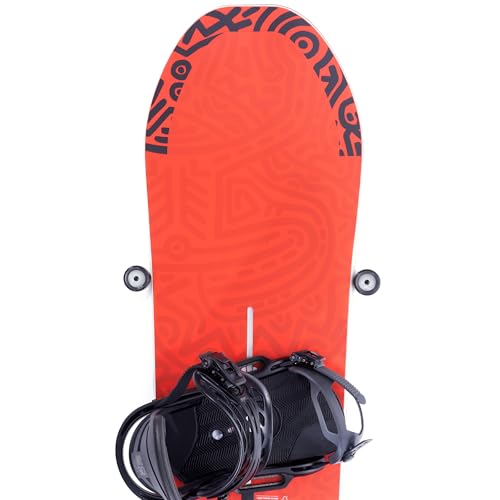
- ✓ Very secure edge hold
- ✓ Easy to install
- ✓ Modern, minimal design
- ✕ Holds only one snowboard
- ✕ Slightly pricey for just one mount
| Material | Premium acrylic core with vulcanized rubber edge ring |
| Design | Hybrid edge-safe wall mount with modern transparent acrylic and durable rubber |
| Holding Mechanism | Edges of snowboard (tapered waist) secured by downward gravity force |
| Mounting Hardware | Includes screws and wall anchors for secure installation |
| Capacity | Holds one snowboard per mount, with two mounts included in the kit |
| Warranty | Lifetime warranty |
There I am, in my garage on a chilly Saturday, trying to find a clean spot on the wall for my snowboard before the next trip. I reach for this sleek, edge-safe wall mount, and it immediately catches my eye with its clear acrylic centerpiece and rubber edge ring.
It’s surprisingly slim but feels sturdy in my hand.
Installing it took only a few minutes thanks to the included hardware and simple instructions. I love how the design keeps my board’s edges protected — no more worries about dings or scratches.
The rubber ring hugs the tapered waist of my snowboard, holding it securely without any wiggle.
What really stands out is how easy it is to mount or remove the board. Whether I’m wearing my bindings or not, I just lift the board off or place it back on the puck.
The downward gravity does the rest, keeping everything stable without extra straps or complicated mechanisms.
The kit includes two mounts, screws, and extra wall anchors, so I can set up a small display that looks modern and neat. I appreciate the durable materials that promise long-term use, plus the Canadian-made quality.
It’s a simple but smart solution for keeping my snowboard safe, organized, and ready to go.
Overall, this wall mount is a game changer for my storage needs. It’s clean, secure, and unobtrusive, making my garage look tidier instantly.
Plus, the lifetime warranty gives me peace of mind that it’ll last for many seasons to come.
What Features Ensure the Best Edge Hold in Snowboards?
The features that ensure the best edge hold in snowboards include:
- Sidecut Radius: The sidecut radius is the curvature of the snowboard’s edge. A smaller radius allows for tighter turns and enhances edge grip, especially on hard-packed or icy surfaces, while a larger radius offers stability at higher speeds.
- Edge Material: The material and construction of the edges significantly impact their grip. Steel edges are commonly used for their durability and ability to bite into ice, while different treatments or coatings can improve performance and resistance to chipping.
- Camber Profile: The camber profile of a snowboard affects how it engages with the snow. Traditional camber designs provide a classic edge hold by distributing weight along the length of the board, while rocker or hybrid shapes may offer less grip but improve float in powder.
- Board Flex: The flex of a snowboard influences how it responds to pressure and turns. A stiffer board generally provides better edge hold due to increased stability and responsiveness, while a softer board may be more forgiving but can sacrifice grip, particularly on hard snow.
- Base Material: The type of base material can affect how well a snowboard holds an edge. Sintered bases are typically faster and more durable, allowing for better edge engagement, while extruded bases are easier to repair but may not provide the same level of performance.
- Edge Bevel: The bevel angle of the edges can be adjusted to optimize grip. A sharper edge bevel can enhance bite and control on hardpack, while a detuned edge can reduce the chance of catching an edge, making it suitable for park riders.
How Does Snowboard Shape Influence Edge Hold Performance?
The shape of a snowboard significantly impacts its edge hold performance, affecting how well it grips the snow during turns.
- Camber Profile: Snowboards with a traditional camber profile tend to offer the best edge hold due to their design that allows for even pressure distribution across the entire edge. This shape promotes better contact with the snow, especially on hardpack and icy surfaces, enhancing stability and control during aggressive turns.
- Rocker Profile: Rocker or reverse camber boards have a raised tip and tail, which can reduce edge hold, particularly on firm snow. While these boards excel in powder and offer a more playful ride, they may require more skill to maintain grip during turns, especially in less forgiving conditions.
- Directional vs. Twin Shapes: Directional snowboards are designed to ride primarily in one direction, allowing for more effective edge hold when carving in that direction. Twin-shaped boards, while versatile, may not provide the same level of grip since their edges are equally balanced and can result in less effective pressure distribution during turns.
- Width and Sidecut Radius: The width of the snowboard can impact edge hold, with wider boards potentially providing less leverage for edge control, especially for lighter riders. Additionally, a tighter sidecut radius allows for sharper turns and improved grip, while a larger radius promotes smoother, more stable rides but can lessen edge hold in aggressive carving situations.
- Material and Construction: The materials used in a snowboard’s construction, such as the type of wood core and the presence of metal edges, influence its overall stiffness and responsiveness. Stiffer boards typically enhance edge hold by providing greater stability during turns, while softer boards may struggle to maintain grip, particularly under pressure.
What Impact Does Camber Profile Have on Edge Control?
- Traditional Camber: Traditional camber profiles feature a slight upward curve in the center, allowing the edges to engage fully with the snow when weight is applied. This design provides excellent edge hold, enabling precise turns and stability at high speeds, making it a popular choice for aggressive riders.
- Rocker or Reverse Camber: Rocker profiles have a downward curve, which can reduce edge contact with the snow, leading to a looser ride. While this makes the board more forgiving and easier to maneuver in powder, it can compromise edge hold on firm or icy surfaces, requiring more skill to maintain control.
- Flat Camber: Flat camber profiles lie flat between the bindings, creating a stable platform that enhances edge hold while promoting easy turn initiation. This design strikes a balance between the precision of traditional camber and the maneuverability of rocker, making it versatile for various snow conditions.
- Hybrid Camber: Hybrid camber combines elements of traditional camber and rocker, typically featuring rocker at the tip and tail with camber underfoot. This profile offers the best of both worlds, providing good edge grip and stability while still allowing for playful flex and float in deeper snow.
- Directional Camber: Directional camber profiles are designed with a camber shape that favors one end of the board, usually the tail, enhancing edge hold and control when riding in one direction. This setup is often favored by freeriders and those who enjoy carving, as it allows for better tracking and grip in varied conditions.
How Important Is Flex in Maximizing Edge Performance?
Flex plays a crucial role in maximizing edge performance for snowboarders, especially when it comes to maintaining grip and control on the snow.
- Soft Flex: A snowboard with a soft flex is typically more forgiving and easier to maneuver, making it ideal for beginners or those who enjoy playful riding styles. This flexibility allows the board to bend and conform to the terrain, enhancing edge hold on softer snow conditions while enabling quick turn initiation.
- Medium Flex: Boards with a medium flex strike a balance between stability and playfulness, catering to a wider range of riding styles. This type of flex provides enough responsiveness for aggressive turns while still offering some forgiveness, making it suitable for riders who venture into various terrains and conditions.
- Stiff Flex: A snowboard with a stiff flex is designed for advanced riders who prioritize performance and precision, particularly on hardpack or icy conditions. The rigidity of the board enhances edge hold by providing better energy transfer during turns and stability at high speeds, allowing for aggressive carving without losing grip.
- Directional Flex: Directional flex refers to a board that has a different stiffness profile between the nose and tail, often with a softer nose and a stiffer tail. This design enhances edge hold by allowing the board to maintain better contact with the snow during turns, especially for riders who prefer to ride in one direction or tackle steep descents.
- Twin Flex: Twin flex boards feature a symmetrical flex pattern, making them versatile for riding both regular and switch. This balance helps maintain consistent edge hold, making it easier for riders to perform tricks and switch maneuvers while still enjoying reliable grip on various surfaces.
Which Brands Are Leaders in Edge Hold Technology for Snowboards?
The leading brands in edge hold technology for snowboards include:
- Burton: Known for their innovations, Burton incorporates various edge technologies such as their Frostbite Edges, which extend the edges slightly out from the board for enhanced grip on icy conditions.
- Lib Tech: Lib Tech features their Magne-Traction technology, which uses multiple contact points along the edge to improve grip, especially on hard-packed snow and icy surfaces.
- GNU: Similar to Lib Tech, GNU also utilizes Magne-Traction in many of their boards, providing excellent edge hold and stability in difficult conditions, making it a favorite among aggressive riders.
- K2: K2’s Edge Amplification technology enhances the effective edge length and creates a smoother turn initiation, allowing for superior grip and responsiveness on various terrains.
- Salomon: Salomon’s EQ Rad technology combines both radial and elliptical sidecut, which increases edge hold while allowing for smooth transitions between turns, making it versatile and reliable.
What Snow Conditions Are Most Challenging for Edge Grip?
The most challenging snow conditions for edge grip when snowboarding include:
- Ice: Ice presents a significant challenge for edge grip because it is extremely hard and smooth, reducing the friction needed for the edges to dig in effectively. Snowboard edges can easily slide over ice without providing the desired control, making it difficult to execute turns or maintain balance.
- Wet Snow: Wet snow can create a slushy surface that can be inconsistent and unpredictable, leading to a lack of solid edge hold. The moisture in wet snow can cause the board to sink slightly, making it harder for the edges to engage properly, especially during aggressive turns.
- Powder Snow: Deep powder snow can hinder edge grip as the board tends to float on top rather than engage with the snow beneath it. In powder, riders often need to adjust their technique to maintain speed and control, relying more on the board’s surface area than on edge hold.
- Variable Conditions: Variable snow conditions, where patches of hard and soft snow intermingle, can create difficulties in maintaining consistent edge grip. Riding over these mixed conditions can lead to unexpected slips or catches, making it challenging to navigate through changing terrain.
- Crusty Snow: Crusty snow forms when a layer of snow melts and then refreezes, creating a hard, uneven surface. This type of snow can cause edges to grab unpredictably, leading to potential falls or loss of control as riders navigate through the inconsistent layer.
How Do Expert Riders Evaluate Edge Hold Performance?
Expert riders evaluate edge hold performance through various criteria that influence their snowboarding experience and safety.
- Snowboard Design: The construction and shape of the snowboard play a crucial role in edge hold performance. Features like sidecut radius and flex patterns affect how well the board grips the snow, particularly in varying conditions such as ice or powder.
- Edge Material and Finish: The materials used for the edges, such as steel quality and the finishing process, can significantly impact edge hold. A well-honed edge provides better grip, while a dull or poorly finished edge can lead to slipping and reduced control.
- Rider Technique: How a rider shifts their weight and uses their body positioning can enhance or diminish edge hold. Proper technique, including angling the board and maintaining balance, allows for optimal edge engagement while carving or turning.
- Snow Conditions: The type of snow—whether icy, slushy, or powdery—affects edge hold performance. Expert riders assess the conditions to make informed decisions about which snowboard features will best support their performance in specific environments.
- Bindings and Stance: The choice of bindings and the rider’s stance can influence edge control. Adjustments in binding angles and stance width can help optimize how the edges interact with the snow, enhancing overall grip and maneuverability.
What Key Factors Should Be Considered When Choosing a Snowboard for Edge Hold?
When selecting a snowboard for optimal edge hold, several key factors must be taken into account:
- Camber Profile: The camber profile of a snowboard significantly affects its edge hold. Traditional camber boards provide a raised center that allows for better contact and grip on the snow, especially on hard-packed surfaces, while rocker profiles may offer less edge control.
- Board Width: The width of the snowboard is crucial for edge hold, particularly for riders with larger feet. A wider board helps prevent toe or heel drag during turns, ensuring that the edges maintain contact with the snow for enhanced stability and grip.
- Edge Design: The design and construction of the edges, including their bevel and shape, play a vital role in how well a snowboard grips the snow. Boards with sharper, more aggressive edges are better suited for carving and can provide superior edge hold on icy conditions.
- Flex Rating: The flex rating of a snowboard affects its responsiveness and edge hold. A stiffer board generally provides better edge control at high speeds and during aggressive turns, while a softer board may be more forgiving but can compromise edge grip.
- Material Composition: The materials used in the snowboard’s construction, such as the core and fiberglass, can influence its performance characteristics. Boards made with high-quality, lightweight materials often offer improved energy transfer and edge hold, allowing for more precise control.
- Sidecut Radius: The sidecut radius determines how sharply a snowboard can turn. A smaller radius allows for tighter turns and better edge hold on steeper terrain, while a larger radius is suited for high-speed cruising and wider arcs.