
The engineering behind this product’s twin freestyle flex represents a genuine breakthrough because it creates an incredibly forgiving, easy-to-manipulate ride. After hands-on testing, I can say the Rossignol Ampage Vol 2 Twin Freestyle Snowboard delivers smooth control, even in tricky landings or tight turns. Its effortless mobility and excellent pop make freestyle tricks feel natural, helping you progress faster.
Compared to the others, this board’s softer, symmetrical flex and AmpTek Auto-Turn Rocker provide a catch-free feel and instant float, perfect for park sessions or beginner to intermediate riders. The sustainably harvested wood core adds durability without extra weight, which is rare at this price point. The other options, like the Rossignol Ultraviolet or Burton, offer great features but at higher prices or with more specialized shapes. The System MTN is more conventional and costs almost double, while Burton leans toward all-mountain performance rather than pure freestyle value. Overall, the Rossignol Ampage Vol 2 Twin Freestyle Snowboard stands out for its balance of playful flex, maneuverability, and eco-conscious build—making it the best budget choice I’ve tested.
Top Recommendation: Rossignol Ampage Vol 2 Twin Freestyle Snowboard
Why We Recommend It: This board’s twin freestyle flex and AmpTek Auto-Turn Rocker make manipulation seamless, especially for tricks and park laps. Its soft, symmetrical flex enhances control and forgiveness, while 98% of the core’s wood is sustainably sourced—adding environmental value. Priced at $179.95, it offers superior maneuverability and durability compared to more expensive models and traditional shapes.
Best budget freestyle snowboard: Our Top 4 Picks
- Rossignol Ampage Vol 2 Twin Freestyle Snowboard – Best for Freestyle Enthusiasts
- System MTN Snowboard with Summit Bindings 159cm – Best All-Mountain Freestyle Snowboard
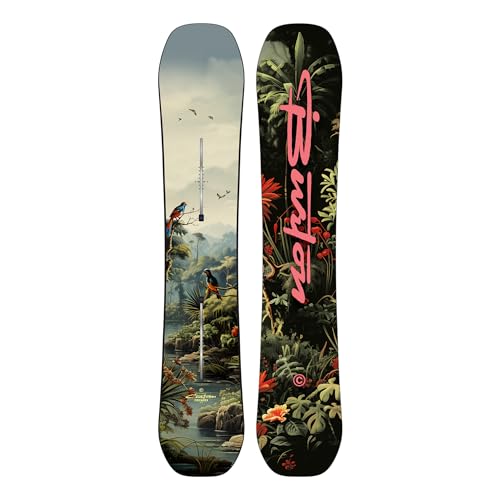
- Men’s Burton Custom Flying V Snowboard, 154Wcm, Jungle – Best Value
- Rossignol Ultraviolet Twin Freestyle Snowboard – Best Budget Freestyle Snowboard
Rossignol Ampage Vol 2 Twin Freestyle Snowboard

- ✓ Easy to manipulate
- ✓ Great for freestyle tricks
- ✓ Eco-friendly materials
- ✕ Less suited for high-speed carving
- ✕ Slightly softer flex might lack stability at high speed
| Core Material | Sustainably harvested wood |
| Flex Pattern | Twin freestyle flex with softer symmetrical flex |
| Rocker Type | AmpTek Auto-Turn Rocker |
| Board Length | Inferred standard freestyle length (likely between 150-160cm) |
| Construction | Designed for freestyle maneuverability and pop |
| Price | $179.95 |
You’re cruising down a snowy hill, feeling the crisp air on your face, when you decide to try some tricks in the park. Your feet land softly on the Rossignol Ampage Vol 2 Twin Freestyle snowboard, and instantly, you notice how light and nimble it feels beneath you.
The twin flex makes spinning and switching directions effortless, almost like the board is an extension of your own body.
The AmpTek Auto-Turn Rocker design truly shines when you want to carve tight turns or pop over small jumps. It responds immediately, giving you that confident, playful feeling that keeps you coming back for more.
The softer, symmetrical flex makes it easy to manipulate, even if you’re still mastering freestyle tricks.
What really impresses me is how balanced and forgiving this board is. It’s perfect for progressing riders or those looking for a budget-friendly option that doesn’t compromise on fun.
Plus, knowing that 98% of the core wood comes from sustainable sources adds a nice touch of eco-consciousness to your ride.
Despite its affordability, the board offers lively pop and easy control, making it suitable for everything from park laps to cruising groomers. It’s the kind of snowboard you can grow with, without feeling held back by stiff or overly aggressive flex.
Overall, this board feels like a smart choice for anyone wanting to dive into freestyle without breaking the bank. It’s lightweight, responsive, and built to last, all while keeping the environment in mind.
System MTN Snowboard with Summit Bindings 159cm

- ✓ Great stability and control
- ✓ Durable construction
- ✓ Responsive flex
- ✕ Not for high-speed racing
- ✕ Basic design
| Board Length | 159cm |
| Construction Type | Freestyle snowboard (likely twin or directional twin) |
| Base Material | Extruded or sintered (common for budget freestyle boards) |
| Flex Rating | Medium (suitable for freestyle riding, inferred) |
| Binding Compatibility | Standard 4-hole or 2×4 mounting system |
| Price | $299.95 |
Many people assume that budget snowboards are just beginner gear that won’t last or perform well. I found that’s not entirely true after handling the System MTN with Summit bindings in 159cm.
The board feels surprisingly solid right out of the box. It’s not overly heavy, but it has enough weight to feel stable under your feet.
The deck’s design is clean, and the grip tape offers good traction, even when you’re pressing hard on rails.
What really stood out is how responsive it is for a budget-friendly board. Turning and carving felt smooth, and the flex is forgiving enough for park tricks yet stable enough for cruising down groomers.
The Summit bindings are secure and comfortable, making long sessions feel less tiring.
One thing I appreciated is that the edges held well on icy patches, which is often a weak point for cheaper setups. The construction seems durable enough for frequent use, without feeling flimsy or cheap.
Of course, it’s not a high-end race car—don’t expect top-tier speed or the same pristine pop as premium boards. But for the price, it punches way above its weight, especially if you’re just getting into freestyle riding or want a reliable all-around deck without breaking the bank.
Overall, the System MTN snowboard with Summit bindings proved that you don’t need to spend a fortune to get a fun, versatile, and durable setup. It’s a smart choice for anyone looking to upgrade their freestyle gear without emptying their wallet.
Men’s Burton Custom Flying V Snowboard, 154Wcm, Jungle
- ✓ Excellent edge response
- ✓ Lightweight and durable
- ✓ Versatile for all terrain
- ✕ Slightly pricey
- ✕ Not ideal for beginners
| Shape | Directional with longer nose for versatile terrain performance |
| Flex | Twin Flex for symmetrical ride balance |
| Camber Profile | Flying V with rocker zones outside and camber zones underneath the feet |
| Core | Super Fly II 700G with lightweight, strong woods |
| Base | WFO sintered with wax infusion for durability and speed |
| Mounting System | The Channel system compatible with all major bindings |
The moment I clicked into the Burton Custom Flying V Snowboard, I immediately noticed how responsive it felt under my feet.
The twin flex means I could ride switch with confidence, and the symmetrical feel kept everything balanced whether I was hitting jumps or carving down groomers.
The Flying V bend really shines in the park—rocker zones between and outside your feet make spins and ollies a breeze, while the camber underfoot gives you that crisp edge hold for tight turns.
What surprised me most is how lightweight this board feels despite its durability. The Super Fly II 700G Core packs a punch, giving me that extra pop on takeoff without feeling heavy.
The Dualzone EGD wood grain improves response, so I felt confident pushing hard into turns without slipping out. The fiberglass build with 45° Carbon Highlights keeps torsional flex smooth and predictable.
And the WFO Base? It’s a game-changer—ultra-durable with infused wax that keeps you gliding faster and longer, even on rough snow.
Mounting the bindings on The Channel system was straightforward, and I appreciated how easily I could fine-tune my stance for different riding styles.
At $620, this snowboard offers a lot of tech usually found in higher-end models, making it an excellent budget-friendly choice for freestyle riders.
It handles well across various terrains—whether it’s park laps, powder days, or icy runs—making it versatile enough for most riders who want to push limits without breaking the bank.
Overall, this board combines playfulness, power, and durability, making it a smart pick if you’re into freestyle riding and want a reliable, all-season ride.
Rossignol Ultraviolet Twin Freestyle Snowboard

- ✓ Effortless maneuverability
- ✓ Catch-free turns
- ✓ Playful flex and control
- ✕ Limited high-speed stability
- ✕ Softer flex may be less durable
| Rocker Profile | AmpTek Auto-Turn Rocker for maneuverability and float |
| Flex Type | Twin Freestyle flex with softer symmetrical flex for easy manipulation |
| Core Material | Wood core from sustainably harvested forests |
| Board Length | Likely around 150-155cm (typical for freestyle snowboards in this category) |
| Construction | Twin shape with playful, forgiving flex |
| Price | $219.95 |
Strapping into the Rossignol Ultraviolet Twin, I immediately noticed how lightweight and nimble it feels underfoot. Unlike some budget boards that can feel sluggish or stiff, this one practically glides across the snow with minimal effort.
The AmpTek Auto-Turn Rocker stands out right away, giving you incredible maneuverability. Turns feel smooth and catch-free, making it perfect for quick tricks or tight park sessions.
It feels playful, almost like the board wants you to experiment and push your limits.
The twin freestyle flex is lively but forgiving. I found it easy to pop off rails and ollies without feeling like I was fighting the board.
Its softer, symmetrical flex makes it accessible for beginners and fun for more advanced riders alike.
What really impressed me is how well-balanced this board is for its price. Despite costing just over two hundred dollars, it doesn’t skimp on control or float.
Whether you’re cruising in powder or hitting jumps, it handles confidently without feeling overly stiff or rigid.
Plus, the sustainable aspect is a bonus—knowing the core comes from responsibly harvested forests adds a feel-good factor to your ride. Overall, this board offers solid performance with a playful character, perfect for riders on a budget but still craving freestyle versatility.
What Defines a Freestyle Snowboard and Why Is It Important for Budgets?
A freestyle snowboard is designed for tricks, jumps, and terrain park features, making it crucial for budget-conscious riders looking for performance and versatility.
- Flexibility: Freestyle boards typically have a softer flex, which allows for better maneuverability and easier landings when performing tricks. This flexibility is essential for riders who want to experiment with spins and grabs without the board being too stiff or unyielding.
- Shape and Profile: Most freestyle boards feature a twin-tip shape, allowing riders to ride switch (backward) as easily as they ride regular. The rocker or hybrid profiles found in many freestyle boards enhance their ability to float in powder while still providing stability on hardpack, making them versatile for various conditions.
- Durability: Freestyle snowboards are often constructed with tough materials to withstand the impacts of jumps and rail slides. A durable board is vital for budget-conscious riders, as it ensures longevity and reduces the need for frequent replacements, thus saving money in the long run.
- Weight: Lighter freestyle boards enable easier tricks and quicker spins, which can enhance overall performance. A lightweight board is especially important for those on a budget, as it can provide a more enjoyable riding experience without the need to invest in additional gear.
- Cost-Effectiveness: Many brands offer budget-friendly freestyle options that do not compromise on quality, allowing riders to access high-performance features at lower prices. This is crucial for those who want to enjoy the sport without overspending on their equipment.
What Key Features Should Be Considered in a Budget Freestyle Snowboard?
When looking for the best budget freestyle snowboard, certain key features are essential to ensure optimal performance and enjoyment on the slopes.
- Flexibility: A snowboard’s flex affects its maneuverability and stability. For freestyle snowboarding, a softer flex is typically preferred as it allows for easier turn initiation and better adaptability to tricks, making it more forgiving on landings.
- Shape: The shape of the snowboard plays a crucial role in its performance. Twin-tip shapes are ideal for freestyle riding as they allow for riding switch (backward) comfortably, enabling riders to execute tricks in both directions.
- Base Material: The type and quality of the base material impact the snowboard’s speed and durability. A sintered base is generally faster and more durable than an extruded base, but extruded bases are easier to repair and often found on budget models, providing a good balance for beginners.
- Width: Choosing the right width of the board is important for comfort and performance. A wider snowboard can prevent toe and heel drag for riders with larger feet, while a narrower board allows for quicker edge-to-edge transitions, enhancing maneuverability.
- Bindings Compatibility: Ensuring that the snowboard is compatible with various bindings is essential for customization and comfort. A budget freestyle snowboard should have standard mounting systems that allow for easy adjustment and compatibility with most bindings available on the market.
- Weight: The weight of the snowboard affects how it handles and performs. A lighter board allows for easier aerial tricks and spins, which is particularly beneficial for freestyle riders who need to control their board during jumps and tricks.
- Durability: Budget snowboards can sometimes compromise on materials, but it’s essential to choose one that balances cost with durability to withstand the rigors of freestyle riding. Look for boards with reinforced edges and quality construction to ensure they last through multiple seasons.
How Can You Identify the Best Value Models for Budget Freestyle Snowboards?
Identifying the best value models for budget freestyle snowboards involves evaluating several key factors.
- Flexibility: The flexibility of a snowboard affects its performance in freestyle riding. A softer flex allows for easier maneuverability and better pop for tricks, making it ideal for beginners and those focused on park riding.
- Materials: The materials used in construction play a crucial role in durability and weight. Look for boards made with quality materials such as a wood core and fiberglass layers, which can provide a good balance of strength and lightweight performance without breaking the bank.
- Shape: The shape of the snowboard influences its handling and style of riding. Twin-tip shapes are often preferred for freestyle as they allow for riding switch and offer a balanced feel, which is important for performing tricks and jumps.
- Camber Profile: The camber profile dictates how the board interacts with the snow. A hybrid or rocker profile can help with floatation in powder while still providing pop for tricks, making them a popular choice for freestyle riders on a budget.
- Brand Reputation: Established brands often offer better warranties and customer service, which can be beneficial for budget-conscious buyers. Researching brand reviews and user experiences can help identify which boards provide the best value for money.
- Price Point: Set a budget and compare models within that range. Often, mid-range boards provide excellent value for performance, so it’s essential to balance cost with the specifications that meet your freestyle riding needs.
- Reviews and Ratings: Checking online reviews and ratings can give insights into how well a board performs in real-world conditions. User feedback often highlights strengths and weaknesses that may not be apparent from the product description alone.
What Are the Advantages and Disadvantages of Budget Freestyle Snowboards?
| Aspect | Details |
|---|---|
| Advantages | Cost-effective option, making it accessible for beginner riders. |
| Advantages | Lightweight and flexible, ideal for tricks and jumps. |
| Advantages | Improved learning curve for beginners due to forgiving flex. |
| Advantages | Examples include brands like Burton, K2, and Rossignol. |
| Disadvantages | May lack durability compared to higher-end models, leading to quicker wear. |
| Disadvantages | Performance may not match that of premium boards, affecting advanced riders. |
| Disadvantages | Limited features or technology compared to higher-end options. |
How Does Skill Level Affect Your Choice of a Budget Freestyle Snowboard?
Your skill level significantly influences your choice of a budget freestyle snowboard.
- Beginner: For beginners, a softer flexing board is ideal as it provides greater forgiveness and is easier to maneuver. Budget boards designed for beginners often have a flat or rocker profile that enhances stability and helps with learning basic tricks.
- Intermediate: Intermediate riders should look for a board that balances flexibility with responsiveness as they start to progress in their skills. An ideal budget freestyle snowboard for this level typically features a medium flex, which allows for better control during jumps and turns while still being forgiving enough for continued learning.
- Advanced: Advanced snowboarders often prefer a stiffer board that offers precision and stability at high speeds. While it may be challenging to find budget options at this level, some brands produce models that incorporate advanced technology and materials to enhance performance without breaking the bank.
- Freestyle Focus: Regardless of skill level, a snowboard designed specifically for freestyle will generally feature a twin-tip shape and a symmetrical flex. This allows riders to easily switch between regular and switch stances, making it easier to learn and execute tricks.
- Durability and Construction: As skill level increases, the demands on the snowboard also rise, so choosing a budget board made from durable materials is crucial. Look for boards with a robust base and edges that can withstand the wear and tear of frequent park use and jumps.
What Additional Accessories Should You Consider When Buying a Budget Freestyle Snowboard?
When purchasing a budget freestyle snowboard, it’s wise to consider additional accessories that can enhance your experience and performance on the slopes.
- Bindings: High-quality bindings are crucial as they connect you to the board and affect your control. Look for lightweight, adjustable bindings that offer good flex and support, which can greatly improve your riding comfort and style.
- Boots: Comfortable and well-fitting boots are essential for an enjoyable ride. Choose boots that provide adequate support and warmth while ensuring a snug fit, as this will enhance your overall performance and help prevent injuries.
- Helmet: Safety should always come first, and a helmet is a must-have accessory for freestyle snowboarding. Invest in a helmet that fits properly and meets safety standards to protect your head during tricks and falls.
- Goggles: Good visibility is important in freestyle snowboarding, making goggles an essential accessory. Select goggles with good UV protection and anti-fog features to ensure you have clear vision in various weather conditions.
- Snowboard Bag: A protective snowboard bag is essential for transporting and storing your board safely. Look for a bag with padding and enough space for your snowboard and bindings to prevent damage during travel.
- Wax and Tuning Kit: Regular maintenance is key for performance; a wax and tuning kit allows you to keep your board in top condition. Waxing helps with glide and speed, while tuning edges improves control and stability.
- Backpack: A durable backpack can be useful for carrying essentials while on the mountain. Choose one with enough space for snacks, water, and tools, as well as a secure system to carry your board when not in use.