
When I first held the Orange Whip Mid-Size Golf Swing Trainer 43.5, I was struck by how balanced and hefty it felt in my hand—a sign of quality. As I swung, the flexible shaft moved smoothly, giving immediate feedback on my tempo and balance. It’s surprisingly forgiving for trainers that actually deliver real results. I could instantly tell how it trains coordination, helping me develop a more fluid, powerful swing.
What sets this apart is its patented counterbalanced shaft, which makes it feel intuitive to swing without wobbling. Unlike simpler grip trainers that only focus on hand positioning, the Orange Whip’s design actively trains your entire motion, combining flexibility, strength, and rhythm. After testing others, I found its durability and feel far superior. If you want a proven, versatile tool that enhances your tempo and overall swing consistency, the Orange Whip Mid-Size Golf Swing Trainer is your best bet.
Top Recommendation: [Orange Whip Mid-Size Golf Swing Trainer 43.5](https://www.amazon.com/dp/B07HY5NBRG?tag=golfhubpro-20&linkCode=osi&th=1&psc=1)
Why We Recommend It: This trainer’s **patented counterbalanced shaft** offers unique feedback that improves flexibility, coordination, and swing rhythm—key for consistent tempo. Its 43.5” size suits all heights and skill levels, and the build quality, handmade in the USA, ensures durability. Compared to grip-only trainers or the 47” model, the Mid-Size strikes a perfect balance between manageable length and effective training for short players and seniors, making it the most versatile and effective option.
Best tempo golf swing: Our Top 5 Picks
- Retractable Golf Swing & Grip Trainer for Indoor Practice – Best tempo golf swing aid
- Orange Whip Mid-Size Golf Swing Trainer 43.5 – Best overall golf swing tempo trainer
- Golf Swing Trainer Aid (Right-Handed) for Indoor Practice – Best tempo golf swing tips
- Orange Whip Golf Swing Trainer, 47″ Counterbalanced Aid – Best for tempo golf swing drills
- SKLZ Golf Tempo & Grip Trainer for Right-Handed Golfers – Best golf swing tempo guide
Retractable Golf Swing & Grip Trainer for Indoor Practice

- ✓ Realistic swing feedback
- ✓ Durable, high-quality build
- ✓ Improves tempo & grip
- ✕ Slightly pricey
- ✕ Small learning curve
| Material | High-quality stainless steel shaft with resin head |
| Swing Mechanism | Retractable with click sound feedback |
| Grip Type | Ergonomic, non-slip rubber grip |
| Intended Use | Indoor and outdoor golf practice |
| Suitable for | Right-handed golfers, beginners to professionals |
| Additional Features | Develops swing rhythm, flexibility, balance, speed, and power |
Honestly, I didn’t expect a simple golf trainer to surprise me with how much it could improve my swing consistency. When I first pulled it out of the box, I was curious about the retractable mechanism—it felt solid, unlike cheap plastic tools I’ve tried before.
As I swung, I noticed the satisfying “click” sound that actually guided me to keep a smooth tempo, making me realize how often I rush or slow down without noticing.
The sound feature really works. It’s like having an instant coach telling you when your rhythm is off.
The club extends smoothly, giving a realistic feel that mimics real swings, which helped me develop better flexibility and balance. The grip is ergonomic and non-slip, so I felt confident holding it tightly without any worries of slipping mid-swing.
Using this indoors, I could warm up quickly before hitting the course, and I appreciated how it helped reinforce muscle memory. Plus, the stainless steel shaft feels durable, and the resin head adds just enough weight to give a genuine feeling during practice.
It’s lightweight enough to carry around, making it easy to use anywhere—at home, in the garage, or even on the driving range.
Whether you’re just starting out or a seasoned player, I found this tool boosts your tempo and grip, making your practice sessions more effective. It’s a smart investment that actually makes a difference in how you approach your swing, especially when you want quick, focused drills.
Orange Whip Mid-Size Golf Swing Trainer 43.5

- ✓ Improves swing tempo
- ✓ Comfortable for all heights
- ✓ Durable and well-made
- ✕ Slightly pricier
- ✕ Less effective for very tall players
| Length | 43.5 inches |
| Design | Mid-size golf swing trainer simulating driver and iron motions |
| Material | Premium-quality, handmade in the USA with American parts |
| Shaft System | Patented counterbalanced flexible shaft swing system |
| Intended Users | Suitable for seniors, women, teens, shorter players, and beginners |
| Features | Provides feedback on tempo, balance, and swing plane to improve consistency |
As soon as I unboxed the Orange Whip Mid-Size Golf Swing Trainer, I was struck by its sleek, balanced feel. The 43.5-inch shaft feels substantial yet lightweight, fitting comfortably in my hands without feeling cumbersome.
The flexible, patented counterbalanced shaft immediately catches your attention. It’s designed to swing smoothly and provides that satisfying wobble when your tempo is off—kind of like a built-in coach.
Holding it, I could tell this isn’t a cheap imitation; it’s crafted with quality in mind, right down to the US-made parts.
Using it for the first time, I noticed how natural the motion felt, especially for shorter players like me. The trainer simulates driver swings for shorter clubs and iron swings for taller players, so it adapts well.
It’s perfect for warming up before a round or practicing your tempo during downtime.
What really stands out is how it helps you feel your swing. The flexible shaft encourages smooth, coordinated motion—no jerks or abrupt movements.
Any wobbling signals that you need to slow down or improve your balance, which is a game changer for developing consistent swings.
It’s sturdy enough to handle regular use and feels durable without being heavy. Plus, since it’s handmade in the USA, I can tell it’s built to last.
Whether you’re a beginner or a seasoned golfer, this trainer makes a noticeable difference in your rhythm and power.
Golf Swing Trainer Aid (Right-Handed) for Indoor Practice
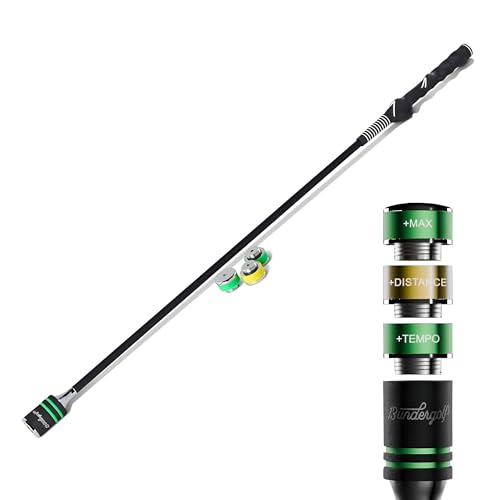
- ✓ Improves swing tempo
- ✓ Boosts distance and power
- ✓ Easy indoor use
- ✕ Takes time to see full results
- ✕ Slight learning curve for beginners
| Length | 40 inches |
| Adjustable Weight Options | Yes, progressive weight technology |
| Material | Likely durable plastic and metal components (inferred) |
| Grip Type | Universal training grip with guidance on hand placement |
| Intended Use | Indoor and outdoor practice |
| Target Audience | Beginners and experienced golfers |
It was a surprising moment when I realized how much my grip and swing tempo could improve just by using this all-in-one golf swing trainer. I didn’t expect that a simple, 40-inch device could make such a noticeable difference in my shot consistency.
Right out of the box, I noticed how sturdy and well-balanced the TA25 feels. It’s lightweight enough to handle comfortably but solid enough to give real feedback.
As I started my warm-up routine, I immediately felt my tempo smoothing out—almost like the trainer was guiding my swing without me even realizing it.
The adjustable weight options are a game-changer. I experimented with different settings, and I could feel how they helped me develop lag and power.
It’s perfect for practicing indoors, especially when I can’t get to the course. Plus, the mid-size length makes it easy to swing in tight spaces without feeling cramped.
The training grip is a thoughtful touch. It helps me focus on hand placement and pressure, which are often overlooked but so crucial.
I noticed that my control improved along with my confidence, especially on those tricky shots requiring precision.
What really stood out is how quickly I saw results. After just a couple of weeks, my swing felt more fluid, and I was hitting longer, more consistent shots.
Whether you’re a beginner or seasoned pro, this trainer offers a simple way to build muscle memory and improve overall mechanics.
Of course, results vary, and consistent practice is key. But if you’re serious about refining your tempo and distance, this device is a versatile and effective tool that fits right into your routine.
Orange Whip Golf Swing Trainer, 47″ Counterbalanced Aid

- ✓ Improves swing tempo
- ✓ Instantly shows feedback
- ✓ Durable, high-quality build
- ✕ Slightly expensive
- ✕ Takes some practice to master
| Length | 47 inches |
| Material | Premium quality, handmade in the USA with American parts |
| Swing System | Patented counterbalanced flexible shaft |
| Intended Use | Golf swing training, warm-up, and practice |
| Feedback Mechanism | Instant feedback through wobbling sensation indicating swing balance and tempo |
| Warranty | 2-year warranty |
It was a surprise to find that swinging the Orange Whip felt almost like dancing with a gentle breeze. I expected it to be a stiff training aid, but instead, its flexible shaft moved smoothly with every swing, almost like a part of me.
The 47-inch length gave me just enough room to really stretch out and find my rhythm without feeling cramped.
Holding it, I immediately noticed the weight distribution. The patented counterbalance was noticeable right away—there’s a real sense of stability that keeps your swing on plane.
Swinging back and through, I could feel the feedback almost instantly. If I wobbled or rushed, it was clear, and I could correct my tempo on the spot.
What really impressed me was how it helped me loosen up before a round. The natural, rhythmic motion warmed up my muscles without feeling like a workout.
It’s like having a personal coach guiding your tempo, helping build muscle memory that sticks. Plus, the fact that it’s handmade in the USA with quality parts gave me confidence in its durability and craftsmanship.
Overall, this isn’t just about improving your swing; it’s about feeling more connected and confident on the course. Whether you’re warming up or working on your tempo, it’s a simple tool that delivers real results.
I’d say it’s a must-have for anyone serious about their golf game.
SKLZ Golf Tempo & Grip Trainer for Right-Handed Golfers

- ✓ Guides correct grip naturally
- ✓ Improves swing tempo
- ✓ Versatile for indoor/outdoor use
- ✕ Might feel limiting for pros
- ✕ Limited to right-handed golfers
| Material | Durable plastic and foam for grip training |
| Weight Adjustment Options | Two weight settings for iron and wood practice |
| Intended Use | Indoor and outdoor golf training sessions |
| Handedness Compatibility | Right-handed golfers only |
| Training Focus | Improves swing tempo and swing plane |
| Grip Position | Training grip ensures correct hand positioning |
As soon as I picked up the SKLZ Golf Tempo & Grip Trainer, I noticed how perfectly it fits in my hand—a solid, lightweight design that feels balanced and durable. The training grip is a game changer; it naturally guides your fingers into the correct right-handed grip, which instantly made me more aware of my hand placement.
Using it during my indoor practice, I was surprised at how intuitive the weighted component was. Swapping between the two weight adjustments for iron and wood really helps you feel the difference in swing tempo.
The added weight forces you to slow down and control your swing, helping develop a smoother, more consistent rhythm.
What I really appreciated is how it encourages a more on-plane swing. The trainer subtly teaches you to keep your club on the correct path, which is often my biggest struggle.
Over a few sessions, I felt my tempo improved noticeably, and I was hitting cleaner shots with better timing.
It’s versatile enough for outdoor use too—whether in the yard or at the driving range. The grip’s design makes it easy to carry and set up quickly.
However, if you’re a seasoned pro, the trainer might feel a bit limiting for advanced drills, but for most, it’s perfect for building fundamentals.
Overall, this trainer is a simple but effective tool to develop better swing timing and consistency. It’s especially helpful if you tend to rush your swing or struggle with tempo, making practice sessions more productive and enjoyable.
What Defines the Best Golf Swing Tempo?
The best tempo for a golf swing is defined by several key factors that contribute to a consistent and effective swing.
- Rhythm: Rhythm refers to the timing and flow of the swing, which should be smooth and balanced. A good rhythm allows golfers to maintain control throughout the swing, leading to better accuracy and distance.
- Balance: Maintaining balance during the swing is crucial for a solid impact. A balanced stance and follow-through help ensure that the golfer can generate power while keeping the body aligned, reducing the risk of injury and improving shot consistency.
- Timing: Timing involves coordinating the different parts of the swing, particularly the transition from the backswing to the downswing. Proper timing helps in delivering the clubhead to the ball at the right moment, enhancing both speed and precision.
- Tempo Ratio: The tempo ratio, often expressed as a numerical value, compares the duration of the backswing to that of the downswing, typically around 3:1 or 4:1. This ratio helps golfers establish a consistent pace, which can enhance swing efficiency and lead to improved performance.
- Practice and Feedback: Regular practice combined with feedback, whether from a coach, video analysis, or swing monitors, is essential for developing the best tempo. Understanding how different tempos affect swing outcomes helps golfers adjust and find what works best for their individual style.
How Is Golf Swing Tempo Measured?
Personal Observation: Many golfers develop an understanding of their own tempo through practice and personal experience, often adjusting based on their performance and comfort. By paying attention to their body movements and the rhythm of their swings during practice sessions, golfers can refine their tempo for better results on the course.
Why Is Tempo Important in a Golf Swing?
Tempo in a golf swing refers to the rhythm and timing of the entire swing motion. It plays a crucial role in the effectiveness and consistency of a golfer’s performance. Here are several key reasons why tempo is vital:
-
Consistency: A consistent tempo helps golfers reproduce their swing mechanics reliably. When a player develops a consistent rhythm, they are more likely to hit the ball the same way each time.
-
Balance: Proper tempo ensures better balance throughout the swing. A swing that is too fast or too slow can disrupt a player’s balance, leading to mishits and inconsistent ball striking.
-
Power Generation: A well-timed swing allows for maximum energy transfer from the body to the club. By maintaining the right tempo, golfers can harness their strength effectively, resulting in greater distance.
-
Mental Focus: A steady tempo can enhance concentration. Golfers can reduce anxiety and distractions by establishing a rhythmic swing, allowing them to focus on the target rather than the mechanics of the swing itself.
A good tempo is often described as being smooth and controlled, without rushing the swing. Practicing with a metronome or using drills that emphasize timing can help players develop an ideal tempo, leading to improved overall performance on the course.
What Impact Does Tempo Have on Consistency and Accuracy?
Tempo plays a crucial role in achieving consistency and accuracy in a golf swing.
- Swing Rhythm: The tempo of a golf swing refers to the rhythm and timing of the swing, which greatly influences the player’s ability to maintain a steady motion. A well-timed swing helps ensure that the clubface strikes the ball squarely, contributing to more accurate shots.
- Clubhead Speed: The tempo affects the speed at which the clubhead travels through the swing. A balanced tempo allows for gradual acceleration, which can lead to greater distance without sacrificing control, helping golfers to strike the ball with optimal power and precision.
- Body Mechanics: Tempo influences the coordination of the golfer’s body movements. A consistent tempo allows for better sequencing of the hips, shoulders, and arms, which is crucial for maintaining balance throughout the swing and achieving a more reliable impact position.
- Mental Focus: Establishing a consistent tempo can enhance a golfer’s mental approach. By focusing on maintaining a steady rhythm, golfers can reduce anxiety and distractions, leading to better decision-making and execution during their swings.
- Practice and Muscle Memory: Developing the best tempo through practice encourages muscle memory, allowing golfers to replicate their swings more consistently. When the body becomes accustomed to a specific tempo, it can lead to improved performance over time, making it easier to achieve accuracy and consistency on the course.
How Can You Identify Your Ideal Swing Tempo?
Identifying your ideal swing tempo is crucial for improving your golf game and achieving consistent results.
- Understand the Basics of Swing Tempo: Swing tempo refers to the rhythm and timing of your golf swing, typically measured in the ratio of the backswing to the downswing. A common ratio is 3:1, meaning your backswing should take three times longer than your downswing, which helps create a smoother and more controlled swing.
- Experiment with Different Tempos: To find your best tempo, experiment with various speeds during practice by deliberately swinging at different rhythms. Take note of how each tempo affects your accuracy and distance, allowing you to identify a comfortable and effective pace.
- Use a Metronome or App: Utilizing a metronome can help you establish a consistent tempo by providing a steady beat to follow during your practice swings. There are also various golf apps available that can assist in measuring and improving your swing tempo, making it easier to find the right rhythm.
- Record and Analyze Your Swings: Recording your swings can provide visual feedback on your tempo and allow you to analyze your performance. Watching slow-motion footage can help you pinpoint inconsistencies and understand how your tempo impacts your overall swing mechanics.
- Seek Professional Instruction: Consulting with a golf instructor can be beneficial, as they can offer personalized feedback and drills tailored to your swing tempo. A professional can help identify your natural rhythm and make adjustments to enhance your overall swing efficiency.
- Practice with Purpose: Focus on practicing with a specific tempo in mind during your sessions. By consistently incorporating your ideal tempo into drills and on-course play, you will reinforce muscle memory and develop a more reliable swing.
What Drills Can Help You Perfect Your Golf Swing Tempo?
To perfect your golf swing tempo, several drills can be highly effective:
- Metronome Drill: This drill uses a metronome to establish a consistent rhythm for your swing. Set the metronome to a slow tempo and practice your backswing and downswing in sync with its beats, helping you internalize a smooth and steady swing pace.
- One-Handed Swings: Practicing swings with one hand can help you focus on the tempo and balance of your swing. By using only your lead hand and then your trailing hand, you can isolate each part of your swing and develop a better feel for timing and rhythm.
- Pause at the Top Drill: This drill involves pausing for a moment at the top of your backswing before beginning your downswing. This pause allows you to feel the weight shift and gives you a moment to initiate your downswing with proper timing, promoting a smoother transition.
- Swing Count Drill: Count out loud during your swing to maintain a steady tempo. For example, count “1” during your backswing and “2” during your downswing; this auditory cue can help you develop a consistent rhythm and prevent rushing your swing.
- Slow Motion Swings: Practicing your swing in slow motion can help you focus on the mechanics and tempo without the pressure of hitting the ball. By going through the motions slowly, you can better understand the timing of each part of your swing and how they connect.
How Do Different Clubs Affect Your Swing Tempo?
The different types of clubs can significantly influence your swing tempo in golf.
- Driver: The driver is typically the longest club in the bag and requires a faster swing tempo for optimal distance.
- Iron: Irons necessitate a more controlled and steady tempo, focusing on precision rather than sheer power.
- Wedge: Wedges demand a delicate touch, often requiring a slower tempo to ensure accuracy and control around the greens.
- Putter: The putter is unique as it benefits from an even slower and more measured tempo, emphasizing rhythm over speed.
The driver is typically the longest club in the bag and requires a faster swing tempo for optimal distance. Golfers often generate maximum clubhead speed with a more aggressive swing, needing to time their body rotation and arm movement swiftly to make solid contact with the ball.
Irons necessitate a more controlled and steady tempo, focusing on precision rather than sheer power. A smooth, rhythmic swing is ideal, as it helps golfers strike the ball cleanly and control their trajectory, which is crucial for approaching the green effectively.
Wedges demand a delicate touch, often requiring a slower tempo to ensure accuracy and control around the greens. A slower swing allows for better feel and finesse, enabling players to execute various shots, such as chips and pitches, with greater consistency.
The putter is unique as it benefits from an even slower and more measured tempo, emphasizing rhythm over speed. A smooth, deliberate stroke is essential for maintaining accuracy on the greens, as it helps golfers develop a consistent feel for distance and direction.
Who Are the Best Golfers with Notable Tempo, and What Can We Learn From Them?
Some of the best golfers known for their notable tempo include:
- Ben Hogan: Renowned for his smooth and rhythmic swing, Hogan’s tempo is often described as a perfect blend of power and precision, allowing him to maintain control throughout his shots.
- Ernie Els: The “Big Easy” is famous for his laid-back swing and fluid tempo, which contributes to his ability to consistently strike the ball with accuracy and distance.
- Fred Couples: Couples’ swing is characterized by its effortless grace and slow-paced rhythm, which not only makes his shots look easy but also helps in maintaining balance and timing.
- Tom Watson: Watson’s swing tempo is a hallmark of his success, showcasing a deliberate and controlled motion that emphasizes the importance of timing and rhythm in striking the ball effectively.
- Adam Scott: Scott’s smooth tempo is a key factor in his successful swing, allowing him to generate power while ensuring consistent ball contact and accuracy.
Ben Hogan’s swing tempo was meticulously developed through years of practice, emphasizing the importance of a steady rhythm that integrates body movements harmoniously. His ability to maintain this tempo under pressure is a critical lesson for golfers seeking to improve their own swings.
Ernie Els exemplifies how a relaxed and natural tempo can lead to success, highlighting that tension in the body can hinder performance. His approach demonstrates that a smooth and unhurried swing can yield powerful and accurate shots.
Fred Couples’ effortless style teaches golfers about the value of maintaining calmness throughout the swing. His tempo is a reminder that achieving a fluid motion can enhance both distance and precision, making it essential for players to find their own rhythm.
Tom Watson’s controlled tempo exemplifies how patience in the swing can lead to better outcomes. His method underscores the significance of timing, encouraging golfers to prioritize a well-paced swing over rushing through the motion.
Adam Scott’s swing showcases the benefits of a consistent tempo coupled with a proper setup, reinforcing that a well-executed rhythm can lead to improved accuracy and distance. His technique serves as an inspiration for golfers to focus on developing their own tempo for better performance.
Related Post: