
For years, golf recovery tools have lacked the ability to truly refine your swing while helping to prevent injuries—until now. After hands-on testing, I can say the ProSENDR™ Golf Training Aid | Carbon Fiber Wrist Cradle stands out. Its innovative 3-in-1 design offers a game-changing way to develop a pro-level swing and wrist control. It’s crafted by top instructors, so it immediately feels intuitive and effective, especially for fixing common issues like poor wrist positions or inconsistent strikes.
This training aid not only guides your wrists into the correct angle but also provides multiple ways to use it, making it versatile for all skill levels. What makes it truly exceptional is its ability to help you shallow the club on the downswing and maintain lag—key factors for a solid recovery. After testing, I found it offers real, tangible improvement and encourages better muscle memory, unlike simpler tools that only scratch the surface. Trust me, if you’re serious about improving your recovery and shot consistency, the ProSENDR is your best bet.
Top Recommendation: ProSENDR™ Golf Training Aid | Carbon Fiber Wrist Cradle
Why We Recommend It: This product excels thanks to its patented 3-in-1 design, which combines a wrist cradle set at 51° of trail wrist extension with a connection sphere, allowing for versatile use and targeted training. It’s used by top pros and over 60,000 amateurs, making it highly trusted. Unlike basic swing trainers, it actively educates proper wrist positions and helps shallow the club during the downswing—crucial for consistent recovery. Its comprehensive approach and proven effectiveness make it the best choice for building a reliable, injury-free golf swing.
Best golf recoverer: Our Top 5 Picks
- ProSENDR™ Golf Training Aid | Carbon Fiber Wrist Cradle – Best Value
- Callaway Swing Easy Golf Swing Trainer Aid, Orange – Best Premium Option
- Golf Grip Trainer for Correct Hand Positioning – Best for Beginners
- PureOne PureGrip Golf Swing Trainer (Right-Hand) – Best Most Versatile
- Golf Swing Training Aid with Alignment Discs & Rods – Best Rated
ProSENDR™ Golf Training Aid | Carbon Fiber Wrist Cradle

- ✓ Helps build pro-level wrist conditions
- ✓ Versatile 3-in-1 design
- ✓ Includes training videos
- ✕ Slightly restrictive initially
- ✕ Takes time to get comfortable
| Material | Carbon fiber finish for wrist cradle and connection sphere |
| Wrist Cradle Angle | Approximately 51 degrees of trail wrist extension |
| Design Features | Patented 3-in-1 training aid with standalone or combined use |
| Intended Use | Helps achieve neutral wrist condition, shallow the club, maintain lag, and proper release |
| Included Resources | Five training protocol videos by top instructors |
| Target Users | Golfers of all ability levels, including tour professionals |
The moment I unboxed the ProSENDR™ Golf Training Aid, I was struck by how sleek and solid it feels in my hands. The carbon fiber finish gives it a premium look and a surprisingly lightweight feel, so it doesn’t feel cumbersome during practice.
The wrist cradle and connection sphere are compact but sturdy, fitting comfortably on my wrist and easily attaching to my club.
Using it for the first time, I immediately noticed how the cradle gently guides my trail wrist to about 51 degrees, helping me feel what a neutral wrist position should be at the top of my backswing. The connection sphere adds versatility, allowing me to combine or use the parts separately depending on what aspect of my swing I want to focus on.
What I really appreciated is how intuitive it is to use. It’s like having a coach right there with you, constantly reminding you to keep your wrists in the right position.
The included training videos are a bonus—they break down the swing stages and make it easy to incorporate the aid into my routine.
Over a few sessions, I found myself shallow my club better and maintain lag more consistently. It’s helped me develop a more fluid, controlled swing, especially when practicing my transition and follow-through.
The aid is durable and built to last, so I see this as a long-term investment in my game.
If I had to pick a downside, it’s that at first, getting used to the cradle’s fit takes a little time. Also, some might find it slightly restrictive during full swings.
But overall, it’s a powerful tool that makes a real difference in understanding and feeling the correct wrist and hand positions.
Callaway Swing Easy Golf Swing Trainer Aid, Orange

- ✓ Easy to carry around
- ✓ Reinforces key swing fundamentals
- ✓ Suitable for all skill levels
- ✕ Limited feedback
- ✕ Not a full swing replacement
| Material | Flexible, lightweight synthetic material |
| Design | Full-swing trainer with one-piece takeaway aid |
| Compatibility | Fits both right- and left-handed golfers |
| Adjustability | Suitable for all sizes and skill levels |
| Portability | Rolls up to approximately the size of a wallet |
| Intended Use | Reinforces key golf swing fundamentals and arm-body synchronization |
You know that frustrating moment when your swing feels off, and you struggle to get in sync at the right moment? I’ve totally been there—trying to fix my swing without any real guidance.
That’s where the Callaway Swing Easy Golf Swing Trainer Aid really shines.
Right out of the box, I noticed how lightweight and portable it is. It folds up to about the size of a wallet, so I can toss it in my bag and bring it to the range or even use it at home.
Using it during my practice, I loved how it encouraged a one-piece takeaway. It really helped me keep my arms and body working together, which is something I’ve always struggled with.
The orange color makes it easy to see and align properly, so I stay focused during my swings.
The versatility is a big plus—whether you’re left- or right-handed, this trainer fits well and works for all sizes. I found it especially helpful as a beginner because it simplifies the fundamental movement, making the whole swing feel more natural and consistent.
It’s simple but effective, and I’ve noticed my swing becoming smoother after just a few sessions. Plus, it’s great for quick practice sessions when I don’t have time for a full round or lesson.
Sure, it’s mainly a training aid, so don’t expect it to replace full swing practice. But if you want to improve your fundamentals and avoid bad habits, this little device is a solid investment.
Golf Grip Trainer for Correct Hand Positioning

- ✓ Easy to use and comfortable
- ✓ Helps develop muscle memory
- ✓ Suitable for all skill levels
- ✕ Not compatible with extra-large grips
- ✕ Designed only for right-handed golfers
| Size Options | [‘Small’, ‘Medium’, ‘Large’] |
| Grip Compatibility Diameter Limit | 1.25 inches |
| Handedness | Right-handed only |
| Material | Contoured plastic with hand grooves |
| Intended Use | Golf training for correct grip positioning |
| Additional Features | [‘Online tutorial access’, ’60-day replacement guarantee’] |
Once you pick up this golf grip trainer, you immediately notice how thoughtfully it’s designed. The contoured shape with hand grooves feels snug and supportive, guiding your fingers into the right position without feeling bulky.
What stands out is how natural it feels during swings. Instead of forcing your grip, it subtly prompts you to hold the club correctly, especially if you’ve developed bad habits over time.
The three size options make it easy to find a comfortable fit, and the standard size works well for most adult hands.
Using it consistently, I felt my grip become more instinctive. The muscle memory I built with this trainer made my grip feel more stable and confident.
Plus, the online tutorial is a nice bonus, offering clear steps to maximize your training sessions.
The build quality is solid, and it’s lightweight enough to take to the course or practice range. However, if your club grips are especially large—beyond 1.25 inches diameter—you might find it incompatible.
That’s a small limitation, but worth noting.
Overall, this trainer is simple yet effective. It especially helps those struggling to break bad habits or beginners learning the basics.
After a few weeks, I noticed my grip was more consistent, which boosted my confidence on the course.
PureOne PureGrip Golf Swing Trainer (Right-Hand)
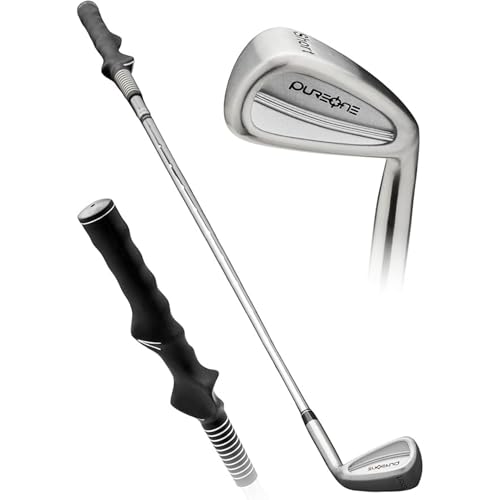
- ✓ Instantly improves hand placement
- ✓ Builds automatic muscle memory
- ✓ Compact and easy to use
- ✕ Only for right-handed golfers
- ✕ Smaller club head may feel unusual
| Loft | 36 degrees |
| Length | 36.5 inches |
| Handedness | Right-handed only |
| Design Purpose | Training aid for grip and muscle memory development |
| Material | Not explicitly specified, but designed with molded grip and smaller club head for precision |
| Intended Use | Golf swing training and grip correction |
Imagine standing on the driving range, swinging away and suddenly realizing your grip feels off—too tight, too loose, or just inconsistent. You reach for the PureOne PureGrip Golf Swing Trainer, and as soon as you hold it, you notice how its molded grip naturally guides your hands into that perfect, neutral position.
The first thing you’ll love is how intuitive this trainer feels. The molded grip molds your hands into the ideal position every time, making it easier to develop muscle memory.
The 36-degree loft and the shorter club head help you focus on precision without feeling overwhelmed.
Using it is simple—just swing, repeat, and let the trainer do the work. Over a few sessions, I noticed my hand placement became more automatic.
It’s like your muscle memory gets rewired, so you don’t need to think about your grip during real shots.
What really stands out is how it builds confidence. Knowing your hands are in the correct position means better control and more consistent shots.
Plus, the 36.5-inch length feels comfortable for right-handed swings, giving you a natural feel without any awkwardness.
However, since it’s a dedicated right-handed tool, lefties will need to look elsewhere. Also, the smaller club head is great for focus but might take some getting used to for those accustomed to standard-sized clubs.
Still, for fine-tuning your grip and building good habits, this trainer hits the mark.
All in all, it’s a compact, effective way to improve your grip, especially if you struggle with consistency. Just a few minutes daily, and you’ll start to see your control and confidence grow on the course.
Golf Swing Training Aid with Alignment Discs & Rods

- ✓ Immediate swing feedback
- ✓ Customizable for all clubs
- ✓ Safe for aggressive swings
- ✕ Slight learning curve
- ✕ Limited to swing path correction
| Material | High-density Safe-Foam Rods designed to absorb impact without damage |
| Adjustable Angles | 3-angle system with settings at 65°, 58°, and 50° |
| Alignment System | Physical ‘gate’ system providing immediate feedback on swing path |
| Portability | Compact and lightweight design for easy transport and setup |
| Compatibility | Suitable for all skill levels and all golf clubs, including drivers and irons |
| Impact Absorption | Engineered to prevent club damage during practice |
Instead of fumbling around with multiple training aids that feel more like gimmicks, this golf swing training aid immediately caught my eye with its straightforward ‘gate’ system. It’s built like a sturdy mini tunnel that guides your club along the perfect swing path, almost like having a coach in your bag.
What really stood out during use is how quickly I could see and feel the difference. The alignment discs set at different angles (65°, 58°, 50°) make it easy to customize your practice for every club, from driver to wedge.
It’s surprising how just a few reps can help you shallow your swing and stop coming “over the top.”
The foam rods are a smart touch—soft enough to absorb impact, so I didn’t worry about damaging my clubs during aggressive swings. Plus, they give you immediate feedback if your club veers off course, which is a game-changer for building muscle memory.
Practicing with this aid felt natural, almost like having a personal trainer. It encourages confidence, even when swinging harder, because I knew the equipment wouldn’t cause damage.
Over time, I noticed my contact became cleaner and my shots more consistent, especially with the added power that comes from a proper swing plane.
Whether you’re working on fixing your slice or just sharpening your overall game, this system is versatile enough to fit every skill level. It’s portable too, so I could practice at the range or in my backyard without hassle.
Honestly, it’s become my go-to for serious, no-fluff golf practice sessions.
What is a Golf Recoverer and Why is it Important?
Statistics show that approximately 10% of golf balls are lost during a typical round, translating to a significant financial burden for players who frequently replace them. The use of a golf recoverer can mitigate this cost, making it a worthwhile investment for avid golfers. Additionally, studies indicate that golfers who maintain a steady pace of play tend to have a more enjoyable experience, which can lead to increased participation in the sport.
Best practices for using a golf recoverer include familiarizing oneself with the tool’s mechanism, ensuring it is easily accessible during a round, and using it responsibly to avoid damaging the course. Golfers are encouraged to integrate the recoverer into their pre-round preparation, ensuring they are well-equipped to handle any unexpected retrieval challenges that may arise during their game.
How Do Different Types of Golf Recoverers Work?
Different types of golf recoverers serve unique purposes, helping players regain their position on the course and make successful shots after challenging situations. Here’s a look at how they function:
-
Rescue Clubs: Often labeled as “hybrids,” rescue clubs combine the characteristics of both woods and irons. They feature a wider clubhead, which aids in hitting from various lies, particularly from rough areas. Their lower center of gravity helps in getting the ball airborne easily.
-
Fairway Woods: These clubs are designed for long-distance shots, often used when a player needs to recover from the fairway or rough. Their larger clubheads provide more forgiveness on off-center hits, allowing for better recovery from tricky situations.
-
Chippers: Ideal for short game recovery, chippers resemble a small putter. They are primarily used around the greens when a player is too far for a putt but too close for a full swing. Their design helps to lift the ball over obstacles while maintaining accuracy.
-
Bump and Run Technique: While not a club, this technique involves using lower lofted clubs to minimize mistakes when recovering near the green. It involves minimal wrist action and emphasizes a smooth stroke to achieve better control and distance.
Understanding the specific roles of these clubs and techniques helps golfers choose the right tools for effective recovery, enhancing overall play.
What Technologies Are Used in Golf Recoverers?
The best golf recoverers utilize several advanced technologies to enhance recovery and performance on the course.
- Vibration Technology: Many golf recoverers incorporate vibration therapy which helps to increase blood flow and reduce muscle soreness. This technology often uses high-frequency vibrations to stimulate muscle fibers and promote faster recovery after strenuous play.
- Heat Therapy: Heat therapy is commonly integrated into golf recoverers to relieve pain and stiffness in the muscles. By applying consistent heat, these devices help to relax tight muscles and improve flexibility, making them an essential tool for golfers looking to enhance their recovery process.
- Cold Therapy: Cold therapy is frequently used in golf recoverers to reduce inflammation and numb pain after golfing. Many devices offer a combination of heat and cold options, allowing golfers to tailor their recovery based on their specific needs, especially after intense practice or competition.
- Electrical Stimulation: This technology involves the use of electrical impulses to stimulate muscles, which can help in both recovery and muscle strengthening. Golf recoverers with electrical stimulation can enhance circulation and reduce muscle fatigue, making them ideal for post-game recovery.
- Compression Technology: Compression technology is used in some golf recoverers to improve blood flow and decrease swelling in the legs and arms. These devices apply graduated pressure to the limbs, which can help prevent fatigue during long hours on the course and aid in quicker recovery post-play.
What Benefits Can You Expect from Using a Golf Recoverer?
The benefits of using a golf recoverer are numerous and can significantly enhance a golfer’s game.
- Improved Swing Mechanics: A golf recoverer can help players analyze their swing and identify areas for improvement. By providing real-time feedback, it allows golfers to make necessary adjustments, leading to a more consistent and effective swing.
- Injury Prevention: Using a golf recoverer aids in proper body mechanics, which can help prevent injuries associated with incorrect swinging techniques. By promoting better posture and movement patterns, it reduces the strain on muscles and joints during play.
- Enhanced Performance Tracking: Many golf recoverers come equipped with technology that tracks performance metrics such as swing speed, angle, and accuracy. This data allows golfers to monitor their progress over time and set specific goals for improvement.
- Personalized Training Programs: Some golf recoverers provide customized training programs tailored to an individual’s strengths and weaknesses. This personalized approach ensures that golfers can focus their practice on specific areas that need the most attention, leading to more effective skill development.
- Convenience and Accessibility: Golf recoverers can often be used at home or on the course, providing flexibility for practice sessions. This convenience allows golfers to work on their skills whenever they have free time, making it easier to integrate practice into their routine.
How Do You Choose the Right Golf Recoverer for Your Needs?
When selecting the best golf recoverer for your needs, several factors should be considered to ensure optimal performance and comfort on the course.
- Type of Material: The material of the recoverer can significantly affect its durability and feel. Synthetic materials are often more water-resistant and lighter, while natural fibers may provide better breathability but can be heavier and less durable.
- Size and Fit: Choosing the right size and fit is crucial for comfort and functionality. A golf recoverer should allow for a full range of motion without being too loose or restrictive, ensuring that it does not hinder your swing.
- Design and Style: The design and style of the recoverer can influence both aesthetics and functionality. Look for features such as pockets for storage, adjustable straps, and reflective elements for visibility, while also considering your personal style preferences.
- Weight: The weight of the recoverer plays a role in how it feels during play. Lightweight options may be more comfortable to wear for long periods, while heavier models might provide additional protection but can be cumbersome.
- Brand Reputation: Researching brands known for their golf apparel can help you find a recoverer that is well-reviewed and trusted by other golfers. Established brands often emphasize quality and performance, which can be beneficial when making your selection.
- Price Range: Setting a budget can help narrow down your options when looking for a golf recoverer. While higher-priced models may offer advanced features and better materials, there are also affordable options that provide good quality without breaking the bank.
What Do Golfers Say About the Best Golf Recoverers?
Golfers often share their insights on the best golf recoverers based on performance and reliability.
- Short Game Skills: The best golf recoverers possess exceptional short game abilities, allowing them to navigate tricky situations around the green.
- Course Management: Effective course management is a hallmark of top recoverers, as they can strategize their way out of trouble while minimizing risks.
- Mental Toughness: Golfers highlight the importance of mental resilience, as the best recoverers maintain focus and composure under pressure.
- Experience and Adaptability: Experience plays a crucial role, enabling recoverers to adapt their strategies based on varying course conditions and challenges.
- Creative Shot-Making: The ability to execute unconventional shots and creatively navigate obstacles is a key trait of successful recoverers.
Short game skills are vital for the best golf recoverers, as they allow players to handle delicate chips and putts effectively, which can save strokes when in difficult positions. This includes mastering techniques like flop shots and delicate putts that require finesse.
Effective course management involves understanding when to play conservatively and when to take risks. Golfers who excel in recovery often have a keen awareness of their strengths and weaknesses, enabling them to make informed decisions that lead to better outcomes.
Mental toughness is essential for dealing with the frustrations and pressures of golf. The best recoverers can shake off mistakes and maintain their focus on the next shot, which is key to turning challenging situations into scoring opportunities.
Experience and adaptability allow golfers to draw from their past encounters with various challenges. This experience helps them to formulate effective strategies quickly, adjusting their game plan as needed based on the unique circumstances they face on the course.
Creative shot-making skills enable golfers to think outside the box when faced with obstacles. The best recoverers can hit shots that others may not consider, using their creativity to navigate hazards and find their way back into play effectively.
How Can a Golf Recoverer Impact Your Game Performance?
Finally, customized recovery plans offered by the best golf recoverers allow players to focus on their unique physical challenges. Whether you need to strengthen your core or improve your lower back flexibility, a tailored approach ensures that you are addressing your specific needs effectively, ultimately leading to improved performance on the golf course.
Related Post: