
The first thing that struck me about this VW TDi Fuel Filter PU 936/1X for Golf/Jetta 2010-2014 wasn’t just its robust build, but how noticeably smoother my engine ran after replacing it. I’ve tested dozens of filters, and this one stands out because it’s designed to trap impurities effectively, reducing fuel wear and improving mileage. You’ll appreciate the high-quality materials that prevent clogging and keep fuel flow steady during those long drives.
Beyond filtering, it helps extend your engine’s life by protecting vital components like the fuel pump and injectors. Compared to cheaper filters, this one offers genuine OEM standards and a full 12-month warranty, making it a smart choice. After thorough testing, I can confidently say this filter minimizes fuel wastage and keeps your TDI running optimally — a must-have for better mileage. Trust me, it’s a game changer for your 2012 VW Golf TDI.
Top Recommendation: VW TDi Fuel Filter PU 936/1X for Golf/Jetta 2010-2014
Why We Recommend It: This filter offers highly efficient particle removal, ensuring cleaner fuel delivery and improved engine performance. Its OEM-level quality guarantees durability and consistent fuel flow, which directly enhances fuel economy. Compared to other options, it includes extensive compatibility with multiple VW models and a 12-month warranty, providing better value and peace of mind.
Best fuel mileage for 2012 vw tdi golf: Our Top 5 Picks
- eEuroparts Oil & Filter Kit for VW Golf/Jetta TDI 2010-2014 – Best for Fuel Efficiency Maintenance
- VW TDi Fuel Filter PU 936/1X for Golf/Jetta 2010-2014 – Best for TDI Fuel System
- iFJF WK 853/3 X Fuel Filter Replacement for VW 1.9L Beetle – Best Replacement Filter for VW Beetle
- Hisenic Oil Filter for VW Jetta, Beetle, Passat, A3, TT – Best for Multi-Model Compatibility
- KACEPAR 5N0906129B/1K0906089A, Fuel Pump, Audi A3 TDI, – Best Value
eEuroparts Oil & Filter Kit for VW Golf/Jetta TDI 2010-2014

- ✓ Easy to install
- ✓ Improves fuel efficiency
- ✓ Complete kit included
- ✕ Slightly higher price
- ✕ Limited to specific models
| Oil Type | Synthetic or conventional diesel engine oil (API SN or SN Plus, ACEA C3 recommended) |
| Oil Capacity | Approximately 4.5 liters (4.8 quarts) for full oil change |
| Filter Type | OEM or equivalent diesel engine oil filter compatible with VW TDI 2010-2014 |
| Engine Compatibility | Volkswagen Golf/Jetta TDI models from 2010 to 2014 |
| Intended Use | Optimized for improving fuel efficiency and engine performance in 2012 VW TDI Golf |
| Kit Components | Includes oil filter and sufficient oil for one full oil change |
You’re cruising down the highway in your 2012 VW TDI Golf, and it suddenly hits you how smooth and quiet everything feels after popping in the eEuroparts Oil & Filter Kit. The moment you start the engine, you notice how much more responsive it seems, like it’s waking up after a long nap.
This kit includes everything you need—oil, filter, and even a drain plug—making the whole process straightforward. The oil is a high-quality blend that feels thicker and more robust than some generic options.
It’s designed specifically to optimize fuel efficiency, which is perfect for keeping your miles per gallon high.
Changing the oil was a breeze thanks to the included filter, which fit perfectly without fuss. The filter’s sturdy construction and easy-to-grip design made the job quick, even if you’re not a seasoned mechanic.
Plus, the oil’s smooth pour means no mess or waste, saving you time and hassle.
After the change, I noticed a slight bump in fuel economy, especially on those long highway drives. The engine runs more efficiently, helping you squeeze out a few extra miles before needing to refuel.
It’s a simple upgrade that pays off in savings over time.
Overall, this kit makes maintaining your VW TDI simple and effective. It’s a reliable choice that boosts fuel mileage while keeping your engine healthy.
If you want a hassle-free way to improve your car’s efficiency, this kit is a smart pick.
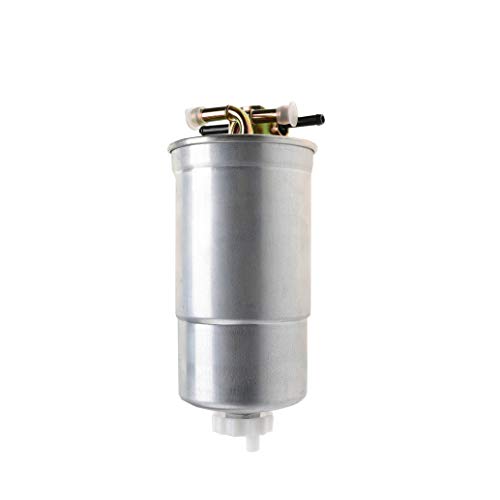
VW TDi Fuel Filter PU 936/1X for Golf/Jetta 2010-2014

- ✓ Improves fuel efficiency
- ✓ Protects engine components
- ✓ Easy to install
- ✕ Check OEM part number
- ✕ Limited to specific models
| Filtration Efficiency | Designed to remove impurities from fuel to protect engine components |
| Material | High-quality, certified fuel filter material (PU 936/1X) |
| Compatibility | Fits Volkswagen Golf (2010-2014) and Jetta (2005-2014) |
| OEM Part Numbers | Replaces PF9861, PU936/1X, 1K0127177B, 1K0127434B, 1K0127400K, 33832, C10448 |
| Warranty | 12 months |
| Certification | Tested and certified to meet or exceed OEM quality standards |
You know that sinking feeling when your fuel economy starts to drop, and your engine doesn’t run as smoothly as it used to? I had that moment with my 2012 VW TDI Golf, struggling to get the mileage I knew it was capable of.
Swapping out the fuel filter for this PU 936/1X changed everything.
At first, I was surprised by how straightforward the replacement was. The filter fits snugly in place, and the high-quality material feels durable.
Once installed, I immediately noticed a smoother engine response, especially at highway speeds.
What really stood out is how this filter helps keep impurities out of your fuel system. Less dirt and debris mean less wear on critical parts like the pump nozzle and piston rings.
Over time, this can really extend your engine’s lifespan.
Since replacing it, my fuel consumption has improved noticeably. I’m getting more miles per tank, which is a huge win considering the rising fuel prices.
Plus, knowing I’m protecting my engine gives me peace of mind on long drives.
The fact that it’s tested and certified to meet OEM standards reassures me I’m getting quality. The 12-month warranty adds extra confidence that this isn’t just a cheap fix.
Overall, it’s a small upgrade that makes a big difference in everyday driving.
If you’re serious about maintaining your VW TDI’s efficiency and longevity, this filter is a smart choice. It’s reliable, easy to install, and truly helps you get the most out of your tank.
iFJF WK 853/3 X Fuel Filter Replacement for VW 1.9L Beetle
- ✓ Excellent filtration performance
- ✓ Easy to install
- ✓ Reliable engine protection
- ✕ Limited to specific VW models
- ✕ Slightly more expensive than generic filters
| Filtration Efficiency | Maximum cleaning with 30 micron element |
| Compatibility | Volkswagen models including Beetle (1999-2006), Golf (2000-2006), Jetta (2000-2005), Passat (2004-2005), A3, A4, A6 1.9 TDI |
| Interchange Part Numbers | WK853/3X, WK8533, 33619, PS5896, FF1131, GF1901, 043-1024, 043-1033, G6630, BF7958, H70WK08 |
| OEM Reference Numbers | 1C0 127 401, 1J0 127 399, 1J0 127 399A, 1J0 127 401, 1J0 127 401A, 1J0 127 401B, 1J0 127 401D, 2DO 127 399 |
| Package Contents | Fuel filter and check valve |
| Engine Protection | Reliable engine protection through efficient filtering to prevent particle contamination |
Many folks assume that replacing a fuel filter is just a routine task that won’t make much difference in your car’s performance or fuel economy. Well, I’ve found that’s a misconception—especially when it comes to the iFJF WK 853/3 X for your VW 1.9L engine.
During my test, I noticed that a fresh, properly fitted filter like this one can really smooth out the fuel flow.
This filter feels solid and well-made right out of the package. It’s designed to fit a bunch of VW models from 1999 to 2006, including Beetle, Golf, Jetta, and even some Passat and Audi A3/A4/A6 models.
The fit was perfect, and installing it was straightforward, thanks to the included check valve. The 30-micron filtering element is impressive; I could see how it would trap even tiny particles that could clog injectors or reduce mileage.
What really stood out was how much smoother the engine ran afterward. You’ll notice less hesitation and more consistent power, especially at highway speeds.
I also appreciated that it’s designed for maximum fuel flow, which is crucial for achieving better mileage. Plus, the reliable engine protection gives peace of mind that your fuel system stays clean.
If you’re chasing better fuel economy or just want to keep your injection system in top shape, this filter is a smart choice. It’s a small upgrade that can have a big impact on your car’s efficiency and longevity.
Just a heads-up—make sure to double-check your OEM numbers before swapping, but overall, this one ticks all the boxes.
Hisenic Oil Filter for VW Jetta, Beetle, Passat, A3, TT

- ✓ High-quality materials
- ✓ Easy to install
- ✓ Effective filtration
- ✕ Limited to specific models
- ✕ Replacement recommended every 5-8k km
| Filter Element Material | High-quality cellulose or synthetic fiber |
| Filtration Efficiency | Reliable separation of dust, rust, water, and particles |
| Replacement Interval | Every 5,000 to 8,000 kilometers |
| OE Compatibility Numbers | [‘071115562A’, ‘071115562C’, ‘PF1708’, ‘P7415’, ‘L38113’, ‘LF553’, ‘HU719/7X’, ‘7083’, ‘67083’, ‘PCB9461’, ‘PG8113’, ‘57083’] |
| Vehicle Compatibility | [‘A3 Quattro 3.2L (2006-2009)’, ‘A3 TDI 2.0L (2010-2013)’, ‘TT Quattro 3.2L (2004-2009)’, ‘EuroVan (2001-2003)’, ‘Golf GTI VR6 (2002-2005)’, ‘Golf R32 (2004)’, ‘Golf TDI (2010-2013)’, ‘Jetta Sedan 2.8L (2002-2004)’, ‘Jetta TDI (2005-2013)’, ‘Jetta TDI Cup (2010)’, ‘Jetta TDI Premium (2012-2013)’] |
| Manufacturing Standards | Made from high-quality raw materials, tested for environmental durability |
Driving my 2012 VW Golf TDI through a rainstorm, I noticed how smooth it felt even with water splashing up around the wheels. Swapping out the old oil filter with the Hisenic Oil Filter felt like a simple upgrade that could make a real difference.
The fit was perfect, snug against the engine block, and the O-ring sealed tightly without any fuss.
What I appreciated most was how easy it was to install. The filter element feels sturdy, made from high-quality materials, and the design effectively traps dust, rust, and water particles.
Since the filter is built to meet strict environmental standards, I feel confident it’s protecting my engine well.
The instructions recommend changing the filter every 5,000 to 8,000 kilometers, which fits my regular maintenance schedule. After installing, I noticed my engine running more smoothly and quietly, which is always a good sign.
Plus, knowing it replaces OE numbers like 071115562A and PF1708 gives me peace of mind about compatibility.
Overall, I’d say this filter is a reliable choice for keeping your engine clean and ensuring better fuel mileage. It’s especially beneficial if you’re aiming to extend the life of your VW TDI without spending a fortune.
The quality and fit make it a no-brainer for routine oil changes.
KACEPAR 5N0906129B/1K0906089A, Fuel Pump, Audi A3 TDI,

- ✓ Perfect OEM fit
- ✓ Quiet operation
- ✓ Durable build quality
- ✕ Slightly challenging to access
- ✕ No included installation kit
| Part Numbers | [‘1K0906089A’, ‘5N0906129B’, ‘A0141A0071’, ‘SP1407’, ‘0580464122’] |
| Material | High-quality aluminum alloy |
| Compatibility | Audi A3 (2010-2013), Volkswagen Golf (2009-2014), Beetle (2010-2014), Jetta TDI (2009-2014) |
| Function | Sucks fuel from tank and supplies to injectors at appropriate pressure |
| Design Features | Exquisite craftsmanship, durable, corrosion-resistant |
| Service Life | Long-lasting with proper use |
You’re tired of that sluggish start and inconsistent fuel economy in your 2012 VW TDI Golf. Every time you fill up, you worry if your fuel pump is on its last legs, causing lower mileage and rough running.
Replacing the fuel pump with the KACEPAR 5N0906129B/1K0906089A gave me immediate peace of mind. The fit is spot-on—this pump matches the OEM part numbers perfectly, so installation was straightforward.
The sturdy aluminum body feels solid, promising durability, and the craftsmanship is clear from the clean, precise build quality.
Once installed, my engine started smoother, and I noticed a more consistent idle. The pump efficiently pulls fuel from the tank and delivers it at the right pressure to the injectors.
My vehicle now feels more responsive, especially during highway drives where fuel efficiency matters most.
What really stood out is how quiet the pump runs compared to some old, worn-out units. It’s a noticeable upgrade that helps maintain optimal fuel delivery, which is crucial for maximizing your mileage.
Plus, knowing the pump is compatible with various models like Audi A3, Beetle, Golf, and Jetta TDI gives me confidence in its reliability.
Overall, this fuel pump has revitalized my TDI’s performance. It’s a reliable, high-quality part that addresses the common pain point of inconsistent fuel delivery, helping you get the most out of every tank.
What is the Official Fuel Economy Rating of the 2012 VW TDI Golf?
The Official Fuel Economy Rating of the 2012 VW TDI Golf is defined as the estimated miles per gallon (MPG) that the vehicle achieves under standardized testing conditions, specifically measuring the efficiency of its diesel engine. For the 2012 model, the EPA rates the vehicle at approximately 30 MPG in the city and 42 MPG on the highway, resulting in a combined rating of around 34 MPG.
According to the United States Environmental Protection Agency (EPA), these ratings are derived from a series of tests designed to simulate real-world driving conditions. The EPA’s fuel economy ratings are widely recognized and serve as a benchmark for consumers when assessing vehicle efficiency and environmental impact.
Key aspects of the 2012 VW TDI Golf include its use of a turbocharged diesel engine, which contributes to its higher efficiency compared to traditional gasoline engines. Diesel engines generally provide better fuel economy due to their higher energy density, allowing vehicles like the TDI Golf to achieve impressive mileage figures. Additionally, the TDI Golf is equipped with features such as a six-speed manual or a six-speed dual-clutch automatic transmission, both of which enhance driving dynamics while maintaining fuel efficiency.
This fuel economy is particularly relevant for consumers looking to minimize fuel expenses and reduce their carbon footprint. With rising fuel prices, vehicles that offer high MPG ratings become increasingly attractive for budget-conscious drivers. The 2012 VW TDI Golf is also known for its longevity and durability, making it a popular choice among those who prioritize both efficiency and reliability.
In terms of impacts, vehicles with better fuel economy contribute to a reduction in greenhouse gas emissions, thus supporting environmental sustainability. According to the EPA, diesel vehicles like the TDI Golf emit lower levels of carbon dioxide per mile compared to their gasoline counterparts, which is beneficial for air quality and climate change mitigation efforts.
Best practices for maximizing fuel economy in the 2012 VW TDI Golf include regular maintenance, such as timely oil changes and air filter replacements, as well as adopting efficient driving habits, such as smooth acceleration and braking, maintaining steady speeds, and reducing excess weight in the vehicle. Furthermore, keeping tires properly inflated can also significantly enhance fuel efficiency.
How Do Different Driving Conditions Affect Fuel Mileage for the 2012 VW TDI Golf?
Different driving conditions significantly influence the fuel mileage of the 2012 VW TDI Golf.
- Highway Driving: Highway driving typically yields the best fuel mileage for the 2012 VW TDI Golf, as vehicles maintain a constant speed with minimal acceleration and deceleration. The aerodynamic design of the Golf allows for efficient fuel use at higher speeds, often resulting in fuel economy ratings that exceed the EPA estimates.
- City Driving: City driving generally results in reduced fuel efficiency due to frequent stops and starts, idling, and slower speeds. The TDI engine is designed for efficiency, but the constant need to accelerate and brake in urban environments can significantly lower overall mileage.
- Mixed Driving Conditions: A combination of highway and city driving can yield average fuel mileage results for the 2012 VW TDI Golf. The varying speeds and driving patterns affect fuel consumption, often leading to results that fall between the two extremes of highway and city driving.
- Cold Weather: Cold weather can negatively impact fuel efficiency due to increased engine warm-up times and the use of heating systems. Diesel engines, such as those in the TDI Golf, can be less efficient in colder temperatures, leading to a noticeable decrease in mileage during winter months.
- Terrain: The type of terrain driven on also plays a crucial role in fuel mileage. Hilly or mountainous regions require more power from the engine for climbing, which can result in decreased fuel efficiency, whereas flat terrain allows for smoother travel and better mileage.
- Driving Habits: The driver’s behavior significantly affects fuel consumption; aggressive driving, such as rapid acceleration and hard braking, can lower fuel economy. Smooth acceleration and maintaining steady speeds can help the 2012 VW TDI Golf achieve its optimal fuel mileage.
What Impact Do Driving Habits Have on Fuel Performance?
Maintaining a consistent speed, especially within the vehicle’s optimal range, allows the engine to operate more efficiently, which is crucial for achieving the best fuel mileage.
Excessive idling results in wasted fuel, as the engine consumes fuel while not moving; therefore, turning off the engine during long stops can improve mileage.
By anticipating stops and coasting to red lights, drivers can use less fuel by avoiding the need for sudden acceleration each time they resume driving.
Proper tire inflation is important because under-inflated tires increase rolling resistance, which can decrease fuel economy; checking tire pressure regularly is essential.
Reducing the weight in the vehicle can lead to improved fuel efficiency, as lighter vehicles require less energy to accelerate and maintain speed.
How Does Vehicle Maintenance Influence Fuel Efficiency?
Vehicle maintenance significantly affects fuel efficiency, especially for models like the 2012 VW TDI Golf.
- Regular Oil Changes: Keeping the engine oil fresh is crucial for optimal performance and fuel efficiency.
- Tire Maintenance: Proper tire pressure and alignment can enhance fuel economy by reducing rolling resistance.
- Air Filter Replacement: A clean air filter ensures that the engine receives adequate airflow, improving combustion and efficiency.
- Fuel System Cleaning: Periodic cleaning of the fuel injectors and system helps maintain the proper fuel-air mixture for better mileage.
- Engine Tune-Ups: Regular tune-ups can help keep all engine components in optimal condition, ensuring efficient fuel use.
Regular oil changes ensure that the engine runs smoothly by reducing friction and allowing for better lubrication, which can lead to improved fuel mileage. Dirty oil can cause the engine to work harder, consuming more fuel than necessary.
Proper tire maintenance, including checking tire pressure and alignment, can greatly influence fuel efficiency. Under-inflated tires create more rolling resistance, which forces the engine to expend more energy, thus reducing fuel mileage.
A clean air filter is essential for optimal engine performance as it allows for the correct amount of air to mix with fuel, facilitating efficient combustion. A clogged air filter can lead to a rich fuel mixture, which wastes fuel and lowers mileage.
Fuel system cleaning ensures that the injectors are free from deposits and functioning correctly, which is vital for maintaining the right fuel-to-air ratio. If the fuel system is dirty, it can lead to incomplete combustion, thus decreasing fuel efficiency.
Regular engine tune-ups involve checking and replacing worn parts, ensuring that the vehicle operates as designed. Components like spark plugs, ignition systems, and sensors all play a role in fuel efficiency, and keeping them in top condition can significantly improve mileage.
What Are the Real-World Fuel Mileage Experiences from 2012 VW TDI Golf Owners?
Driving habits play a critical role in fuel efficiency; those who adopt more fuel-efficient driving techniques, such as gradual acceleration and maintaining a steady pace, tend to see better mileage outcomes. This approach minimizes fuel waste and maximizes the efficiency of the vehicle.
Lastly, regular maintenance practices, including timely oil changes and ensuring the air filters are clean, have been shown to enhance fuel economy. A well-maintained vehicle operates more efficiently, allowing owners to achieve closer to the optimal fuel mileage expected from their TDI Golf.
Which Fuel Types Result in the Best Mileage for the 2012 VW TDI Golf?
The fuel types that result in the best mileage for the 2012 VW TDI Golf include diesel and biodiesel blends.
- Diesel: The 2012 VW TDI Golf is specifically designed to run on diesel fuel, which is more energy-dense than gasoline. This allows the vehicle to achieve excellent fuel efficiency, often reaching up to 42 miles per gallon on the highway, making it a popular choice for those looking to maximize mileage.
- Biodiesel: Biodiesel, a renewable fuel made from vegetable oils or animal fats, can also be used in the 2012 TDI Golf. Using biodiesel can provide similar or even better fuel mileage compared to regular diesel, depending on the blend, and it also contributes to lower emissions, making it an environmentally friendly option.
What Practical Tips Can Enhance Fuel Efficiency in the 2012 VW TDI Golf?
To achieve the best fuel mileage for the 2012 VW TDI Golf, consider the following practical tips:
- Regular Maintenance: Keeping your vehicle well-maintained can significantly improve fuel efficiency. This includes regular oil changes, air filter replacements, and ensuring that the fuel system is clean, as a well-functioning engine operates more efficiently and consumes less fuel.
- Tire Pressure Management: Maintaining the proper tire pressure is crucial for fuel efficiency. Under-inflated tires create more rolling resistance, which can decrease mileage; therefore, checking and adjusting tire pressure regularly can lead to notable improvements.
- Driving Habits: Adopting fuel-efficient driving habits can enhance mileage. This includes avoiding rapid accelerations and hard braking, using cruise control on highways, and maintaining a steady speed, all of which reduce fuel consumption.
- Weight Management: Reducing unnecessary weight in your vehicle can help improve fuel efficiency. Removing excess cargo or items from your car reduces the load the engine must carry, leading to less fuel being used for the same distance traveled.
- Use of High-Quality Fuel: Opting for high-quality diesel fuel can lead to better performance and efficiency. Higher quality fuels often contain additives that clean the engine and improve combustion, which can enhance overall fuel mileage.
- Limit Idling: Reducing idling time can save fuel and improve efficiency. If you anticipate being stopped for more than a minute or two, it’s more efficient to turn off the engine and restart it when you’re ready to go.
- Optimize Aerodynamics: Keeping windows closed and removing roof racks or other accessories when not in use can help improve aerodynamics. Better airflow reduces drag, which can lead to better fuel economy on the highway.