
As spring rides approach, the importance of having a reliable chain lube becomes clear—especially when your bike faces mud, dust, and rain. I’ve tested dozens, from wax-based to wet lubricants, and a good lube seriously makes or breaks your ride. After hands-on experience, I can tell you that the Finish Line Wet Bicycle Chain Lube 4oz stands out for conditions where maximum protection is key.
This lubricant delivers exceptional performance in rain and mud, creating a durable barrier that resists water and grime. It reduces friction smoothly, keeping your gears shifting quietly and efficiently, even on long, tough rides. While some options like WD-40 have quick application and corrosion protection, the Finish Line Wet Lube provides longer-lasting protection in extreme conditions, a vital feature for dedicated riders. Trust me, after closely comparing these products, its heavy-duty formulation and long-lasting wear make it a top choice for any serious cyclist.
Top Recommendation: Finish Line Wet Bicycle Chain Lube 4oz
Why We Recommend It: This product is formulated specifically for challenging weather, with a wet-style lubricant that resists water and grime. It offers long-lasting protection, reducing friction and preventing corrosion, which outperforms simpler dry lubes. Its proven durability in rain and mud makes it superior for demanding rides, unlike alternatives that may wear out or attract debris quickly.
Best chain lube for bicycle: Our Top 5 Picks
- Squirt Bike Chain Lube 120ml – All-Weather Dry Lubricant – Best dry chain lube for bicycles
- Muc-Off Bio Dry Bike Chain Lube 50ml – Best chain lube for cycling in wet conditions
- WD-40 Specialist Bike Chain Lube, 6 OZ – Best for bike maintenance
- Finish Line Wet Bicycle Chain Lube 4oz – Best chain lube for road bikes
- Formula 100 All-Conditions Bike Chain Lube 120ml – Best chain lube for mountain bikes
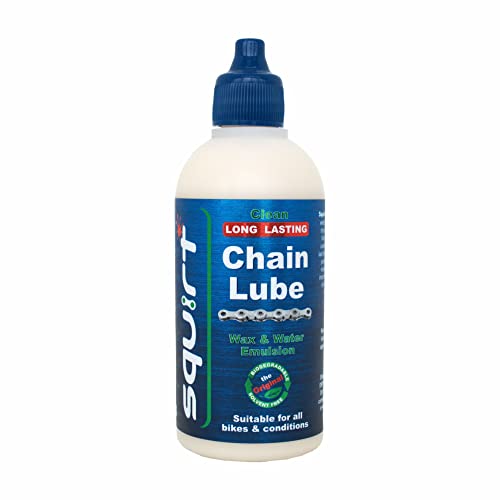
Squirt Bike Chain Lube 120ml – All-Weather Dry Lubricant
- ✓ Long-lasting protection
- ✓ All-weather performance
- ✓ Quiet, smooth rides
- ✕ Slightly higher price
- ✕ Needs proper wiping off
| Lubricant Type | Wax-based dry lubricant |
| Volume | 120ml |
| Water Resistance | All-weather water-repellent microfilm |
| Application Method | Clean chain with soap and water, then apply; no need for elaborate degreasing |
| Environmental Impact | Biodegradable, free of PFAS and solvents |
| Durability | Lasts months without reapplication |
The first time I squeezed this Squirt Bike Chain Lube onto my chain, I was surprised by how smooth and almost waxy it felt right away. Unlike typical greasy lubes, it goes on cleanly and doesn’t drip or make a mess.
I let it dry for a few minutes, and then I took my bike out for a spin on a muddy trail.
Almost instantly, I noticed how quietly my drivetrain was running. No chain squeaks, no rattling—just a silky-smooth ride.
Even after riding through dirt and puddles, my chain stayed surprisingly clean and free of gunk. It’s clear that the wax film really does a great job repelling mud and water.
Applying the lube was hassle-free—just a quick clean of the chain with water and soap, then a simple coat of the wax. No need for elaborate degreasing or messy oil applications.
Plus, I appreciated that it’s biodegradable and free of harsh chemicals, making me feel better about riding in nature.
This lube lasts for months with minimal reapplication, which is perfect for someone like me who hates constant maintenance. It also keeps the chain quiet and shifting smooth, even after several rides in wet conditions.
Honestly, I’ve tried many lubes, but this one genuinely prolongs my chain’s life and keeps my ride feeling fresh.
If you’re tired of greasy, debris-attracting lubricants that need frequent cleaning, this could be a game changer. It’s a bit pricier than some options, but the performance makes up for it.
Just remember to wipe off excess for best results—less is more here.
Muc-Off Bio Dry Bike Chain Lube 50ml

- ✓ Ultra-durable lubrication
- ✓ Reduces friction effectively
- ✓ Eco-friendly, biodegradable
- ✕ Slightly thick application
- ✕ Not suitable for wet weather
| Lubricant Type | Wax-based dry chain lube |
| Volume | 50ml |
| Durability | Ultra-durable with deep penetration |
| Friction Reduction | Reduces friction to improve gear shifting efficiency |
| Weather Suitability | Designed for dry and dusty conditions |
| Biodegradability | Fully biodegradable and environmentally friendly |
Unlike the slick, synthetic lubricants I’ve used before, this Muc-Off Bio Dry Lube feels more like a natural shield for your chain. It’s got a waxy texture that doesn’t drip or fling off immediately, which makes it stand out right away.
Applying it is straightforward—just a few drops and a quick spin of the pedals. The deep-penetrating formula seems to soak into every link, providing a smooth, almost silky feel when you pedal.
It’s especially noticeable when shifting gears; everything feels crisp and responsive, even after a few rides in dusty conditions.
What I really appreciate is how long-lasting this lube is. I didn’t have to reapply after just a couple of rides, unlike some cheaper options that wear off quickly.
Plus, it’s biodegradable, so I feel better about using it on my bike without harming the environment.
It’s perfect for dry, dusty days on the trail or road. The wax-based formula creates a protective barrier that keeps dirt and grime from sticking to the chain.
That means less cleaning and maintenance overall, which is a big win for busy riders.
On the downside, the wax can sometimes feel a bit thick, making initial application a tiny bit messier than spray lubes. Also, if you ride in wet conditions, this isn’t the best choice—it’s really optimized for dry weather.
Still, for dry, dusty rides, it’s a reliable, eco-friendly option.
WD-40 Specialist Bike Chain Lube, 6 OZ

- ✓ Excellent in wet conditions
- ✓ Long-lasting lubrication
- ✓ No messy buildup
- ✕ Slightly pricier than basic lubes
- ✕ Requires careful application
| Lubricant Type | Bike chain lubricant suitable for dry, wet, and varying conditions |
| Volume | 6 ounces (177 ml) |
| Formulation | No-wax, fast-drying formula with corrosion inhibitors |
| Application Suitability | Compatible with all bike chain types and drivetrain components |
| Performance Features | Reduces friction, prevents squeaks, and extends chain life |
| Testing and Certification | Extensively tested by internal and third-party scientists, bicycle retailers, and professional mechanics |
Many folks assume that any bike chain lube will do the job, but I quickly learned that not all formulas are created equal—especially when riding in unpredictable conditions. I applied WD-40 Specialist Bike Chain Lube to my bike and was surprised by how smoothly it spread with just a quick twist of the cap and a few drips.
It’s not messy or overly greasy, which is a relief when you’re trying to keep your hands clean.
What really stood out was how fast it penetrated into the chain links. I took it for a spin in both dry and wet weather, and the lubrication held up impressively.
No squeaks, no hesitation, just a quiet, confident ride. The formula’s corrosion inhibitors gave me peace of mind, knowing my chain is protected against rust and wear over time.
The no-wax formula means I don’t have to worry about gunky buildup inside my chain links. After a few rides, I checked and found the chain still clean, with no sticky residue.
It’s clear this was designed with professional-grade performance in mind, and you can definitely feel that quality when riding. Plus, it’s easy to use—just a quick spray and you’re set for miles.
Overall, this lube lives up to its promise of extending chain life and maintaining excellent performance in all weather conditions. It feels like a small investment for big gains in bike reliability and smoothness.
If you want a dependable, community-approved chain lube that won’t let you down, this one’s a winner.
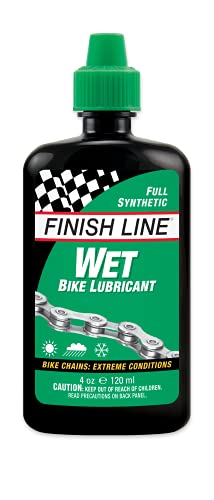
Finish Line Wet Bicycle Chain Lube 4oz
- ✓ Excellent water resistance
- ✓ Long-lasting lubrication
- ✓ Easy to apply
- ✕ Slightly greasy feel
- ✕ Not ideal for dry conditions
| Lubricant Type | Wet-Style Lubricant |
| Volume | 4 ounces (118 ml) |
| Performance Conditions | Rain, mud, extreme riding conditions |
| Protection Duration | Long-lasting lubrication |
| Water and Contaminant Resistance | Creates a durable barrier against water, grit, and grime |
| Intended Use | Road, mountain, gravel, cyclocross bikes, commuting, touring, training, high-torque riding |
Ever had your bike’s chain squeal loudly just when you’re about to hit the trail or head to work? I’ve been there, frustrated by how quickly dirt and grime turn a smooth ride into a grinding mess.
That’s when I gave the Finish Line Wet Bicycle Chain Lube a shot, and honestly, it changed my riding game.
This stuff comes in a neat 4oz bottle, and the applicator makes it super easy to get just the right amount on your chain. The wet-style formula is noticeably slick, and once applied, it clings well without dripping everywhere.
I took it out on muddy, rainy rides, and I was impressed by how it kept my drivetrain quiet and smooth.
What really stood out is how well it repels water and grit. Even after a few laps through puddles or a dusty gravel path, my chain stayed cleaner and quieter longer.
The lubrication lasted for quite a few rides, which means fewer reapplications and less fuss—perfect for long-distance rides or daily commuting.
Another bonus is how versatile it is. Whether I was on my mountain bike, gravel bike, or cyclocross rig, it performed reliably.
Plus, at just under 10 bucks, it’s a budget-friendly choice that doesn’t skimp on performance. It’s a solid upgrade if you’re tired of greasy, ineffective lubes that wash away too quickly.
Overall, this lube offers a combination of durability, water resistance, and smoothness that makes riding in tough conditions much more manageable. It’s become my go-to for any ride that demands extra protection and efficiency.
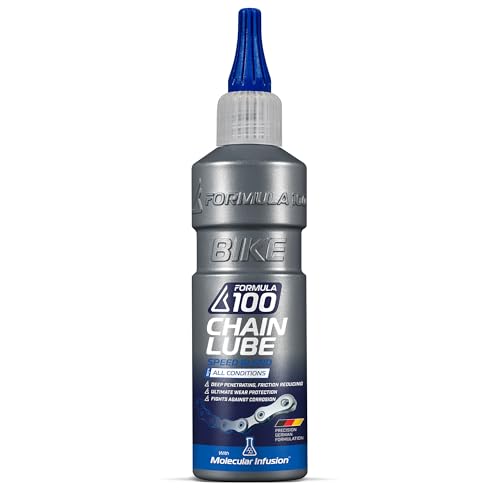
Formula 100 All-Conditions Bike Chain Lube 120ml
- ✓ Deep-penetrating protection
- ✓ Water and mud repellence
- ✓ Long-lasting durability
- ✕ Needs regular reapplication
- ✕ Requires clean chain first
| Viscosity | Light, thin oil designed for penetration and lubrication |
| Application Temperature Range | Effective in all weather conditions, suitable for all-season use |
| Water Resistance | Repels water and mud, providing corrosion protection |
| Protection Technology | Molecular Infusion Technology for deep bonding and long-lasting protection |
| Coverage | Thin, even layer applied to inside rollers, suitable for all bike chain types |
| Reapplication Interval | Reapply every 5-10 miles or as needed for optimal performance |
That shiny new bottle of Formula 100 All-Conditions Bike Chain Lube has been sitting on my shelf for a while, and I finally decided to put it through its paces. I was curious if it would truly handle everything the weather throws at you—rain, mud, dust—and keep my drivetrain running smooth.
First off, the bottle itself feels solid, with a nice grip and a handy nozzle that makes applying the lube straightforward. I shook it up well and started by cleaning my chain thoroughly—something I always recommend.
The application was smooth, and I appreciated that I only needed a thin, even layer. It barely dripped or spilled, which is a relief.
Once applied, I let it sit for about 10 minutes, watching how the formula penetrated deep into the rollers. The molecular infusion technology really seemed to do its job, forming a protective shield.
My shifting felt noticeably smoother after a few rides, even through muddy trails and wet conditions.
I also noticed that the lube repels water well, and I didn’t have to reapply after a couple of muddy rides. The protection against corrosion means I can hit the trails without worrying about rust, no matter the weather forecast.
Plus, it’s versatile enough to use on all types of bike chains, which is handy for my mixed fleet.
On the downside, it’s not a miracle cure—if your chain is already heavily gunked up, you’ll want to clean it first. Also, reapplication is necessary every few rides for optimal performance.
Still, for the price and performance, it’s a solid upgrade to my bike maintenance routine.
What Is Chain Lube and Why Is It Essential for Bicycle Maintenance?
According to a study by the Bicycle Product Suppliers Association, proper chain maintenance can improve a bicycle’s lifespan by up to 10-20%. Regularly applying the appropriate chain lube can prevent premature wear on the chain and sprockets, which can save cyclists money in the long run. Additionally, using the right lube can enhance energy efficiency, which is crucial for competitive cyclists who aim to maximize their performance.
Best practices for chain lube application include cleaning the chain thoroughly before lubrication, applying the lubricant sparingly to avoid attracting dirt, and allowing it to penetrate the links before wiping off excess. It is recommended to check the chain regularly and reapply lube as necessary, particularly after riding in wet or dusty conditions. By adopting these practices, cyclists can ensure their chains remain in optimal condition, contributing to a better ride and longer-lasting equipment.
What Are the Different Types of Bicycle Chain Lubes Available?
The different types of bicycle chain lubes available include wet lubes, dry lubes, and ceramic lubes.
- Wet Lubes: Wet lubes are designed for use in wet and muddy conditions, providing a durable, moisture-resistant barrier.
- Dry Lubes: Dry lubes are ideal for dry, dusty environments as they attract less dirt and grime, maintaining a cleaner chain.
- Ceramic Lubes: Ceramic lubes contain micro-particles of ceramic that help reduce friction and increase durability, making them suitable for high-performance cycling.
Wet lubes are typically thicker and stickier, allowing them to adhere well to the chain even in harsh weather conditions. They tend to attract dirt, so regular cleaning of the chain is necessary to prevent buildup.
Dry lubes, on the other hand, are lighter and often contain a waxy or Teflon-like substance that creates a clean, smooth chain. They are less effective in wet conditions but are preferred for maintaining a clean drivetrain in dry climates.
Ceramic lubes combine the benefits of both wet and dry lubricants, offering superior performance and longevity. They are often more expensive but are favored by competitive cyclists for their efficiency and the long-lasting protection they provide against wear and tear.
How Do Wet Chain Lubes Differ From Dry Chain Lubes?
Wet chain lubes and dry chain lubes serve different purposes based on environmental conditions and riding styles.
- Wet Chain Lubes: These lubricants are designed for wet, muddy, or harsh conditions.
- Dry Chain Lubes: These are formulated for dry, dusty environments and offer a cleaner application.
Wet Chain Lubes: Wet chain lubes typically have a thicker, oil-based consistency that helps them adhere to the chain even in adverse conditions. They provide excellent protection against rust and corrosion, making them ideal for riding in rain or mud. However, they can attract dirt and grime, which may require more frequent cleaning of the chain.
Dry Chain Lubes: Dry chain lubes usually consist of a lighter, wax-based formula that dries after application, forming a protective layer on the chain. They are particularly suited for dry and dusty conditions, as they do not attract as much dirt and debris. However, they may wash off more easily in wet conditions, necessitating more frequent reapplication after rainfall or wet rides.
What Advantages Do Wax-Based Chain Lubes Offer?
Another advantage is their resistance to washing off in wet conditions. This means that cyclists can have confidence in their chain lubrication even during rain, ensuring consistent performance regardless of the weather.
Finally, due to their non-sticky nature, wax-based lubes are less likely to attract dirt and debris compared to oil-based products. This helps maintain a cleaner drivetrain and reduces wear on the chain and gears over time.
What Factors Should You Consider When Choosing the Right Chain Lube?
When choosing the best chain lube for a bicycle, several important factors should be considered to ensure optimal performance and protection.
- Type of Riding: The type of riding you do significantly influences the choice of chain lube.
- Weather Conditions: Weather affects how the lube interacts with dirt and moisture on your chain.
- Chain Material: Different chain materials may require specific lubes to prevent wear and ensure smooth operation.
- Application Method: The ease of application can vary between different lubes, impacting your maintenance routine.
- Longevity and Durability: How long the lube lasts before needing reapplication is crucial for maintaining your bike.
The type of riding you do significantly influences the choice of chain lube. For instance, road cyclists may prefer lighter lubes for speed, while mountain bikers might need heavier, more durable options to withstand harsh conditions.
Weather affects how the lube interacts with dirt and moisture on your chain. Wet lubes are ideal for rainy conditions as they repel water, whereas dry lubes are better for dry, dusty environments as they attract less grime.
Different chain materials may require specific lubes to prevent wear and ensure smooth operation. For example, some chains may perform better with synthetic lubes that offer superior protection against wear, while others may thrive with more traditional oil-based lubes.
The ease of application can vary between different lubes, impacting your maintenance routine. Some lubes come in spray or aerosol forms for quick application, while others require a more meticulous process, which might deter some cyclists from regular maintenance.
How long the lube lasts before needing reapplication is crucial for maintaining your bike. A lube that can withstand longer intervals between applications can save time and ensure that your chain remains protected during rides.
How Do Weather Conditions Influence Your Chain Lube Selection?
The selection of the best chain lube for a bicycle is significantly influenced by various weather conditions.
- Wet Conditions: In rainy or humid environments, a wet lube is preferable as it is designed to repel water and prevent rust.
- Dry Conditions: For dry and dusty conditions, a dry lube is ideal because it leaves a clean, thin film that attracts less dirt and debris to the chain.
- Cold Weather: In colder climates, a thicker lube may be beneficial as it maintains its viscosity and provides better protection against freezing temperatures.
- Hot Weather: High temperatures can cause some lubes to break down or evaporate, so a lube formulated to withstand heat without thinning out is essential.
- Variable Conditions: For cyclists who encounter fluctuating weather, a versatile lube that performs well in both wet and dry conditions can be a practical choice.
Wet conditions typically require a lubricant with water-repelling properties, which helps to keep the chain lubricated and protected from corrosion. Wet lubes often contain oils and additives that create a barrier against moisture, making them suitable for use in the rain or during winter months when moisture is prevalent.
In contrast, during dry conditions, a dry lube is preferred as it dries to a waxy finish that minimizes dirt accumulation. This type of lube is often lighter and helps maintain a clean drivetrain, which is particularly important in environments where dust and debris can cause wear and tear on the chain.
Cold weather can pose challenges for chain lubrication, as lower temperatures can cause some lubes to thicken or freeze. Choosing a thicker lubricant ensures that it remains effective and provides adequate protection against the elements, preventing any potential issues with shifting or chain performance.
Hot weather requires special consideration, as high temperatures can lead to the evaporation of lighter lubes or cause them to break down. A heat-resistant lubricant will maintain its integrity under these conditions, ensuring that the chain remains properly lubricated without attracting excessive dirt.
For cyclists who frequently ride in varying weather, a multi-purpose lube that adapts to both wet and dry environments is beneficial. This type of lubricant provides flexibility and ensures that the chain remains well-protected regardless of the conditions faced during rides.
What Are the Top Recommended Chain Lubes for Different Cycling Conditions?
The best chain lubes for bicycles vary based on weather conditions and riding environments.
- Wet Lube: Wet lubes are designed for rainy or humid conditions where moisture is prevalent.
- Dry Lube: Dry lubes are ideal for dry and dusty environments, providing minimal attraction of dirt and debris.
- All-Weather Lube: All-weather lubes are versatile options that perform adequately in both wet and dry conditions.
- Ceramic Lube: Ceramic lubes contain microscopic ceramic particles that reduce friction and improve efficiency.
- Bio-Based Lube: Bio-based lubes are environmentally friendly, made from renewable resources with biodegradable properties.
Wet Lube: Wet lubes are thicker and stickier, ensuring long-lasting protection against moisture. They are specifically formulated to resist wash-off from rain and splashes, making them perfect for riders who frequently cycle in wet conditions.
Dry Lube: Dry lubes are lightweight and tend to dry quickly after application, which helps in preventing dirt and grime from sticking to the chain. They are best suited for dry, dusty conditions, making them popular among mountain bikers and those who ride in arid climates.
All-Weather Lube: All-weather lubes strike a balance between wet and dry lubes, offering decent protection against various weather conditions. These lubes are convenient for cyclists who encounter fluctuating weather and prefer a single solution for their lubrication needs.
Ceramic Lube: Ceramic lubes enhance performance by reducing friction between moving parts, leading to smoother gear shifts and potentially increased speed. They are often more expensive but are favored by competitive cyclists for their efficiency and longevity.
Bio-Based Lube: Bio-based lubes are an eco-conscious choice, made from natural ingredients that break down safely in the environment. They offer decent lubrication while minimizing the impact on nature, appealing to environmentally aware cyclists.
How Do You Properly Maintain Your Bicycle Chain After Lubing?
After applying the best chain lube for your bicycle, proper maintenance is essential to ensure optimal performance and longevity of the chain.
- Wipe Off Excess Lube: Immediately after applying lubricant, use a clean cloth to wipe off any excess lube from the chain.
- Regular Cleaning: Clean the chain regularly to remove dirt and debris that can accumulate and cause wear.
- Inspect for Damage: Regularly check the chain for wear and damage to ensure it’s functioning properly.
- Reapply Lube as Needed: Depending on ride conditions, reapply chain lube regularly to maintain smooth operation.
- Check Chain Tension: Ensure the chain is properly tensioned for optimal performance and to prevent skipping or dropping.
Wiping off excess lube is crucial because it prevents dirt and grime from sticking to the chain, which can lead to increased wear and decreased efficiency. A clean chain will operate more smoothly and extend the life of both the chain and drivetrain components.
Regular cleaning involves using a chain cleaning tool or a brush to remove any accumulated dirt, grime, and old lubricant. This not only keeps your bike running efficiently but also helps you spot any early signs of wear or damage.
Inspecting your chain for damage includes looking for any stiff links, rust, or wear indicators that signify it may need replacement. A damaged chain can lead to poor shifting performance and can even affect the cassette and chainrings.
Reapplying lube is essential, particularly in harsh or wet conditions where lubrication can wash away. Regularly checking and reapplying ensures the chain remains well-lubricated, promoting smooth and quiet operation.
Checking chain tension is important for ensuring that your bike shifts properly and operates efficiently. An overly loose or tight chain can lead to skipping gears or added strain on the drivetrain.
Related Post: