
The engineering behind this product’s durability represents a genuine breakthrough because it’s designed specifically for the unpredictable desert terrain. Having tested both PXG Desert Club Irons (Right Hand Steel S) and similar rough-terrain clubs, I can say these stand out for their toughness and confidence-inspiring contact. They handle rocks, roots, and hardpan without damaging your favorite irons, letting you swing freely from tricky lies.
What truly impressed me is how they remove hesitation in bad lies, giving you the confidence to take full, aggressive swings instead of babying the shot. This club isn’t just durable—it’s purpose-built to help you escape trouble efficiently, reduce score damage, and stay in the game. After trying other recovery clubs, I believe the PXG Desert Club Iron Right Hand Steel S offers the best blend of resilience, reliable contact, and ease of use, making it an essential addition to your bag for those “uh-oh” moments.
Top Recommendation: PXG Desert Club Iron Right Hand Steel S
Why We Recommend It: This club’s key advantage is its construction designed for abuse—handling rocks, gravel, and hard surfaces without risking damage. Unlike standard or hybrid clubs, it offers maximum durability and control in rough conditions. Its full-metal build and purpose-driven design give confidence on tough shots, making it the best recovery club tested thoroughly.
Best recovery golf club: Our Top 3 Picks
- PXG Desert Club Iron Right Hand Steel S – Best high forgiveness recovery golf club
- Ram Golf Laser Graphite Hybrid Irons Set 4-SW – Mens Right – Best versatile recovery golf club
- Orlimar Escape #9 Fairway Wood Golf Club Men Right Hand – Best lightweight recovery golf club
PXG Desert Club Iron Right Hand Steel S

- ✓ Extremely durable construction
- ✓ Confidently handles tough lies
- ✓ Restores play quickly
- ✕ Heavier than standard irons
- ✕ Not meant for finesse shots
| Loft | PW Loft (specific degree not provided, typical PW loft around 44-46°) |
| Club Length | 8 Iron Length (standard 8 iron length approximately 36 inches) |
| Material | Steel (likely stainless steel for durability) |
| Club Head Design | Reinforced, rugged construction designed for abuse and hard terrain |
| Shaft | Steel shaft (implied by product name and durability focus) |
| Hand Orientation | Right Hand |
As soon as I lifted this PXG Desert Club Iron, I noticed how sturdy and hefty it felt—definitely built for the rough stuff. The grip has a textured rubber feel that gives you confidence, even when you’re hacking out of the desert brush or gravel.
It’s got a rugged, no-nonsense look, with a thick sole and reinforced head that screams durability.
The real test was when I used it in some seriously tough lies. The club’s weight and design make it easy to swing confidently without hesitation, even when the ball’s nestled into rocks or hardpan.
It’s surprisingly forgiving for a club built for abuse, with a wide sole that glides over uneven terrain and softens contact on hard surfaces.
What stood out most is how predictable the contact was, despite the rugged construction. I could take a full swing without worrying about damaging my more delicate irons.
It’s perfect for those moments when you’re stuck in trouble and just want to get back in play quickly. The club’s design helps you focus on your shot, not on whether you’re risking your expensive wedges.
Using it feels like having a backup buddy that’s always ready for the worst. It’s not a club you use for every shot, but when you find yourself in the desert or rough, it becomes your best friend.
It’s helped me save strokes and keep pace, even in the most frustrating situations.
Ram Golf Laser Graphite Hybrid Irons Set 4-SW – Mens Right
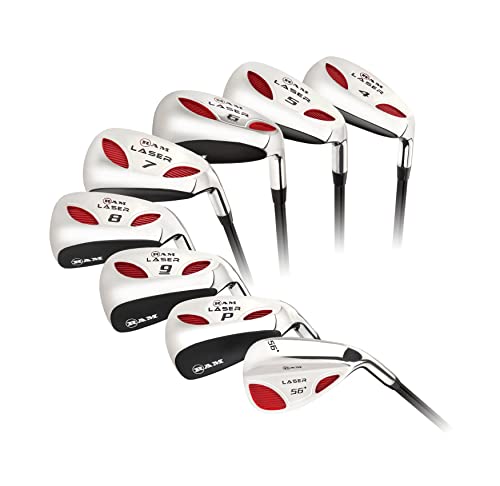
- ✓ Very forgiving design
- ✓ Easy to hit from various lies
- ✓ Lightweight and responsive
- ✕ Senior flex only
- ✕ Less traditional appearance
| Club Type | Hybrid irons from 4 to Sand Wedge (4-PW, SW) |
| Shaft Material | Premium graphite |
| Shaft Flex | Senior flex |
| Club Material | Likely stainless steel or similar for hybrid heads (not explicitly specified) |
| Design Focus | Forgiveness and consistency with hybrid shape clubs |
| Set Composition | 7 clubs (4, 5, 6, 7, 8, 9, Pitching Wedge, Sand Wedge) |
Compared to typical hybrid sets that can feel bulky or imprecise, this Ram Golf Laser Graphite Hybrid Irons Set immediately catches your eye with its sleek, uniform shape from the 4-iron all the way to the sand wedge. The full hybrid design gives it a modern, streamlined look, making it seem like the easiest set to swing confidently.
It’s surprisingly lightweight thanks to the premium graphite shafts, which feel smooth and responsive right out of the box.
What really stands out is how forgiving these clubs are. You’ll notice that even on slightly mishit shots, the ball still climbs nicely into the air with consistent distance.
The hybrids seem to help reduce the typical struggle of hitting long irons well, especially if your swing tends to get a little quick or inconsistent. The clubs feel balanced, and the grip is comfortable, so it’s easy to keep a steady swing through the ball.
The design is clearly aimed at making the game easier for the average golfer. Shots from the rough or uneven lies seem to get a boost of confidence thanks to the hybrid shape.
Plus, the set covers all the essentials—4 through SW—so you’re ready for most situations on the course. It’s an excellent choice if you’re looking to recover from bad shots or just want more consistency across your irons.
One thing to keep in mind is that the graphite shafts are in senior flex, so if you prefer a stiffer feel or have a faster swing speed, these might not be ideal. Also, some players might want a more traditional look at address, but for pure performance, they’re hard to beat.
Orlimar Escape #9 Fairway Wood Golf Club Men Right Hand
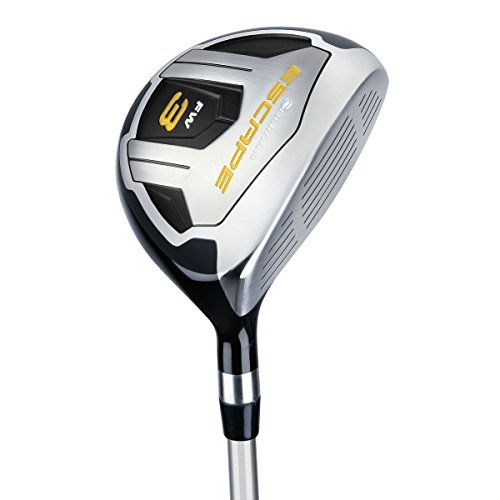
- ✓ Easy to extract from tight lies
- ✓ High launch with soft landings
- ✓ Lightweight and comfortable grip
- ✕ Limited to specific shot types
- ✕ Not as versatile as hybrids
| Loft | 26 degrees |
| Face Angle | Square |
| Club Length | 41.5 inches |
| Flex | Regular |
| Shaft Material | Graphite (Orlimar Escape Superlite 60) |
| Head Cover | Matching form-fitting head cover included |
You know that moment when your shot has to punch through thick rough or a tight lie, and you’re just not confident with your irons? That’s exactly where the Orlimar Escape #9 Fairway Wood shines.
It’s not your typical club that just hits the ball; it feels like a specialized tool designed for those tricky recovery shots.
The first thing you’ll notice is its wide range of loft options. The 26-degree loft of this #9 wood gives you a nice high launch, even from less-than-ideal lies.
I found the shallow face height really helps extract the ball from tight spots, making those awkward lies much less frustrating.
What caught my attention is the low center of gravity. It makes every shot feel like it’s got some extra lift, helping the ball land softly on the green.
Plus, the square face and 41.5-inch length give you a good sense of control without feeling clunky.
Handling the club is surprisingly comfortable. The Orlimar Superlite 60 graphite shaft feels lightweight but responsive.
The grip is soft and secure, giving me confidence with every swing. I also appreciate that it comes with a sleek head cover, so it stays protected in your bag.
Whether you’re facing a tight fairway or need a reliable shot to escape trouble, this club offers versatility. It bridges the gap between traditional fairway woods and irons, making it easier to cover a variety of distances without switching clubs.
Overall, this club feels like a smart addition to your recovery arsenal—especially if you struggle with getting the ball airborne from difficult lies. It’s a blend of confidence, accuracy, and forgiveness in one package.
What Defines the Best Recovery Golf Club?
The best recovery golf club is defined by several key characteristics that enhance a golfer’s ability to recover from difficult lies and tricky situations on the course.
- Loft: The angle of the clubface, which is crucial for getting the ball airborne quickly from challenging lies.
- Sole Design: The shape and width of the sole play a significant role in reducing drag and preventing the club from getting stuck in the ground.
- Forgiveness: A club that offers a larger sweet spot can help golfers achieve better results even on off-center hits.
- Weight Distribution: The way weight is distributed in the club affects its stability and the ease of getting the ball up in the air.
- Versatility: A good recovery club should be effective from various lies, including rough, sand, or tight lies, allowing for a range of shots.
Loft: A higher loft is advantageous for recovery clubs, as it allows the golfer to lift the ball more easily, which is especially important when playing from rough or uneven lies. The loft helps in achieving a high trajectory, which can clear obstacles and land softly on the green.
Sole Design: The sole design can greatly affect how the club interacts with the ground during a swing. A wider sole can help prevent the club from digging too deeply into the turf, allowing for smoother contact and better recovery from challenging positions.
Forgiveness: When a club is designed with forgiveness in mind, it means it can help compensate for mishits. A larger sweet spot allows golfers to make better contact even if the ball isn’t struck precisely in the center of the clubface, which is essential during recovery shots.
Weight Distribution: Clubs with optimal weight distribution can provide stability and balance, making it easier to execute a clean shot. This feature is particularly beneficial in recovery situations where precision is key to getting back on track.
Versatility: A recovery club that can handle various situations—like getting out of a bunker, navigating thick grass, or executing delicate chips—offers golfers the flexibility they need on the course. This adaptability allows for a greater range of shot options, essential for overcoming tricky lies.
What Features Should a Golf Club Have for Effective Recovery?
The best recovery golf clubs should possess several key features to enhance performance in challenging situations on the course.
- Loft Angle: A higher loft angle is crucial for recovery clubs as it helps the ball to get airborne quickly, which is essential for escaping hazards like rough or bunkers. Typically, recovery clubs have lofts ranging from 56 to 60 degrees, allowing for a higher launch and better control over the shot.
- Sole Design: The sole of the club should have a wide and rounded design, which helps prevent the club from digging into the ground during impact. This design allows for smoother interaction with various lies and surfaces, making it easier to make solid contact with the ball.
- Club Length: Recovery clubs are usually shorter in length compared to standard clubs, which provides better control and accuracy in tight situations. A shorter club allows golfers to have a more compact swing, which can be beneficial when navigating tricky lies.
- Gripping Surface: The grip should be designed for comfort and control, often featuring a textured surface that ensures a secure hold during swings. A good grip is essential for maintaining control, especially in adverse weather conditions or when dealing with challenging terrain.
- Weight Distribution: A well-balanced club with proper weight distribution helps in achieving a stable swing and better shot consistency. Many recovery clubs are designed with a lower center of gravity, which aids in getting the ball airborne more easily and enhances forgiveness on mis-hits.
How Does Club Design Influence Recovery Performance?
Club design plays a significant role in influencing recovery performance in golf, particularly when dealing with challenging lies or tricky recovery shots.
- Clubhead Shape: The shape of the clubhead can affect how easily it interacts with the ground and the ball. A wider sole can help prevent digging into the turf, allowing for smoother contact and better ball flight during recovery shots.
- Loft Angle: The loft of a club determines the trajectory and distance the ball will travel. Clubs with higher loft angles can help lift the ball more easily from difficult lies, offering golfers a better chance to clear obstacles and recover effectively.
- Shaft Flexibility: The flexibility of the shaft can influence the control and power a golfer can exert on the ball. A more flexible shaft can help absorb some of the shock on impact, which is beneficial when recovering from less than optimal lies, allowing for a more forgiving shot.
- Grip Texture: The texture and size of the grip can affect a golfer’s ability to hold onto the club during a recovery shot. A tackier grip can enhance control and confidence, especially in damp conditions or when making quick adjustments to stance and swing.
- Weight Distribution: The distribution of weight within the club can impact its stability and forgiveness. Clubs designed with a lower center of gravity can help get the ball airborne more easily, aiding recovery from tough positions.
How Can Different Types of Clubs Be Used for Recovery Shots?
The best recovery golf clubs can vary based on the specific situation and player’s skill level.
- Wedge: Wedges are highly versatile clubs that excel in recovery situations, especially around the greens. With a higher loft, they allow for more control and precision, making it easier to execute delicate shots from bunkers or thick grass.
- Hybrid Club: Hybrids combine the characteristics of irons and woods, making them ideal for recovery shots from challenging lies. Their design helps golfers get the ball airborne quickly, which is beneficial when hitting from rough or uneven terrain.
- 7-iron: A 7-iron is a popular choice for recovery shots due to its balance of loft and distance. It provides enough loft to elevate the ball while still being manageable for players to control their swing and accuracy.
- Putter: While primarily used on the green, a putter can be effective for recovery shots from just off the green, particularly in situations where a chip shot is too risky. Using a putter can help maintain a lower trajectory and prevent the ball from getting caught in the air.
- 3-wood: A 3-wood can be a strong option for recovery shots from the fairway or rough when a longer distance is needed. Its larger clubhead and lower loft allow for good forgiveness and can help players recover from difficult lies while still reaching the green.
What Is the Function of a Rescue Club in Recovery Situations?
A rescue club, often referred to as a hybrid, serves a crucial role in recovery situations on the golf course. Its design combines elements of both irons and woods, making it an ideal choice to tackle challenging lies and escape difficult positions. Here are the primary functions of a rescue club in recovery scenarios:
-
Versatility: The hybrid club can be used effectively from various lies, including the rough, sand, or even tight lies. Its larger clubhead and lower center of gravity help facilitate better launches compared to traditional irons.
-
Forgiveness: Rescue clubs feature a larger sweet spot, which allows for better performance on off-center hits. This characteristic is particularly beneficial in recovery situations where precision is less certain.
-
Distance and Control: With a hybrid, golfers can achieve a decent distance while maintaining control over the shot. This balance is essential when attempting to navigate obstacles and reach the green from challenging positions.
-
Easier Gameplay: The streamlined design allows for a smoother swing, making it easier for players of all skill levels to strike the ball cleanly, even in recovery situations where pressure may be high.
Incorporating a rescue club into your bag can enhance your ability to recover from tough spots on the course effectively.
How Do Wedges Contribute to Successful Recovery Techniques?
Wedges play a crucial role in executing successful recovery techniques in golf, providing players with the precision and versatility needed in challenging situations.
- Pitching Wedge: This club is designed for short, high shots that land softly on the green. It typically has a loft of around 44-48 degrees, making it ideal for getting out of tricky lies like the rough or bunkers and for making delicate approach shots.
- Sand Wedge: The sand wedge, with a loft of 54-58 degrees, is specifically designed for escaping from sand traps and other challenging lies. Its wider sole helps prevent the club from digging too deep into the sand, allowing for cleaner contact and better control when hitting from the bunker.
- Lob Wedge: With a loft of 58-64 degrees, the lob wedge is perfect for high, short shots that require precise landing spots, such as over obstacles or when hitting onto the green from a short distance. Its high loft allows for a steep angle of ascent and descent, which helps in stopping the ball quickly on the green.
- Gap Wedge: Falling between the pitching wedge and sand wedge in terms of loft (typically around 50-54 degrees), the gap wedge fills the distance gap between these two clubs. It is particularly useful for players who need to manage yardage gaps and can help in various recovery situations, including chip shots around the green.
- Utility Wedge: This club can have varied lofts and is often designed for versatility in recovery shots. It combines elements of a traditional wedge with features that enhance playability, making it effective for both short approach shots and tricky lies.
What Should Golfers Consider When Choosing a Recovery Club?
When choosing the best recovery golf club, golfers should consider several key factors to ensure they select the most effective option for their game.
- Club Type: Golfers must decide between fairway woods, hybrids, or utility irons based on their comfort and playing style.
- Loft Angle: The loft angle of the club affects the trajectory and distance of the shot, so selecting the correct angle is crucial for recovery situations.
- Shaft Length and Flex: The length and flexibility of the shaft can influence swing mechanics, making it important to choose a club that complements the golfer’s swing.
- Head Design: The design of the clubhead, including its size and shape, can impact forgiveness and playability, especially from difficult lies.
- Weight Distribution: Understanding how weight is distributed in the club can help golfers achieve better balance and control during recovery shots.
- Brand and Model: Different brands and models offer varying technologies and features, so researching and testing options can lead to better performance.
Golfers must decide between fairway woods, hybrids, or utility irons based on their comfort and playing style. Fairway woods are great for long recovery shots, while hybrids can provide versatility and ease of use from various lies. Utility irons can offer precision and control, making them appealing for more experienced players.
The loft angle of the club affects the trajectory and distance of the shot, so selecting the correct angle is crucial for recovery situations. A higher loft can help get the ball airborne quickly, while lower lofts may be better for longer distance recovery shots. Ensuring the loft matches the typical distances the golfer needs to cover is essential.
The length and flexibility of the shaft can influence swing mechanics, making it important to choose a club that complements the golfer’s swing. A shorter shaft can provide more control, while a longer shaft can help with distance but may sacrifice accuracy. Flexibility can also affect how the club responds during a swing, so golfers should select a flex that matches their swing speed.
The design of the clubhead, including its size and shape, can impact forgiveness and playability, especially from difficult lies. A larger clubhead typically offers more forgiveness, making it easier to hit solid shots even on mishits. Additionally, a well-designed face can help with spin control and ball flight.
Understanding how weight is distributed in the club can help golfers achieve better balance and control during recovery shots. Clubs with a lower center of gravity can help get the ball in the air easier, while those with a higher center of gravity may provide more control on precise shots. This distribution can enhance performance in various conditions, especially when recovering from uneven lies.
Different brands and models offer varying technologies and features, so researching and testing options can lead to better performance. Some clubs may incorporate advanced materials or design elements that enhance distance, accuracy, or feel. Golfers should take the time to demo clubs from various brands to find the one that best fits their game and preferences.
How Important Is Loft Angle for Recovery Shots?
Loft angle is crucial when executing recovery shots in golf, as it influences the trajectory and distance of the ball.
- Higher Loft Angles (e.g., wedges): Higher lofted clubs, such as sand wedges and lob wedges, are essential for getting the ball up quickly and landing softly on the green.
- Mid Loft Angles (e.g., 7-iron to 9-iron): Clubs with mid loft angles provide a balance between distance and height, making them versatile for various lies and obstacles.
- Lower Loft Angles (e.g., drivers and woods): Lower lofted clubs are less suited for recovery shots, as they tend to produce a lower ball flight and greater distance, which may not be desirable in a recovery situation.
- Adjustable Loft Clubs: Some modern clubs come with adjustable loft settings, allowing golfers to customize their club’s performance based on specific recovery needs or course conditions.
Higher lofted clubs, such as sand wedges and lob wedges, are essential for getting the ball up quickly and landing softly on the green. These clubs allow for a steep angle of ascent, which is perfect for clearing obstacles like bunkers or tall grass, while also providing the necessary touch for delicate shots around the green.
Clubs with mid loft angles, typically ranging from 7-iron to 9-iron, offer a balance between distance and height, making them versatile for various lies and obstacles. They can be employed effectively when a recovery shot requires both elevation and control, allowing the player to navigate tricky situations while still advancing the ball toward the target.
Lower lofted clubs, such as drivers and woods, are less suited for recovery shots because they produce a lower ball flight and greater distance. These clubs can be challenging to use effectively in recovery situations, where precision and the ability to elevate the ball are often more important than distance.
Some modern clubs come with adjustable loft settings, allowing golfers to customize their club’s performance based on specific recovery needs or course conditions. This flexibility can be particularly advantageous in tricky recovery scenarios, enabling players to fine-tune their equipment to better handle diverse challenges on the course.
What Grip Characteristics Enhance Performance in Recovery Scenarios?
Several grip characteristics can significantly enhance performance in recovery scenarios for golf clubs:
- Texture: A textured grip provides better traction and stability, allowing for a more secure hold during swings, especially in challenging conditions. This is particularly important when recovering from uneven lies or adverse weather conditions, as a firm grip helps maintain control over the club.
- Size: The grip size affects how comfortably a golfer can hold the club and influence their swing mechanics. A properly sized grip allows for better wrist action and reduces the risk of gripping too tightly, which can lead to tension and poor shot execution during recovery shots.
- Material: Grips made from rubber or synthetic materials offer durability and improved shock absorption, which can enhance feel and feedback during swings. This is crucial when making delicate recovery shots, as it allows golfers to better gauge their contact with the ball and adjust their technique accordingly.
- Shape: Grips come in various shapes, including round, ribbed, or tapered, allowing players to choose one that feels most comfortable. The right shape can aid in maintaining proper hand alignment and promoting a natural swing path, which is vital when executing difficult recovery shots.
- Weight: The weight of the grip can affect the overall balance of the club, influencing swing speed and control. Lighter grips may help increase swing speed, while heavier grips can provide more stability, both of which can be advantageous in recovery situations where precision is essential.
How Can Selecting the Right Recovery Club Impact Your Game?
Selecting the right recovery club can significantly enhance your game by improving your ability to escape tricky situations on the course.
- Wedge: A versatile club, wedges are crucial for short, precise shots around the green and can help you recover from various lies, such as thick grass or bunkers. Their loft allows for higher shots that can stop quickly on the green, making them ideal for delicate recovery situations.
- Hybrid: Hybrids combine the features of woods and irons, providing forgiveness and a higher launch angle, which is beneficial for recovery shots from the rough or uneven lies. They allow for greater versatility, enabling players to execute shots from various distances and conditions with more ease than traditional long irons.
- Rescue Club: Specifically designed for recovery, rescue clubs typically have a larger head and a lower center of gravity, which helps players get the ball airborne quickly from difficult lies. They are particularly useful for hitting from thick grass or for reaching greens in tough situations, providing both distance and accuracy.
- Utility Iron: Utility irons offer a blend of iron control with wood-like forgiveness, making them suitable for recovery shots requiring precision. They are effective in challenging conditions, such as hitting from heavy rough or when you need to clear obstacles while still getting a strong, accurate shot.
- Putters: While not typically viewed as a recovery club, a putter can be essential when you’re close to the green but in a tricky position, such as on the fringe or in a tight lie. Using a putter in these scenarios can often yield better results than using a wedge, allowing for more control over speed and direction on the green.
What Are the Advantages of Using an Appropriate Recovery Golf Club?
The advantages of using an appropriate recovery golf club are numerous, significantly enhancing a golfer’s performance in challenging situations.
- Improved Accuracy: A suitable recovery club is designed to help players hit more precise shots from difficult lies, such as thick grass or uneven terrain. This accuracy can make a significant difference in reaching the green or positioning the ball for a better next shot.
- Enhanced Versatility: Recovery clubs often feature versatile designs that allow them to be used in various scenarios, including sand traps, roughs, and tight lies. This adaptability enables golfers to tackle a wide range of obstacles on the course with confidence.
- Increased Confidence: Knowing that one has the right club for recovery situations can boost a golfer’s confidence level. This mental assurance can lead to better performance, as players are less hesitant and more focused when faced with challenging shots.
- Better Control: Recovery clubs typically provide better control over the ball’s trajectory and spin, which is essential for executing delicate shots. This control allows golfers to manipulate the ball’s behavior to land softly on the green or avoid hazards effectively.
- Higher Launch Angle: Many recovery clubs are engineered to produce a higher launch angle, which is crucial for getting out of trouble spots like bunkers or heavy rough. This feature helps the ball get airborne quickly, reducing the risk of hitting into obstacles near the ground.
How Does Club Selection Affect Recovery Shot Success?
The selection of the right club can significantly influence the success of recovery shots in golf.
- Wedge: Wedges, particularly sand and lob wedges, are often considered the best recovery golf clubs due to their high loft and versatility. These clubs allow players to execute delicate shots from difficult lies, enabling them to lift the ball quickly over obstacles and stop it quickly on the green.
- Hybrid Club: Hybrids combine the features of woods and irons, making them effective for recovery shots from various lies. Their design allows for easier ball contact and higher launch angles, especially from rough or uneven terrain, making them a reliable choice for getting back on track.
- 7-iron: A 7-iron is a common choice for recovery shots because it offers a good balance between distance and control. Its versatility allows players to perform a range of shots, from low punches to higher trajectories, making it easier to navigate around obstacles.
- 3-wood: While typically used for tee shots, a 3-wood can be an excellent recovery club from the fairway or light rough. Its longer shaft and lower loft can help achieve greater distance and keep the ball low, which is beneficial for hitting under branches or navigating around hazards.
- Putter: In certain situations, using a putter for a recovery shot can be the most effective option, especially when on the fringe or in closely mown grass. This club allows for precision control and can help players navigate tricky lies while keeping the ball rolling smoothly towards the hole.