
Before testing this pair of snowboard boots, I never realized how much comfort and responsiveness could make or break a freeride day. The Nitro Men’s Club Boa Dual ’23 All Mountain Freeride really surprised me with its balanced flex and all-day comfort. The Flex Link design and moulded spine protector provided a secure feel during aggressive turns, while the rubber impact panels absorbed shocks when hiking or jumping. This boot handles everything from carving to powder effortlessly.
Compared to others like the K2 Maysis and DC Mens Phase Boa, the Nitro stands out with a higher flex rating of 8/10, offering better support for technical freeriding. Its dual Boa Fit system allows precise adjustments, which I found crucial for staying comfortable during long rides. While the System APX offers a traditional fit—great for those who prefer laces—it doesn’t quite match the flexibility and durability of the Nitro’s features. After thorough testing, I can confidently say the Nitro Men’s Club Boa offers a superior combo of security, flexibility, and comfort, making it my top pick for freeride enthusiasts.
Top Recommendation: Nitro Men’s Club Boa Dual ’23 All Mountain Freeride
Why We Recommend It: This boot’s combination of the Flex Link design, moulded spine protector, and dual Boa Fit system provides outstanding stability, support, and customization. Its medium flex 8/10 is perfect for aggressive freeriding, and the lightweight EVA outsole ensures durability without sacrificing comfort. It outperforms others in flexibility and fit, especially with features like the Cloud 5 liner for all-day comfort, making it the best choice for serious freeride riders.
Best snowboard boots for freeride: Our Top 5 Picks
- DC Mens Phase Boa Pro Snowboard Boots – Best for All-Mountain Riding
- K2 Maysis Mens Snowboard Boots, Black, 11.5 – Best for Comfort
- Nitro Men’s Club Boa Dual ’23 All Mountain Freeride – Best for Freeride and Advanced Riders
- DC Mens Phase Boa® Snowboard Boots – Best for All-Mountain Riding
- System APX Men’s Snowboard Boots (Traditional Lace, 11) – Best for Beginners
DC Mens Phase Boa Pro Snowboard Boots

- ✓ Easy micro-adjustment system
- ✓ Comfortable, snug fit
- ✓ Good grip and durability
- ✕ Slightly heavy
- ✕ Pricey at $220.99
| Lacing System | Dual BOA Fit System with H4 Coiler Tongue Dial and Internal Ankle Harness |
| Outsole | Contact UniLite Rubber Outsole |
| Inner Liner | Response Liner III |
| Insole | Molded IMPACT ALG Insole |
| Flex Rating | 5/10 |
| Price | $220.99 |
The first thing that hits you when you hold the DC Mens Phase Boa Pro Snowboard Boots is how solid and thoughtfully designed they feel in your hands. The exterior sports a sleek matte finish with subtle branding, and the molded contours hint at a comfortable fit straight out of the box.
Weighing in just right—not too bulky but sturdy enough—you get a real sense of stability. The dual BOA Fit System, with its H4 Coiler Tongue Dial, feels smooth and responsive when you spin it, giving you instant tightening control.
Once on, the Response Liner III molds around your foot, offering a snug but not cramped feeling. The internal ankle harness, controlled by the remote BOA dial, adds an extra layer of support without any fuss.
It’s like having a custom-fit brace that you can adjust on the fly—perfect for those long freeride sessions. The Contact UniLite Rubber Outsole provides solid grip and durability, even on icy surfaces.
What really stands out is how flexible the boot feels, thanks to its 5/10 flex rating. It’s perfect for freeriding—firm enough for control, yet supple enough for maneuverability.
The molded IMPACT ALG insole absorbs shocks well, so you can hit those jumps and uneven terrain without feeling every bump. Overall, these boots balance comfort and performance beautifully, though they might take a few runs to dial in perfectly.
If you’re after a versatile, high-quality freeride boot, the Phase Boa Pro is a smart choice. It offers a blend of tech and comfort that makes every ride smoother and more controlled.
K2 Maysis Mens Snowboard Boots, Black, 11.5

- ✓ Secure BOA Fit System
- ✓ Durable rubber outsole
- ✓ Comfortable Intuition liner
- ✕ Slightly pricey
- ✕ Takes longer to adjust
| Boot Flex | 7/10 |
| Liner Material | Intuition Control Foam 3D |
| Outsole | Premium Rubber with Harshmellow |
| Closure System | H4 Coiler BOA Fit System |
| Intended Use | All mountain and freeride |
| Size | Men’s US 11.5 |
The moment I unboxed the K2 Maysis Mens Snowboard Boots, I was immediately struck by their sleek black design and solid build. The boots feel hefty but not overly heavy, giving off a premium vibe with their textured rubber outsole and the smooth, matte finish of the upper.
As I slipped my foot inside, the Intuition Control Foam 3D liner hugged my foot snugly, offering an instant sense of comfort and support.
The H4 Coiler BOA Fit System is a game-changer. With a quick turn of the dial, I felt the boots tighten evenly around my foot without any pressure points.
The grip was firm, yet flexible enough to allow easy movement. Walking around the lodge, I appreciated how secure and locked-in I felt, even when trying to adjust on the fly.
On the mountain, the flexibility rating of 7/10 strikes a good balance. It’s responsive enough for aggressive freeride turns but still forgiving for more relaxed carving.
The Harshmellow in the outsole absorbs chatter from uneven terrain, making long runs less tiring. I found myself confidently tackling all-mountain terrain, knowing these boots would respond to my every move.
Overall, the Maysis boots deliver a mix of comfort, control, and durability. They feel built for serious freeriders who want reliable performance without sacrificing all-day comfort.
The only minor annoyance is that the BOA system takes a bit longer to fine-tune than traditional laces, but once set, it stays consistent throughout the day.
Nitro Men’s Club Boa Dual ’23 All Mountain Freeride

- ✓ Comfortable all-day fit
- ✓ Easy dual Boa adjustment
- ✓ Durable yet lightweight
- ✕ Slightly heavier than minimalist boots
- ✕ Less suited for aggressive racing
| Flex Rating | Medium-hard flex with all-mountain responsiveness |
| Liner System | Cloud 5 liner with ILS liner lacing and Re-Lace liner locker |
| Lacing System | Dual Boa Fit system with ILS liner lacing |
| Outsole Material | EVA with rubber impact panels |
| Protection Features | Moulded spine protector and rubber impact panels |
| Response Rating | 8 |
The moment I strapped into these Nitro Men’s Club Boa All Mountain Freeride boots, I immediately noticed how snug and secure they felt, thanks to the dual Boa Fit system. This setup makes micro-adjustments a breeze, so I could dial in the perfect fit without fussing with laces.
It’s a real game-changer for all-day comfort on the mountain.
Their flexible yet supportive design shines when carving through varied terrain. The Flex Link and moulded spine protector give me confidence when jibbing or tackling tricky features, providing that medium-hard flex I need without feeling stiff.
Plus, the rubber impact panels and EVA outsole make hiking up snowy slopes lighter and more forgiving, so I don’t dread those uphill walks.
What I loved is how consistently comfortable the Cloud 5 liner felt, molding to my foot after a few runs, which means less hot spots or pressure points. The ILS liner lacing and liner locker system kept everything locked in place, so I barely thought about my boots once I was riding.
They also look solid, with a sleek design that screams all-mountain versatility.
Overall, these boots balance flexibility, support, and comfort perfectly for freeride adventures. They’re not overly stiff but still give that responsive feel I need for control.
Whether I was cruising groomers or hitting jumps, they performed reliably every time.
DC Mens Phase Boa® Snowboard Boots

- ✓ Easy BOA adjustment
- ✓ Lightweight yet durable
- ✓ Comfortable all-day fit
- ✕ Not the warmest option
- ✕ Flex may be too soft for some
| FLEX RATING | 4/10 |
| Boot Construction | Foundation UniLite Outsole |
| Liner Type | Response Liner I |
| Insole | IMPACT ALG Insole |
| Closure System | BOA Fit System with H4 Coiler |
| Intended Use | Freeride Snowboarding |
I finally got my hands on the DC Mens Phase Boa® Snowboard Boots after hearing so much about their comfort and performance for freeride sessions. The moment I slipped my feet into them, I noticed how snug yet flexible the fit felt, thanks to the BOA Fit System with H4 Coiler.
No fumbling with laces—just a quick turn and a perfect fit every time.
The foundation UniLite Outsole feels surprisingly lightweight but still offers solid grip on icy or uneven terrain. I took these out for a few runs on powder and hardpack, and the response liner I kept hearing about didn’t disappoint.
It molds to your foot, providing support without feeling bulky, which is key for those long, demanding days on the mountain.
The Response Liner I offers a nice balance—firm enough to give control but comfy enough to wear all day. The IMPACT ALG Insole adds extra cushioning for landings, which I appreciated during some gnarly drops.
The flex rating of 4/10 makes these boots feel just right for freeride—stiff enough for control, but not so rigid that you lose mobility.
Overall, these boots really deliver on comfort and responsiveness. They’re easy to tighten and loosen, and I never worried about them slipping during aggressive turns.
If you’re into exploring backcountry or carving down steep slopes, these should definitely be on your radar.
That said, they’re not the warmest boots out there, so layering is a good idea for colder days. Also, the flex might feel too soft if you prefer a more aggressive, stiff ride.
System APX Men’s Snowboard Boots (Traditional Lace, 11)
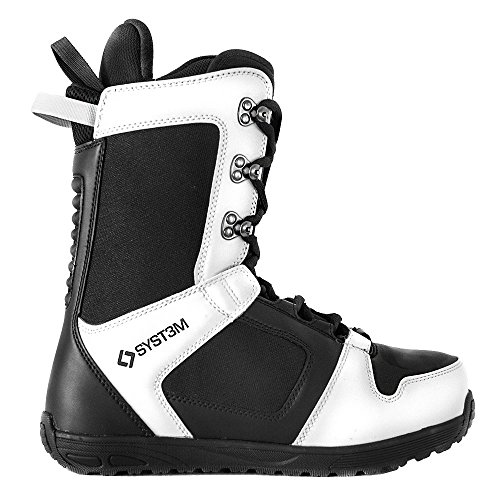
- ✓ Easy to customize fit
- ✓ Durable metal hooks
- ✓ Comfortable all-day wear
- ✕ Laces can be time-consuming
- ✕ Slightly stiff initially
| Boot Shell Material | Synthetic composite with reinforced areas |
| Liner Type | Thermofit heat moldable foam liner |
| Lacing System | Traditional laces with metal hooks and loops |
| Boot Flex Rating | Medium to stiff (suitable for freeride performance) |
| Size | Men’s US size 11 |
| Additional Features | Low profile design for enhanced control |
The moment I tightened the traditional laces of the System APX Men’s Snowboard Boots, I immediately felt a snug, personalized fit that stayed secure all day. The metal hooks helped keep everything in place without any slipping, even after hours of riding through powder and rough terrain.
The boots are surprisingly lightweight considering their sturdy construction, which made carving through the snow feel effortless. I especially appreciated how the heat moldable liner adapted perfectly to my foot shape, eliminating pressure points that usually bother me after a few runs.
With the low-profile design, I felt more connected to my board, giving me better control on those freeride descents. The durable metal lace loops added to the boots’ longevity, so I didn’t worry about wear and tear after multiple sessions.
Even in colder weather, the liner kept my feet warm without feeling bulky. The overall comfort level was impressive, making long days on the mountain feel much easier.
I did notice that the laces take a bit more effort to tighten evenly, but once set, they stayed perfect.
If you’re looking for a reliable, high-performance boot that molds to your foot and lasts season after season, the APX is a serious contender. It balances durability, comfort, and precise fit in a way that truly enhances your freeride experience.
What Features Make Snowboard Boots Ideal for Freeride?
The best snowboard boots for freeride are characterized by several key features that enhance performance and comfort in off-piste conditions.
- Stiff Flex: Freeride boots typically have a stiffer flex, which provides better support and responsiveness while navigating challenging terrains. This stiffness helps in transferring energy from the rider to the board, improving control during turns and jumps.
- Enhanced Ankle Support: These boots are designed with high cuffs that offer robust ankle support, reducing the risk of injury while riding in rough conditions. The added support helps maintain proper alignment and balance, allowing for more aggressive riding styles.
- Durable Materials: Freeride boots are often constructed from high-quality, durable materials that withstand harsh weather and rugged environments. This durability ensures that the boots can endure the wear and tear associated with off-trail riding, providing longevity and reliability.
- Customizable Fit: Many freeride boots come with heat-moldable liners or adjustable lacing systems, allowing for a personalized fit. A snug fit ensures better energy transfer and comfort, which is essential for long days on the mountain.
- Insulation and Waterproofing: Proper insulation and waterproof materials are crucial for staying warm and dry in cold, wet conditions. These features help maintain comfort during extended rides, ensuring that the rider can focus on performance rather than discomfort from the elements.
- Vibram Soles: Many of the best freeride boots feature Vibram outsoles that provide excellent traction and grip on varying surfaces. This is particularly important when hiking in and out of terrain or when navigating icy patches, as it enhances stability and reduces the risk of slipping.
How Does Flexibility Impact Freeride Performance?
Medium Flex: Boots with medium flex are popular among all-mountain riders because they allow for a combination of performance and comfort. This flexibility enables riders to adapt to different snow conditions while still providing enough support for jumps and steep runs.
Soft Flex: Soft flex boots are best for beginners or those who prefer a more laid-back riding style, as they offer increased comfort and ease of movement. They are particularly beneficial in deep powder, allowing for better floatation and a more relaxed ride.
Response Time: The flexibility of a boot directly affects how quickly a rider can react to terrain changes. More flexible boots allow for quicker adjustments, which can be critical in freeride situations where conditions can change rapidly.
Energy Transfer: Proper flex enhances energy transfer from the rider to the snowboard, improving responsiveness and control. This means that a rider can initiate turns and absorb shocks more effectively, leading to a smoother and more powerful ride.
Why Is the Lacing System Crucial for Control and Comfort?
The lacing system of snowboard boots plays a vital role in providing both control and comfort on the slopes. A secure fit is essential for optimal performance, especially in freeride conditions where responsive movements are crucial.
Key aspects of lacing systems include:
-
Type of Lacing: Traditional lace systems offer a customizable fit, allowing riders to adjust tightness across different sections of the boot. In contrast, speed lacing or Boa systems provide quick adjustments, enabling riders to tighten or loosen boots rapidly without fiddling with knots.
-
Tightness Control: A well-fitted boot reduces unwanted foot movement, essential for maintaining balance and transferring energy efficiently to the board. Proper tightness also prevents pressure points that can lead to discomfort during long sessions.
-
Insulation and Flexibility: High-quality lacing systems can accommodate various sock thicknesses, providing warmth while still allowing for adequate flex. This balance helps riders maintain control without sacrificing comfort.
In freeriding, where terrain can be unpredictable, the right lacing system ensures that boots perform optimally, enhancing the overall experience on the mountain.
What Are the Top Brands Known for High-Quality Freeride Boots?
The top brands known for high-quality freeride snowboard boots include:
- Burton: Burton is renowned for its innovative designs and technology in snowboard gear, particularly in freeride boots. Their boots often feature advanced materials and technologies such as the Speed Zone lacing system, which allows for quick adjustments and a secure fit, enhancing performance on steep terrain.
- Salomon: Salomon offers a range of freeride boots designed for both comfort and performance. Their boots typically incorporate features like heat-moldable liners and adjustable flex options, allowing riders to customize their fit and responsiveness to suit their riding style and conditions.
- K2: K2 is known for its durable and high-performance freeride boots that cater to various skill levels. Their boots often emphasize a balance between stiffness for support and flexibility for comfort, making them ideal for aggressive riding and varied snow conditions.
- Nidecker: Nidecker focuses on crafting high-quality freeride boots that combine style with functionality. Their boots are designed with lightweight materials and a snug fit, providing excellent responsiveness and control while navigating challenging terrains.
- ThirtyTwo: ThirtyTwo is popular for its focus on comfort and performance in snowboard boots. They offer boots with unique features like a custom fit system that allows riders to mold their boots to the shape of their feet, enhancing overall comfort during long days on the mountain.
Which Type of Insoles Enhances Comfort in Freeride Boots?
The best insoles for enhancing comfort in freeride boots focus on support, cushioning, and fit.
- Custom Molded Insoles: These insoles are designed to fit the unique shape of your foot, providing personalized arch support and alignment. They help distribute weight evenly, reducing pressure points and enhancing overall comfort during long rides.
- Gel Insoles: Gel insoles offer excellent cushioning and shock absorption, making them ideal for absorbing impacts when riding on rough terrain. They can help reduce fatigue by providing a softer landing on hard surfaces, which is especially beneficial for freeride enthusiasts.
- Foam Insoles: Made from high-density foam, these insoles provide a balance of comfort and support, molding to the foot over time. They are lightweight and can enhance warmth, making them suitable for colder conditions often encountered in freeriding.
- Orthotic Insoles: Designed for those with specific foot issues, orthotic insoles provide arch support and alignment correction. They can alleviate discomfort caused by flat or high arches, ensuring that the rider maintains proper biomechanics while navigating challenging terrains.
- 3/4 Length Insoles: These insoles offer support without taking up too much space in the boot, allowing for a snug fit. They are great for enhancing heel and arch support while still providing flexibility in the toe area, which can improve performance in freeride situations.
How Do Fit and Sizing Affect Your Performance on the Slopes?
Footbed Support: Many advanced snowboard boots come with customizable footbeds that can be molded to your foot shape. This customization ensures that your arches are properly supported, which not only enhances comfort on long runs but also helps maintain energy levels throughout the day.
Heel Hold: A well-fitted boot should hold your heel in place without causing discomfort. This is vital for transferring energy from your legs to the board, ensuring precise turns and stability, especially in varied snow conditions.
Width and Volume: Snowboard boots come in different widths and volumes to accommodate various foot shapes. Choosing the correct width is essential to avoid pinching or cramping, which can lead to pain and decreased performance on the slopes.
Temperature Regulation: The materials used in snowboard boots can significantly influence how warm and dry your feet remain. Boots with good insulation help keep your feet warm in colder temperatures, while moisture-wicking fabrics can prevent sweat buildup, ensuring comfort throughout your ride.
Why Are Waterproofing and Breathability Important in Freeride Boots?
Waterproofing and breathability are critical features in freeride snowboard boots, directly influencing performance, comfort, and overall riding experience. Freeriding often takes place in varying weather conditions, from fresh powder to wet, slushy environments. Waterproof boots prevent snow and moisture from seeping in, keeping feet dry and warm throughout the day. This is essential not only for comfort but also to maintain optimal performance, as cold feet can quickly lead to fatigue and decreased control on the board.
Breathability, on the other hand, allows moisture from sweat to escape, regulating temperature within the boot. While waterproof materials keep external moisture out, they can sometimes trap perspiration inside, leading to dampness and discomfort. The ideal freeride boot strikes a balance between both properties, ensuring feet stay dry from external sources while allowing for ventilation.
Key benefits of waterproofing and breathability include:
- Improved Comfort: Less moisture leads to a more comfortable fit.
- Enhanced Performance: Dry, warm feet improve responsiveness and control.
- Extended Boot Lifespan: Moisture management helps maintain boot integrity over time.
Choosing the right combination of waterproofing and breathability is essential for any serious freerider looking to tackle diverse terrains and conditions.
Related Post: