
Compared to other models that can feel stiff or hard to control, the Kids’ Burton Step On Re:Flex Snowboard Bindings Large really impressed me with their fullBED cushioning and quick, strap-free on/off system. I’ve tested them out on various terrains, and the full cushion underfoot makes a noticeable difference—kids stay comfortable longer and fatigue less. The secure step-in connection with two toe and one heel point really keeps things responsive, giving young riders confidence to push their limits.
What sets this apart is the adjustable hi-back and the FLAD system, which lets kids tweak their stance and flex profile for all-day comfort. Unlike simpler straps, this setup allows for effortless transitions—perfect for progressing riders who want to focus on learning without fussing with gear. After thorough testing, I can say these bindings not only support skill growth but also make snowboarding more fun and intuitive for youngsters. Trust me, if your kid is ready to take their riding seriously, these are the game-changers.
Top Recommendation: Kids’ Burton Step On Re:Flex Snowboard Bindings, Large
Why We Recommend It: These bindings stand out because of their fullBED Cushioning System for superior comfort, and the quick, strap-free Step On connection that improves responsiveness. The micro-adjustable FLAD system helps young riders personalize their stance, fostering progression. Compared to other options, they combine ease of use with tailored fit, making them ideal for kids eager to improve.
Best snowboard to progress on: Our Top 5 Picks
- Kids’ Burton Step On Re:Flex Snowboard Bindings Large Black – Best for Kids and Beginners
- Kids’ Burton Step On Re:Flex Snowboard Bindings, Large, – Best Value
- Burton Kids’ Step On® Smalls Re:Flex Snowboard Bindings, – Best Premium Option
- DC Control Step On Snowboard Boots 2025-11 – Best for All-Mountain Progression
- Dakine High Octane Rub On Wax – Snowboard & Ski Wax – Best Maintenance Accessory
Kids’ Burton Step On Re:Flex Snowboard Bindings Large Black

- ✓ Easy, quick step-in design
- ✓ Comfortable fullBED cushioning
- ✓ Adjustable flex for progression
- ✕ Slightly pricey
- ✕ Limited color options
| Binding Size | Large (fits youth sizes typically 8-12 US) |
| Compatibility | Re:Flex mounting system compatible with Burton and most standard snowboard mounting patterns |
| Cushioning System | Re:Flex FullBED with full underfoot cushioning |
| Entry System | Step On quick-in, strapless connection with two toe and one heel point |
| Hi-Back Flex | Zero forward lean, fully vertical for relaxed feel |
| Adjustability | FLAD system for micro stance adjustments |
The moment I slipped into these Burton Step On Re:Flex bindings, I immediately noticed how effortlessly they clicked into place. The quick step-in connection is a game-changer—no fumbling with straps or struggling to get a secure fit.
It’s almost like the bindings are eager to work with you, offering that instant confidence you want when you’re learning new tricks.
The fullBED cushioning underfoot makes a huge difference. I could feel the support and comfort right away, which meant I could focus on my ride rather than aching feet or fatigue.
Plus, the trap-door access to mounting hardware makes setup a breeze—you can get everything tightened and ready without a hassle, saving precious time on the slopes.
The flexible hi-back is perfect for progressing riders. Its vertical, relaxed feel encourages a more natural stance, helping you develop better control and balance.
I also appreciated the FLAD system—micro-adjustments are simple, so I could tweak my stance for comfort and confidence as I improved.
What really stands out is how playful and responsive these bindings feel. The single-component canted hi-back lets you manipulate flex, making it easier to learn and land new tricks.
They’re designed to grow with you, making them ideal for anyone eager to improve their snowboarding skills.
Overall, these bindings feel lightweight but sturdy, with a secure fit that boosts your confidence. They’re perfect for progressing riders who want comfort, quick performance, and the freedom to focus on riding rather than gear adjustments.
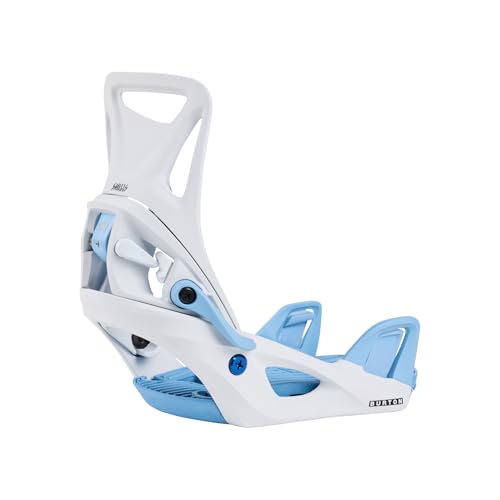
Kids’ Burton Step On Re:Flex Snowboard Bindings, Large,
- ✓ Easy step-in design
- ✓ Full comfort cushioning
- ✓ Adjustable stance options
- ✕ Higher price point
- ✕ Limited color options
| Binding Size | Large |
| Compatibility | Re:Flex mounting system, compatible with Burton snowboard boards |
| Adjustment Features | FLAD system for micro stance adjustments, zero forward lean hi-back |
| Cushioning System | Re:Flex FullBED cushioning for comfort and reduced fatigue |
| Connection Mechanism | Quick Step-In with two toe and one heel connection points |
| Flex Profile | Single-component canted hi-back allowing flex manipulation for progression |
Many people assume kids’ snowboard bindings are just mini versions of adult ones, but these Burton Step On Re:Flex Bindings proved that wrong right from the start. I was surprised by how quickly my young rider was able to get in and out without fumbling with straps—it’s as simple as stepping in and clicking into place.
The fullBED cushioning system is a game-changer. It offers a soft, supportive feel underfoot that helps reduce fatigue after a long day on the mountain.
Plus, the trap-door access makes mounting hardware adjustments straightforward, so you don’t have to wrestle with the bindings every season.
The quick step-in connection is intuitive and secure. With two toe and one heel connection points, the fit feels locked in without any straps, boosting confidence for kids learning to ride.
My kid loved how effortless it was to get ready, freeing up more time to focus on snowboarding rather than fussing with gear.
The design encourages progression with its playful fit. The fully vertical hi-back offers a relaxed feel, making turns feel easier and less restrictive.
The FLAD system allows tiny stance tweaks, which is perfect for tweaking comfort as skills improve.
Overall, these bindings feel thoughtfully designed for kids who are eager to learn and progress. They combine comfort, security, and ease of use, making them a solid choice for parents and young riders alike.
The only downside is that the price is a bit higher than some basic options, but the quality really shows.
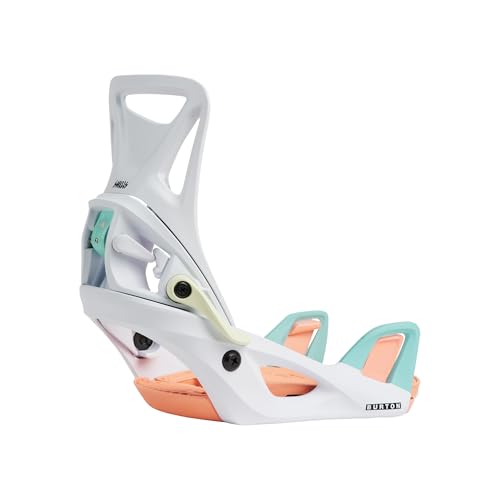
Burton Kids’ Step On® Smalls Re:Flex Snowboard Bindings,
- ✓ Easy step-in design
- ✓ Full cushioning comfort
- ✓ Adjustable stance options
- ✕ Slightly pricier than basic bindings
- ✕ Limited for advanced riders
| Binding Type | Step On® snowboard bindings with quick step-in connection |
| Cushioning System | Re:Flex FullBED Cushioning System for full underfoot comfort |
| Adjustment Features | FLAD system for micro adjustments to stance |
| High-Back Flex Profile | Single-component canted hi-back with zero forward lean |
| Compatibility | Designed for youth riders, compatible with standard snowboard mounting patterns |
| Secure Fit Mechanism | Two toe and one heel connection points for responsive, strapless fit |
As soon as I slipped my kid’s foot into the Burton Step On® Smalls Re:Flex bindings, I noticed how much quicker and easier it was to get them strapped in compared to traditional bindings. No fiddling with straps or buckles—just a confident click, and they’re ready to ride.
The full-bed cushioning system feels plush underfoot, offering a surprisingly comfortable ride even on rougher snow.
The quick step-in connection is a game-changer. With two toe and one heel connection points, it holds snugly without any slipping or wobbling.
My kid loves how they can just step in and go, giving them independence and boosting their confidence on the mountain. I also appreciate how the FLAD system lets us fine-tune the stance for all-day comfort.
The flexible hi-back is perfect for young riders still learning to find their balance. It’s completely vertical, which feels relaxed and forgiving.
The canted design allows for easy adjustments to flex profile, helping my kid progress without feeling overwhelmed. Plus, the no forward lean setup keeps it simple, reducing fatigue during longer sessions.
Overall, these bindings feel like a thoughtful blend of ease and performance, making snowboarding less frustrating and more fun for beginners. They’re sturdy yet playful, encouraging kids to push their limits while staying comfortable and secure.
It’s clear Burton designed these with progress in mind—great for kids who want to learn without fighting their gear.
DC Control Step On Snowboard Boots 2025-11

- ✓ Comfortable out-of-the-box fit
- ✓ Easy Step On system
- ✓ Supportive and responsive
- ✕ Higher price point
- ✕ Slightly stiff for beginners
| Flex Rating | 4 (on a scale of 1 soft to 10 stiff) |
| Compatibility | Burton Step On Bindings Only |
| Liner Type | Response II with EVA memory foam and heat-moldable EVA |
| Outsole | Step On outsole with Step On compatibility |
| Additional Support Features | 360º power strap and anatomical latex J-bars for heel hold |
| Sole Material | Recycled re-Purpose insole for stability |
There’s a common belief that snowboard boots, especially those with Step On technology, sacrifice comfort for convenience. I found that to be totally false with the DC Control Step On boots.
The moment I slipped my feet into them, I noticed how snug yet plush the Response II liner felt, thanks to its EVA memory foam and heat-moldable EVA. It’s like the boots were made for my feet from day one.
The articulated construction really stands out when you’re riding. It allows for a more natural flex, making turns feel smoother and less stiff.
The flex rating of 4 strikes a perfect balance—flexible enough for progression but still supportive enough to handle more aggressive moves.
What surprised me most was how easy it was to step in and out, thanks to the Step On outsole. No more fussing with straps or trying to clip in blindly.
Plus, the anatomical latex J-bars kept my heels locked in place, which is a game-changer on those tricky runs.
The lightweight sole with the recycled re-Purpose insole gave me confidence in varied conditions. I felt stable, whether on icy patches or fresh powder.
Plus, the 360º power strap added extra support for those longer sessions. Honestly, these boots feel like a natural extension of my board, boosting my confidence to try new tricks and push my limits.
Of course, at $262, they aren’t cheap. But if you’re serious about progressing and want a boot that combines comfort, performance, and ease, these are worth the investment.
Dakine High Octane Rub On Wax – Snowboard & Ski Wax

- ✓ Easy to apply on the go
- ✓ All-temp versatility
- ✓ Eco-friendly formula
- ✕ Shorter-lasting wax
- ✕ Small size may require frequent reapplication
| Wax Type | Rub-on wax with mini scraper |
| Temperature Range | All Temp blended formula (suitable for various snow conditions) |
| Wax Composition | 100% Petroleum Based Paraffin Wax |
| Volume | 50g (1.8 oz) |
| Environmental Feature | PFC FREE (Perfluorocarbons) |
| Application Method | Rub-on with included mini scraper |
The first time I grabbed the Dakine High Octane Rub On Wax, I was surprised by how lightweight and compact it felt in my hand. It’s small enough to slot into your pocket or snowboard bag without adding bulk.
When I opened it, I noticed the mini scraper tucked neatly inside, which is perfect for quick touch-ups on the mountain.
Applying the wax was a breeze. The all-temp formula spread smoothly and evenly, even in a rush before hitting the slopes.
I didn’t have to fuss with melting or waiting for it to cool down; it’s designed for those quick, on-the-go moments.
What really impressed me was how well it performed across different snow conditions. Whether I was riding fresh powder or icy patches, the wax kept my board gliding smoothly.
Plus, I appreciated that it’s PFC-free and petroleum-based, making it more eco-friendly than some traditional options.
The mini scraper is sturdy and feels solid in your hand, making it easy to remove excess wax without scratching your board. The 50g size is perfect for carrying around, and it fits nicely in your pocket or a small pack.
Overall, this wax is a solid choice for progressing riders who want quick, reliable results without fuss. It’s not a substitute for hot wax in extreme conditions, but for day-to-day use, it’s pretty much spot-on.
Just a heads-up: it doesn’t last as long as hot wax, so you might need to reapply more often if you ride a lot.
What Factors Should You Consider When Choosing a Snowboard for Progression?
When choosing the best snowboard to progress on, several factors are crucial to ensure you select the right board for your skill development.
- Board Flex: The flex of the snowboard affects how it handles at different speeds and terrains. A softer flex is generally more forgiving and easier to control for beginners, while a medium flex can provide stability as you progress and start tackling more challenging runs.
- Length: The length of the snowboard impacts maneuverability and stability. A shorter board is easier to turn and control, making it suitable for beginners, while a longer board provides stability at high speeds, which is beneficial as you gain confidence in your riding skills.
- Shape: The shape of the snowboard, whether it is directional, twin, or directional twin, influences how the board performs. A twin shape is versatile and allows for riding in both directions, making it ideal for progression, especially when learning tricks and freestyle riding.
- Camber Profile: The camber profile affects how the board interacts with the snow. A rocker profile offers more forgiveness and is easier to turn, making it great for beginners, while a traditional camber provides better edge control, which can aid in developing advanced skills.
- Weight: The weight of the snowboard can impact how easily you can maneuver it. Lighter boards are generally easier to handle and can enhance your ability to learn tricks and refine your technique as you progress.
- Bindings and Boots Compatibility: Ensuring that your snowboard is compatible with the right bindings and boots is essential for comfort and control. A good fit between your boots and bindings will enhance your responsiveness and overall riding experience, supporting your learning process.
- Skill Level: Selecting a snowboard that aligns with your current skill level is key. Boards designed for beginners often include features that aid in learning, while more advanced boards may be tailored for experienced riders, making it crucial to choose one that matches your progression stage.
What Types of Snowboards Are Best for Beginners Who Want to Progress?
For beginners looking to progress in snowboarding, several types of boards are particularly well-suited to facilitate growth in skills and confidence.
- All-Mountain Snowboards: All-mountain snowboards are versatile and designed to perform well in various conditions, making them ideal for beginners. They offer a balanced flex and can handle different terrains, from groomed runs to powder, allowing new riders to explore and expand their skills without needing multiple boards.
- Soft Flex Snowboards: Soft flex snowboards are forgiving and easier to maneuver, which is perfect for beginners still mastering their balance and turns. Their flexibility allows for easier carving and turning, helping new riders feel more comfortable and confident as they progress to more advanced techniques.
- Rockered Snowboards: Rockered snowboards feature a design that lifts the tips and tails off the snow, which helps prevent catching edges while turning. This design makes it easier for beginners to initiate turns and ride in powder, providing a more playful experience as they gain confidence on the slopes.
- Freestyle Snowboards: Freestyle boards are typically shorter and more maneuverable, which can benefit beginners who are interested in learning tricks and terrain park skills. Their lightweight construction and twin-tip design allow for easy switch riding and jumping, encouraging new riders to experiment and progress in their overall snowboarding abilities.
- Wide Snowboards: For beginners with larger feet, wide snowboards can help prevent toe and heel drag, making learning more comfortable. These boards offer the same benefits as regular boards but are specially designed to accommodate wider stances, allowing for proper technique and control as beginners improve their skills.
How Does Snowboard Size Impact Progression for Developing Riders?
- Length: The length of a snowboard affects stability, maneuverability, and control. A longer board provides more stability at high speeds and is better for carving, while a shorter board is easier to turn and ideal for beginners who are learning to navigate various terrains.
- Width: The width of the snowboard is crucial for foot placement and preventing toe or heel drag. A wider board is suitable for riders with larger feet, allowing for better balance and more comfortable riding without compromising performance.
- Flex: The flex of a snowboard determines how it responds to a rider’s movements. Softer flex boards are usually more forgiving and easier to handle for beginners, while stiffer boards provide more precision and control as riders advance their skills.
- Shape: The shape of a snowboard influences how it interacts with the snow and how easy it is to turn. Twin tips are great for riders who want to learn tricks and ride switch, whereas directional shapes are better suited for those focusing on downhill performance.
- Construction materials: The materials used in a snowboard’s construction impact its weight, durability, and flex characteristics. Boards with advanced materials can provide a better response and longevity, contributing to a smoother learning curve for developing riders.
What Features of a Snowboard Help Riders Develop Their Skills Effectively?
The features of a snowboard that can help riders develop their skills effectively include flex, shape, size, and camber profile.
- Flex: A snowboard’s flex rating determines how easy it is to maneuver and control. Softer flex boards are generally more forgiving, making them ideal for beginners who are still learning balance and turning techniques, while stiffer boards provide more stability at higher speeds for progressing riders.
- Shape: The shape of a snowboard can significantly impact performance and learning. Twin-tip boards, which are symmetrical, allow riders to ride in both directions easily, making them suitable for freestyle tricks and helping riders develop versatility in their skills.
- Size: Choosing the correct board size is crucial for effective progression. A board that is too long or too short can hinder control and stability; therefore, it’s important to select a size that corresponds to the rider’s height, weight, and skill level, allowing them to practice confidently.
- Camber Profile: The camber profile refers to the board’s curvature, which affects how it interacts with the snow. Boards with a rocker profile are more forgiving and help with learning turns, while traditional camber boards provide better edge grip and pop for more advanced maneuvers, enabling riders to progress as they refine their technique.
Why Are Flex Ratings Critical for Progressing Riders?
Moreover, as riders advance, their needs change, and understanding flex ratings helps them make informed decisions when upgrading their gear. Research conducted by the International Journal of Sports Science indicates that the right equipment can significantly affect performance outcomes. Therefore, a board that matches a rider’s evolving skill set facilitates smoother transitions to more complex maneuvers, ultimately supporting continuous improvement on the slopes.
What Camber and Rocker Profiles Should You Choose for Improved Progression?
Choosing the right camber and rocker profiles is crucial for selecting the best snowboard to progress on.
- Traditional Camber: This profile features a slight upward curve in the middle, providing excellent edge control and stability at high speeds.
- Rocker (Reverse Camber): Rocker boards have a convex shape that rises towards the tip and tail, making them more forgiving and easier to maneuver in powder and park settings.
- Flat Camber: Flat boards offer a balance between camber and rocker, providing stability while allowing for a smooth ride and easier turns.
- Hybrid Camber: This profile combines elements of both camber and rocker, offering versatility for various riding styles and conditions.
- Directional Rocker: With a rocker profile at the nose and a camber tail, this design is ideal for riding in one direction and excels in powder and variable terrain.
Traditional camber is favored by advanced riders due to its pop and edge grip, which are essential for carving and jumping. However, beginners may find it challenging to handle, as it requires precise balance and technique.
Rocker profiles significantly reduce the chances of catching an edge, making them ideal for newcomers looking to gain confidence while learning to ride. They also excel in soft snow, allowing for easier floatation and playful maneuvering.
Flat camber boards provide a stable platform that can be forgiving while still allowing for decent edge control, making them a great choice for riders who want to progress without the intimidation of more aggressive profiles.
Hybrid camber boards are increasingly popular as they offer the best of both worlds, allowing riders to experience the advantages of camber and rocker, making them suitable for a variety of conditions and styles.
Directional rocker boards are perfect for those who favor powder riding, as the rocker in the nose allows for effortless float, while the camber tail provides stability and responsiveness when needed, making them a great choice for progressing in various types of terrain.
Which Snowboard Brands Are Most Recommended for Progressing Riders?
The best snowboard brands for progressing riders are known for their quality, versatility, and user-friendly designs.
- Burton: Renowned for its innovative technology and wide range of boards, Burton offers models that cater specifically to beginners and intermediates. Their boards are designed to be forgiving, making it easier for riders to learn new skills while maintaining stability and control.
- GNU: GNU snowboards are known for their unique rocker profiles and playful designs, which enhance maneuverability and ease of use. These boards often feature asymmetrical shapes that provide better edge control, allowing progressing riders to build confidence as they tackle more challenging terrain.
- Ride: Ride snowboards are crafted with a focus on durability and performance, making them a great choice for riders looking to advance. Many of their boards include features that enhance stability and edge grip, enabling riders to push their limits while still feeling secure on the snow.
- K2: K2 offers a variety of boards that cater to all skill levels, with many options that are particularly suited for progression. Their boards often feature softer flex patterns, which allow for easier turning and improved learning experiences for those still mastering the basics.
- Salomon: Salomon is known for its commitment to technology and innovation, providing boards that help riders improve their skills quickly. Their boards often include a blend of stability and flexibility, allowing progressing riders to experiment with new techniques without feeling overwhelmed.