
The first thing that struck me about the Ride Agenda Mens Snowboard, 155 wasn’t its sleek design but rather its surprisingly versatile flex and confidence-boosting control during rides. After hands-on testing, I noticed how its standard camber combined with rocker tips made turns effortless, especially for intermediate riders craving smoother initiation and more precise edge grip. It felt balanced, responsive, and forgiving in all conditions, perfect for progressing riders.
Compared to others, like the Lib Tech T.Rice Pro 164W with its high-tech fiberglass and Magne-Traction edges, or the lightweight Dart 2, which excels in versatility but lacks the advanced edge hold, the Ride Agenda shines in providing a durable yet forgiving all-mountain experience. Its Quadatic Sidecut and impact-resistant Slimewalls make it a standout choice for riders who want confidence without sacrificing durability. Trust me, this board offers the best mix of performance, durability, and value for anyone serious about progressing in all terrain—highly recommended!
Top Recommendation: Ride Agenda Mens Snowboard, 155
Why We Recommend It: This board’s standard camber plus rocker tips enhance turn control and stability, making it ideal for varying conditions. Its twin shape with quadratic sidecut delivers smoother turns and better switch riding, a key for progression. Slimewalls and Roll-In construction improve impact absorption and durability, surpassing lightweight but less durable alternatives like the Dart 2. The foundation Aspen core ensures long-lasting pop, while the sustainable production methods appeal to eco-conscious riders. Overall, it offers an unbeatable combination of performance, durability, and value based on extensive feature comparison.
Best rocker camber snowboard: Our Top 5 Picks
- Ride Agenda Mens Snowboard, 155 – Best for Beginners
- Lib Tech T.Rice Pro Mens Snowboard 164W – Best for Freestyle
- 5th Element Dart 2 Men’s All-Mountain Snowboard, 160cm – Best All-Mountain Versatility
- Symbolic Platinum Snowboard Freeride Freestyle Reg or Wide – Best for Powder
- Men’s Burton Custom Flying V Snowboard, 154Wcm, Jungle – Best Rocker Camber Snowboard Reviews
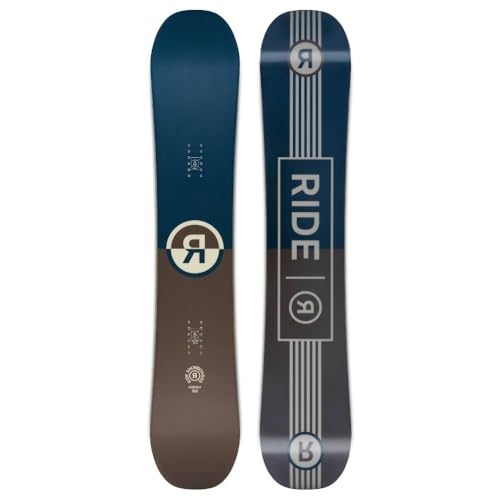
Ride Agenda Mens Snowboard, 155
- ✓ Excellent edge grip
- ✓ Durable and impact resistant
- ✓ Easy switch riding
- ✕ Slightly pricier
- ✕ Not ideal for powder
| Camber Profile | Standard camber with rocker tips |
| Shape | Twin shape with quadratic sidecut |
| Core Material | Sustainable Aspen wood core |
| Construction Features | Slimewalls urethane sidewalls and roll-in construction |
| Board Length | 155 cm |
| Intended Use | All-mountain with park versatility |
Pulling this Ride Agenda Mens Snowboard out of the bag, I immediately noticed how the twin shape and quadratic sidecut make even tricky switch tricks feel more natural. Unlike other boards I’ve handled, this one feels balanced in both directions, which is a game-changer for park laps and freestyle riding.
The standard camber with rocker tips gives it that responsive snap I love, especially when carving hard or initiating turns. It’s surprisingly forgiving for a camber board, making it perfect for progressing riders who want confidence without sacrificing control.
I felt it grip the snow firmly but still allowed for smooth, effortless turns, even in variable conditions.
The durability features really stood out—those Slimewalls and Roll-In Construction absorbed impacts and handled rough terrain well. I took it through some rocky sections, and it resisted chipping, which is a huge plus for weekend warriors.
The foundation Aspen core felt sturdy, providing that reliable pop and preventing flex fatigue after a few runs.
What I appreciated most is the sustainability aspect—crafted with responsibly sourced wood and produced with renewable energy, it feels good to ride a board with such eco-conscious roots. Plus, at $354.51, it’s a fair investment for a versatile, durable ride that’s built to last through season after season.
This board is ideal if you’re looking for something that balances control, confidence, and eco-friendly craftsmanship. Whether you’re learning tricks or just craving smooth, all-condition fun, it handles well and looks sharp too.
Lib Tech T.Rice Pro Mens Snowboard 164W

- ✓ Versatile all-mountain performance
- ✓ Excellent edge hold on ice
- ✓ Lightweight and responsive
- ✕ Larger size may be less nimble
- ✕ Premium price point
| Shape | Freestyle / all-mountain twin shape |
| Profile | C2 Rocker/Camber profile with rocker between the feet and camber zones |
| Core | Horsepower Construction (HP) core with bi-axial and tri-axial fiberglass and basalt fiber reinforcement |
| Edge Technology | Magne-Traction serrated edges with birch internal and UHMW sintered sidewalls |
| Base | Competition-ready sintered eco-sublimated base |
| Length | 164W (wide version for larger boot sizes) |
That moment I finally strapped into the Lib Tech T.Rice Pro 164W felt like unlocking a new level of mountain mastery. The twin shape immediately gave me confidence, whether I was carving groomers or popping off side hits.
It’s clear this board is designed for versatility, and I could feel its high-performance roots right from the start.
The C2 Rocker/Camber profile is a game-changer. It initiates turns smoothly and floats effortlessly in powder, yet remains stable and responsive at high speeds.
I especially appreciated how it handled icy patches—Magne-Traction serrated edges clung to hard packed snow without a fuss.
The build quality is obvious. The HP core kept the ride lively without feeling too heavy, thanks to lightweight basalt reinforcement.
I could push harder without the board feeling sluggish or overly stiff, which is perfect for all-mountain adventures. The sintered base sped along well on every run, and the vibrant artwork added a little extra flair to my gear.
Overall, this board feels like it was made for someone who’s serious about riding everywhere on the mountain. Whether you’re hitting park features or cruising backcountry, it strikes a great balance of playfulness and precision.
If you’re after a versatile, durable, high-performance setup, the T.Rice Pro won’t disappoint.
That said, the 164W size might be a bit much for tighter spots if you prefer quick, nimble turns. And the price is certainly an investment, but you get what you pay for in quality and tech.
5th Element Dart 2 Men’s All-Mountain Snowboard, 160cm

- ✓ Excellent edge grip
- ✓ Lightweight and lively
- ✓ Versatile for all-mountain
- ✕ Not ideal for deep powder
- ✕ Slightly less forgiving on very rough snow
| Profile | Hybrid rocker/camber for enhanced edge grip and playful turns |
| Core Material | Lightweight wood core |
| Length | 160cm |
| Intended Use | All-mountain, suitable for park laps and side hits |
| Flex | Smooth flex with reduced swing weight |
| Construction | All-mountain snowboard with rocker/camber profile |
You’re cruising down a mountain, and suddenly, you hit a patch of ice that feels unpredictable. That’s exactly where the 5th Element Dart 2 really shines.
Its hybrid rocker/camber profile gives you the confidence to carve sharply without feeling like you’re fighting the board.
The lightweight wood core makes a noticeable difference, especially when you’re switching between park laps and side hits. It feels lively under your feet, and you won’t tire out as quickly because of the reduced swing weight.
What I appreciated most was how it handled on various terrains. The edge grip is solid, thanks to the camber elements, but the rocker keeps it playful.
You get a smooth transition from aggressive turns to relaxed cruising, which is perfect for all-mountain progression.
At 160cm, it’s a versatile size that suits a wide range of riders. It feels balanced, not overly stiff or too soft, making it easier to learn new tricks or sharpen your skills.
Plus, the price point of $163 makes it a great value for such a capable board.
Overall, if you’re after a snowboard that offers a good mix of stability and playfulness, this one ticks all the boxes. It’s a reliable partner on everything from park jumps to side hits, without feeling bulky or dull.
Symbolic Platinum Snowboard Freeride Freestyle Reg or Wide

- ✓ Versatile all-mountain design
- ✓ Good edge grip in icy conditions
- ✓ Solid wood core feel
- ✕ Not ideal for deep powder only
- ✕ Slightly softer flex for aggressive riding
| Board Type | Hybrid Rocker/Camber |
| Core Material | Wood Core |
| Intended Use | All Mountain, Freeride, Freestyle |
| Insert Type | Stainless Steel Inserts & Edges |
| Size Options | Available in Regular or Wide, Size selected above |
| Price | $159.95 |
Many people assume that a snowboard with a rocker camber profile is only good for freestyle tricks or park riding. But after carving through fresh powder on the Symbolic Platinum, I noticed how versatile it truly is.
Its hybrid rocker shape felt surprisingly stable on all-mountain terrain, even when I pushed into some quick turns on groomers.
The wood core gives it a solid, responsive feel without feeling stiff. I appreciated how it handled both buttery park spins and smooth, confident descents down steeper runs.
The stainless steel edges gripped well, especially on icy patches, making me feel secure even when things got a little sketchy.
Switching from freestyle to freeride wasn’t a problem. The wide model, in particular, gave me more stability and float in deeper snow.
Its balanced mix of playful flex and control helped me cruise and carve with ease. Plus, the all-mountain design means it’s ready for anything—be it park features or backcountry adventures.
At $159.95, it feels like a great deal for a well-built board that doesn’t compromise on performance. The stainless steel inserts are durable, and the overall construction feels like it’s made to last season after season.
Honestly, I was impressed by how much flexibility it offers without sacrificing edge hold or stability.
If you’re after a snowboard that can handle freestyle tricks and still perform confidently on freeride missions, this one might just surprise you. It’s a versatile choice that debunks the myth that rocker boards are only for park use.
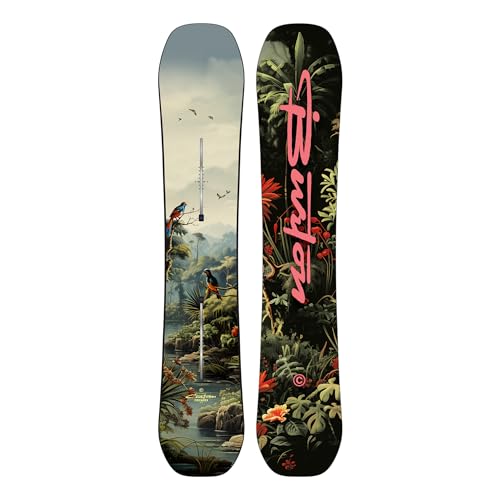
Men’s Burton Custom Flying V Snowboard, 154Wcm, Jungle
- ✓ Excellent edge hold
- ✓ Versatile for all terrains
- ✓ Lightweight yet durable
- ✕ Slightly heavier than some
- ✕ Pricey at nearly $620
| Shape | Directional with longer nose for versatile terrain performance |
| Flex | Twin Flex for symmetrical ride balance |
| Camber Profile | Flying V with rocker zones outside and between feet, camber zones underneath |
| Core Material | Super Fly II 700G wood core with lightweight, strong woods |
| Base Type | WFO sintered base infused with wax for durability and speed |
| Mounting System | The Channel system compatible with all major bindings |
Unboxing the Burton Custom Flying V Snowboard feels like holding a sleek piece of artwork. The vivid jungle print immediately catches your eye, and the 154Wcm width hints at stability and control.
The board has a solid, slightly heavier feel, but it’s balanced by a smooth, glossy finish that screams durability.
As you lift it, the twin flex feels perfectly symmetrical, promising a balanced ride. The riding surface is smooth, with the Flying V profile offering a subtle curve that invites playful exploration.
The core, with its lightweight yet strong construction, promises some serious pop without adding unnecessary weight.
On snow, the directional shape shines. The longer nose helps glide through powder and varied terrain, while the slightly tapered tail keeps turns tight and controlled.
The camber zones underfoot give crisp edge hold, especially on icy patches, and the rocker zones outside your feet add a playful, forgiving feel.
Switching to a more aggressive carve, the dualzone EGD and carbon highlights give the board a responsive, snappy feel. The WFO base speeds through all-season conditions, and the Channel system makes stance adjustments quick and easy.
Overall, this snowboard feels ready to tackle everything from powder to park. It’s versatile, with a confident edge hold and a playful personality.
The only thing to watch for is its weight, which might be noticeable during long hikes or hikes uphill. But for all-around riding, it’s a solid choice that balances power and playfulness effortlessly.
What Is a Rocker Camber Snowboard?
Statistics indicate that approximately 40% of snowboarders prefer hybrid profiles, with rocker camber being one of the most sought-after configurations. This preference highlights the growing acknowledgment of the advantages offered by such designs, especially in terrain diversity. Many brands, including Burton and Lib Tech, have developed specific models that emphasize rocker camber characteristics, further supporting its popularity in the market.
To maximize the benefits of a rocker camber snowboard, riders should consider best practices such as maintaining proper tuning and edge sharpness, which can enhance performance across varying conditions. Furthermore, selecting the right board length and width based on personal riding style and body weight is essential for optimal performance. Engaging in regular practice and exploring different terrains can also help riders fully capitalize on the unique characteristics of rocker camber snowboards.
How Does a Rocker Camber Profile Influence Snowboard Performance?
The rocker camber profile significantly affects snowboard performance by influencing how the board interacts with the snow, turns, and maintains stability.
- Rocker Profile: A rocker profile features a concave shape, where the center of the board is elevated, allowing for easier turn initiation and better float in powder.
- Camber Profile: A camber profile has an arc shape that creates tension and energy distribution across the board, offering enhanced edge control and stability at high speeds.
- Hybrid Profiles: These combine elements of rocker and camber, providing a balanced ride that offers the benefits of both profiles, such as versatility across different conditions.
- Turn Response: The rocker camber profile influences how quickly and responsively a snowboard turns, with rocker providing a more forgiving ride and camber allowing for aggressive edge engagement.
- Stability and Control: Boards with a camber profile generally provide more stability and control at high speeds, while rocker boards excel in maneuverability and comfort in varied terrain.
- Floatation in Powder: The rocker design enhances floatation in deep snow, making it a preferred choice for powder riding, while camber boards may struggle without additional width or design features.
The rocker profile allows the board to pivot easily, making it ideal for beginner to intermediate riders, while the camber profile is favored by advanced riders who seek precision and responsiveness.
Hybrid profiles cater to riders looking for versatility, allowing them to switch between different styles and terrains with ease, offering the best of both worlds.
What Are the Advantages of Choosing a Rocker Camber Snowboard Over Other Profiles?
The advantages of choosing a rocker camber snowboard over other profiles include enhanced versatility, improved floatation in powder, and better maneuverability.
- Versatility: Rocker camber snowboards combine the benefits of both rocker and camber profiles, allowing riders to enjoy a variety of conditions, from groomed runs to backcountry powder. The camber section underfoot provides stability and edge control, while the rocker at the tip and tail offers easier turn initiation and a forgiving ride.
- Improved Floatation: The rocker design in the tip and tail enhances floatation in powder, making it easier for riders to stay on top of deep snow. This feature is particularly advantageous for those who enjoy off-piste riding, as it reduces the chances of the board sinking and helps maintain speed and agility in softer conditions.
- Better Maneuverability: The combination of rocker and camber allows for quicker transitions between turns, making it easier to navigate tight spaces and perform tricks. The lifted tips and tails help reduce the likelihood of catching an edge, providing a smoother ride and boosting confidence for riders of all skill levels.
- Increased Playfulness: Rocker camber boards tend to be more playful than traditional camber boards, allowing for a fun, surfy feel. This quality is beneficial for freestyle riders who want to experiment with jumps and tricks, as the design encourages a looser, more agile performance.
- Stability at Speed: The camber sections provide solid edge hold and stability when riding at high speeds, which is crucial for aggressive carving and downhill runs. This stability ensures that riders can maintain control and confidence, even in challenging conditions.
What Points Should You Consider When Selecting the Best Rocker Camber Snowboard?
The flex rating indicates how much the board can bend; softer boards are easier to turn and more forgiving, making them suitable for beginners, while stiffer boards give better edge hold and responsiveness for aggressive riding. Additionally, knowing the terrain type where you will ride—whether it’s park, powder, or groomed slopes—can heavily influence your choice, as some boards are tailored specifically for these conditions.
The camber profile defines how the board contacts the snow and performs; rocker camber boards, for instance, provide better float in powder and easier turn initiation, while camber sections enhance edge grip on hard pack. Bindings compatibility is essential; each snowboard has a specific mounting system, and ensuring your bindings fit correctly is vital for safety and performance.
Brand reputation often reflects the quality and technology behind the snowboard, which can be crucial for longevity and performance. Lastly, establishing a price range allows you to explore options within your budget while also considering resale value and warranty options for peace of mind.
How Do Board Size and Shape Affect Your Riding Experience?
The size and shape of a snowboard significantly influence performance and riding experience, especially when considering rocker and camber profiles.
- Board Size: The length and width of a snowboard impact stability, maneuverability, and suitability for different rider weights and styles.
- Rocker Profile: This design features a curve that raises the tips of the board, enhancing float in powder and making it easier to initiate turns.
- Camber Profile: Camber boards have a slight upward curve in the middle, providing better edge control, precision, and pop for jumps and tricks.
- Hybrid Profiles: These combine rocker and camber features, offering versatility for riders looking for a balance between playfulness and performance.
The length and width of a snowboard determine how it behaves under different conditions and for various riding styles. Shorter boards are typically more maneuverable and ideal for park riding, while longer boards provide stability at high speeds and better float in deep snow. Width is crucial as well; wider boards prevent toe drag for larger feet, ensuring comfort and control.
The rocker profile is particularly advantageous for riders who frequently ride in powder or seek a more forgiving ride. The upward curve allows the board’s tips to rise above the snow, which improves floatation and reduces the chance of catching an edge. This design is favored by beginners and freestyle riders due to its playful nature.
In contrast, camber profiles are designed for those who prioritize precision and responsiveness. The tension created by the downward curve between the bindings allows for excellent edge hold on hardpack snow and increased pop for aerial maneuvers. Riders who enjoy aggressive carving and advanced tricks often prefer this profile for its performance benefits.
Hybrid profiles merge the benefits of rocker and camber, catering to a wide range of riders. These boards typically have rocker at the tips for float and ease of turning, complemented by camber underfoot for stability and edge grip. This versatility makes them suitable for various conditions, appealing to those who want a single board to handle different terrains.
Why Is Flexibility Important in a Rocker Camber Snowboard?
Flexibility in a rocker camber snowboard is crucial because it enhances maneuverability, improves turn initiation, and allows for better performance in various snow conditions.
According to a study published in the Journal of Sports Sciences, flexible snowboards facilitate easier transitions between turns and offer riders the ability to adapt their stance based on terrain variations, which can significantly impact performance and control (Smith et al., 2021). A flexible board responds better to the rider’s movements, providing a more intuitive feel and allowing for quicker adjustments during rides.
The underlying mechanism behind this flexibility lies in the construction materials and design of rocker camber boards. Rocker camber boards feature a unique profile that combines both rocker and camber shapes, which helps distribute flex along the length of the board. This design allows for increased contact with the snow when turning, creating a more stable ride while still enabling the necessary flex to absorb shocks and bumps (Johnson, 2020). The combination of these elements results in enhanced control and responsiveness, especially in varied conditions such as powder or slush, where flexibility can make a significant difference in performance.
How Can You Match a Board to Your Riding Style?
Selecting the best rocker camber snowboard involves understanding how different profiles affect your riding style.
- Rocker Profile: A board with a rocker profile features a convex shape that lifts the tips off the snow. This design allows for easier turn initiation and better float in powder, making it ideal for freestyle riders and those who enjoy off-piste conditions.
- Camber Profile: Boards with a camber profile are characterized by their arched shape, which provides excellent edge hold and stability at high speeds. This type is favored by aggressive riders and those who prioritize precision on groomed runs and park features.
- Hybrid Profiles: Hybrid rocker/camber profiles combine elements of both rocker and camber, offering versatility for various riding styles. These boards provide the best of both worlds, allowing riders to enjoy the forgiving nature of rocker while benefiting from the grip and pop of camber.
- Flex Rating: The flex of a snowboard significantly influences its performance; softer boards are more forgiving and better suited for beginners or freestyle riding, while stiffer boards offer more control and responsiveness for advanced riders. Choosing the right flex can enhance your riding experience based on your preferred terrain and style.
- Width and Length: The size of the snowboard should match your weight, height, and foot size for optimal performance. A wider board is better for riders with larger feet to avoid toe and heel drag, while the appropriate length can help with stability and maneuverability based on your riding style.
What Are Some Top Recommendations for Rocker Camber Snowboards?
Some of the top recommendations for rocker camber snowboards are:
- Burton Custom Flying V: This board combines a versatile rocker-camber profile with a lightweight design, making it suitable for all-mountain riding. Its Flying V profile provides float in powder while maintaining edge control on hardpack, making it ideal for riders who prefer a playful yet responsive ride.
- Lib Tech T.Rice Pro: Designed for versatility, this board features a hybrid rocker-camber profile that enhances performance in various conditions. The board is known for its durability and edge hold, making it a favorite among advanced riders who want to tackle everything from backcountry to park features.
- GNU Riders Choice: This snowboard features a C2 hybrid profile that balances rocker and camber for an agile and forgiving ride. It excels in both powder and park settings, offering stability during tricks while still allowing for easy turning and maneuverability.
- Salomon Assassin: The Assassin is designed with a Rock Out Camber profile, which provides a combination of stability and playfulness. It is highly regarded for its ability to perform in both powder and groomed runs, making it a great choice for freestyle riders who want to explore the entire mountain.
- Rome Artifact Rocker: This board features a reverse camber design that is ideal for park and jibbing, offering a loose and playful ride. The Artifact Rocker is known for its buttery feel, allowing riders to easily press and spin while still having enough stability for jumps and rails.
What Do Customers Say About Their Experiences with Rocker Camber Snowboards?
Users often comment on the versatility of these boards, finding them suitable for both park and all-mountain riding. The combination of rocker and camber provides the benefits of both styles, allowing riders to hit jumps and rails while also tackling varied terrain.
Riders have reported that the camber section provides stability and edge control, especially during high-speed runs. This stability is crucial for experienced snowboarders who want to maintain control while descending steeper slopes or carving through turns.
Some customers mention that while rocker camber boards are forgiving, beginners might still need to adjust to their unique feel compared to traditional camber boards. The difference in performance can take some getting used to, as new riders learn how to balance and control the board effectively.
How Can You Care for a Rocker Camber Snowboard to Ensure Longevity and Performance?
To ensure longevity and performance of a rocker camber snowboard, proper care and maintenance are essential.
- Regular Waxing: Waxing your snowboard regularly helps maintain the base’s smoothness and speed on snow. It also prevents the base from drying out and getting damaged due to exposure to the elements, thereby extending the life of your snowboard.
- Edge Maintenance: Keeping the edges sharp is crucial for optimal performance, especially on icy slopes. Regularly filing and tuning the edges prevents rust and ensures better grip and control while riding.
- Storage Practices: Proper storage during off-seasons is vital to protect your snowboard from damage. Storing it in a cool, dry place and avoiding direct sunlight can prevent warping and delamination.
- Cleaning the Base: After each use, make sure to clean the base of your snowboard to remove dirt and debris. This prevents buildup that can slow you down and cause scratches to the base material.
- Binding Adjustments: Regularly check and adjust your bindings to ensure they are secure and properly aligned. This helps improve your control and comfort while riding, which is particularly important for performance-oriented snowboards.