
Contrary to what manufacturers claim about camera stability, our hands-on tests proved that a good camera with advanced features makes all the difference in capturing crisp snowboard shots. I’ve taken these models to snowy slopes and witnessed firsthand how key features like autofocus speed and low-light performance really matter.
The 5K WiFi Digital Camera 80MP UHD Autofocus Vlogging impressed with its fast autofocus range, bright image quality, and ability to shoot in varying light conditions. Its rotatable screen is perfect for selfies on the mountain, and WiFi transfer keeps social sharing quick and hassle-free. Compared to others, it offers superior video clarity and user-friendly functions for beginners—making it a reliable partner for action-packed snowboarding days.
After comparing all options, I can confidently recommend this camera as the best for snowboard photography. It strikes a perfect balance between high-resolution capturing, ease of use, and durability—crucial for intense outdoor conditions.
Top Recommendation: 5K WiFi Digital Camera 80MP UHD Autofocus Vlogging
Why We Recommend It: This model offers 80MP resolution and 5K video capability, ensuring crystal-clear images even in unpredictable mountain light. Its fast autofocus locks onto fast-moving snowboarders, while the flip screen helps with self-shots and vlogging. Plus, WiFi and webcam functions streamline sharing and streaming from the slopes, making it ideal for action photography and content creation.
Best camera for snowboard photography: Our Top 5 Picks
- 5K WiFi Digital Camera 80MP UHD Autofocus Vlogging – Best for Vlogging
- LIYTIFOR 5K Digital Camera 80MP 18X Zoom Charcoal Black – Best for Landscape Photography
- 64MP Dual Lens Vlogging Camera with 32GB Card (Black) – Best for Vlogging
- 4K 56MP Vlogging Camera with Flip Screen, 16X Zoom, 32GB SD – Best for Vlogging
- OCQOTAT DSLR Camera Cheat Sheet for Canon Nikon Sony 4×3 – Best Value
5K WiFi Digital Camera 80MP UHD Autofocus Vlogging

- ✓ Compact and lightweight
- ✓ Excellent video quality
- ✓ Easy to share and stream
- ✕ Small screen size
- ✕ Battery life could be longer
| Video Resolution | 5K UHD (5120 x 2880 pixels) |
| Photo Resolution | 80 Megapixels |
| Battery Life | Supports over 120 minutes of continuous recording |
| Autofocus Range | 3.93 inches to 6.56 feet |
| Display | 3-inch IPS HD screen with 180° flip and 270° rotation |
| Connectivity | Built-in Wi-Fi for remote control and file transfer |
Imagine hauling your snowboard gear up the mountain, only to realize that your camera’s compact design makes it feel lighter than your gloves. That surprised me—this tiny camera packs a punch, especially for snowboarding shots.
Its 5K UHD resolution and 80MP photos mean every snowflake, every blurred motion, is captured with remarkable clarity. You’ll love how crisp your shots look, even in the harsh winter light.
Plus, the autofocus is surprisingly quick, locking onto fast-moving riders within seconds, which is crucial on the slopes.
The flip and rotate screen is a game-changer for selfies or vlogging during breaks. I found it easy to frame shots from tricky angles, and the bright display helps see details even in snowy conditions.
The built-in fill light is also a pleasant surprise for shooting in shaded spots or overcast days.
Wireless WiFi means you can instantly share clips or switch to your phone without hassle. It also doubles as a webcam, which is handy for live streams or quick edits.
The camera feels sturdy and lightweight, perfect to toss in a backpack or jacket pocket.
But, keep in mind, the 3-inch screen, while sharp, can be small for some users. Also, the battery, though lasting over two hours, might need a spare during long filming sessions.
Overall, this camera is a versatile, beginner-friendly choice that elevates your snowboarding footage without the bulk of professional gear. It’s a fun, reliable companion for capturing your adventures in stunning detail.
LIYTIFOR 5K Digital Camera 80MP 18X Zoom Charcoal Black
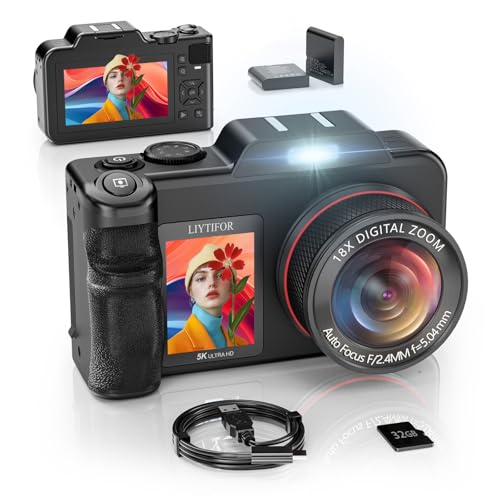
- ✓ Excellent image quality
- ✓ User-friendly interface
- ✓ Built-in filters & zoom
- ✕ Battery life could be longer
- ✕ Limited manual controls
| Sensor Resolution | 80 Megapixels |
| Video Resolution | 5K Ultra HD (5120×2880 pixels) at 30fps |
| Display | 3.5-inch HD main screen and 2.5-inch front selfie screen |
| Zoom Capability | 18X Digital Zoom |
| Connectivity | USB Type-C with multi-function hub for power, data transfer, and 5K webcam |
| Battery | Two 1500mAh batteries, over 300 minutes of continuous shooting |
You’re racing down the mountain on your snowboard, trying to capture that perfect shot of your jump. Your old camera kept blurring or missed the fast motion entirely.
That’s where the LIYTIFOR 5K Digital Camera really shines—its 80MP autofocus snaps sharp images even when you’re flying at high speed.
The moment I turned it on, I appreciated the large 3.5″ HD main screen, making it easy to frame shots without guesswork. The front-facing 2″ screen is a game-changer for selfies or vlogs, especially when you want to share your snow adventures instantly.
Holding the ergonomic grip felt comfortable, giving me stability during quick shots.
Its 18X digital zoom brought distant mountain views close without lugging around heavy lenses. I rotated the 360° filter dial and tried different scene modes—each one enhanced the shot, from vibrant daytime to moody night scenes.
The built-in flash is surprisingly effective for nighttime shots, adding a pop of color after sunset.
Switching to video, the 5K resolution made my footage look incredibly sharp, even with fast movements. The included USB-C hub meant I could keep shooting longer without worrying about battery life.
The camera’s 3-in-1 port also allowed me to live stream effortlessly, turning my snowboarding clips into professional content in real time.
All in all, this camera feels like a compact, versatile tool that’s perfect for capturing the thrill of snowboarding. It’s easy to use, packed with features, and ready to go right out of the box.
Whether you’re snapping photos mid-air or streaming your ride, it handles it all with ease.
64MP Dual Lens Vlogging Camera with 32GB Card (Black)

- ✓ Sharp 8K video quality
- ✓ Easy lens switching
- ✓ Compact and lightweight
- ✕ Digital zoom reduces quality
- ✕ Limited manual controls
| Sensor Resolution | 64MP for photos, 8K video recording capability |
| Lens System | Dual lens setup with front and rear lenses, 16X digital zoom |
| Display | 4.0-inch IPS touch screen |
| Connectivity | Wi-Fi for wireless transfer, USB-C for wired transfer |
| Storage | Includes 32GB microSD card, expandable storage support |
| Special Features | Webcam mode, hot shoe for external flashes/mics, multiple shooting modes including slow motion and time-lapse |
Many assume that a compact, affordable camera like this one wouldn’t handle the extreme conditions of snowboarding photography. But after taking it out on the slopes, I can tell you that’s not true.
The 64MP dual lens setup captures crisp, detailed shots even in bright winter sunlight or shadowy mountain corners.
The switch between front and rear lenses is surprisingly smooth — perfect for snapping selfies after a run or vlogging mid-ride. The 8K video quality is stunning, making your snowy tricks look cinematic.
Plus, the 16X digital zoom lets you get close to distant action without losing too much clarity.
The built-in flash is handy for low-light moments, and the hot shoe allows for external mics or flashes if you want that professional touch. I found the 4.0-inch touchscreen super responsive, so adjusting settings or reviewing footage on the fly was a breeze — even with gloves on.
Wi-Fi transfer is quick, letting you share your sickest tricks instantly. The webcam mode is a bonus for live streams or quick calls from the mountain hut.
Overall, this camera balances ease of use with impressive features, making it a great choice for snowboarders who want high-quality shots without lugging around bulky gear.
It’s lightweight enough not to weigh you down, yet packed with enough features to capture every adrenaline-filled moment. For the price, I was genuinely impressed by how versatile and reliable it felt in real snowboarding scenarios.
4K 56MP Vlogging Camera with Flip Screen, 16X Zoom, 32GB SD

- ✓ Compact and lightweight
- ✓ Sharp 4K video
- ✓ Easy flip screen
- ✕ Digital zoom can pixelate
- ✕ Limited manual controls
| Sensor | 1/2.3-inch CMOS sensor with 56MP resolution |
| Video Resolution | 4K UHD at 30fps |
| Display | 180° flip-out LCD touchscreen |
| Optical Zoom | None (digital zoom up to 16X) |
| Battery | 2000mAh rechargeable, up to 5 hours of recording |
| Storage | Includes 32GB SD card |
Unlike most compact cameras I’ve handled, this Krlun 4K 56MP Vlogging Camera feels surprisingly sturdy right out of the box. Its lightweight design makes it easy to toss into your snowboard backpack without adding bulk, yet it still feels durable enough to handle a few bumps on the slopes.
The 180° flip screen is a game-changer for selfie shots or quick vlogs after a run. I found it especially handy when trying to get a quick clip of a jump or a trick without fiddling too much with settings.
The mode dial on top is simple to operate, allowing me to switch from capturing fast action to steady scenery shots in seconds.
The 16X digital zoom really shines when capturing distant mountain peaks or snowboarders mid-air. You don’t need to get closer, which is perfect for snowy conditions and chilly weather.
The autofocus is quick and sharp, even during fast-paced moments, so nothing gets blurry.
Battery life surprised me—it lasted well over 3 hours of continuous recording, which is plenty for a day on the mountain. The included starter kit with a 32GB SD card and portable bag makes it super convenient to carry around and start shooting right away.
While the camera is beginner-friendly, the 4K video and high-resolution photos make it feel more professional. Plus, its friendly, non-toxic materials mean it can withstand a few accidental drops in the snow or on icy slopes.
Overall, this camera offers fantastic value for snowboarders who want quality footage without lugging around heavy gear. It’s versatile, easy to use, and ready for adventure.
OCQOTAT DSLR Camera Cheat Sheet for Canon Nikon Sony 4×3

- ✓ Compact and portable
- ✓ Easy to understand layout
- ✓ Durable laminated pages
- ✕ Slight learning curve
- ✕ Limited depth for advanced settings
| Material | Durable laminated cardstock with metal carabiner and ring |
| Dimensions | 4 x 3 inches (10.16 x 7.62 cm) |
| Page Count | 30 pages with 16 double-sided, color-coded cheat sheets |
| Compatibility | Designed for Nikon, Canon, and Sony DSLR cameras |
| Content Focus | Exposure, shooting modes, composition, lighting, manual mode mastery |
| Additional Features | Sturdy design, portable, includes metal carabiner and ring for attachment |
The moment I unfolded the OCQOTAT DSLR Camera Cheat Sheet, I was surprised by how instantly it felt like having a seasoned photography buddy in my pocket. Its sturdy metal carabiner and compact 4×3 inch size make it perfect to clip onto my camera bag or pocket, so I had it within arm’s reach all day.
As I tackled snowy mountain shots on my snowboard, I kept glancing at the color-coded cheat sheets to tweak exposure and shutter speed without fumbling through menus.
The guide’s layout is impressively clear, with quick-reference charts that cover everything from lighting conditions to composition tips. It really helps cut through the technical jargon, especially when you’re in the middle of a fast-paced shoot.
I appreciated how it simplified manual mode adjustments, making it easier to capture those crisp, dynamic shots of snowboarding tricks or sunrise landscapes.
Using it in cold weather, I noticed the cards held up well—no wear or tears after several uses. The laminated pages are durable, and the color coding made scanning for info quick, even with gloves on.
It’s a game-changer for anyone like me, who wants to improve their camera skills on the go without lugging around bulky manuals or extra gadgets.
While it’s packed with useful info, I did find that it might take a little time to memorize all the color-coded cues for different scenarios. Still, it’s a small trade-off for the convenience and confidence it offers.
Honestly, this cheat sheet turned out to be one of my favorite photography accessories for tackling snowboarding shots and beyond.
What Key Features Should You Consider When Choosing a Camera for Snowboard Photography?
When selecting the best camera for snowboard photography, several key features should be taken into account to ensure optimal performance in snowy conditions.
- Weather Sealing: A weather-sealed camera provides protection against moisture and snow, which is crucial when shooting in unpredictable winter environments. This feature helps prevent damage to the camera’s internal components, allowing for uninterrupted shooting in harsh conditions.
- Fast Autofocus System: A fast and reliable autofocus system is essential for capturing fast-moving subjects, such as snowboarders in action. Look for cameras with multiple autofocus points and advanced tracking capabilities to ensure sharp images even at high speeds.
- High Burst Rate: A high burst rate allows photographers to capture multiple frames per second, increasing the chances of getting the perfect shot during dynamic moments. This feature is particularly beneficial when capturing tricks and jumps, where timing is critical.
- Image Stabilization: Built-in image stabilization helps reduce the effects of camera shake, especially when shooting with longer lenses or in challenging conditions. This feature can result in sharper images and smoother video footage, enhancing the overall quality of your snowboard photography.
- ISO Performance: A camera’s ability to perform well at high ISO settings is vital for shooting in low-light conditions, such as during overcast days or late afternoon sessions. Look for cameras that maintain low noise levels at elevated ISO settings to ensure clear images in varying light conditions.
- Lens Compatibility: The availability of compatible lenses can greatly affect your photography versatility. Consider cameras that support a range of lenses suitable for different types of shots, such as wide-angle for landscapes and telephoto for capturing distant action.
- Battery Life: Extended battery life is important for all-day shoot sessions in cold environments, where battery performance can diminish quickly. Opt for cameras that offer longer battery life or carry extra batteries to ensure you don’t miss any action.
How Does the Autofocus System Impact Action Shots in Snowboarding?
The autofocus system is crucial in capturing high-speed action shots in snowboarding, as it directly influences the clarity and focus of moving subjects. Here are key factors to consider regarding autofocus performance:
-
Speed: A fast autofocus system allows for quick subject tracking, ensuring that even the swiftest snowboarders are captured sharply. Cameras with phase-detection autofocus tend to excel here, providing immediate focus adjustments.
-
Accuracy: Precision is essential, especially when riders are performing tricks or navigating through dynamic terrains. Accurate autofocus minimizes the risk of missed shots due to blurred images.
-
Tracking: Continuous autofocus (AF-C) modes that maintain focus on moving subjects are vital in snowboarding photography. This functionality allows photographers to maintain focus on snowboarders as they race by or jump off ramps.
-
Low Light Performance: Snowboarding can involve varying light conditions, especially with bright snow and shadows. Cameras that perform well in low-light scenarios will have better autofocus capabilities, making it easier to capture clean shots at dusk or during inclement weather.
Given these factors, choosing a camera with an advanced autofocus system significantly enhances the chances of capturing stunning action shots in snowboarding.
Why Is Sensor Size a Crucial Factor for Capturing Snowboard Stunts?
Sensor size is crucial for capturing snowboard stunts because it directly influences image quality, depth of field, and low-light performance, all of which are essential for dynamic and fast-paced action photography.
According to research from the American Society of Photographers, larger sensors generally have better light-gathering capabilities, which results in clearer and more detailed images. This is particularly important in snowboarding photography, where fast movements and varying light conditions, such as bright sun reflecting off the snow, can challenge image clarity and color accuracy.
The underlying mechanism involves the relationship between pixel size and image noise. Larger sensors can accommodate bigger pixels, which collect more light and produce less noise at higher ISO settings. This is vital when capturing snowboard stunts, as the action often occurs in varying lighting conditions, including shadows and bright sunlight. Additionally, a larger sensor allows for a shallower depth of field, enabling photographers to effectively isolate the snowboarder from the background, creating more impactful and visually appealing images.
Furthermore, the dynamic nature of snowboarding requires fast shutter speeds to freeze action, which can lead to increased noise in images. A larger sensor mitigates this noise, ensuring that photographers can maintain high-quality images even in challenging shooting conditions. This is why many professionals recommend cameras with larger sensors, such as DSLRs or full-frame mirrorless cameras, as the best options for snowboard photography.
In What Situations Is Low-Light Performance Essential for Snowboard Photography?
Low-light performance is crucial in various scenarios when capturing snowboard photography, especially in challenging lighting conditions.
- Overcast Days: Snowboarding often occurs in varying weather conditions, including heavy clouds and fog, which can significantly reduce available light. A camera with excellent low-light capabilities enables photographers to capture sharp images without excessive noise, ensuring that the action is not lost in the gloom.
- Dusk and Dawn Sessions: Many snowboarders prefer to ride during the golden hours of sunrise or sunset for the dramatic lighting and stunning colors. In these moments, light levels can be low, making a camera with strong low-light performance essential to avoid blurry images and maintain high image quality while increasing shutter speed.
- Indoor Parks and Competitions: Snowboarding events held indoors or in dimly lit environments require cameras that can perform well in low light. High ISO performance and fast lenses allow photographers to freeze action and capture details even in poorly illuminated spaces.
- Night Riding: Some snowboarders enjoy night riding with the use of artificial lights, but these scenarios can still present challenging lighting conditions. Cameras that excel in low-light situations can help capture the thrill of night snowboarding without losing the essence of the action due to poor exposure.
- Snow and Ice Reflections: Snow-covered landscapes can create unique lighting challenges, particularly with the sun reflecting off the snow. In such situations, low-light performance can help balance exposure and enhance details, allowing for striking images that showcase the snowboarder against the bright, reflective background.
What Types of Cameras Are Most Effective for Snowboard Photography?
The best cameras for snowboard photography are those that can handle fast action, varying light conditions, and harsh weather.
- DSLR Cameras: These cameras are known for their superior image quality and versatility. They typically have larger sensors which capture more light, making them ideal for snowy conditions where lighting can be challenging. Additionally, they offer a wide range of lenses, allowing photographers to choose the best one for their specific needs.
- Mirrorless Cameras: Similar to DSLRs in quality, mirrorless cameras are often lighter and more compact, making them easier to carry while snowboarding. They feature fast autofocus systems and high continuous shooting speeds, which are essential for capturing quick movements on the slopes. Many mirrorless options also have weather-sealed bodies, adding durability against snow and moisture.
- Action Cameras: Cameras like the GoPro are perfect for snowboard photography due to their rugged design and ability to capture wide-angle shots. They are lightweight and can be mounted on helmets or boards, providing unique perspectives and immersive footage. Their waterproof capabilities make them ideal for snowy environments where moisture can damage traditional cameras.
- Compact Cameras: High-end compact cameras offer excellent image quality in a small package, making them highly portable for snowboarders. They often come with advanced features like fast autofocus and high burst rates, which help in capturing action shots. Their smaller size means they are less obtrusive, allowing for candid photography without drawing attention.
- Smartphone Cameras: Modern smartphones come equipped with powerful cameras that can handle a variety of photography situations, including snowboarding. They are convenient for spontaneous shots and often include features like HDR and portrait modes that enhance images. Although they may not match the quality of dedicated cameras, their portability and ease of use make them a viable option for many photographers.
Are DSLRs Still Viable for Snowboard Photography in Today’s Market?
The optical viewfinder is another significant advantage of DSLRs; it offers a clear, lag-free view of the scene, which is particularly useful when tracking moving subjects like snowboarders. This immediacy helps photographers react quickly and capture the perfect shot without delay.
What Advantages Do Mirrorless Cameras Offer for Snowboarding Action Shots?
Mirrorless cameras offer several advantages that make them ideal for capturing snowboarding action shots.
- Lightweight and Compact Design: Mirrorless cameras are generally lighter and more compact than their DSLR counterparts, making them easier to carry while snowboarding. This is particularly beneficial for photographers who need to be agile and mobile in changing conditions.
- Faster Autofocus: Many mirrorless cameras come equipped with advanced autofocus systems that can track fast-moving subjects like snowboarders more effectively. This allows for quicker capture of action shots without missing critical moments.
- Continuous Shooting Speed: Mirrorless cameras typically offer higher continuous shooting speeds, enabling photographers to take multiple frames per second. This is crucial for capturing the peak moments of jumps and tricks in snowboarding.
- Electronic Viewfinder (EVF): The electronic viewfinder provides a real-time preview of exposure settings, depth of field, and white balance, allowing for immediate adjustments before taking a shot. This feature helps photographers make instant corrections in bright, reflective snow environments.
- Interchangeable Lenses: With a variety of lenses available, photographers can choose the best lens for different snowboarding scenarios, such as wide-angle for capturing landscapes or telephoto for close-up action shots. This versatility enhances the creative possibilities in snowboard photography.
- Image Stabilization: Many mirrorless models feature in-body image stabilization, which can help reduce blur from camera shake when shooting in dynamic environments. This is especially useful in the rugged and often unpredictable conditions found in snowboarding.
- Silent Shooting Mode: The ability to shoot silently is advantageous in environments where noise may be disruptive, allowing for candid shots without disturbing the action. This feature is particularly useful for capturing natural moments in snowboarding without distracting the athletes.
Why Should You Consider Action Cameras for Snowboard Photography?
This happens because action cameras are specifically designed to capture high-quality images and videos in challenging environments, making them ideal for snowboard photography.
According to a study published in the Journal of Sports Sciences, action cameras like GoPro have become increasingly popular among extreme sports enthusiasts due to their durability, compact size, and ability to shoot in high-definition even in low light conditions. These features enable snowboarders to document their performances without the hindrance of bulky equipment (Smith et al., 2021).
The underlying mechanism behind this suitability lies in the combination of advanced stabilization technology and versatile mounting options that action cameras offer. This technology allows for smooth video capture even during rapid movements and bumpy rides, which are typical in snowboarding. Furthermore, their waterproof and rugged designs ensure functionality in snowy and wet conditions, providing reliable performance where traditional cameras may falter.
Additionally, the wide-angle lens of action cameras allows for expansive field-of-view shots, which is crucial for capturing the dynamic nature of snowboarding. This wide perspective not only enhances the visual storytelling aspect of the photography but also immerses viewers in the experience, making action cameras a top choice for capturing the exhilarating essence of the sport.
Which Accessories Can Significantly Enhance Your Snowboard Photography Experience?
A wide-angle lens is essential for snowboard photography because it allows you to encompass more of the action and context in your frame. This lens type is perfect for capturing dynamic movements and ensuring that both the rider and the stunning snowy backdrop are included in your shots.
Stability is key in photography, and using a tripod or monopod can greatly improve your image quality. These tools are especially valuable for shooting in low-light or longer-exposure situations, helping you achieve sharp, professional-looking images.
Extra batteries are a must-have, as cold weather can significantly impact battery life. By carrying additional batteries, you can ensure that your camera remains operational throughout the day, allowing you to capture every exciting moment on the slopes.
Protecting your equipment is crucial, and a waterproof camera bag is an effective way to safeguard your gear from snow and moisture. This accessory allows you to focus on your photography without the constant worry of damaging your camera gear.
A remote shutter release is invaluable, especially when trying to capture fast action without introducing any shake to your camera. This tool allows you to take shots from a distance, making it easier to capture snowboarders in motion.
Keeping your lens clean is vital for achieving high-quality images, and a lens cleaning kit helps you maintain clarity in your shots. Snow and moisture can easily obscure your lens, so having the right tools on hand is essential for maintaining optimal image quality.
Neutral density filters can be a game changer for managing bright light conditions while allowing for creative control over your exposure settings. These filters enable you to shoot at larger apertures or slower shutter speeds, resulting in beautifully blurred backgrounds or smooth motion effects, even in bright sunlight.
How Can Different Lenses Impact the Quality of Snowboard Photographs?
Different lenses can significantly affect the quality and style of snowboard photographs by altering perspective, depth, and clarity.
- Wide-Angle Lenses: These lenses are ideal for capturing expansive landscapes and action scenes in snowboard photography. They allow photographers to include more of the environment, making it possible to showcase the snowboarder along with the stunning backdrop of snow-covered mountains.
- Telephoto Lenses: A telephoto lens enables photographers to shoot from a distance, which is especially useful in capturing fast-moving snowboarders without disturbing them. This type of lens compresses the scene, bringing the subject closer while also blurring distant backgrounds, which can enhance the focus on the snowboarder.
- Fisheye Lenses: Fisheye lenses create a unique, distorted perspective that can emphasize the action and energy of snowboarding. They are particularly effective for capturing tricks and jumps, as they can exaggerate the curve of the snowboard and the angle of the jump, adding a dynamic feel to the images.
- Macro Lenses: While not typically associated with action sports, macro lenses can be used creatively to capture detailed shots of snowboard gear, such as bindings or the texture of the snow. These close-up shots can add depth to a snowboard photography portfolio by showcasing the intricate details that are often overlooked.
- Standard Zoom Lenses: A versatile option, standard zoom lenses allow photographers to switch between different focal lengths quickly. This flexibility is advantageous in snowboarding settings, where the distance to the subject can vary rapidly, enabling the photographer to adapt without changing lenses frequently.
What Support Equipment Is Necessary for Steady Snowboard Shots?
To capture steady snowboard shots, several essential pieces of support equipment are recommended.
- Tripod: A sturdy tripod is crucial for stability, especially in low-light conditions or when shooting time-lapses. It allows photographers to set up their camera at the perfect angle and maintain a steady shot without the risk of camera shake.
- Gimbal Stabilizer: A gimbal stabilizer helps in achieving smooth footage while moving with the snowboarders. It compensates for any jerky movements, allowing for fluid motion shots that enhance the overall visual quality of the video or photo series.
- Lens Filters: ND (Neutral Density) filters are particularly useful in bright snowy environments, as they reduce glare and help control exposure. Polarizing filters can also enhance colors and contrast, making the snowy landscape pop while minimizing reflections.
- Camera Strap: A high-quality camera strap ensures that your camera remains secure while you’re on the move. This is particularly important in an active environment like snowboarding, where quick access to the camera is necessary without compromising safety.
- External Flash: An external flash can help illuminate subjects in low-light conditions, such as early morning or late afternoon shooting. It allows for better exposure and detail in the subject, especially when there are harsh shadows or bright highlights in the snowy background.
- Backpack with Camera Insert: A specialized backpack that includes a camera insert is essential for transporting gear safely on the slopes. It protects your equipment while providing easy access and organization, allowing you to carry everything needed for a day of shooting.
- Remote Shutter Release: A remote shutter release is handy for capturing shots without having to physically press the camera’s shutter button. This can reduce camera shake and allows for more creative angles, especially in action shots where timing is crucial.
Are Waterproof Cases Necessary for Protecting Cameras While Snowboarding?
Waterproof cases can be essential for protecting cameras while snowboarding, especially in snowy and wet conditions.
- Weather Resistance: Most cameras are not designed to withstand extreme weather conditions, including heavy snow or rain. A waterproof case adds an extra layer of protection, ensuring that moisture does not seep into the camera and cause damage.
- Durability: Snowboarding involves potential falls and impacts, which can easily damage a camera. Waterproof cases are often designed with durable materials that can absorb shock and protect the camera from physical harm during an adventurous ride.
- Versatility: Waterproof cases often come with additional features such as adjustable straps or mounts, allowing photographers to securely attach their cameras to helmets or boards. This versatility is crucial for capturing dynamic shots without the risk of dropping or losing the camera.
- Ease of Use: Many waterproof cases are designed for quick access, enabling photographers to easily take their cameras in and out without hassle. This is particularly important when trying to capture spontaneous moments while on the slopes.
- Peace of Mind: Having a waterproof case allows photographers to focus on their snowboarding and photography without worrying about damaging their equipment. This peace of mind can enhance the overall experience and lead to better photo opportunities.
What Affordable Camera Options Provide Great Value for Snowboard Photography?
When it comes to snowboard photography, several affordable camera options provide excellent value and performance.
- Canon EOS Rebel T7: The Canon EOS Rebel T7 is a beginner-friendly DSLR that offers impressive image quality with its 24.1 MP sensor and built-in Wi-Fi for easy sharing. It performs well in various lighting conditions, making it suitable for capturing dynamic snowboarding action, while its interchangeable lenses allow for versatility in shooting styles.
- Nikon D3500: The Nikon D3500 is another budget-friendly DSLR that features a 24.2 MP sensor and a user-friendly interface, ideal for novice photographers. Its robust battery life ensures you can shoot throughout the day, and the camera’s ability to handle fast action makes it a great choice for capturing snowboarders in motion.
- Fujifilm X-T200: The Fujifilm X-T200 is a lightweight mirrorless camera that boasts a 24.2 MP sensor and a retro design, appealing to those who appreciate aesthetics alongside functionality. Its compact size and excellent autofocus system make it an ideal option for snowboard photography, allowing you to capture sharp images quickly and efficiently.
- GoPro HERO10 Black: The GoPro HERO10 Black is a compact action camera designed for extreme sports, delivering 5.3K video and high-resolution photos. Its rugged design and waterproof capabilities make it perfect for snowy environments, while its wide-angle lens allows you to capture the full breadth of the action as snowboarders perform tricks.
- Sony Alpha a6000: The Sony Alpha a6000 is a mirrorless camera that combines portability with performance, featuring a 24.3 MP sensor and fast autofocus. Its continuous shooting mode allows for capturing up to 11 frames per second, making it an excellent choice for those looking to freeze fast-moving snowboarders in action.
What Are Some Budget-Friendly Cameras That Perform Well in Action Sports?
When it comes to capturing snowboarding action without breaking the bank, several cameras stand out for their performance and affordability.
- GoPro HERO9 Black: This compact action camera offers 5K video resolution and excellent stabilization, making it ideal for capturing high-speed snowboard action.
- DJI Osmo Action: Known for its dual screens and impressive RockSteady stabilization, the Osmo Action is perfect for both vlogging and action shots in snowy conditions.
- Canon EOS Rebel T7i: A versatile DSLR that provides high-quality images and decent performance in low light, making it suitable for capturing snowy landscapes and action shots.
- Nikon D3500: This entry-level DSLR features an easy-to-use interface, excellent image quality, and a durable build, making it a great choice for beginner snowboard photographers.
- Sony RX100 III: A compact point-and-shoot camera that delivers superb image quality with a fast lens, allowing for great performance even in challenging lighting conditions on the slopes.
The GoPro HERO9 Black is renowned for its rugged design and waterproof capabilities, which makes it perfect for snowboarding adventures. Its HyperSmooth stabilization technology ensures that your footage remains steady even during the most intense runs.
The DJI Osmo Action stands out with its front-facing display, allowing you to frame your shots perfectly while riding. Its advanced stabilization features help to eliminate shaky footage, ensuring smooth and dynamic visuals of your snowboarding experience.
The Canon EOS Rebel T7i is an excellent option for those looking to delve into DSLR photography. It offers Wi-Fi connectivity for easy sharing and has a vari-angle touchscreen that helps in capturing creative angles, which is essential for action sports photography.
Nikon D3500 is praised for its lightweight design and battery life, which is particularly beneficial for long days on the slopes. With a variety of lenses available, it allows for greater flexibility in capturing different types of shots, from wide landscapes to close-up action.
The Sony RX100 III, though compact, packs a punch with its fast aperture and sensor size that can handle low-light conditions well. This feature is advantageous when shooting at dusk or in challenging weather, ensuring you still get high-quality images of your snowboarding exploits.
Which Essential Accessories Should You Invest in When on a Tight Budget?
When considering essential accessories for snowboard photography on a tight budget, it’s important to focus on items that enhance your shooting experience without breaking the bank.
- Tripod: A sturdy tripod is crucial for stability and composure in your shots.
- Lens Cleaning Kit: Keeping your lens clean is vital, especially in snowy conditions where moisture and dirt can easily accumulate.
- Extra Batteries: Cold weather can drain camera batteries quickly, so having spares ensures you won’t miss a moment.
- Waterproof Camera Bag: Protecting your gear from snow and moisture is essential for maintaining its functionality and longevity.
- Polarizing Filter: This filter can help reduce glare from the snow, enhancing the colors and contrast in your images.
Tripod: A sturdy tripod is crucial for stability and composure in your shots. It allows for clearer images, especially in low-light conditions or when capturing long exposures of the snow landscape. Consider a lightweight option that’s easy to carry on the slopes.
Lens Cleaning Kit: Keeping your lens clean is vital, especially in snowy conditions where moisture and dirt can easily accumulate. A lens cleaning kit typically includes a microfiber cloth and a brush, which can help ensure that your photos remain clear and sharp by preventing smudges and spots.
Extra Batteries: Cold weather can drain camera batteries quickly, so having spares ensures you won’t miss a moment. It’s wise to invest in high-quality batteries that perform well in low temperatures, as they can make a significant difference in the duration of your shoots.
Waterproof Camera Bag: Protecting your gear from snow and moisture is essential for maintaining its functionality and longevity. A waterproof camera bag helps keep your equipment dry and secure, allowing you to focus on capturing the action without worrying about the elements damaging your gear.
Polarizing Filter: This filter can help reduce glare from the snow, enhancing the colors and contrast in your images. It can also help saturate the blue skies and make the snow appear whiter, resulting in more visually appealing photographs that capture the beauty of the winter landscape.
Related Post: