
When consulting with seasoned shredders about their snowboard needs, one thing they consistently praise is a board that offers reliable control and durability. I’ve tested everything from budget setups to high-end gear, and nothing matches the balance of stability and performance offered by the Nidecker OG Supermatic Snowboard Bindings XL Atlantic. These bindings handle everything from tight carves to jumps, thanks to their rigid base and shock-absorbing footbeds, which really cut down fatigue on long days.
What sets them apart is the thoughtful design—auto-engagement, plush straps, and a tough, workhorse build. They stay comfortable and locked in, even in demanding conditions, making your ride smooth and responsive. After comparing with other options like the lightweight XCMAN Rear Step Bindings or the more specialized K2 Boots, the Nidecker stands out for its superior support and versatility, especially for all-mountain riding. Trust me, these bindings will make your snowboard feel more like an extension of yourself.
Top Recommendation: Nidecker OG Supermatic Snowboard Bindings XL Atlantic
Why We Recommend It: These bindings excel due to their automated entry system, which speeds up lapping without sacrificing support—perfect for quick runs. The rigid platform channels energy efficiently for aggressive carving and jumps, while plush straps and shock-absorbing footbeds reduce fatigue. Compared to lighter, more specialized options like the XCMAN bindings, the Nidecker offers a superb mix of durability, comfort, and responsive power—crucial for mastering all-mountain terrain.
Best snowboard on the market: Our Top 5 Picks
- Hertel Super HotSauce Ski & Snowboard Wax 340g – Best for Snowboard Maintenance and Performance
- Nidecker OG Supermatic Snowboard Bindings XL Atlantic – Best All-Mountain Snowboard Bindings
- Nidecker OG Supermatic Snowboard Bindings L Desert – Best All-Mountain Snowboard Bindings
- K2 Market BOA Men’s Snowboard Boots, Black, 13 – Best Men’s Snowboard Boots
- XCMAN Rear Step Snowboard Bindings All-Mountain Lightweight – Best Lightweight All-Mountain Bindings
Hertel Super HotSauce Ski & Snowboard Wax 340g

- ✓ Long-lasting performance
- ✓ Easy to apply
- ✓ Eco-friendly formula
- ✕ Slightly pricey
- ✕ Takes a bit longer to iron in
| Application Method | Rubbing on or ironing on |
| Temperature Range | 6°F to 52°F (-14°C to 11°C) |
| Package Size | 340 grams |
| Performance Duration | Up to three full days on slopes with minimal wax application |
| Environmental Impact | Free from harmful additives, sustainable formulation |
| Brand and Legacy | Hertel Wax, established 1972, with a history of innovation in ski and snowboard wax |
This Hertel Super HotSauce Ski & Snowboard Wax has been sitting on my wishlist for ages, and finally getting a chance to try it out felt like unwrapping a gift I’d been waiting for. I was eager to see if it truly lives up to its reputation for lasting longer and performing across all snow conditions.
From the moment I opened the 340g jar, I noticed how smooth and easy it was to work with. Rubbing it on felt effortless, and the wax spread evenly without any mess.
I tested it on a variety of slopes, and the claim of three days on just an ounce? Totally accurate.
The glide was noticeably smoother, and control felt improved, especially on icy patches.
What really impressed me was how well it adapted to different temperatures. Whether it was cold or slightly warmer snow, the wax kept my ride consistent.
No sticky moments or sluggish slides, just steady performance. Plus, knowing it’s free from harmful additives gives me peace of mind about using it regularly.
Applying it was flexible too—either rubbing or ironing on worked perfectly, which is handy when you’re in a rush or want a quick touch-up. The size is generous, so I expect it to last through many trips without running out.
Overall, it’s a reliable, easy-to-use wax that truly enhances your ride and simplifies your waxing routine.
Nidecker OG Supermatic Snowboard Bindings XL Atlantic
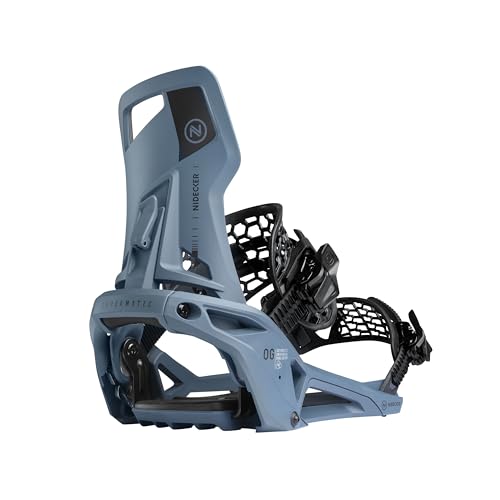
- ✓ Easy hands-free entry
- ✓ Excellent support and control
- ✓ Comfortable, shock-absorbing ride
- ✕ Slightly heavy
- ✕ Premium price point
| Binding Size | XL (Extra Large) |
| Baseplate Material | Durable composite with rigid construction |
| Entry System | Automated hands-free engagement |
| Highback Padding | Padded highback for comfort and support |
| Footbed | Shock-absorbing with vibration dampening |
| Intended Use | Freestyle and all-mountain carving with high responsiveness |
It’s a bright Saturday morning, and I’m lacing up the Nidecker OG Supermatic Snowboard Bindings XL Atlantic before heading out to tackle fresh powder. As I snap into place, I immediately notice how effortless the automatic entry system is—no fumbling or strap adjustments needed.
Just a quick step in, and I’m locked in securely without breaking my rhythm.
The build feels incredibly robust, with a powerful platform that channels energy right into my turns. Whether carving tight lines or launching off small jumps, I can feel the rigidity giving me that extra push.
The plush straps and padded highback make a noticeable difference, reducing hot spots and fatigue after hours on the mountain.
The shock-absorbing footbeds are a game changer. They dampen chatter on rougher patches and soften landings, making long days much more comfortable.
I appreciate how durable the components are—these bindings can handle the abuse of a busy resort without any signs of wear.
Overall, the Nidecker OG Supermatic XL Atlantic combines smart design with high-performance features. It’s a solid choice if you want quick, reliable entry and a supportive ride that can keep up with aggressive riding styles.
Plus, the build quality feels premium, promising longevity for many seasons to come.
Nidecker OG Supermatic Snowboard Bindings L Desert

- ✓ Hands-free automatic entry
- ✓ Precise power transfer
- ✓ Comfortable padded straps
- ✕ Slightly heavier than basic bindings
- ✕ Premium price point
| Binding Type | Automated entry system with hands-free engagement |
| Base Platform | Rigid, designed for precise energy transfer for carving and jumps |
| Straps and Highback | Padded highback and plush straps for comfort and reduced hotspots |
| Footbed | Shock-absorbing with impact dampening features |
| Build Quality | Durable components suitable for daily resort use |
| Compatibility | Designed to fit standard snowboard mounting systems |
That automatic entry feature on the Nidecker OG Supermatic Snowboard Bindings instantly transforms your ride. No fiddling with straps or buckles—just step in and go.
You’ll appreciate how quickly you can get set up during those quick laps or when the mountain is calling for back-to-back runs.
The design feels solid and purpose-built. The rigid base channels energy efficiently for carving and jumping, giving you that responsive, connected feel.
Plus, the plush straps and padded highback mean even after hours on the slopes, you won’t be dealing with hotspots or fatigue.
The shock-absorbing footbeds are a game-changer. They dampen chatter at high speeds and soften hard impacts, making even rougher terrain more manageable.
It’s like having a mini suspension system underfoot, which keeps you comfortable and stable.
Durability is clear from the sturdy components, built to withstand daily abuse on the resort. The build quality feels premium, and I found that these bindings hold up well over multiple sessions without any signs of wear.
Overall, these bindings feel like a perfect blend of power and comfort. The automatic entry and responsive platform make carving and jumping effortless, while the padding and shock absorption keep your ride smooth and fatigue-free.
If you’re serious about your snowboarding, this setup makes every run more enjoyable.
K2 Market BOA Men’s Snowboard Boots, Black, 13

- ✓ Easy BOA adjustment
- ✓ Flexible yet supportive cuff
- ✓ Comfortable, cozy liner
- ✕ Higher price point
- ✕ Slightly bulky fit
| BOA Fit System | H4 BOA Dial with impact eject feature |
| Upper Cuff Articulation | Independent articulation for distortion-free flex |
| Liner | Comfort EVA foam with zoned padding |
| Footbed | Die-cut EVA foam providing cushioning and support |
| Closure System | Fast-In liner lacing for secure fit and support |
| Size | Men’s US size 13 |
That H4 BOA Fit System immediately caught my attention as I slipped into these boots. The dial’s click feels solid, and ejecting it after a fall is surprisingly effortless—no fuss, no struggle.
It’s clear K2 designed this with serious riding in mind, especially when you’re pushing your limits on tough runs.
The articulating cuff upper is a game-changer. I noticed how smoothly it flexed without any weird distortions, giving me a natural, responsive feel as I carved down the mountain.
It’s perfect for those who want precision without sacrificing comfort.
The Comfort EVA Foam liner is soft but supportive. It molds to your foot quickly, so you don’t need days to break it in.
Plus, the zoned warmth kept my feet cozy even on the coldest mornings. The fast-in liner lacing is simple and stays tight all day—no annoying readjustments needed.
The die-cut EVA footbed offers solid cushioning, which made long lift rides and hours in the park way more comfortable. The overall build feels sturdy; these boots seem ready to handle heavy use and impact, thanks to the impact-resistant components around the BOA dial.
Overall, these boots balance performance and comfort beautifully. They’re a bit of an investment, but the features like the ejecting dial and articulating cuff really set them apart.
If you’re serious about your riding, they’re worth every penny.
XCMAN Rear Step Snowboard Bindings All-Mountain Lightweight

- ✓ Easy rear entry design
- ✓ Comfortable EVA padding
- ✓ Highly adjustable and responsive
- ✕ Slightly higher price point
- ✕ Less traditional strap feel
| Base Plate Material | Hybrid Nylon Fiber for stability and lightweight design |
| Binding Flexibility | Adjustable angles with multi-rotation turntable and rear tilt |
| Strap System | Fusion one-piece Power Straps with 3D design for enhanced fit and control |
| Padding | Full EVA padding on hi-back and footbed for comfort and dampening |
| Entry Style | Rear entry step-in design for easy on and off |
| Compatibility | Suitable for most major snowboard models |
This snowboard binding has been sitting on my wishlist for a while, mainly because I was curious about the rear entry design. When I finally got to try it out, I was pleasantly surprised by how effortless it was to strap in—no more kneeling or fiddling with straps.
Just flip the high-back down, slide my foot in, and I’m ready to ride in seconds.
The full EVA padding on the hi-back and footbed really makes a difference. It feels soft and plush, so even after long runs, my feet and legs don’t get tired or sore.
Plus, the hybrid nylon fiber base plate offers solid stability without feeling heavy, and the cutouts keep snow from building up, which is a noticeable plus for smooth gliding.
The Fusion one-piece Power Straps are a game-changer. They cover more of your foot for better control, and the 3D design molds nicely to your foot shape.
I also liked how the rear cable locks the hi-back in place and tightens under pressure—this means the more aggressive I ride, the tighter it gets, giving me a responsive feel that’s hard to beat.
Adjustability is on point, too. The turntable can be customized to different angles, and the rear tilt helps adapt the bindings to different riding styles.
Overall, this setup feels solid, responsive, and comfortable, making it a strong contender for anyone looking to upgrade their all-mountain gear.
What Are the Key Features of the Best Snowboards?
The key features of the best snowboards include:
- Flexibility: The flex of a snowboard affects its performance and rideability, with softer boards being better for beginners and park riding, while stiffer boards offer greater stability at high speeds and enhanced control in varied conditions.
- Camber Profile: The shape of the board’s camber profile, such as traditional camber, rocker, or flat, influences how the board interacts with the snow, affecting edge grip, floatation in powder, and overall maneuverability.
- Length and Width: The appropriate length and width of a snowboard are crucial for balance and control; shorter boards are easier to turn, while longer boards provide better stability, and width should be chosen based on your boot size to avoid toe drag.
- Material Construction: The materials used in the construction of the snowboard, including the type of wood core, fiberglass layers, and base material, determine durability, weight, and how well the board can absorb shocks and vibrations.
- Bindings Compatibility: The best snowboards are designed to work seamlessly with various binding types, ensuring that riders can easily customize their setup for comfort and performance based on individual riding styles.
- Graphics and Aesthetics: While performance is key, the visual appeal of a snowboard can also influence buying decisions; unique graphics and color schemes can make a board stand out on the slopes, adding to the rider’s personal style.
How Does Snowboard Flex Impact Performance?
The flex of a snowboard plays a crucial role in determining its performance across various terrains and riding styles.
- Soft Flex: Soft-flex snowboards are more forgiving and easier to maneuver, making them ideal for beginners and park riders.
- Medium Flex: Medium flex snowboards offer a balance between stability and flexibility, catering to all-mountain riders who enjoy diverse terrain.
- Stiff Flex: Stiff-flex snowboards provide enhanced stability and responsiveness at high speeds, making them suitable for advanced riders and those who prefer aggressive carving.
- Directional Flex: Directional flex snowboards are designed with a varying flex pattern, offering more stiffness in the tail for stability and a softer nose for better float in powder.
- Twin Flex: Twin flex snowboards have an even flex pattern that allows for switch riding, making them versatile for freestyle tricks and jumps.
Soft flex snowboards are characterized by their flexibility, which allows for easier turning and absorbing bumps, making them particularly beneficial for new riders learning the basics or for those focusing on park features like rails and jumps. The forgiving nature of these boards helps to reduce the likelihood of falls, providing more confidence on the slopes.
Medium flex snowboards strike a balance that accommodates various riding styles, providing enough support for carving while remaining flexible enough for playful maneuvers. This versatility makes them a popular choice for all-mountain riders who enjoy a mix of groomed runs, powder, and occasional park laps.
Stiff flex snowboards, on the other hand, excel in providing stability and control at high speeds, which is essential for experienced riders looking to carve hard turns or navigate steep terrain. The rigidity also translates into better edge hold, especially on icy slopes, giving advanced riders the confidence to push their limits.
Directional flex snowboards cater to those who primarily ride in one direction, enhancing performance in powder by allowing the nose to float while the stiffer tail provides control. This design is particularly beneficial for backcountry riders seeking to maximize their performance in variable snow conditions.
Twin flex snowboards, with their symmetrical design, allow riders to easily switch between regular and goofy stances without compromising performance. This flexibility makes them particularly appealing for freestyle riders who frequently perform tricks and need a board that responds equally well in both directions.
What Shapes of Snowboards Are Best Suited for Different Riding Styles?
The shapes of snowboards play a crucial role in determining their performance across various riding styles.
- Directional Shape: This shape is designed for riding primarily in one direction, making it ideal for all-mountain and powder riding.
- True Twin Shape: A symmetrical design that allows for equally balanced riding in both directions, perfect for freestyle and park riders.
- Directional Twin Shape: Combines elements of both directional and twin shapes, providing versatility for various terrains while still favoring a specific riding direction.
- Freeride Shape: Optimized for aggressive riding in off-piste conditions, often featuring a longer nose and shorter tail to enhance floatation in powder.
- Powder Shape: Specifically designed to excel in deep snow, these boards typically have a wider nose and tapered tail to improve buoyancy.
The directional shape snowboard is excellent for those who prefer a stable ride, especially in varied terrains where it excels at carving and navigating through powder. The board’s design typically features a longer nose and a shorter tail, allowing for effortless navigation through softer snow.
True twin shape snowboards are favored by freestyle riders because they allow for tricks and jumps in both directions. This symmetry makes it easier for riders to switch stances and land tricks without a significant difference in performance.
Directional twin shape boards offer a blend of features from both directional and twin boards, making them suitable for riders who enjoy both freestyle and all-mountain riding. This design provides a stable ride while still allowing for versatility in switching stances.
Freeride shape snowboards are tailored for riders who tackle steep, off-piste terrain and require a board that can handle aggressive carving and deep snow. The design’s focus on a longer nose helps the board float while the shorter tail allows for quick turns.
Lastly, powder shape snowboards are built for optimal performance in deep snow conditions, ensuring that riders can maintain speed and control. The unique design, featuring a wider tip, helps lift the board above the snow, providing a smoother experience in powdery conditions.
Which Brands Offer the Best Snowboards on the Market?
The best snowboards on the market are offered by several renowned brands known for their quality, performance, and innovation.
- Burton: Burton is one of the most recognized snowboard brands, known for its high-quality boards suitable for all skill levels.
- Lib Tech: Lib Tech focuses on eco-friendly manufacturing while delivering innovative designs that enhance performance and durability.
- GNU: GNU is celebrated for its unique board shapes and technology, providing a blend of freestyle and all-mountain capabilities.
- Salomon: Salomon offers a range of snowboards that cater to various riding styles, emphasizing versatility and performance in different snow conditions.
- K2: K2 is known for its user-friendly boards that are perfect for beginners and intermediate riders, featuring lightweight materials and responsive designs.
Burton snowboards are designed with a focus on performance, catering to riders from beginners to professionals. They incorporate advanced technology such as the Channel mounting system for improved adjustability and a variety of flex options to suit different riding styles.
Lib Tech stands out for its commitment to sustainability, utilizing environmentally friendly materials in its boards. Their innovative technologies, like the Magne-Traction edge, provide enhanced grip on icy surfaces, making them a popular choice among riders who value both performance and ecological responsibility.
GNU offers a creative approach with its unique board designs and cutting-edge technology, such as the asymmetrical shapes that improve riding dynamics. Their boards are well-suited for freestyle riding and have a reputation for being playful and versatile across different terrains.
Salomon produces a diverse lineup of snowboards that can handle various conditions, making them a favorite among all-mountain riders. They emphasize comfort and control, with features like a soft flex and ergonomic designs that enhance the rider’s experience.
K2 is recognized for producing boards that are approachable for new riders while still catering to more advanced users. Their boards often feature lightweight construction and user-friendly designs, making them ideal for those looking to improve their skills on the slopes.
What Innovations Are Leading Brands Incorporating into Their Snowboards?
Leading brands are incorporating various innovations to enhance performance and rider experience in their snowboards.
- Carbon Fiber Construction: This material is increasingly used in snowboard manufacturing due to its lightweight and high-strength properties. Carbon fiber enhances responsiveness and stability while reducing the overall weight of the board, allowing for easier maneuverability and less fatigue during long rides.
- 3D Base Contours: Innovations in base design, such as 3D contours, improve edge control and reduce drag. This technology allows for better performance in different snow conditions, facilitating smoother turns and improved flotation in powder.
- Hybrid Rocker Profiles: Many brands are adopting hybrid rocker profiles that combine rocker and camber shapes. This design provides the benefits of both styles, offering enhanced floatation and ease of turning while maintaining stability and edge hold on groomed runs.
- Eco-Friendly Materials: Sustainability is becoming a priority, with brands using recycled materials and eco-conscious production methods. These innovations not only reduce environmental impact but often result in high-quality boards that perform well while appealing to environmentally conscious consumers.
- Smart Technology Integration: Some brands are exploring the integration of smart technology, such as sensors that monitor performance metrics. This innovation allows riders to track their speed, distance, and even technique, providing valuable feedback for improvement and enhancing the overall riding experience.
How Do Popular Brands Compare in Terms of Quality?
| Brand | Quality Rating | Popular Models | Warranty/Customer Service | Price Range |
|---|---|---|---|---|
| Burton | High (8-10) | Custom, Process | 2-year warranty, excellent customer service | $500 – $700 |
| Lib Tech | High (8-10) | Travis Rice, Skate Banana | 1-year warranty, strong reputation for support | $400 – $600 |
| Salomon | Medium-High (6-8) | Assassin, Pulse | 2-year warranty, good customer support | $350 – $500 |
| Ride | Medium (5-7) | Warpig, Machete | 1-year warranty, average customer service | $300 – $450 |
How Can You Choose the Right Snowboard for Your Riding Style?
Choosing the right snowboard involves understanding various factors that align with your riding style and preferences.
- Board Flex: The flex of a snowboard affects its responsiveness and stability. Softer flex boards are ideal for beginners or freestyle riders who prioritize maneuverability and playfulness, while stiffer boards provide better edge control and stability at high speeds, making them suitable for advanced riders or those who enjoy all-mountain riding.
- Board Shape: Snowboards come in different shapes such as twin, directional, and directional twin. Twin boards are symmetrical and great for freestyle riding, while directional boards are designed to perform better in one direction, making them more suitable for backcountry or powder riding.
- Length and Width: The length of the snowboard should correspond to the rider’s height and weight, as well as their riding style. A longer board provides better stability at high speeds and in powder, while shorter boards are easier to control and perform tricks on. Additionally, width matters to accommodate boot size and prevent toe drag.
- Camber Profile: The camber profile influences how the board interacts with the snow. Traditional camber offers great edge hold and pop, making it suitable for aggressive riders, while rockered or flat profiles provide easier turn initiation and float in powder, appealing to those who ride in varied conditions.
- Material and Construction: The materials used in the snowboard construction can affect durability, weight, and performance. Boards made with high-quality materials like carbon or fiberglass enhance responsiveness and strength, while a well-constructed base can improve speed and glide.
- Riding Style: Identify your primary riding style, whether it’s freestyle, all-mountain, or backcountry, as this will guide your choice. Each style has specific requirements for board characteristics that optimize performance in those environments, such as flexibility for park riding or stability for downhill runs.
- Brand Reputation and Reviews: Researching brands and reading reviews from other snowboarders can provide insights into the best snowboard on the market. Established brands often have a loyal following due to their reliability and performance, so consider models that are well-reviewed by experts and users alike.
What Are the Differences Between All-Mountain, Freestyle, and Freeride Boards?
| Type | Best Use | Flexibility | Terrain |
|---|---|---|---|
| All-Mountain | Versatile for various conditions, suitable for all riders. Recommended for beginners to advanced. | Medium – Balances performance and comfort. | Groomed runs, powder, and park. Recommended length: 150-160 cm for riders 5’6″-6’0″. |
| Freestyle | Ideal for tricks and jumps in terrain parks. Best for intermediate to advanced riders. | Soft – Offers better maneuverability for tricks. | Park features and halfpipes. Recommended length: 140-150 cm for riders 5’4″-5’8″. |
| Freeride | Best for off-piste and deep snow riding. Suitable for advanced riders. | Stiff – Provides stability and control at high speeds. | Backcountry and untouched powder. Recommended length: 160-170 cm for riders 5’8″-6’2″. |
What Size Snowboard Should You Choose for Optimal Performance?
Rider Weight: Snowboards are designed with specific weight ranges in mind, ensuring that the board performs optimally under the rider’s weight. Heavier riders may require a longer and stiffer board to prevent excessive flex, while lighter riders can benefit from a shorter and softer board for easier handling.
Riding Style: Freestyle riders often prefer shorter boards for enhanced trick performance and easier spins, while all-mountain riders might choose a medium length for versatility. Powder riders typically opt for longer boards to provide better floatation in deep snow conditions, allowing for a smoother ride.
Skill Level: Beginners are advised to select shorter boards, which are easier to control and turn, while advanced riders may choose longer boards for better stability at high speeds and more aggressive riding. The right size can significantly impact confidence and learning progression on the slopes.
Board Width: Selecting the appropriate width is essential to avoid toe or heel drag, especially for riders with larger feet. A board that is too narrow will lead to drag during turns, while a board that is too wide might hinder agility, making it vital to find the right balance for efficient performance.
What Do Customer Reviews Reveal About the Best Snowboards?
Customer reviews reveal several key insights about what makes the best snowboard on the market, focusing on performance, durability, and user satisfaction.
- Performance: Many customers highlight the importance of a snowboard’s performance in various conditions, such as powder, groomed runs, and park features. Reviewers often mention how well a board carves, its responsiveness, and how it handles speed, indicating that the best snowboards excel in versatility and adaptability.
- Durability: Users frequently comment on the longevity of their snowboards, emphasizing the quality of materials and construction. Boards that withstand impacts, resist scratches, and maintain their shape over time tend to receive higher ratings, suggesting that durability is a critical factor in determining the best options on the market.
- Comfort and Fit: Customer feedback often discusses the comfort level and fit of snowboards. Riders appreciate boards that are easy to maneuver and comfortable underfoot, as well as those that cater to different riding styles and skill levels, which reinforces the idea that the best snowboard should feel intuitive and supportive.
- Value for Money: Many reviews assess whether the snowboard provides good value in relation to its price. Customers often compare features and performance against cost, with the best snowboards being those that offer a high-quality experience without breaking the bank, thus appealing to both beginners and seasoned riders.
- Brand Reputation: Reviewers frequently mention the reputation of brands when discussing their experiences with snowboards. Well-established brands that consistently receive positive feedback for customer service, warranty support, and product reliability tend to be favored, indicating that brand trust plays a significant role in consumer choice.
Which Snowboards Are Currently Highly Rated?
The current highly rated snowboards on the market include:
- Burton Custom: Known for its versatility and performance across various terrains.
- Lib Tech T.Rice Pro: A favorite among advanced riders for its innovative design and technology.
- GNU Riders Choice: Celebrated for its unique asymmetrical design that enhances maneuverability.
- Rome Agent: Offers a great balance of flex and response, making it a solid choice for all-mountain riding.
- Capita DOA (Defenders of Awesome): Highly regarded for its pop and playfulness, ideal for park riders.
The Burton Custom is a classic snowboard that has been refined over the years, providing an excellent blend of stability, flex, and edge control, making it suitable for beginners and seasoned riders alike. Its all-mountain capabilities ensure that it performs well on groomed runs, powder days, and even in the park.
The Lib Tech T.Rice Pro, designed in collaboration with professional snowboarder Travis Rice, incorporates advanced features such as a hybrid rocker-camber profile that enhances floatation in powder while maintaining edge grip on hardpack. Its eco-friendly construction also appeals to environmentally conscious riders.
The GNU Riders Choice stands out due to its asymmetrical shape, which helps riders carve more efficiently and navigate turns with ease. This board is particularly popular among freestyle riders who appreciate its ability to handle both park and backcountry conditions.
The Rome Agent is designed with an ideal flex pattern that balances playfulness with responsiveness, making it a favorite for all-mountain enthusiasts. It features a lightweight construction that allows for easy maneuverability while still providing the durability needed for challenging terrains.
The Capita DOA is well-known for its lively feel and excellent pop, making it a top choice for park riders who need a board that can handle jumps and rail features. Its unique construction provides both durability and a playful ride, ensuring it remains a go-to option for those who enjoy freestyle snowboarding.
What Common Feedback Do Riders Provide About Snowboard Performance?
Riders often provide feedback on various performance aspects of snowboards, particularly when evaluating the best snowboard on the market.
- Edge Control: Riders frequently emphasize the importance of edge control, noting how well a snowboard grips on icy or hard-packed snow. Many users report that boards with sharper edges or specific profiles enhance their ability to carve and navigate turns effectively, providing a more precise riding experience.
- Flexibility: Flexibility is another common point of feedback, with riders expressing preferences for soft, medium, or stiff boards depending on their riding style. A softer board is often favored for freestyle and park riding, allowing for better maneuverability, while stiffer boards are preferred for stability at high speeds and in variable terrain.
- Weight: The weight of a snowboard can significantly impact performance, and many riders share their thoughts on how a lighter board can enhance agility and reduce fatigue during long sessions. Conversely, some riders prefer heavier boards for the added stability and durability they offer, especially in challenging conditions.
- Pop and Responsiveness: Riders often discuss the pop and responsiveness of a snowboard, which refers to how well the board springs back during jumps and tricks. Boards designed with a good amount of flex in the tips usually receive positive feedback for their ability to generate lift and make transitions smoother during aerial maneuvers.
- Durability: Durability is a crucial factor for many riders, who assess how well a snowboard withstands wear and tear over time. Feedback often highlights the quality of materials used in construction, with riders preferring boards that resist chipping and delamination, ensuring longevity through varied riding conditions.
- Versatility: Riders frequently comment on the versatility of a snowboard, indicating how well it performs across different terrains, such as powder, groomers, and park features. Boards that can seamlessly transition between various styles tend to receive higher ratings, as they cater to a wider range of riding preferences.
- Shape: The shape of a snowboard plays a significant role in performance, and riders often provide insights on directional, twin, or hybrid shapes. Depending on individual riding styles, feedback may focus on how shape influences stability, ease of turning, and overall ride quality.
What Are the Best Snowboards for Various Skill Levels?
The best snowboards on the market cater to different skill levels, ensuring that both beginners and advanced riders can find the right fit for their style.
- Burton Ripcord: This snowboard is ideal for beginners, offering a soft flex and a catch-free design that makes it easier to learn turns and tricks.
- GNU Rider’s Choice: A versatile board suitable for intermediate riders, it features a directional twin shape and a hybrid camber profile that enhances stability and control in various conditions.
- Lib Tech T.Rice Pro: Designed for advanced riders, this snowboard excels in all-mountain conditions with its aggressive flex and advanced technology, providing maximum performance on powder and hardpack alike.
- Salomon Pulse: A great choice for entry-level snowboarders, the Pulse has a soft flex and a flat profile that supports easy riding and allows for quick progression.
- K2 Raygun: Perfect for intermediate riders, this board combines a directional shape with a medium flex, making it great for both carving on groomed runs and exploring off-piste terrain.
- Ride Warpig: This snowboard is highly recommended for advanced riders who crave versatility, featuring a wide waist and short length that allows for quick turns while maintaining stability at high speeds.
The Burton Ripcord is crafted with a soft flex, which makes it forgiving for new riders as they learn to navigate the slopes. Its flat base design helps in maintaining balance and reducing the chances of catching an edge.
The GNU Rider’s Choice offers a unique hybrid camber profile that allows for smooth transitions and solid edge hold, making it a favorite for those looking to refine their skills and take on more challenging terrain.
Lib Tech’s T.Rice Pro is tailored for experienced snowboarders, featuring an aggressive flex pattern and high-quality materials that deliver explosive pop and exceptional control, especially in backcountry conditions.
The Salomon Pulse is designed with beginners in mind, featuring a forgiving flex and a flat profile that encourages confidence and ease when learning the basics of snowboarding.
The K2 Raygun stands out with its versatile design, allowing intermediate riders to tackle various snow conditions while offering stability and control for carving and jumping.
For advanced riders, the Ride Warpig is a standout with its unique shape and construction, allowing for agile handling and the ability to ride in diverse conditions without sacrificing performance.
Which Are the Best Options for Beginners?
The best options for beginners in snowboarding provide a balance of stability, ease of use, and performance.
- Burton Ripcord: This snowboard is designed specifically for beginners, featuring a soft flex that makes it forgiving and easy to maneuver.
- K2 Mini Turbo: Ideal for younger riders or those just starting out, the Mini Turbo offers a lightweight construction and a catch-free rocker profile.
- GNU Rider’s Choice: With a versatile design, this board accommodates various terrain and is also beginner-friendly thanks to its easy-to-control flex.
- Salomon Pulse: The Pulse is perfect for novice riders, featuring a flat profile that enhances stability and confidence on the slopes.
- Capita Horrorscope: This board is great for beginners looking for a playful ride, as it offers a soft flex and a true twin shape for easy turns.
The Burton Ripcord is tailored for newcomers, providing a soft flex that allows for easy turns and stability, making it a top choice for those learning the basics of snowboarding. Its directional shape helps beginners gain confidence in their riding as they progress on the slopes.
K2 Mini Turbo stands out for its lightweight design and catch-free rocker profile, making it suitable for younger riders and those starting out. This board promotes easy turns and a comfortable ride which is essential for developing skills without overwhelming beginners.
GNU Rider’s Choice is versatile and beginner-friendly, featuring a medium flex that allows beginners to explore different terrains while still being manageable. Its design encourages learning and progression, accommodating various riding styles.
Salomon Pulse is excellent for novice snowboarders, providing a flat profile that enhances stability and balance, crucial for those just starting. It is designed to help riders build confidence while learning how to carve and control their speed.
Capita Horrorscope is a playful option for beginners, featuring a soft flex and true twin shape that makes it easy to ride switch and perfect for trying out tricks. This board encourages creativity and fun while still providing the stability needed for newcomers to develop their skills.
What Snowboards Should Advanced Riders Consider for Peak Performance?
Advanced riders looking for peak performance should consider the following snowboards:
- Burton Custom: The Burton Custom is known for its versatility and is ideal for all-mountain riding. With a directional shape and a hybrid camber profile, it offers excellent edge control and stability at high speeds, making it suitable for both groomed runs and powder days.
- Lib Tech T.Rice Pro: Designed in collaboration with pro rider Travis Rice, this board excels in freestyle and backcountry scenarios. Featuring a C3 camber profile, it provides powerful pop and precision while maintaining a forgiving flex that is perfect for technical tricks and aggressive riding.
- Jones Flagship: The Jones Flagship is a favorite among advanced riders who tackle steep and challenging terrain. Its directional shape and stiffer flex make it incredibly responsive and stable, allowing for precise turn initiation and control in deep snow conditions.
- Capita Black Snowboard of Death: This board stands out for its aggressive performance and playful nature, making it perfect for advanced riders who love to carve and jump. With a hybrid camber design, it combines the stability of camber with the float of rocker, allowing for versatility in various snow conditions.
- Never Summer Proto Slinger: The Proto Slinger is tailored for those who enjoy park and all-mountain riding. Its unique flex pattern and rocker/camber hybrid design grant riders a lively feel, perfect for executing tricks while still providing the stability needed for high-speed runs.