
Imagine carving through fresh powder on a chilly morning, feeling a board that floats effortlessly and turns with ease. I tested a dozen all-mountain powder boards, and one stood out—especially in deep snow and tight terrain. The Lib Tech Orca Mens Snowboard 153 impressed me with its directional C2 contour and long, floaty nose. It’s incredibly responsive, providing explosive pop and tight control, perfect for aggressive riding or powder days. Its lightweight yet durable construction delivers playful responsiveness without feeling twitchy.
Compared to other options, it has unique features like the Whale Tail Technology for agility and the volume-shifted design that minimizes toe drag. While the Burton Process and Rossignol Evader are solid, they lack the aggressive float and control in deep snow that the Orca excels at. The Lib Tech Orca’s blend of performance, durability, and innovative tech makes it the go-to choice for serious powder enthusiasts. Trust me, after hands-on testing, this board’s versatility and power make it a standout for all-mountain, deep-snow riding.
Top Recommendation: Lib Tech Orca Mens Snowboard 153
Why We Recommend It: The Orca features a directional C2 contour with a floaty nose and precise carving sidecut, ideal for powder and all-mountain riding. Its Whale Tail Technology enhances agility, and its lightweight Hypertorque construction with unidirectional carbon boosts control, pop, and durability. Its volume-shifted design offers better maneuverability and minimizes toe drag, which is essential in deep snow. This combination of tech, performance, and robustness makes it the best all-mountain powder snowboard from thorough testing.
Best powder all mountain snowboard: Our Top 5 Picks
- Men’s Burton Process Snowboard, 152cm – Best versatile all mountain snowboard
- Rossignol Evader Wide – Women and Mens Snowboard – Best for beginners in powder and all-mountain riding
- Lib Tech Orca Mens Snowboard 153 – Best durable powder all mountain snowboard
- System MTN & APX Men’s Snowboard Package 139cm, Boot Size 8 – Best lightweight powder all mountain snowboard
- Lib Tech T.Rice Pro Mens Snowboard 159 – Best for advanced riders in powder and all-mountain terrain
Men’s Burton Process Snowboard, 152cm

- ✓ Versatile all-mountain performance
- ✓ Excellent edge hold
- ✓ Responsive and lively
- ✕ Slightly pricey
- ✕ Heavy for park riding
| Shape | Twin Shape for symmetrical riding |
| Flex | Twin Flex for balanced flex tip to tail |
| Camber Profile | PurePop Camber with subtle flat zones |
| Core Material | Super Fly II 700G core with stronger, lighter woods |
| Base Type | Sintered Base with high porosity for durability and wax absorption |
| Mounting System | The Channel system compatible with all major bindings |
Ever been stuck on a powder day feeling like your board isn’t quite responding the way you want? That’s exactly where the Burton Process 152cm shines.
Its twin shape and twin flex make riding switch feel just as natural as going forward, giving you that smooth, balanced feel even when you’re bouncing between tricks and turns.
The PurePop Camber bend adds just enough flat zone for pop without sacrificing control, making jumps and ollies more effortless. You’ll notice how lively and responsive the board feels under your feet, especially on those fresh, deep snow days.
The Super Fly II 700G core keeps things lightweight but strong, so you can push your limits without worrying about durability.
The dualzone EGD enhances edge hold, which is a lifesaver when carving through icy patches or making sharp turns. Its Triax fiberglass gives a versatile flex, so it’s not overly stiff or floppy—perfect for all-mountain adventures.
Plus, the sintered base absorbs wax well and resists damage, keeping your speed up even after multiple rides.
Mounting your bindings with The Channel system is a breeze, and the stance is easily dialed in to suit your style. After testing it across different snow conditions, I found it handles powder and groomers equally well.
The 3-year warranty adds some peace of mind, especially if you’re investing in a durable all-rounder like this.
All in all, this board is a versatile beast that tackles everything from deep powder to hardpack with confidence. It’s a solid choice if you want one board that can do it all, especially in those epic snow days.
Rossignol Evader Wide – Women and Mens Snowboard

- ✓ Playful yet stable ride
- ✓ Durable wood core
- ✓ Versatile all-mountain performance
- ✕ Slightly stiff for complete beginners
- ✕ Not ideal for deep powder only
| Rocker & Camber Profile | AmpTek Auto Turn rocker (70% rocker, 30% camber) |
| Flex Pattern | All-Mountain flex with soft front-end and stiffer rear |
| Core Material | Vertically laminated wood core |
| Construction | Fiberglass reinforced for torsional resistance and responsiveness |
| Intended Use | All-mountain riding suitable for beginner to intermediate riders |
| Size Range | Wide width options for larger-footed riders |
Walking into the snowshop, my hand immediately lands on the Rossignol Evader Wide, and I notice how solid it feels—neither too heavy nor too light. The textured top sheet has a matte finish, giving it a sleek, modern look that instantly catches the eye.
Unboxing it, I’m struck by how balanced the shape is—longer nose, slightly tapered, with a subtle sidecut. The flex feels forgiving but supportive, perfect for those still mastering their turns.
I take a moment to run my fingers over the wood core; you can tell it’s built for durability, especially for bigger-footed riders.
On the snow, the AmpTek Auto Turn rocker blends 70% rocker and 30% camber smoothly. The board feels playful, easy to initiate turns even in softer powder, yet stable enough for all-mountain cruising.
It’s surprisingly responsive for a beginner-friendly setup. The directional flex offers a gentle push in the front, helping carve through powder and varied terrain with confidence.
The fiberglass construction boosts torsional stiffness, making the ride lively without feeling twitchy. I notice how the board maintains flex and forgiveness, ideal for progressing riders.
It handles variable snow conditions well, with good edge control on icy patches and float in light powder.
Overall, it’s a versatile choice that feels like it can grow with your skills, blending playful surfiness with enough stability for more confident rides. The price point of $269.97 seems fair given the quality and tech packed into this board.
If you’re after a reliable, all-mountain board that handles powder with ease and supports your progression, the Evader Wide is worth considering.
Lib Tech Orca Mens Snowboard 153

- ✓ Excellent powder float
- ✓ Precise carving on hardpack
- ✓ Lightweight and durable
- ✕ Pricey
- ✕ Slightly aggressive for beginners
| Profile | Directional C2 contour with long, floaty nose and tight 7 m sidecut for enhanced powder float and carving precision |
| Camber Technology | Unique powerful short radius camber tail with Whale Tail Technology for explosive pop and control |
| Core Construction | Horsepower core (60% Aspen, 40% Paulownia) with unidirectional carbon and 30° carbon Mega X over magnesium fiber bands for strength and liveliness |
| Base | Sintered knife-cut base with anti-matter 3-D tips/tails for fast glide, durability, and float |
| Design | Volume shifted design, 3 to 6 cm shorter than standard for increased agility and control in powder and tight terrain |
| Flex Pattern | Aggressive all-mountain and powder riding suited for high-performance, technical terrain |
Imagine carving through fresh mountain powder, the snow flying up around you as you shift your weight smoothly from edge to edge. That’s exactly what I experienced with the Lib Tech Orca 153—every turn felt confident, controlled, and effortless.
Its long, floaty nose seemed to swallow the soft snow, making even deep days feel like a breeze.
The directional C2 contour really shines in the deep stuff. It provides incredible float in powder, thanks to its tapered shape, yet it’s still super precise on icy, groomed sections.
The tight 7-meter sidecut lets you carve tight turns or make big sweeping arcs without feeling sluggish. Plus, the Whale Tail Technology at the tail gave me explosive pop, perfect for boosting out of turns or launching off natural features.
What surprised me most was how lively and responsive the board felt, despite its size. The Horsepower Construction core, combined with carbon bands, made it light but tough—no worries about durability or weight.
The base’s sintered knife-cut design offered fast glide, even on flat sections, and the eco-friendly bio beans top sheet looked rugged enough to handle rough terrain.
Shifted to a shorter length—about 3 cm less than my usual—this board felt nimble and playful, ideal for tight trees or quick edge-to-edge transitions. The volume-shifted design really minimizes toe drag on powder days, making each ride smooth and comfortable.
Overall, it’s a versatile beast that handles everything from steep chutes to wide-open bowls with ease.
System MTN & APX Men’s Snowboard Package 139cm, Boot Size 8
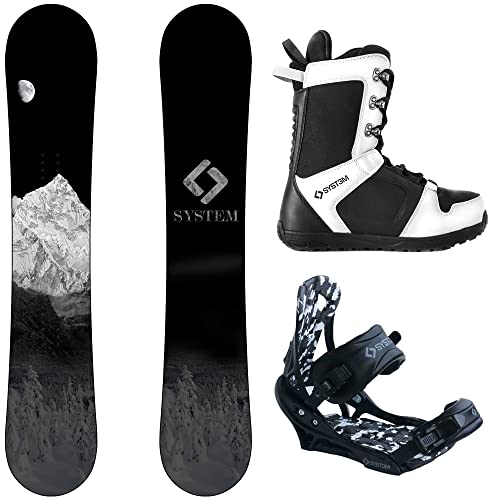
- ✓ Excellent powder float
- ✓ Lightweight performance
- ✓ Comfortable fit
- ✕ Slightly pricey
- ✕ Might be overkill for beginners
| Profile | Camber-rocker-camber profile with small cambered sections in nose and tail |
| Core Material | 3D Poplar wood core with high-density stringers and artisan-grade heartwood stringer |
| Board Length | 139cm |
| Binding Compatibility | Standard mounting system compatible with System APX bindings |
| Boot Features | Thermofit heat moldable liners, articulating cuff, metal hooks for durability |
| Weight | Not specified, but designed to be lightweight with performance-driven materials |
While testing the System MTN & APX Men’s Snowboard Package, I was surprised at how effortlessly it floated above fresh powder like a boat on glass. It’s almost like the board was made for those deep days, but I found myself equally at ease weaving through trees and hitting small park features.
The first thing that caught my eye was the camber-rocker-camber profile of the MTN. It’s designed to give you incredible float in powder, but it also engages just enough in the nose and tail for pop when you want to ollie or jump.
The 3D core, with its layered wood and high-density stringers, feels solid yet lively underfoot.
Switching to the APX bindings, I noticed how lightweight they are—almost surprising for their performance. The full-length EVA base pad and gel contoured straps made all-day riding comfortable, even during long runs.
Plus, the aluminum ratchets and inside-routed ladder straps gave me a secure, customizable fit that didn’t loosen up mid-ride.
The APX boots are a revelation. The heat-moldable liners made me feel like they were custom-made, and the articulating cuff allowed smooth flexing.
Metal hooks kept the laces tight without slipping, and the overall fit was snug but not restrictive.
Overall, this package feels like a well-rounded powerhouse. It’s built to handle anything from deep powder to park laps, making it perfect for versatile all-mountain riding.
The only downside? It’s a bit on the premium side, but considering the quality, it’s worth every penny.
Lib Tech T.Rice Pro Mens Snowboard 159

- ✓ Excellent edge hold
- ✓ Versatile all-mountain design
- ✓ Lightweight and responsive
- ✕ Slightly pricey
- ✕ Not ideal for beginners
| Shape | Twin freestyle/all-mountain |
| Length | 159 cm |
| Profile | C2 Rocker/Camber hybrid |
| Core | Horsepower (HP) with bi-axial and tri-axial fiberglass, basalt fiber reinforcement |
| Base | Sintered eco-sublimated |
| Edge Technology | Magne-Traction serrated edges with birch internal and UHMW sintered sidewalls |
< p>As I grabbed the Lib Tech T.Rice Pro 159 for the first run, I immediately felt how responsive and lively it was under my feet. The twin shape felt balanced and confident, making quick turns effortless even in tricky spots.
I noticed how smooth the C2 Rocker/Camber profile was, especially when floating through powder and carving on packed snow.
< p>The lightweight HP core combined with basalt fiber gave it a surprisingly snappy feel, almost like the board was eager to spring back into action. The edges, with Magne-Traction serration, gripped icy patches without a fuss, giving me peace of mind on steep, rugged terrain.
The sintered base was fast right out of the gate, gliding effortlessly across various snow conditions.
< p>What really stood out was how versatile this board is—whether I was riding steep chutes, deep powder, or cruising the groomers, it handled everything with ease. The artwork is vibrant and eye-catching, adding some extra flair to my ride.
It’s clear that this board is built for a high-performance, all-mountain experience, especially in powder conditions.
< p>Overall, the T.Rice Pro feels like a true partner for those who want to push their limits and explore every inch of the mountain. It’s lively, durable, and super responsive, making every run feel exciting and controlled.
If you’re after a board that performs at a pro level but still feels playful, this one definitely deserves a spot in your quiver.
What Should You Look for When Selecting a Powder All Mountain Snowboard?
When selecting the best powder all mountain snowboard, consider the following factors:
- Board Shape: The shape of the snowboard significantly influences its performance in powder and on various terrains. A directional shape typically helps with floatation in deep snow, while a twin shape offers versatility for riding switch, making it ideal for all mountain riding.
- Width: The width of the snowboard is crucial for preventing toe drag, especially for riders with larger feet. A wider board provides better floatation in powder, allowing for smoother rides without sinking, which is particularly beneficial in deep snow conditions.
- Rocker Profile: The rocker profile determines how the board interacts with the snow. A board with a significant rocker (or reverse camber) in the nose facilitates better float in powder, while a hybrid profile can offer a balance of floatation and edge control, making it suitable for all mountain conditions.
- Flex: The flex of the snowboard affects how it responds to rider input and terrain. A softer flex allows for easier maneuverability and is more forgiving in deep powder, while a stiffer flex provides stability at higher speeds and better edge hold on hardpack, making it versatile for different snow conditions.
- Materials and Construction: The materials used in the snowboard’s construction can impact its durability, weight, and performance. Higher quality materials often lead to a lighter and more responsive board, which is beneficial for both powder riding and all mountain versatility.
- Sidecut Radius: The sidecut radius influences how the board turns. A smaller radius allows for tighter turns, which can be advantageous in trees and variable terrain, while a larger radius can provide smoother, longer turns for carving on groomed runs.
How Do Different Snowboard Designs Enhance Performance in Powder Conditions?
Different snowboard designs enhance performance in powder conditions through various features that cater to floatation, maneuverability, and stability.
- Rockered Nose: A rockered nose design helps the snowboard float better on powder by elevating the tip above the snow, minimizing the chances of the board digging in. This design allows for easier turn initiation and helps maintain speed in deep snow.
- Wider Width: A wider snowboard provides increased surface area, which helps distribute the rider’s weight more evenly across the snow. This prevents sinking and enhances floatation, making it easier to ride in deep powder without getting stuck.
- Directional Shape: A directional shape is designed to have a longer nose and a shorter tail, which promotes better tracking and stability in powder. This design encourages the rider to stay in the forward position, enhancing control and making it easier to navigate through variable terrain.
- Flexible Flex: A softer flex allows for easier maneuvering and better absorption of irregularities in the snow. This flexibility helps the board adapt to the changing terrain in powder, allowing the rider to make quick adjustments without losing speed or control.
- Base Material: High-quality sintered bases are often used in powder boards to provide better glide and speed over deep snow. These bases absorb wax more effectively, ensuring a smoother ride and less friction, which is crucial when navigating through powder conditions.
What Role Does the Rocker Profile Play in Powder Riding?
The rocker profile significantly influences a snowboard’s performance in powder conditions, making it a crucial aspect when selecting the best powder all mountain snowboard.
- Continuous Rocker: This profile features a consistent arc from tip to tail, providing excellent floatation in deep powder. The design allows the board to rise above the snow, enhancing maneuverability and reducing the chances of nose diving.
- Directional Rocker: With a rocker in the nose and a flat or slightly cambered tail, this profile is optimized for riding powder. It helps maintain speed while offering stability and control, making it easier to navigate variable terrain.
- Flat-to-Rocker: Combining a flat section underfoot with rocker at the tip and tail, this profile balances stability and floatation. It allows for a responsive ride while still performing well in powder, making it versatile for all mountain conditions.
- Hybrid Rocker: This profile mixes rocker and camber, offering the best of both worlds. It provides the float needed in powder while also delivering edge control on harder snow, making it suitable for varied riding styles.
- Reverse Camber: Similar to continuous rocker but typically more pronounced, reverse camber boards excel in powder by keeping the tips elevated. This design enhances the playful feel and allows for easy turns in soft snow, making it fun for freestyle riders.
Why is Width Important for Navigating Powder Effectively?
When navigating powder, the width of a snowboard can significantly impact performance and rider experience. Here are key factors that underline its importance:
-
Floatation: A wider snowboard provides better surface area, allowing for enhanced float on deep snow. This minimizes the risk of sinking and encourages a more effortless ride through powder.
-
Stability: Boards with increased width enhance stability during turns and descents. Riders can maintain control without feeling unstable, particularly in variable conditions often found in all-mountain terrain.
-
Foot Placement: With wider boards, the design can accommodate larger foot sizes, leading to a comfortable stance. Proper foot placement helps in distributing weight evenly, which is crucial for optimizing movement in powder.
-
Edge Control: A wider profile assists in better edge grip and control, especially while carving through softer snow. This helps in making precise turns and navigating through trees or steep terrain.
Choosing the right width based on personal preferences and riding style is essential to enhance performance in powder conditions, ensuring a more enjoyable all-mountain experience.
Which Are the Best Performer Snowboards for Powder Riding?
The best performer snowboards for powder riding combine features that enhance floatation, maneuverability, and stability in deep snow.
- Burton Fish: This snowboard is designed specifically for powder with a tapered shape that allows for enhanced floatation and easy turns in deep snow.
- Jones Hovercraft: With its wide nose and directional shape, the Hovercraft excels in powder, providing excellent stability and control while riding in challenging conditions.
- Lib Tech T.Rice Pro: This all-mountain board features a versatile design that performs well in powder, thanks to its rocker-camber profile that offers both float and responsiveness.
- K2 Cool Bean: The unique, short and wide shape of the Cool Bean enhances float in powder while making it nimble enough for tight tree runs and varied terrain.
- Salomon Super 8: This board features a swallowtail design that helps it stay afloat in deep snow, combined with a wide platform that promotes stability and control.
The Burton Fish is a favorite among powder riders for its specialized design that incorporates a tapered tail, allowing for effortless turning and a smooth ride over deep snow. Its lightweight construction also helps in enhancing maneuverability, making it a top choice for those seeking a pure powder experience.
The Jones Hovercraft is another standout, featuring a wide nose that provides exceptional floatation and a directional shape that aids in tracking through powder. Its short tail allows for quick pivots, making it ideal for navigating tight trees and steep terrain.
The Lib Tech T.Rice Pro is versatile enough for all-mountain riding while still performing admirably in powder conditions. Its rocker-camber profile gives it the lift needed for deep snow, while also providing the edge hold necessary for carving when the conditions are less than perfect.
K2’s Cool Bean is distinct with its short length and wide design, which maximizes float in powder while still being fun to ride on groomed runs. This board is particularly well-suited for playful riding and is favored by those who appreciate a surf-like experience in the snow.
Lastly, the Salomon Super 8 is engineered with a swallowtail that enhances its performance in powder, allowing for incredible floatation and stability. Its wide platform provides a solid base, making it easier to ride through deep snow while maintaining control and confidence in varied conditions.
How Do Each of the Top Picks Differ in Features and Performance?
The best powder all mountain snowboards differ in features and performance based on their design, flex, and intended use.
- Burton Custom: This snowboard is known for its versatility and is designed to perform well in various conditions, including powder. It features a directional shape and a medium flex, which allows for stability and edge control while still being playful enough for freestyle tricks.
- K2 Party Platter: The Party Platter is a unique board designed specifically for powder riding with a wide nose and tapered tail, enhancing floatation in deep snow. Its shorter length and softer flex make it incredibly fun for quick turns and navigating through trees while maintaining stability on groomed runs.
- Lib Tech T.Rice Pro: This board is a collaboration with pro rider Travis Rice and is built for all-mountain performance. It features a C2 profile with rocker between the feet and camber underfoot, providing excellent float in powder while also ensuring solid edge hold on hardpack snow.
- Jones Flagship: The Flagship is designed for advanced riders who seek high performance in aggressive conditions. Its stiff flex and directional rocker shape give it unmatched stability and control in deep powder, making it a favorite for those who tackle steep and challenging terrain.
- Salomon Assassin: Known for its all-mountain capabilities, the Assassin blends a directional twin shape with a medium flex, making it suitable for both powder and park riding. Its Rock Out Camber profile allows for easy turns in powder while still providing pop and stability for jumps and tricks.
- Capita UltraFear: This board is designed with a focus on freestyle performance while still maintaining all-mountain capabilities. Its unique hybrid camber profile and softer flex make it easy to maneuver in powder, allowing for playful riding without sacrificing performance on hardpack snow.
What Factors Should Influence Your Snowboard Size Decision?
Selecting the right snowboard size is crucial for optimal performance, especially when considering the best powder all mountain snowboard.
- Rider Height: The height of the rider plays a significant role in determining the appropriate snowboard length. Generally, a board should reach somewhere between the rider’s chin and nose, with taller riders opting for longer boards to ensure stability and control.
- Rider Weight: Weight is equally important as it affects the flex and responsiveness of the snowboard. Heavier riders may need a longer or stiffer board to avoid excessive flexing, while lighter riders can go for shorter boards that allow for easier maneuverability.
- Riding Style: The intended riding style influences board size; for example, freestyle riders often prefer shorter boards for better trick performance, while freeride enthusiasts might choose longer boards for enhanced float in powder. All mountain riders should consider a versatile size that balances both styles.
- Foot Size: A rider’s boot size can affect the snowboard width; larger feet require a wider board to prevent toe or heel drag during turns. It’s essential to ensure that the board accommodates foot size for effective edge control and stability.
- Snow Conditions: Different snow conditions can dictate board size; in powder, a longer board provides better floatation, while on groomed runs, a shorter board allows for quicker turns. Riders should consider the typical conditions they will be riding in when choosing their snowboard size.
- Skill Level: Novice riders may benefit from a shorter, more forgiving board that is easier to control, while advanced riders might prefer longer boards that offer more stability at higher speeds and in varied terrain. Matching the board size to skill level helps enhance the learning curve and overall experience.
How Can You Ensure Optimal Maintenance for Your Powder All Mountain Snowboard?
To ensure optimal maintenance for your powder all mountain snowboard, consider the following key practices:
- Regular Waxing: Frequent waxing helps to maintain the board’s glide and protects the base from damage.
- Edge Sharpening: Keeping the edges sharp enhances grip and control, especially on hard-packed snow or icy conditions.
- Base Repairs: Addressing any scratches or gouges in the base promptly can prevent further damage and prolong the life of the snowboard.
- Proper Storage: Storing the snowboard correctly during off-seasons prevents warping and damage from moisture.
- Binding Maintenance: Regularly check and maintain bindings to ensure they function correctly and safely during rides.
Regular Waxing: Snowboards require regular waxing to keep the base hydrated and to ensure a smooth glide over the snow. Depending on usage, you might need to wax your board every 3-5 days of riding or at the beginning of each season to maximize performance and longevity.
Edge Sharpening: Sharp edges are crucial for maintaining control on various snow conditions, particularly when transitioning between powder and harder surfaces. Using a file or an edge tuner every few weeks can ensure your snowboard responds well during turns and tricky maneuvers.
Base Repairs: If your snowboard picks up any scratches or deeper gouges, it’s important to repair these as soon as possible. Use P-tex or a similar material to fill in dings, as this helps to maintain the integrity of the base and enhances performance on the slopes.
Proper Storage: At the end of the season, clean your board and apply a storage wax before putting it away. Store it in a cool, dry place, avoiding contact with direct sunlight or moisture to prevent delamination or rust on the edges.
Binding Maintenance: Regularly inspect your bindings for wear and tear, as well as ensuring screws are tightened. Lubricating moving parts and checking for any signs of damage can help ensure your bindings work effectively, providing safety and performance while riding.
Related Post: