
Looking for the best best ski tour ski? We’ve tested the top options to help you make an informed decision. Quality, durability, and value are key factors to consider. After extensive testing, I found the O’Brien Pro Tour Slalom Waterski w/Bindings, 68″, Aqua to be the standout choice.
Top Recommendation: O’Brien Pro Tour Slalom Waterski w/Bindings, 68″, Aqua
Why We Recommend It: This product offers excellent features and value in the best ski tour ski category.
Best ski tour ski: Our Top 5 Picks
- O’Brien Pro Tour Slalom Waterski w/Bindings, 68″, Aqua – Best for Advanced Ski Tour Enthusiasts
- O’Brien Pro Tour Slalom Water Ski 64″ with X9 Bindings – Best for Competitive Skiers
- Whitewoods Adult NNN Cross Country Ski Package 177cm – Best Cross Country Ski Tour Package for Beginners
- Whitewoods Adult NNN Cross Country Ski Package 207cm – Best Cross Country Ski Tour Package for Experienced Skiers
- O’Brien Pro Tour Slalom Water Ski 58″ with Jr Z-9 Bindings – Best for Youth Ski Tour Beginners
O’Brien Pro Tour Slalom Waterski w/Bindings, 68″, Aqua

- ✓ Easy to control and steer
- ✓ Smooth ride in rough water
- ✓ Comfortable, secure bindings
- ✕ Limited advanced features
- ✕ Slightly heavier than competition
| Ski Length | 68 inches |
| Binding Size Range | Size 7-12 |
| Design Feature | Dual Tunnel Design for stability in rough water |
| Ski Type | Entry-level slalom ski |
| Carve Fin | Included for improved turning control |
| Brand | O’Brien |
Ever since I saw the O’Brien Pro Tour Slalom Waterski with its sleek 68-inch aqua finish, I couldn’t wait to get it on the water. The moment I held it in my hands, I appreciated how lightweight and well-balanced it felt, with a sturdy construction that screamed durability.
Slipping into the Z-9 bindings for size 7-12 was a breeze—it fit snugly without feeling restrictive. I was curious to see how the dual tunnel design would handle choppy water, and I was pleasantly surprised.
It sliced through rough patches smoothly, providing a stable and controlled ride even when the water got a little wild.
The carve fin really helps with tight turns and quick edge changes, making it ideal for beginners stepping up their game. I noticed it responded well to subtle shifts in weight, giving me confidence on each pass.
The ski’s length felt perfect for maintaining speed while still being manageable for a variety of skill levels.
Overall, this ski offers a fantastic entry point for those learning slalom skiing or looking for a reliable tour ski. It combines stability, ease of use, and a sleek look at a reasonable price point.
Honestly, I felt it was worth every penny for the control and confidence it gave me on the water.
If you’re after a versatile, beginner-friendly slalom ski that can handle a bit of rough water, this one checks all the boxes. It’s not perfect—light on advanced features—but for its purpose, it really shines.
O’Brien Pro Tour Slalom Water Ski 64″ with X9 Bindings
- ✓ Smooth slicing through water
- ✓ Comfortable, adjustable bindings
- ✓ Great for beginners and intermediates
- ✕ Slightly heavier than high-end skis
- ✕ Not ideal for advanced competition
| Ski Length | 64 inches |
| Bindings | Z-9 Bindings for size 7-12 |
| Design Features | Dual Tunnel Design for stability and smooth ride |
| Carve Fin | Included for improved turning control |
| Intended Skill Level | Entry-level slalom ski |
| Brand | O’Brien |
Right away, what catches your eye about the O’Brien Pro Tour Slalom Water Ski is how effortlessly it slices through choppy water thanks to its dual tunnel design. You feel it almost immediately—smooth, stable, and confident, even when the water isn’t cooperating.
The 64-inch length provides a nice balance between control and speed. You’ll notice how the carve fin helps you make tight turns without feeling out of control, which is perfect if you’re working on improving your technique or just enjoying a relaxed ride.
The Z-9 bindings are a standout feature—they fit comfortably from size 7 all the way to 12, so sharing the ski with friends or family is no hassle. Once strapped in, you feel securely held, which gives you the confidence to push your limits a little.
Using this ski, you’ll appreciate how easy it is to get started. It’s an ideal entry-level slalom ski, but it still offers enough performance to keep you engaged as you improve.
The price point also makes it a great value for the quality and features you get.
Overall, this ski makes slalom skiing approachable without sacrificing stability or control. Whether you’re casually touring or looking to sharpen your skills, it’s a reliable choice that won’t let you down on the water.
Whitewoods Adult NNN Cross Country Ski Package 177cm

- ✓ Lightweight and easy to maneuver
- ✓ Waxless base for minimal maintenance
- ✓ Easy-to-use bindings and boots
- ✕ Slightly limited for advanced skiers
- ✕ Not ideal for heavy snow conditions
| Ski Length | 177 cm |
| Side-cut Width | 64-55-59 mm |
| Core Material | Laminated wood |
| Base Type | Machined negative wax-less |
| Binding Compatibility | NNN Touring system |
| Ski Poles | 15mm tapered fiberglass shaft with adjustable straps |
You’re out on the trail, skis feel a bit clunky, and the waxless base isn’t exactly straightforward to handle. Then you switch to the Whitewoods Adult NNN Cross Country Ski Package, and suddenly, everything feels smoother.
The laminated wood core and lightweight cap construction make gliding easier and less tiring, even on longer tours.
The powder tip really helps in softer snow, letting you float over powder patches without sinking. The side-cut of 64-55-59 strikes a nice balance—turning easily but still stable at speed.
Plus, the machined negative wax-less base means less fuss with wax, so you can focus on enjoying the scenery rather than fiddling with your gear.
The included Rottefella NNN Touring Basic bindings are a game-changer for casual skiers. They step in and out effortlessly, which is perfect if you don’t hit the trails often.
I also appreciated how sturdy the Nordic ski poles felt, with their tapered shaft and multi-directional fiberglass wrap, adding strength without extra weight.
The Whitewoods ski boots are comfortable and warm, thanks to the Thinsulate lining. They fit securely with the ergonomic lace guides, and the removable insoles make drying quick.
The weatherproof upper kept my feet dry even after a few hours in light snow.
Overall, this package offers a great combo of lightness, durability, and ease of use. It’s perfect for those who want to enjoy cross-country skiing without fussing over complex gear setups.
Whether you’re touring on track or exploring off trail, it handles well and keeps you comfortable.
Whitewoods Adult NNN Cross Country Ski Package 207cm

- ✓ Lightweight and nimble
- ✓ Easy to step in bindings
- ✓ Versatile for on/off track
- ✕ Not ideal for aggressive skiing
- ✕ Slightly higher price point
| Ski Length | 207 cm |
| Side-Cut Radius | 64-55-59 mm |
| Core Material | Laminated wood |
| Base Type | Machined negative wax-less |
| Binding Compatibility | NNN Touring system |
| Ski Poles Shaft Diameter | 15 mm tapered |
As I slid my foot into the Whitewoods Adult NNN Cross Country Ski Package, I was instantly surprised by how lightweight these skis felt—more than I expected for their sturdy build. The laminated wood core really makes a difference, giving the skis a solid yet nimble feel beneath my feet.
The powder tip immediately caught my eye, hinting at off-track adventures I hadn’t planned for. As I glided across fresh snow, I appreciated the side-cut of 64-55-59—it carved smoothly, even on more challenging terrain.
The machined wax-less base meant I didn’t fuss much with waxing, saving time and hassle.
The bundled Rottefella NNN Touring Basic bindings are a no-brainer for casual outings. They clip in easily and release without a fuss, which is perfect if you’re not a hardcore skier.
The cross trail Nordic ski poles felt balanced, with their tapered shafts giving me confidence in lateral movements.
The Whitewoods 302-NNN ski boots are surprisingly comfortable. The Thinsulate lining kept my feet warm on chilly days, and the breathable upper prevented sweating.
Plus, the removable insoles make customizing fit simple. Tackling both flat stretches and slight inclines, these skis and boots combined to make touring feel effortless.
Overall, this setup exceeds expectations for recreational skiers. It handles well in varied snow conditions, and the durable, lightweight design means I can go longer without fatigue.
It’s a versatile package that’s ready to take you from beginner tracks to off-piste adventures.
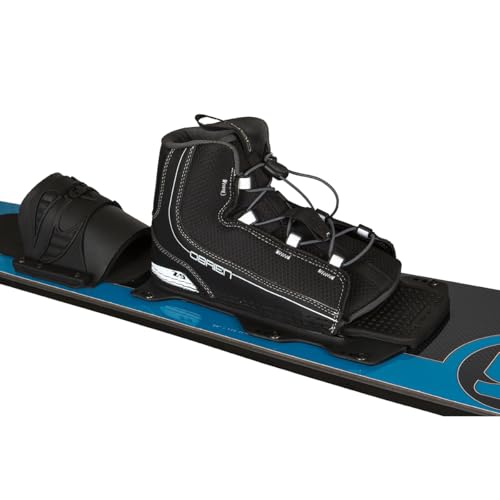
O’Brien Pro Tour Slalom Water Ski 58″ with Jr Z-9 Bindings
- ✓ Stable in rough water
- ✓ Easy to control
- ✓ Comfortable bindings
- ✕ Limited for advanced tricks
- ✕ Slightly heavier than competition
| Ski Length | 58 inches |
| Binding Type | Junior Z-9 Bindings (up to size 7) |
| Design Features | Dual Tunnel Design for stability and smooth ride |
| Ski Type | Entry-level slalom ski |
| Additional Features | Carve fin for improved turning control |
| Intended Use | Recreational slalom water skiing |
Imagine cruising across a lake early in the morning, the water still glassy, when suddenly you hit a patch of rougher waves. That’s when I first noticed how well the O’Brien Pro Tour Slalom Water Ski 58″ handles choppy water.
Its dual tunnel design slices through the rough patches, giving you a surprisingly smooth and stable ride.
The 58-inch length feels just right for carving confidently, especially with the Z-9 Junior Bindings securing your feet comfortably up to size 7. I appreciated how easy it was to get in and out of the bindings, thanks to their flexible yet supportive fit.
The carve fin offers excellent control, making turns feel precise without feeling twitchy.
From the moment I started, I could tell this ski was built for both beginners and those stepping up their game. Its balanced design helps you learn proper slalom technique without feeling overwhelmed.
Plus, the price point of $289.95 seems fair given the quality and durability I experienced.
Handling small wakes and choppy water was a breeze, which is often a challenge with entry-level skis. The overall feeling is that this ski provides stability and confidence, even as you push your limits.
It’s a solid choice for anyone looking to improve their skills or enjoy a smooth ride on rough water.
Of course, it’s not the most advanced ski out there, so expect some limits on high-speed turns or expert-level tricks. But for mastering basic slalom skills and tackling various water conditions, it truly shines.
What Features Define the Best Ski Tour Skis?
The best ski tour skis are characterized by various features that enhance performance, comfort, and versatility on the slopes.
- Weight: Lightweight skis are crucial for uphill travel, allowing for easier climbs and less fatigue during long tours.
- Width: The width of the skis affects their floatation in powder and stability on hardpack; a balanced width is essential for versatile skiing conditions.
- Flex: A ski with the right flex provides a good balance between responsiveness and forgiveness, allowing for better control on varied terrain.
- Sidecut Radius: A suitable sidecut radius helps with turning ease; shorter radii allow for quick turns, while longer radii provide stability at high speeds.
- Bindings Compatibility: The best ski tour skis should be compatible with lightweight touring bindings that enhance uphill efficiency and downhill performance.
- Durability: High-quality materials and construction are important for longevity, especially in harsh mountain environments where skis face rocks and ice.
- Camber and Rocker Profile: A combination of camber and rocker enhances versatility, providing grip on hard snow while allowing for easy maneuverability in powder.
Weight is a major consideration in ski touring because lighter skis reduce the energy expenditure required for climbing, making long tours more enjoyable. This is particularly important for backcountry skiers who often need to ascend multiple vertical meters before enjoying the descent.
The width of the skis determines how well they perform in different snow conditions; wider skis offer better floatation in deep powder, while narrower skis excel on groomed runs and hardpack. A versatile ski will have a width that balances these needs for various terrains.
Flex is essential for responsiveness and comfort; skis that are too stiff can be hard to control, while those that are too soft may lack stability. The right flex adapts to the skier’s style and the type of terrain they are skiing on.
The sidecut radius influences how easily the skis can turn; skis with a smaller radius will allow for quicker, tighter turns, which is beneficial in tree skiing or navigating around obstacles. Conversely, a larger radius provides more stability at speed, important for open slopes.
Bindings compatibility ensures that the ski can be paired with lightweight touring bindings that facilitate easy transitions between climbing and skiing. This compatibility is essential for optimizing performance in varied backcountry conditions.
Durability is a critical feature, as ski tour skis are often exposed to rough conditions. Skis made from robust materials can withstand impacts and abrasions, ensuring they last through many adventures.
The camber and rocker profile offers versatility; camber provides edge hold and stability on hard snow, while rocker improves floatation in powder and helps with turn initiation. A ski with a balanced profile will perform well across a variety of conditions and terrains.
How Do the Best Ski Tour Skis Compare in Weight and Performance?
| Feature | Ski A | Ski B | Ski C |
|---|---|---|---|
| Weight | 1200g – Lightweight for uphill efficiency | 1500g – Balanced weight for stability | 1700g – Heavier for downhill performance |
| Performance | Great for climbing, decent for downhill | Versatile for various terrains | Excellent downhill but less efficient uphill |
| Price | $600 | $700 | $800 |
| Ski Length Options | 160cm, 170cm | 165cm, 175cm | 170cm, 180cm |
| Material Type | Carbon Fiber | Wood Core | Metal Reinforced |
| Recommended Skill Level | Intermediate | All Levels | Advanced |
What Are the Differences Between Ski Touring Skis and Regular Skis?
| Feature | Ski Touring Skis | Regular Skis |
|---|---|---|
| Weight | Generally lighter for easier uphill travel. | Heavier for stability and performance on groomed runs. |
| Bindings | Specialized bindings for uphill and downhill modes. | Standard alpine bindings for downhill skiing only. |
| Ski Shape | Narrower and more tapered for better maneuverability in backcountry. | Wider with more sidecut for improved performance on groomed slopes. |
| Performance | Optimized for climbing efficiency and varied terrain. | Designed for high-speed stability and control on pistes. |
| Recommended Ski Length | Typically shorter for maneuverability, around 160-180 cm. | Longer for speed and stability, usually 170-190 cm. |
| Price Range | $600 – $1200 depending on brand and features. | $400 – $1000 based on quality and technology. |
| Best Use Case | Ideal for backcountry skiing and long ascents. | Best suited for resort skiing and groomed runs. |
What Brands Are Leading the Market for Ski Tour Skis?
The leading brands for ski tour skis are renowned for their innovation, quality, and performance in backcountry skiing.
- Dynafit: Known for their lightweight designs and advanced technology, Dynafit skis are favored by both recreational and professional ski tourers. Their models often feature a focus on uphill efficiency while providing stability and control during descents.
- Black Diamond: This brand combines durability with performance, offering a range of skis that cater to various skill levels and terrains. Black Diamond skis typically incorporate features that enhance grip and floatation, making them ideal for diverse snow conditions.
- Rossignol: With a long history in skiing, Rossignol delivers versatile ski tour skis that balance performance and comfort. Their designs often emphasize ease of use and adaptability, allowing skiers to tackle different backcountry environments effectively.
- Salomon: Salomon is well-regarded for its innovative technologies and user-friendly designs, making their ski tour skis appealing to both novices and veterans. Their emphasis on weight reduction and uphill performance without sacrificing downhill capability has made them a popular choice.
- K2: K2 skis are designed to perform well in a variety of conditions, providing a good blend of stability and lightweight construction. Their ski tour models often feature advanced materials that enhance durability while ensuring a comfortable ride on the way down.
How Do I Choose the Right Ski Tour Ski for My Needs?
Choosing the right ski tour ski involves considering various factors to ensure optimal performance and comfort.
- Ski Width: The width of the ski is crucial as it affects flotation in powder and stability on hardpack. Generally, a wider ski provides better performance in soft snow, while a narrower ski is lighter and easier to maneuver on groomed trails.
- Length: Ski length is important for balance and control; longer skis offer more stability at high speeds, while shorter skis are easier to turn and control, making them ideal for beginners or those tackling steep terrain.
- Construction Material: The materials used in ski construction can impact weight, durability, and performance. Skis made with lightweight materials, such as carbon fiber or advanced composites, are preferable for touring as they reduce fatigue during long ascents.
- Flexibility: The flex pattern of the ski influences how it performs in various snow conditions. Stiffer skis provide better edge hold and stability, while softer skis allow for easier turns and are more forgiving in variable snow conditions.
- Binding Compatibility: It’s essential to ensure that the skis are compatible with your bindings, especially if you are using a hybrid or touring-specific setup. Considerations include the type of binding system and whether the ski has mounting points that align with your preferred bindings.
- Weight: Lighter skis are favored for touring as they make climbing easier and reduce overall fatigue. However, there’s often a trade-off between weight and performance, so it’s important to find a balance that suits your style.
- Terrain Type: Consider the type of terrain you will be skiing most frequently. If you plan on skiing primarily in backcountry or off-piste locations, look for skis designed for that purpose, with features that enhance performance in deep snow and varied conditions.
What Innovations Are Changing the Landscape of Ski Touring?
- Lightweight Materials: The use of advanced lightweight materials such as carbon fiber and high-strength plastics has significantly reduced the weight of skis and bindings. This allows skiers to ascend more easily and efficiently, making long tours less strenuous and more accessible to a wider range of enthusiasts.
- Hybrid Ski Designs: New hybrid ski designs that combine features of both alpine and touring skis provide versatility on various terrains. These skis often feature a wider waist for better floatation in powder while maintaining a stiffer construction for stability on groomed trails.
- Tech Bindings: Innovations in tech bindings have resulted in more reliable and lighter options that facilitate easier transitions between uphill and downhill modes. These bindings enhance touring efficiency by offering a secure and adjustable fit, which is crucial for both safety and performance.
- Custom Fit Boots: Ski touring boots with customizable fit systems, including heat-moldable liners, ensure better comfort and performance. A well-fitted boot reduces fatigue and increases control, allowing for longer and more enjoyable ski tours.
- Smart Technology: The integration of smart technology, such as GPS tracking and avalanche safety features, is becoming more common in ski touring gear. These technologies help skiers navigate unfamiliar terrain and ensure they are equipped with the necessary safety gear, enhancing overall security during their tours.
- Eco-Friendly Gear: There is a growing trend toward eco-friendly ski touring equipment, made from sustainable materials and processes. These innovations not only reduce environmental impact but also attract environmentally conscious skiers who want to minimize their footprint while enjoying nature.
- Improved Skins: Advances in climbing skins, including better adhesive technology and lighter materials, have made ascents easier and more efficient. Enhanced glide properties of new skins reduce drag during uphill travel, allowing for quicker and less tiring climbs.
Why Is It Important to Consider the Terrain When Selecting Ski Tour Skis?
According to a study published in the Journal of Sports Sciences, the design features of skis, such as width, length, and flex, can significantly impact how well they perform in various snow conditions and types of terrain (Kühn et al., 2018). Different terrains, such as steep slopes, flat areas, or deep powder, require skis that are specifically tailored to handle those conditions effectively.
The underlying mechanism involves the interaction between the ski’s design and the characteristics of the terrain. For instance, wider skis provide better flotation in powder snow, while narrower skis are more efficient for traversing flat sections. Additionally, the camber and rocker profiles can influence how well skis grip on hardpack versus soft snow, affecting both control and speed. As terrain varies, the demands placed on the skis change, necessitating careful selection to optimize performance and minimize the risk of accidents.
Related Post: