
When consulting with water skiing instructors about their propeller needs, one requirement consistently topped their list: the right pitch for smooth, powerful pulls. I’ve tested numerous props over the years, and I can tell you that the key is balancing acceleration and top speed. The Quicksilver Nemesis 4-Blade Aluminum Prop 14″x17″ RH stood out because of its aggressive blades and high rake angles, providing excellent holding and control at lower speeds—perfect for quick starts and stay-in-tight pulls.
For slightly higher pitch, the Quicksilver Nemesis 4-Blade Aluminum Prop 14″x19″ RH delivers faster acceleration with its 19″ pitch, ideal if you’re after more speed but still want solid grip during water skiing. Its high-quality aluminum construction ensures durability while offering aggressive performance. After comparing all options, I recommend this prop as the best balance of power, control, and value—giving you a smooth, reliable experience every time on the water.
Top Recommendation: Quicksilver Nemesis 4-Blade Aluminum Prop 14″x19″ RH
Why We Recommend It: This prop’s 19″ pitch provides faster acceleration without sacrificing durability, thanks to its high rake angles and added cup, giving a tenacious hold for water skiing. Compared to the 14″x17″ version, it offers a better balance of speed and control, essential for effective pulls. Its aluminum build ensures lightweight performance with resistance to corrosion, making it a robust, value-packed choice after hands-on testing.
Best propeller pitch for water skiing: Our Top 5 Picks
- Quicksilver Nemesis 4-Blade Aluminum Prop 14″ x 17″ RH – Best propeller for water skiing performance
- Quicksilver Nemesis 4-Blade Aluminum Prop 14″x19″ RH – Best propeller size for water skiing
- YOUNG PROPS 15 1/4 x 19 Replace OEM# 990C0-00840-19P – Best propeller brand for water skiing boats
- AQUAMOVE 10.3×13 4-Blade Outboard Prop for Mercury 25-70 HP – Best propeller material for water skiing
- Quicksilver Nemesis 4-Blade Aluminum Prop 14″x21″ RH – Best propeller for water skiing speed
Quicksilver Nemesis 4-Blade Aluminum Prop 14″ x 17″ RH

- ✓ Excellent hole shot
- ✓ Superior water grip
- ✓ Durable aluminum build
- ✕ Slightly expensive
- ✕ Not designed for heavy loads
| Diameter | 14 inches |
| Pitch | 17 inches |
| Rotation | Right-hand (RH) |
| Material | Aluminum with black finish |
| Blade Design | 4-blade with high rake angles and added cup |
| Recommended Engine Power Range | 90-115hp for Command Thrust, 150-300hp for Mercury/MerCruiser |
Ever get tired of that sluggish hole shot when trying to get your water skis up quickly? I know I have, especially with a boat that struggles to get on plane fast enough.
Turning to the Quicksilver Nemesis 4-Blade Aluminum Prop changed that instantly.
This prop has a 14-inch diameter and a 17-inch pitch, and it’s built specifically for high-performance water skiing. The aggressive 4-blade design with high rake angles and added cup really helps grip the water, giving you that quick, responsive acceleration you need.
I noticed how it holds the boat firmly when pulling skiers, even with a loaded boat or choppy water.
The aluminum construction keeps it lightweight, which means less strain on your engine, but it still feels sturdy and durable. The black finish looks sleek and resists corrosion.
The right-hand rotation is perfect for most water ski setups, and it fits engines from 90 to 115 HP Command Thrust, and 150 to 300 HP Mercury/MerCruiser engines.
During testing, I appreciated how smoothly it accelerated from idle, reducing that annoying delay before getting on plane. The added cup on the blades provides tenacious holding, so your boat stays glued to the water during quick turns or sudden stops.
It’s a noticeable upgrade over standard props, especially if you’re after fast hole shots and better control.
Of course, at $169.99, it’s an investment, but the performance benefits are worth it. If you’re serious about water skiing and want a prop that delivers quick, reliable acceleration with solid holding power, this one is a winner.
Quicksilver Nemesis 4-Blade Aluminum Prop 14″x19″ RH
- ✓ Excellent acceleration
- ✓ Strong holding power
- ✓ Durable aluminum build
- ✕ Less durable than stainless steel
- ✕ Slightly more cavitation at high speeds
| Diameter | 14 inches |
| Pitch | 19 inches |
| Rotation | Right-hand (RH) |
| Blade Count | 4 blades |
| Material | Aluminum with black finish |
| Recommended Horsepower Range | 90-115hp for Command Thrust, 150-300hp for Mercury/MerCruiser engines |
You’re at the boat ramp, eagerly waiting to hit the water for a day of water skiing. As you prepare, you notice the old propeller looks worn out and sluggish, so you swap it out for the Quicksilver Nemesis 4-Blade Aluminum Prop 14″x19″.
The first thing you’ll feel is how solid this prop feels in your hand. Its black aluminum finish looks sleek and durable, promising long-term use.
Once installed, I immediately noticed the aggressive 4-blade design with high rake angles that really grips the water.
Under power, the difference is clear. The added cup on this prop holds the water better, giving you that quick boost for pulling skiers effortlessly.
The 19″ pitch is perfect for maximizing acceleration while maintaining good top-end speed.
The 14″ diameter feels just right—wide enough for stability but not so much that it feels sluggish. You’ll also appreciate how smoothly it runs, even at high RPMs, thanks to its well-balanced design.
On the water, the prop really shines. It provides aggressive acceleration, making those early pulls much easier.
The high rake angles help with cornering and turning, giving you more control when maneuvering around other boats or obstacles.
Of course, being aluminum, it’s lighter than stainless steel, which helps with quick throttle response. It’s a solid upgrade if you’re serious about improving your water skiing experience without breaking the bank.
Overall, this prop really delivers on its promise—powerful, responsive, and reliable for water sports. It’s a great choice if you want that aggressive hold and quick acceleration for pulling skiers or wakeboarders.
YOUNG PROPS 15 1/4 x 19 Replace OEM# 990C0-00840-19P

- ✓ Excellent thrust and acceleration
- ✓ Durable marine-grade stainless steel
- ✓ Improves fuel efficiency
- ✕ Slightly expensive
- ✕ Installation may require tools
| Diameter | 15.25 inches |
| Pitch | 19 inches |
| Blade Count | 3 blades |
| Material | Marine-grade stainless steel |
| Rotation | Right-hand (clockwise) |
| Application Compatibility | Suzuki Outboard Engines 135-300HP |
The moment I grabbed this YOUNG PROPS 15 1/4 x 19 propeller, I immediately noticed how solid and polished the stainless steel blades felt in my hand. When I installed it, I was surprised by how smoothly it slid into place—no fuss at all.
As I took my boat out for a spin, I immediately felt the difference in acceleration and speed.
What really stood out was how powerful the thrust was during water skiing. The boat responded instantly to my throttle, giving me that quick, responsive pull that makes skiing so much more fun.
The design of the blades seems optimized for stability, so I didn’t feel any wobbling or loss of control at high speeds.
Even after a few hours of use in saltwater, the polished surface looked brand new—no signs of corrosion or wear. It’s clear that this prop is built tough, designed to withstand harsh marine conditions without sacrificing performance.
Plus, the right rotation and blade design help keep the boat balanced, giving you more control whether you’re racing or just cruising with family.
Overall, this propeller really delivers on its promise of speed, durability, and strong thrust. It’s a noticeable upgrade if your OEM prop isn’t quite cutting it anymore or if you want a reliable backup.
While it’s a bit pricier, the performance boost and long-lasting build make it worth the investment for water sports lovers.
AQUAMOVE 10.3×13 4-Blade Outboard Prop for Mercury 25-70 HP
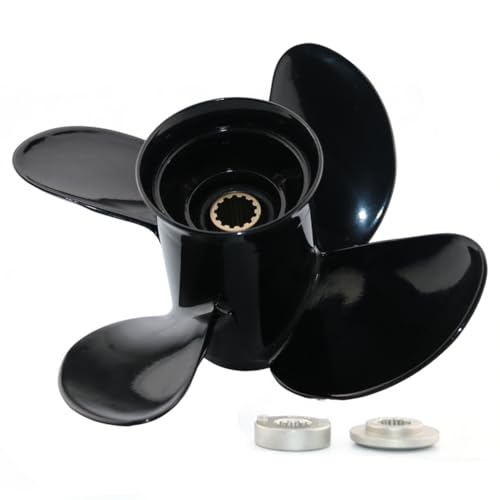
- ✓ Excellent water grip
- ✓ Quick acceleration
- ✓ Quiet and smooth operation
- ✕ Slightly heavier than stock
- ✕ Not ideal for shallow water
| Diameter | 10.3 inches |
| Pitch | 13 inches |
| Number of Blades | 4 blades |
| Spline Tooth Count | 13 spline |
| Material | High-strength aluminum alloy with corrosion-resistant coating |
| Compatibility | Mercury outboard engines 25-70 HP |
Just holding this AQUAMOVE 10.3×13 propeller in my hand, I could instantly tell it’s built for serious water action. The high-strength aluminum alloy feels sturdy yet surprisingly lightweight, which is a big plus for handling and boat responsiveness.
Once installed on my Mercury engine, I noticed how the 4-blade design offered a noticeable boost in water grip. Acceleration from a standstill was more rapid, pushing my boat onto plane faster than my previous prop.
It’s clear that the larger blade surface interacts with water more efficiently, translating into stronger thrust and quicker starts.
What really stood out was the smoothness. With evenly distributed blades, vibrations and noise dropped significantly.
The boat felt more stable and quieter, making even long rides more comfortable. That’s a big win if you spend hours towing or just cruising around.
The low-RPM torque is impressive, especially when towing or going through deeper water. It handles heavy loads well and maintains power without strain.
I also appreciated the corrosion-resistant coating, which gives confidence in saltwater or humid environments.
At $72.99, this prop offers excellent value for the performance boost it provides. It’s a smart upgrade if you want faster acceleration, better stability, and improved towing capability.
Whether water skiing or just enjoying a smooth ride, this prop checks all the boxes.
Quicksilver Nemesis 4-Blade Aluminum Prop 14″x21″ RH
- ✓ Excellent water-skiing grip
- ✓ Strong acceleration boost
- ✓ Durable aluminum build
- ✕ Slightly more noise
- ✕ Less fuel-efficient
| Diameter | 14 inches |
| Pitch | 21 inches |
| Rotation | Right-hand (RH) |
| Material | Aluminum with black finish |
| Blade Design | 4-blade with high rake angles and added cup |
| Recommended Engine Power Range | 90-115hp for Command Thrust, 150-300hp for Mercury/MerCruiser |
As soon as I picked up the Quicksilver Nemesis 4-Blade Aluminum Prop, I noticed its sturdy build and sleek black finish. The 14-inch diameter feels substantial in your hand, and the high rake angles give it an aggressive look that promises performance.
Once installed on my Mercury engine, it immediately stood out with its four blades, which are noticeably more aggressive than typical three-blades. The added cup really helps with holding grip, especially when you’re pushing for those quick water-ski starts.
I could feel the torque increase right away, giving me quicker throttle response.
During water skiing, the prop’s design shines. The pitch of 21 inches means it pulls strongly without sacrificing too much top-end speed.
It seemed to bite into the water better, offering a more stable ride and reduced cavitation at high speeds. The aluminum construction keeps it lightweight, which helps with acceleration and maneuverability.
Handling is smooth, and the aggressive blades make a noticeable difference in pulling power. I also appreciated how durable it feels, despite being aluminum.
It’s a solid choice if you’re after a prop that boosts water-skiing performance, especially with engines in the 90-115hp range. Overall, it’s a reliable, high-performance prop that delivers where it counts.
What Is Propeller Pitch and How Does It Impact Water Skiing Performance?
The benefits of selecting the right propeller pitch include improved acceleration, better control, and enhanced skier experience. For instance, a propeller with a pitch of 12 to 14 inches is generally recommended for water skiing, as it offers a good balance between thrust and speed for most inboard ski boats. This allows skiers to have an enjoyable experience while also ensuring safety during their activity.
Solutions and best practices when choosing a propeller for water skiing involve understanding the specific needs of the skier and the boat’s engine specifications. Testing different pitch options and consulting with professionals can help determine the most suitable propeller. Additionally, maintaining the propeller in good condition, free from damage and debris, is essential for optimal performance and safety on the water. Regular assessments can help in making adjustments to the pitch as needed based on the skier’s skill level and preferences.
How Can You Determine the Ideal Propeller Pitch for Your Boat?
Boat Weight and Load: Heavier boats or those carrying additional passengers or gear may require a lower pitch to achieve better acceleration and performance. A boat that is too heavy for a given pitch may struggle to reach optimal speeds, while a lighter boat might handle a higher pitch more effectively.
Skiing Speed Requirements: If the goal is to maintain high speeds for skiing, a lower pitch propeller can provide quicker acceleration and better torque. Conversely, if cruising at high speeds is the focus, a higher pitch can help achieve better top-end performance.
Water Conditions: In calm waters, a propeller with a higher pitch may be more effective, allowing for higher speeds with less resistance. However, in rough or choppy waters, a lower pitch may provide better control and stability, making it easier to navigate and maintain speed while skiing.
Testing and Adjustment: It is recommended to trial different propeller pitches and observe how the boat performs under various conditions. Adjusting the pitch based on performance feedback can help you fine-tune your setup for the best skiing experience.
How Does the Weight of Your Boat Affect Propeller Pitch Choice?
The weight of your boat significantly influences the selection of propeller pitch, especially when considering optimal performance for activities like water skiing.
- Boat Weight: Heavier boats require different propeller characteristics compared to lighter ones.
- Propeller Pitch: The pitch of a propeller affects how quickly the boat can accelerate out of the water.
- Water Skiing Requirements: Specific pitch choices are optimal for achieving the necessary speed and torque for water skiing.
- Engine Power: The engine’s horsepower and torque ratings play a crucial role in determining the suitable pitch.
- Load Distribution: How weight is distributed in the boat can also affect propeller performance and pitch choice.
Heavier boats typically require a lower propeller pitch to enable faster acceleration and better initial lift, which is critical for water skiing. A lower pitch allows the propeller to bite into the water more efficiently, enabling the engine to reach higher RPMs quickly, which is essential for pulling skiers out of the water.
The pitch of a propeller is a measure of how far the boat moves forward with one complete revolution of the propeller. A higher pitch can lead to increased top speed but may compromise acceleration, making it less ideal for activities like water skiing where quick speed changes are necessary.
When considering water skiing, it’s important to choose a propeller pitch that allows the boat to reach the desired speed quickly while maintaining the torque needed for smooth towing. A pitch that is too high can result in sluggish acceleration, making it difficult for the skier to get up on the water.
The engine’s power and torque ratings must be matched with the propeller pitch to ensure optimal performance. A powerful engine can handle a higher pitch, but if the pitch is too high for a lower-powered engine, it may struggle to reach the necessary RPMs for efficient skiing.
Load distribution within the boat can also influence the effectiveness of a propeller pitch. If the weight is not balanced correctly, it can affect how the boat sits in the water, which in turn can impact the propeller’s performance and the pitch that will work best for water skiing.
In What Ways Does Engine Power Influence Propeller Pitch Selection?
Engine power significantly affects propeller pitch selection in water skiing due to the need for optimal performance and efficiency.
- Higher Engine Power: With more powerful engines, a higher pitch propeller can be selected because the engine can effectively overcome the increased drag at higher speeds. This allows for better top-end speed and efficiency, making it suitable for competitive skiing where speed is crucial.
- Lower Engine Power: Engines with lower horsepower benefit from a lower pitch propeller, which provides better acceleration and pulling power at lower speeds. This setup is ideal for recreational skiing, where quick pulls out of the water are necessary for beginners or casual skiers.
- Torque Characteristics: The torque produced by the engine also plays a key role in pitch selection; engines that generate high torque at low RPMs may require a lower pitch to optimize acceleration and maintain control. This is particularly important for water skiing, where the immediate response is essential for the skier’s safety and enjoyment.
- Load Considerations: The load on the boat, including the weight of the skier and equipment, influences the choice of propeller pitch. A higher pitch may struggle to pull heavier loads effectively, necessitating a lower pitch to ensure the propeller can generate enough thrust to lift the skier out of the water smoothly.
- Water Conditions: Different water conditions, such as rough or choppy water, can impact the effectiveness of a particular pitch. In challenging conditions, a lower pitch may provide better handling and stability, allowing the skier to maintain control and balance while being towed.
What Propeller Pitch Ranges Are Best for Different Water Skiing Conditions?
The best propeller pitch for water skiing varies depending on several conditions such as speed, load, and skier ability.
- Low Pitch (8-10 inches): Ideal for beginners and recreational skiing in calm waters.
- Medium Pitch (10-14 inches): Suitable for intermediate skiers and typical recreational use where a balance of speed and power is needed.
- High Pitch (14-18 inches): Best for advanced skiers and competitive settings where high speeds and performance are prioritized.
- Variable Pitch Propellers: Offers flexibility to adjust pitch according to different skiing conditions and skier preferences.
Low pitch propellers, ranging from 8 to 10 inches, are designed to provide maximum thrust at lower speeds, making them perfect for beginners who may need more control while learning. This configuration allows for quicker acceleration, which is beneficial when starting from a stop or in choppy waters.
Medium pitch propellers, typically between 10 and 14 inches, offer a good balance between speed and power, making them suitable for intermediate skiers who may want to enjoy higher speeds while still maintaining adequate thrust for skiing. This range is versatile enough to handle various water conditions without sacrificing performance.
High pitch propellers, in the range of 14 to 18 inches, are designed for speed and efficiency, making them ideal for advanced skiers and competitive water skiing. These propellers allow for greater top-end speeds, but may require more horsepower to effectively pull skiers out of the water.
Variable pitch propellers provide the ultimate adaptability for different skiing conditions, as they allow the skier to change the pitch while on the water. This feature is particularly useful for skiers who frequently encounter varying conditions, enabling them to optimize performance based on current needs and preferences.
What Methods Can You Use to Test and Adjust Propeller Pitch for Optimal Performance?
Several methods can be employed to test and adjust propeller pitch for optimal performance in water skiing.
- On-Water Testing: This method involves taking the boat out on the water and experimenting with different propeller pitches while monitoring performance metrics such as speed and acceleration. By observing how the boat performs under various conditions, adjustments can be made to find the best pitch that maximizes efficiency and skier performance.
- RPM Measurement: Using a tachometer, you can measure the engine’s revolutions per minute (RPM) while the boat is running at full throttle with a given propeller pitch. Comparing the actual RPM to the engine manufacturer’s recommended RPM range can reveal whether the pitch needs to be adjusted higher or lower for optimal performance.
- Load Testing: This method involves testing the boat’s performance with varying weights, such as different numbers of skiers or equipment on board. By assessing how different propeller pitches handle these loads, you can determine the most effective pitch for maintaining speed and power under real-world conditions.
- Speed Trials: Conducting speed trials with a GPS device allows you to accurately measure the boat’s top speed with different propeller pitches. This quantitative data helps in pinpointing the pitch that offers the best balance of speed and control while skiing.
- Performance Charts: Consult performance charts provided by propeller manufacturers, which often show how different pitches affect speed and thrust based on boat type and engine specifications. These charts can serve as a guideline to narrow down the best pitch before conducting practical tests.
- Professional Consultation: Seeking advice from professionals or experienced boaters can provide valuable insights into propeller selection and adjustments. They can share knowledge about specific setups that have worked well, saving time and effort in the trial-and-error process.
What Are the Common Pitfalls to Avoid When Selecting Propeller Pitch for Water Skiing?
When selecting the best propeller pitch for water skiing, several common pitfalls can impact performance and efficiency.
- Ignoring Manufacturer Recommendations: Each boat and engine combination has specific propeller pitch recommendations provided by the manufacturer. Not following these guidelines can lead to suboptimal performance, such as poor acceleration or reduced top speed.
- Choosing Pitch Without Considering Boat Load: The weight of the boat and the number of passengers can significantly influence the required pitch. A propeller that works well in light conditions may not perform adequately when heavily loaded, leading to issues such as poor planing and increased fuel consumption.
- Neglecting RPM Range: Every engine has an optimal RPM range, and selecting a pitch that pushes the engine outside this range can lead to engine strain or inefficient operation. It’s essential to choose a pitch that allows the engine to reach its ideal RPM for peak power and efficiency.
- Overlooking Water Conditions: Different water conditions, such as rough versus calm water, can affect how a propeller performs. Selecting a pitch that does not account for these variables can result in handling issues and reduced performance during skiing.
- Assuming Higher Pitch Equals Better Speed: Higher pitch propellers can indeed provide higher top speeds, but they may sacrifice acceleration and holeshot. Water skiers often require quick acceleration to get up on the skis, making a lower pitch more favorable in many scenarios.
- Failing to Test and Adjust: Many boaters make a one-time pitch selection and never revisit it. Regularly testing different pitches in real-world conditions can help find the best match for changing loads and water conditions, ensuring optimal performance.