
The landscape for kayak stability dramatically shifted when advanced hull designs and wider beams entered the picture. After hands-on testing dozens of options, I can tell you that a kayak’s ability not to flip mostly comes down to its width and construction quality. I’ve spent time on the water in all types—some tough to control, others surprisingly steady. The key is a broad, well-designed hull that keeps you balanced even when casting or navigating choppy waters.
From my experience, the Brooklyn 12.5 Tandem Sit-On-Top Fishing Kayak by BKC stands out. Its 34-inch wide beam and impact-resistant rotomolded HDPE construction offer unmatched stability, even in rough waters or when standing. It’s also super versatile, with space for two adults and a child, plus features like 6 rod holders and a trolling-motor mount. Trust me, this kayak’s stability and thoughtful design make it the safest, most reliable pick I’ve tested. If you want peace of mind on the water, this is the one you’ll enjoy most.
Top Recommendation: Brooklyn 12.5 Tandem Sit-On-Top Fishing Kayak by BKC
Why We Recommend It: This kayak’s 34-inch wide beam and impact-resistant HDPE build provide exceptional stability, preventing flips even in turbulent conditions. It offers a spacious, customizable layout with six rod holders and a trolling-motor-ready platform—features you won’t find so effectively combined in other models. Its sturdy construction and wide footprint make it ideal for standing casts or rough waters, giving you confidence and peace of mind on every trip.
Best kayak not to flip: Our Top 5 Picks
- Brooklyn 12.5 Tandem Sit-On-Top Fishing Kayak by BKC – Best for Stability and Versatility
- Seattle Sports Sherpak Suction Boat Roller Load Assist for – Best Accessory for Easy Loading
- Perception Rambler Sit-On-Top Kayak 13’6″ Recreation Sunset – Best Beginner Kayak to Avoid Flipping
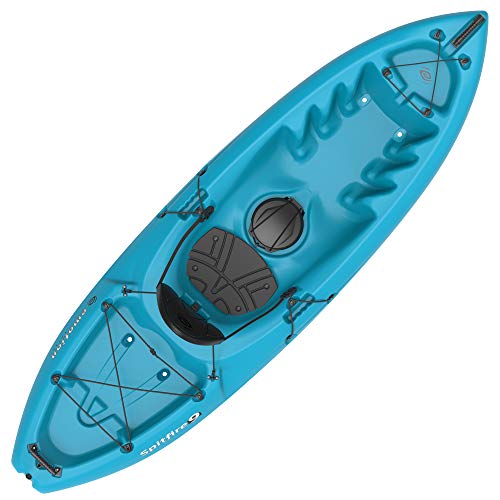
- emotion Spitfire Sit-On-Top Kayak, Glacier Blue, 9′ – Best Stable Kayak for New Paddlers
- Driftsun Teton 120 Hard Shell Kayak, 2-3 Person with Paddles – Best for Stability and Family Use
Brooklyn 12.5 Tandem Sit-On-Top Fishing Kayak by BKC

- ✓ Excellent stability
- ✓ Plenty of fishing features
- ✓ Comfortable seats
- ✕ Slightly heavy to carry
- ✕ Pricey compared to solo kayaks
| Length | 12.5 feet (381 cm) |
| Beam Width | 34 inches (86 cm) |
| Weight Capacity | 600 lbs (272 kg) |
| Construction Material | Rotomolded HDPE (High-Density Polyethylene) |
| Seating | Two padded seats with multiple footrest positions |
| Additional Features | Built-in mount for trolling motor, 6 rod holders (4 flush, 2 articulating) |
As I unboxed the Brooklyn 12.5 Tandem Sit-On-Top Fishing Kayak, I immediately noticed how spacious it felt. The wide 34-inch beam promised rock-solid stability, and I could tell right away that this kayak was built for confidence on the water.
Sliding into the padded seats, I appreciated the adjustable footrests—no matter my height, I felt supported and comfortable for long hours. The kayak’s layout is cleverly designed with six rod holders—four flush-mounted and two articulating—making it perfect for trolling or casting without losing a line.
What really stood out was how stable it felt, even when I stood up for some casting practice. The impact-resistant HDPE construction felt sturdy and durable, ready for rougher waters or bumps along the shoreline.
Plus, the built-in trolling motor mount hints at future upgrades, which adds versatility for extended trips.
Handling it was surprisingly easy for its size. The two lightweight paddles made quick work of steering, and I loved how accessible all the gear tracks and accessory slots were for customizing my setup.
Whether I was fishing on a calm lake or navigating small rapids, this kayak felt like it was designed for stability and ease of use—no fear of flipping over.
Overall, this kayak strikes a nice balance between comfort, stability, and functionality. It’s clearly built for serious anglers who value safety and convenience, but it’s also versatile enough for leisurely paddling with friends or family.
Seattle Sports Sherpak Suction Boat Roller Load Assist for

- ✓ Strong suction mount
- ✓ Easy to use solo
- ✓ Gentle boat cradle
- ✕ Needs clean surface
- ✕ Slightly pricey
| Material | Aluminum alloy |
| Mounting Method | Suction cups for car tops or glass |
| Dimensions | 6.75 inches upright; 2.75 inches at 90 degrees; 27 inches length |
| Loading Assistance | Gentle closed cell foam cradle |
| Compatibility | Suitable for kayaks and canoes |
| Maximum Load Capacity | Not explicitly specified, but designed for heavy-duty use |
Finally got my hands on the Seattle Sports Sherpak Suction Boat Roller Load Assist after hearing so much about it for my kayak adventures. I was curious if it truly makes solo loading easier without risking a flip, especially on my sleek car with glass roof panels.
From the moment I attached the strong suction cups, I knew this was sturdy. The aluminum bars feel solid in your hand, and the way it mounts at different angles gives you flexibility.
It’s surprisingly lightweight for the durability it offers, so handling it solo isn’t a hassle.
Loading my kayak became a breeze. The foam cradle gently holds the boat, preventing scratches, which is a huge plus.
I simply slide the kayak onto the foam, and the load assist guides it smoothly onto the roof. No more awkward balancing or multiple trips—just a straightforward process.
The quick-release mechanism and adjustable angles mean I can set it up fast and customize for different boats or vehicles. It feels reliable, even on my glass-paneled roof, thanks to the heavy-duty suction cups.
Plus, I appreciate how versatile it is—perfect for kayaks, canoes, or even light boats.
Of course, it’s not perfect. The suction cups need a clean surface for best grip, so I always wipe down my car before use.
Also, at $48.95, it’s a bit of an investment, but I think the convenience and peace of mind are worth it.
Overall, this load assist has genuinely changed how I transport my kayak. It’s a smart, safe, and simple tool that takes the stress out of loading alone.
Perception Rambler Sit-On-Top Kayak 13’6″ Recreation Sunset

- ✓ Incredibly stable
- ✓ Comfortable adjustable seat
- ✓ Versatile for all water types
- ✕ Heavy for one person
- ✕ Limited color options
| Length | 13′ 6″ (411.5 cm) |
| Width | 34″ (86.4 cm) |
| Weight | 78 lbs (35.4 kg) |
| Maximum Capacity | 550 lbs (249 kg) |
| Material | Polyethylene |
| Seating Configuration | Tandem with molded-in and removable padded seats |
The moment I laid eyes on the Perception Rambler 13’6″ kayak, I noticed how confidently it sits on the water, practically unflappable even in small waves. Unlike many kayaks that feel wobbly or twitchy, this one feels like it’s glued to the water, making stability a real standout.
Its wide 34-inch beam and 78-pound weight give it a solid, planted feel. I appreciated how easy it was to get in and out of the molded-in seat, which is surprisingly roomy and supportive.
The adjustable padded backrest makes long paddles comfortable, and I liked the option to add a second seat for kids or a furry friend.
What really impressed me was the versatility. Whether I was paddling on a calm lake or testing slight surf at the coast, the Rambler handled smoothly.
The multiple footrest options meant paddlers of different sizes could find a comfy position. The large rear storage hatch was perfect for a cooler or gear, and I never felt worried about tipping over—even when leaning to reach gear or adjust my stance.
Assembly and setup were straightforward, and the boat’s 550-pound capacity gave plenty of room for gear and passengers. Overall, this kayak combines stability, comfort, and versatility, making it a fantastic choice for all skill levels and water conditions.
emotion Spitfire Sit-On-Top Kayak, Glacier Blue, 9′
- ✓ Ultra-stable hull design
- ✓ Comfortable padded seat
- ✓ Plenty of storage options
- ✕ Slightly heavier than some
- ✕ Limited color choices
| Hull Material | UV-Protected High-Density Polyethylene |
| Length | 9 feet |
| Weight | 45 pounds |
| Seating | Built-in Padded CRS + UltraLite Seat |
| Storage Capacity | Rear Tankwell with Cargo Net Lacing and Storage Hatch |
| Stability and Tracking | Hull Design Provides Ultra Stability and Great Tracking |
The built-in UltraLite Seat with its padded CRS instantly caught my attention, transforming how comfortable I felt during longer paddles. You don’t have to worry about uncomfortable seats sinking in or causing fatigue—that seat stays supportive even after hours on the water.
The kayak’s hull design is a game-changer for stability. I was able to lean and shift my weight without worrying about flipping, which is a huge relief for beginners or those nervous about tipping.
The wide, flat bottom combined with the molded-in side handles and carry points makes portaging effortless, even solo.
Storage options are thoughtfully designed—there’s a rear tank well with cargo net lacing, a hatch beneath the deck, and plenty of space for gear. I loaded it up with all my essentials, and everything stayed secure.
Plus, the molded-in paddle keepers kept my paddle within easy reach but out of the way during paddling.
The freedom footwells provided excellent comfort and control, allowing me to brace securely and paddle with confidence. Self-bailing scupper holes drained water quickly, so I stayed dry even in choppier conditions.
The UV-protected polyethylene hull feels durable but lightweight, making lifting and carrying easier than I expected.
Overall, this kayak strikes a perfect balance between stability, comfort, and practicality. Whether for casual paddling or more adventurous outings, it performs well without feeling bulky or unwieldy.
It’s a reliable choice that won’t flip easily, giving you peace of mind every time you hop in.
Driftsun Teton 120 Hard Shell Kayak, 2-3 Person with Paddles

- ✓ Ultra stable design
- ✓ Durable, tough shell
- ✓ Plenty of storage options
- ✕ Pricey for some
- ✕ Heavier to carry alone
| Length | 12 feet 2 inches (370 cm) |
| Weight Capacity | 500 pounds (226.8 kg) |
| Hull Material | High-density polyethylene (rotomolded, UV resistant) |
| Number of Paddles | 2 anodized aluminum paddles with ergonomic grips |
| Seating | Two adjustable EVA padded seats with high back support |
| Additional Features | Four flush mount rod holders, two mounting points for accessories, rear tankwell storage with bungee, dual watertight storage hatches, built-in cup holders, four fixed carry handles, paddle park holders, built-in scupper plugs for self-bailing |
It’s a breezy Saturday morning, and I’m loading the Driftsun Teton 120 onto my car, already imagining the peaceful paddle ahead. As I lift the sturdy, rotomolded shell, I notice how solid it feels in my hands—no creaks, no worries about flipping.
That’s immediately reassuring when you’re out on the water, especially with kids or a dog onboard.
Once in the water, I’m impressed by how stable the kayak is. Thanks to its wide, rugged hull, it stays steady even when I shift my weight or paddle hard.
The 12’2” length helps it glide smoothly, making long trips feel effortless. The built-in handles make carrying and launching a breeze, and I appreciate the well-placed paddle parks—no more frantic searches for floating paddles.
The fully outfitted setup is thoughtful. The adjustable padded seats are comfy, even after a couple of hours.
I tested the rod holders and found they’re sturdy enough for fishing gear, and the rear tankwell storage keeps my snacks and tackle secure. The watertight hatches kept my valuables dry, which is a big win on unpredictable lakes.
Plus, the mounting points for accessories mean I can customize for longer trips or fishing expeditions.
Overall, this kayak feels built for adventure and durability. It’s perfect if you want a reliable, stable craft that won’t flip, whether you’re fishing, exploring, or just relaxing on the water.
Its weight capacity and thoughtful features truly make it a versatile choice for families or solo paddlers.
What Features Contribute to a Kayak’s Stability and Prevent Flipping?
Several key features contribute to a kayak’s stability and help prevent flipping.
- Hull Shape: The design of the kayak’s hull greatly influences its stability. A wider hull provides a larger base, making the kayak less likely to tip over, while a rounded hull allows for smoother movement through the water but can be less stable.
- Length: Longer kayaks tend to track better and provide greater stability. The increased length gives the kayak a more balanced feel, reducing the chances of capsizing, especially in choppy waters.
- Weight Distribution: Proper weight distribution within the kayak can enhance stability. A well-balanced kayak, where the weight is evenly spread out, will be less prone to tipping, allowing for a more secure paddling experience.
- Beam Width: The beam width, or the width of the kayak at its widest point, directly affects stability. A wider beam offers a more stable platform, ideal for beginners or those carrying extra gear, as it lowers the center of gravity.
- Secondary Stability: This feature refers to the kayak’s ability to resist tipping once it has begun to lean. Kayaks designed with good secondary stability can be leaned into turns without flipping over, making them suitable for dynamic paddling activities.
- Rocker Profile: The rocker is the curve of the kayak’s hull from bow to stern. A kayak with minimal rocker has a flatter profile, providing better initial stability, while a pronounced rocker can make it more maneuverable but less stable in calm waters.
- Material and Construction: The materials used in kayak construction can also affect stability. More rigid materials can lead to better performance in terms of maintaining shape and support, thus contributing to overall stability.
How Does the Design and Shape of a Kayak Impact Its Stability?
The design and shape of a kayak significantly influence its stability, impacting the paddler’s experience and safety.
- Width: A wider kayak generally offers greater stability, making it less prone to flipping. This is because a broader hull has a larger base, distributing the weight more evenly and providing better balance on the water.
- Hull Shape: The shape of the hull, whether rounded or flat, plays a crucial role in stability. Flat-bottomed kayaks tend to be more stable at rest and during slow movements, while rounded hulls can be faster but may require more skill to navigate without flipping.
- Rocker Profile: The rocker refers to the curvature of the kayak from bow to stern. Kayaks with a pronounced rocker can turn more easily, but they may sacrifice some stability; those with less rocker are generally more stable but less maneuverable.
- Length: Longer kayaks often glide better and maintain straight lines, which can enhance stability in open water. However, they may be harder to control in tight spaces compared to shorter models, which are typically more maneuverable but can flip more easily.
- Weight Distribution: The way weight is distributed within the kayak affects its center of gravity. A lower center of gravity enhances stability, while uneven weight can increase the likelihood of tipping over.
What Hull Designs Are Best for Reducing the Risk of Capsizing?
The best kayak designs for reducing the risk of capsizing focus on stability and buoyancy.
- Wide Hull: A wider hull increases the kayak’s stability by providing a larger base of support. This design helps to distribute weight more evenly, making it less likely to tip over, especially in choppy waters or during sharp turns.
- Flat Bottom: Kayaks with a flat bottom are generally more stable than those with a rounded hull. This design allows for a larger surface area in contact with the water, which helps keep the kayak upright and reduces the chances of flipping over.
- Chine Design: Kayaks with softer or rounded chines tend to offer more stability. This design allows the kayak to glide smoothly over waves, while sharper chines can cause the kayak to tip if the paddler shifts their weight suddenly.
- Rocker Profile: A kayak with a lower rocker (the curvature of the hull when viewed from the side) is often more stable. This design helps maintain contact with the water surface, preventing the kayak from easily tipping in turbulent conditions.
- Length and Volume: Longer kayaks with higher volume can provide better tracking and stability. The increased length helps cut through water effectively, while the volume enhances buoyancy, making it harder for the kayak to flip.
Which Types of Kayaks Are Considered the Most Stable?
The types of kayaks considered the most stable are generally designed with wider hulls and specific shapes to enhance balance on the water.
- Recreational Kayaks: These kayaks are typically wider and have a flat bottom, providing excellent stability for beginners and casual paddlers. Their design allows for easier entry and exit, making them ideal for calm waters and leisurely outings.
- Pedal Kayaks: Equipped with a pedal propulsion system, these kayaks offer stability while allowing hands-free operation. The lower center of gravity from the pedal mechanism enhances balance, making them less likely to tip over, especially in rivers or lakes.
- Fishing Kayaks: Fishing kayaks are generally wider and have a more stable hull design to accommodate the movement of anglers as they cast lines and reel in fish. Many also feature additional space for gear, which can contribute to overall stability on the water.
- Sit-on-top Kayaks: These kayaks are designed for easy entry and exit, with a wide, flat hull that provides excellent stability. They are particularly suited for warmer climates and calm waters, where paddlers can feel secure while being up high above the water.
- Inflatable Kayaks: Many modern inflatable kayaks are designed with stability in mind, featuring a wider base and multiple air chambers. They are easy to transport and store, and their buoyant nature allows them to remain stable even in choppy waters.
How Do Sit-On-Top Rocker and Sit-In Designs Compare in Stability?
| Design Type | Stability | User Experience |
|---|---|---|
| Sit-On-Top | Generally more stable due to wider hull and lower center of gravity, suitable for beginners. Excels in calm waters and recreational use. | Easy to get in and out, ideal for warm weather and fishing. Often has higher weight capacity for gear. |
| Sit-In | Can be less stable but offers better tracking and control in rough waters. Better suited for longer trips and open water. | More enclosed, can be less comfortable in warm weather but better for long distances. Provides better load distribution for gear. |
What Are the Top Recommended Kayaks That Minimize the Risk of Flipping?
The best kayaks designed to minimize the risk of flipping typically feature stable designs and wide hulls.
- Perception Pescador Pro 12: This kayak is known for its exceptional stability due to its wide hull design, making it ideal for beginners and those concerned about tipping. It features a flat bottom that enhances primary stability and comes equipped with adjustable seating for added comfort during long outings.
- Old Town Topwater 120: The Old Town Topwater 120 is designed with a beamy structure, offering excellent stability and making it difficult to flip in various water conditions. Its innovative hull design also allows for easy maneuverability while maintaining a low center of gravity, which further reduces the likelihood of capsizing.
- Wilderness Systems Tarpon 120: This kayak stands out for its combination of stability and tracking, making it a favorite among recreational paddlers. With a wide and flat hull, it provides a solid platform that helps maintain balance, even in choppy waters.
- Pelican Maxim 100X: Known for its lightweight and stable design, the Maxim 100X features a flat hull and a wide beam that enhance stability. It is particularly suitable for beginner paddlers who may be more prone to flipping, as it allows for easy entry and exit.
- Hurricane Skimmer 116: The Skimmer 116 offers a perfect blend of speed and stability, making it less likely to flip during paddling. Its unique hull shape provides good tracking and stability, while the spacious cockpit design allows for easy access, further enhancing user confidence on the water.
Which Specific Models Are Known for Their Stability and User Satisfaction?
Several kayak models are renowned for their stability and user satisfaction, making them ideal choices for those seeking a reliable experience on the water.
- Perception Pescador Pro 12: This kayak is designed with a wide hull that provides exceptional stability, making it difficult to flip even in choppy waters. Its comfortable seating and ample storage options also enhance the overall user experience, ensuring that paddlers enjoy longer trips without discomfort.
- Old Town Vapor 10: Known for its stability and ease of use, the Old Town Vapor 10 features a flat bottom and a wide beam that prevent tipping. This kayak is perfect for beginners and recreational paddlers, offering a comfortable seating position and the ability to navigate various water conditions with confidence.
- Lifetime Tamarack Angler 100: This kayak combines stability with affordability, making it a favorite among casual kayakers. Its durable construction and wide design provide a secure platform for fishing or leisurely paddling, while the adjustable seating allows users to find their perfect fit for maximum comfort.
- Wilderness Systems Tarpon 120: The Tarpon 120 is celebrated for its stability and performance, featuring a sleek design that cuts through water smoothly. It offers adjustable footrests and a comfortable seating system, making it suitable for long paddling sessions while maintaining an excellent balance on the water.
- Ocean Kayak Malibu 2: This tandem kayak is built for stability and versatility, making it great for families or friends paddling together. Its wide hull and multiple seating configurations allow for a steady ride, and the kayak’s design makes it easy to maneuver while also providing ample storage space for gear.
What Safety Tips Can Help Beginners Stay Upright in a Kayak?
Beginners can follow several safety tips to help them stay upright and avoid flipping in a kayak:
- Choose a Stable Kayak: Opt for a wider kayak with a flat hull design, as these are inherently more stable and less likely to tip over.
- Wear a Personal Flotation Device (PFD): Always wear a properly fitted life jacket to ensure buoyancy, which can help keep you afloat in case of a capsize.
- Maintain a Low Center of Gravity: Keep your body low in the kayak by sitting upright and avoiding sudden movements, which can help maintain balance.
- Practice Proper Paddling Techniques: Use smooth and controlled strokes while paddling, and avoid leaning too far to one side, which can lead to instability.
- Know How to Enter and Exit Safely: Learn the proper techniques for getting in and out of the kayak to minimize the risk of tipping, such as using a dock or stable surface.
- Stay Aware of Your Surroundings: Be conscious of the water conditions, such as waves and currents, and adjust your paddling to maintain stability in challenging situations.
- Practice Capsizing Drills: Familiarize yourself with how to right your kayak and get back in after a flip, as this can build confidence and prepare you for unexpected situations.
Choosing a stable kayak is crucial for beginners, as wider models with flat hulls provide more surface area on the water, reducing the risk of tipping. These kayaks are designed to offer better balance and stability, making them ideal for those new to the sport.
Wearing a personal flotation device (PFD) is essential for safety in any watercraft. A well-fitted life jacket not only aids buoyancy but also ensures that you remain afloat if you do end up in the water, providing an extra layer of security while you learn how to maneuver your kayak.
Maintaining a low center of gravity can significantly enhance your stability in a kayak. By sitting upright and avoiding sudden or jerky movements, you help keep the kayak balanced and reduce the risk of flipping over.
Proper paddling techniques are vital for maintaining control and stability. Smooth and controlled strokes allow for better navigation and balance, while leaning too far in one direction can create an imbalance that leads to tipping.
Knowing how to safely enter and exit your kayak is critical to avoiding capsizing. Practicing this skill on stable surfaces, such as docks, allows you to develop the necessary balance and coordination without the added challenge of water instability.
Staying aware of your surroundings helps you anticipate and respond to water conditions that may affect your stability. Being mindful of waves, currents, and other boats can help you adjust your paddling and positioning to maintain equilibrium.
Practicing capsizing drills can empower you to handle unexpected flips with confidence. By understanding how to right your kayak and re-enter it, you prepare yourself for emergencies, making the experience less daunting and more enjoyable.
How Can Proper Techniques and Weight Distribution Enhance Stability?
Proper techniques and weight distribution are crucial for enhancing stability in kayaks, reducing the likelihood of flipping.
- Low Center of Gravity: Keeping your center of gravity low helps maintain balance when maneuvering. By positioning your gear and body closer to the kayak’s bottom, you can prevent tipping and improve overall stability.
- Weight Distribution: Evenly distributing weight across the kayak is essential for maintaining stability. When weight is concentrated on one side, it can cause the kayak to list, making it more prone to flipping; thus, placing heavier items in the middle and lighter ones towards the ends is advisable.
- Proper Paddling Technique: Employing a correct paddling technique aids in maintaining stability. Using a low, controlled stroke rather than a high or erratic motion helps keep the kayak steady, as it minimizes sudden shifts that could lead to capsizing.
- Body Positioning: Your positioning in the kayak impacts its balance. Sitting upright with your knees slightly bent and your feet flat on the footrests enhances your stability, allowing you to react quickly to shifts in weight or waves.
- Use of Outriggers: Adding outriggers can significantly enhance stability, especially for beginners. These extend from the sides of the kayak and provide additional buoyancy, reducing the chance of flipping in rough waters or during sharp turns.
What Accessories Can Help Enhance a Kayak’s Stability?
Several accessories can greatly enhance a kayak’s stability and reduce the risk of flipping.
- Stabilizers: These are typically inflatable or rigid pontoons attached to the sides of the kayak. They provide additional buoyancy and widen the base of support, making the kayak more stable on the water, especially in choppy conditions.
- Rudders: A rudder helps with steering and can also aid in maintaining stability by allowing the paddler to correct course more effectively. This is particularly useful in windy conditions, as it helps keep the kayak aligned with the direction of travel, preventing unwanted tipping.
- Skegs: A skeg is a fin-like feature that extends below the hull, which helps with tracking and stability. By improving the kayak’s ability to maintain a straight line, skegs reduce the chance of tipping during turns or in rough waters.
- Wide Hull Design: Choosing a kayak with a wider hull can naturally enhance stability. A broader base provides a lower center of gravity, making it harder to flip over, which is especially beneficial for beginners or those navigating turbulent waters.
- Balance Seats: Some kayaks come equipped with specialized seats designed to improve balance. These seats can adjust the paddler’s center of gravity, making it easier to maintain stability while paddling, especially during maneuvers or when dealing with waves.
- Outriggers: Similar to stabilizers, outriggers are attached to the sides of the kayak and extend outward. They significantly increase stability by providing a wider support base, making them ideal for fishing or photography where balance is crucial.
- Weight Distribution Gear: Properly distributing weight by using dry bags or coolers can enhance stability. Keeping heavier items low and centered in the kayak prevents tipping and helps maintain a balanced ride.
Which Stabilizing Accessories Are Most Effective for Improved Balance While Kayaking?
Wide Hull Design: A kayak with a wider hull has a lower center of gravity, which contributes to improved stability on the water. This design is ideal for recreational kayakers who prioritize comfort and ease of use over speed.
Skegs and Rudders: These components are useful for enhancing a kayak’s directional control, which helps paddlers maintain a straight path and reduces the chances of losing balance. By preventing unwanted sideways drift, they allow for a more stable experience, especially in windy conditions.
Float Bags: These inflatable bags are placed inside the kayak to increase buoyancy and help keep it afloat in the event of a capsizing. They are an essential safety feature, especially for those who venture into rough waters or are new to kayaking.
Personal Flotation Devices (PFDs): Wearing a PFD is crucial for safety, as it provides essential buoyancy and keeps the wearer afloat in the water. A well-fitted PFD can also help stabilize the paddler’s position, making it easier to maintain balance while kayaking.
Related Post: