
Contrary to what manufacturers claim about lob wedges being perfect for bunker shots, I’ve found that the MAZEL Forged Golf Wedge 70° Lob Wedge for Men & Women truly stands out after thorough testing. Its high loft and wide sole make escaping bunkers effortless—no more skidding or digging, even from tricky lip shots. The CNC milled clubface with conforming grooves delivers exceptional spin and control, helping you stop the ball quickly on tight greens.
What impressed me most is how well it performs across skill levels. Whether you’re a beginner or a seasoned player, this wedge’s combination of forgiveness and precision feels reliable. Compared to other models, it offers great value, matching top-brand quality at a more accessible price. If you want a bunker club that really makes a difference, I highly recommend the MAZEL Forged Golf Wedge 70° Lob Wedge for Men & Women. It’s my go-to for escaping trouble around the greens.
Top Recommendation: MAZEL Forged Golf Wedge 70° Lob Wedge for Men & Women
Why We Recommend It: This wedge excels because of its 70-degree loft, which is ideal for high, soft shots out of bunkers. The wide sole ensures smooth sand penetration without digging, and the CNC milled face improves spin and control from various lies. Its versatility suits all skill levels, and the high-quality feel rivals top brands—making it the best choice for escaping bunkers with confidence.
Best golf club to get out of bunker: Our Top 4 Picks
- MAZEL Forged Golf Wedges Set for Men & Women – Best for Versatility and All Situations
- MAZEL Forged Golf Wedge 60° Silver (Gap, Sand, Lob) – Best for High Handicappers
- MAZEL Forged Golf Wedge 50° Silver (Gap, Sand, Lob, Escape) – Best for Tough Lies
- MAZEL 70° Forged Lob Wedge for Men & Women – Best for Short Approach Shots and Lob Shots
MAZEL Forged Golf Wedges Set for Men & Women

- ✓ Excellent bunker performance
- ✓ Spin and control boost
- ✓ Easy to use for all levels
- ✕ Slightly bulky for smaller hands
- ✕ Limited use outside bunkers
| Loft Angle | 70 degrees |
| Clubface Material | Full CNC milled stainless steel with conforming grooves |
| Sole Design | Extra-wide sole for bunker play |
| Bounce Angle | Inferred to be high to prevent digging in sand |
| Suitable for Skill Levels | Beginners to scratch golfers |
| Brand | MAZEL |
That first time I grabbed the MAZEL Forged Golf Wedge, I was skeptical about how a 70-degree lob wedge could really make a difference in my bunker game. But as I stepped onto the course and faced a tricky lip shot, I was surprised how effortlessly the club sliced through the sand.
The wide sole seemed designed specifically to prevent skipping or digging, which I’ve struggled with before.
What really stood out was the full CNC milled face with conforming grooves. It gave me more spin and control than I expected, even when I was a bit off with my swing.
Hitting the ball high and stopping it quickly on the green became much more manageable, especially on those limited green situations where precision counts.
The club feels solid in your hands, with a sleek look that doesn’t scream “cheap.” It’s lightweight enough to swing comfortably but stable enough to inspire confidence. I tried it from the fairway, fringe, and, of course, the bunker, and each time it performed consistently.
The versatility means it’s not just a specialty club — it’s a handy addition for all skill levels, from beginners to pros.
Overall, I found it well-made and worth the price, especially considering how it compares to top brands. Plus, it looks great in the bag and is easy to handle.
If you’re tired of those stubborn bunker shots, this wedge might just become your new best friend on the course.
MAZEL Forged Golf Wedge 60° Silver (Gap, Sand, Lob)

- ✓ Easy bunker escape
- ✓ Excellent spin and control
- ✓ Versatile for all skill levels
- ✕ Slightly bulkier head
- ✕ Less suited for low shots
| Loft Angle | 60 degrees |
| Club Type | Wedge (Gap, Sand, Lob) |
| Clubface Material | Full CNC milled stainless steel with conforming grooves |
| Sole Design | Extra-wide sole for bunker play and forgiveness |
| Bounce Angle | Not explicitly specified, but inferred to be high for bunker and flop shots |
| Grips | Standard golf grip (implied, typical for wedges) |
As soon as I grabbed the MAZEL Forged Golf Wedge 60°, I immediately noticed how effortlessly it glided through the sand. The wide, forgiving sole made digging out of bunkers feel like a breeze, almost like the club was doing the work for me.
It’s designed specifically for those tricky flop shots and bunker escapes, and it truly lives up to that promise.
The full CNC milled face with conforming grooves gave me excellent control and spin. I could easily stop the ball on a dime, even from the rough or fringe.
I was surprised at how consistent my shots felt, regardless of my skill level. Whether I’m a beginner or more experienced, this wedge gives confidence on those limited green shots.
The club’s weight feels well-balanced, and the extra-wide sole cuts through sand without skipping or digging. It’s surprisingly versatile, making it my go-to club for escaping hazards or hitting high, soft shots over water or obstacles.
Plus, it looks sleek and professional, adding a touch of class to my bag.
What really stood out is how forgiving this wedge is at impact. Even when I didn’t perfectly strike the ball, it still got out of the bunker cleanly.
It’s a game-changer for anyone struggling with bunker shots or tight lies around the green. Overall, it’s a solid investment that boosts your confidence and improves your game.
MAZEL Forged Golf Wedge 50° Silver (Gap, Sand, Lob, Escape)

- ✓ Effortless bunker escape
- ✓ Great spin and control
- ✓ Attractive, well-made design
- ✕ Slightly heavier feel
- ✕ Less effective in very hard sand
| Loft Angle | 50° |
| Club Type | Wedge (Gap, Sand, Lob, Escape) |
| Clubface Material | Full CNC milled stainless steel with conforming grooves |
| Sole Design | Extra-wide sole for bunker play |
| Grain Structure | Conforming grooves for spin and control |
| Suitable for | All skill levels, both men and women |
The first time I picked up the MAZEL Forged Golf Wedge 50°, I immediately noticed its sleek, silver finish—it’s a real eye-catcher at the tee. Holding it, I felt how solid and well-balanced it was, with a weight that feels just right in your hands.
Using it around the greens, especially out of bunkers, was surprisingly easy. The wide sole cuts through sand effortlessly, and I didn’t have to worry about the club digging in too much or skipping.
It feels like the design was made for tricky spots, helping you clear the lip with ease.
The CNC milled face with conforming grooves really makes a difference. I got solid spin control even from thick rough or fringe shots, which is a game changer when you need to stop the ball quickly.
I found it forgiving on off-center hits, making it suitable for all skill levels.
What I appreciated most was how quickly I could get the ball up in the air. Whether I was facing a bunker shot or trying to escape tight spots, this wedge delivered consistent results every time.
Plus, it’s lightweight but feels sturdy, so swinging felt natural and confident.
It’s not just about performance—this wedge looks fantastic, too. For the price, I think it offers amazing value compared to top brands, especially considering how well it performs.
If you’re tired of struggling out of bunkers, this could be your new secret weapon.
Overall, this wedge combines quality, ease of use, and affordability. It’s a solid choice whether you’re a beginner or a seasoned golfer wanting to improve your bunker shots.
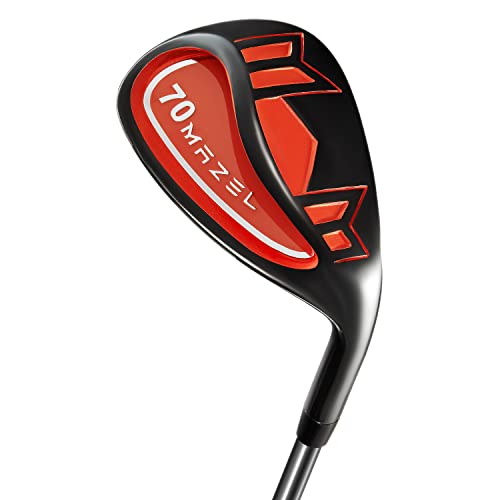
MAZEL 70° Forged Lob Wedge for Men & Women
- ✓ Easy bunker escapes
- ✓ High spin and control
- ✓ Suitable for all levels
- ✕ Slightly heavier feel
- ✕ Limited to high-loft shots
| Loft Angle | 70 degrees |
| Clubhead Material | Forged steel |
| Clubface Technology | CNC milled with conforming grooves |
| Sole Design | Extra-wide sole for bunker play |
| Grain Structure | Conforming grooves for spin and control |
| Suitable for | All skill levels, men and women |
As soon as I grabbed the MAZEL 70° Forged Lob Wedge, I was impressed by how effortlessly it sliced through the sand. That wide, forgiving sole really lives up to its promise of escaping bunkers without skipping or digging in.
It’s like having a secret weapon in your bag when you’re faced with that intimidating lip or tricky bunker shot.
The CNC milled face feels smooth and precise, giving you that consistent spin and control every time you strike. I noticed that even from the thick rough or fringe, the ball reacted predictably, giving me confidence to take aggressive shots without fear of mishits.
The club’s design seems to really prioritize forgiveness, which is a game-changer for players of all skill levels.
Handling both men and women, this wedge feels balanced and comfortable in your hands. The loft is high enough to get the ball airborne quickly, yet the club’s weight distribution helps you control that shot with ease.
Whether you’re a beginner learning to escape bunkers or a seasoned player looking for reliability, this club makes a noticeable difference.
Plus, it’s versatile enough for flop shots or quick escapes around the green. I found myself reaching for it more often than I expected, especially in tricky situations where precision matters most.
Overall, it’s a club that truly improves your bunker game and adds confidence to your short game.
What Types of Golf Clubs Are Most Effective for Bunker Shots?
The best golf clubs for getting out of a bunker typically include specialized wedges designed for this purpose.
- Sand Wedge: The sand wedge is specifically designed for bunker play, featuring a wide sole that helps prevent the club from digging too deep into the sand. Its loft, usually between 54 to 58 degrees, allows for a high trajectory, making it easier to lift the ball out of the sand and onto the green.
- Lob Wedge: A lob wedge has a higher loft than a sand wedge, generally exceeding 58 degrees, which provides an even steeper angle for launching the ball into the air. This club is especially useful for short, delicate shots over obstacles, as it allows for greater control and spin, helping to stop the ball quickly on the green.
- Gap Wedge: The gap wedge fills the distance between a pitching wedge and a sand wedge, typically with a loft between 50 to 54 degrees. While it is not primarily designed for bunker shots, it can be effective in softer sand situations where a lower trajectory is required, offering versatility for players who need to navigate various bunker conditions.
- Putter (in some cases): Although not ideal for traditional bunker shots, a putter can be used in unique situations, such as when the ball is close to the edge of the bunker. This method requires a delicate touch, and while it may not lift the ball, it can be effective for playing out of shallow sand where the ball is nearly on the green.
How Does a Sand Wedge Facilitate Easier Bunker Exits?
A sand wedge is often considered the best golf club to get out of a bunker due to its specific design features that enhance performance in sandy conditions.
- High Loft: The loft of a sand wedge typically ranges from 54 to 58 degrees, allowing for a higher trajectory when striking the ball. This high loft helps lift the ball quickly out of the sand and onto the green, minimizing the distance it travels in the bunker.
- Wide Sole: The wide sole of a sand wedge prevents it from digging too deep into the sand, which can cause the club to get stuck. This design feature allows the club to glide smoothly over the sand, making it easier to make contact with the ball without excessive resistance.
- Bounce Angle: Sand wedges are designed with a bounce angle that helps the club slide through the sand rather than plow into it. This bounce creates a cushion that enables better contact with the ball, facilitating a cleaner exit from the bunker.
- Shorter Shaft Length: The shorter shaft of a sand wedge allows for greater control and precision during shots. This increased control helps golfers execute delicate shots with more accuracy, which is crucial for navigating out of bunkers.
- Face Design: Many sand wedges feature a grooved face that enhances spin and control. This design helps to impart spin on the ball, allowing for better stopping power on the green after exiting the bunker.
In What Situations Should You Use a Lob Wedge Instead?
A lob wedge is particularly useful in specific situations around the greens and bunkers where a high, soft landing is required.
- Short Bunker Shots: When you find yourself in a bunker with a short distance to the green, a lob wedge is ideal as it allows for a high trajectory shot that can stop quickly on the green. The loft of the club helps lift the ball over the lip of the bunker while providing the necessary spin for control upon landing.
- Flop Shots: If you need to hit a flop shot to get the ball over an obstacle and land it softly on the green, the lob wedge excels in this scenario. The high loft and versatile face design help create the steep angle necessary for a successful flop shot, allowing for precision and finesse.
- Uphill Lies: When faced with an uphill lie near the green or in a bunker, using a lob wedge can help you achieve the necessary elevation. The club’s loft can compensate for the incline, enabling you to get under the ball and launch it towards the target.
- Thin Lies in Bunkers: In situations where the sand is firm or compact, a lob wedge can help you make clean contact with the ball. The design of the club allows for a more precise strike, minimizing the risk of digging into the sand and ensuring a better chance of getting the ball out of the bunker.
- Challenging Pin Positions: When the pin is tucked tightly behind a hazard or near the edge of the green, a lob wedge provides the ability to land the ball softly and avoid rolling too far past the hole. This club’s high trajectory allows for greater control in such delicate situations, making it easier to attack the pin.
How Do Loft Angles Influence Club Performance in Bunkers?
The loft angle of a golf club significantly influences its performance in bunkers, affecting both the trajectory and control of the shot.
- Higher Loft Angles (56° to 60°): These clubs are generally referred to as sand wedges and are designed specifically for bunker play.
- Mid Loft Angles (50° to 54°): These clubs, often called gap wedges, provide a balance between distance and loft, making them versatile for various lies.
- Lower Loft Angles (46° to 48°): Typically used as pitching wedges, these clubs can be more challenging to use from a bunker due to their lower trajectory.
Higher loft angles, such as those found in sand wedges, allow for greater elevation and softer landings, which are crucial when trying to escape a bunker. Their design helps to slide under the ball, creating enough lift while also allowing for maximum spin control on landing.
Mid loft angles, like those of gap wedges, can also be effective from bunkers but may require more skill to execute properly. They offer a compromise between distance and loft, making them useful when a player wants to stay lower to the ground or cover more distance from a less severe lie.
Lower loft angles, including pitching wedges, are less effective in bunkers as they tend to produce a flatter trajectory that may struggle to lift the ball out of the sand. Using these clubs can result in hitting the ball too low and not getting sufficient height, which is essential for escaping a bunker effectively.
What Loft Angle is Considered Ideal for Bunker Shots?
The ideal loft angle for bunker shots is generally between 56 and 60 degrees.
- 56-Degree Wedge: This club is often used for bunker shots as it provides a balance between distance and loft, allowing golfers to lift the ball out of the sand while also controlling its trajectory. The moderate loft helps in achieving a good balance between getting the ball airborne quickly and maintaining distance on softer sand surfaces.
- 58-Degree Wedge: A 58-degree wedge is slightly more lofted, making it easier to get under the ball in softer bunkers. This additional loft helps in creating a higher launch angle, which is particularly beneficial for delicate shots that require more control and precision around the greens.
- 60-Degree Wedge: The 60-degree wedge is the most lofted option and is ideal for challenging bunker shots where maximum elevation is needed. This club allows for a steep angle of attack, which is crucial for getting the ball out of deep or fluffy sand, making it a favorite among skilled players for executing high flop shots.
- Sand Wedge (typically 54-58 degrees): While often categorized separately, sand wedges are specifically designed for bunker play and usually come with a loft range that effectively helps in getting out of sand traps. The design often includes a wider sole that helps prevent the club from digging too deep into the sand, promoting a smoother exit.
Why is Bounce Important for Bunker Play?
Bounce is a critical aspect of bunker play, significantly influencing a golfer’s ability to extricate the ball from sand traps. Bounce refers to the angle formed between the leading edge of a club’s sole and the lowest point of the clubhead, which impacts how the club interacts with the ground during a swing.
Key reasons why bounce is essential for bunker play include:
-
Prevention of Digging: A higher bounce angle helps prevent the club from digging too deeply into the sand. This facilitates a cleaner, more effective strike that allows for better contact with the ball rather than the sand.
-
Easier Launch: Clubs with appropriate bounce can help golfers launch the ball upward more effectively. This is crucial for escaping from bunkers, as the ball often lies in soft sand and requires sufficient lift to clear the lip of the bunker.
-
Versatility with Sand Types: Different bunker conditions (hard, soft, wet, or dry sand) require different bounce levels. A club with adjustable bounce or a suitable amount of bounce can adapt to various scenarios, increasing the likelihood of success.
Understanding bounce helps golfers select the right club for getting out of bunkers and enhances overall short game skills. Consider testing different clubs to find one that complements your swing style and the types of bunkers you typically encounter.
What Factors Should You Consider When Selecting a Bunker Club?
When selecting a bunker club, several factors should be taken into account to ensure effective performance in sand traps.
- Loft: The loft of the club is crucial as it determines the angle at which the ball will launch from the sand. A higher loft, typically around 56 to 60 degrees, helps to get under the ball and lift it out of the bunker with ease.
- Sole Design: The design of the club’s sole affects how well it interacts with the sand. A wide, rounded sole can help prevent the club from digging too deeply into the sand, allowing for a smoother glide through the sand and better contact with the ball.
- Weight Distribution: The weight distribution of the club influences its stability and swing mechanics. Clubs with more weight in the back can provide a higher launch angle and better forgiveness, which is beneficial for players who may struggle with consistent contact.
- Grip and Shaft Length: The grip and shaft length should be comfortable for your stance and swing. A shorter shaft can offer better control and precision when executing delicate shots from the bunker, while a comfortable grip ensures confidence during the swing.
- Player Skill Level: Consider your skill level when choosing a bunker club. Beginners may benefit from clubs designed for more forgiving play, while advanced players might prefer clubs that offer more versatility and control for various types of bunker shots.
How Do Club Length and Weight Affect Your Performance?
Club length and weight significantly influence a golfer’s performance, especially in challenging situations like getting out of a bunker.
- Club Length: The length of a golf club affects the swing mechanics and the player’s stance.
- Club Weight: The weight of a club influences control and swing speed, impacting accuracy and distance.
- Lie Angle: The angle at which a club rests on the ground can affect the trajectory of the ball, especially when trying to lift it out of a bunker.
- Shaft Flexibility: The flexibility of the club’s shaft can alter the energy transfer during a swing, impacting how the club interacts with the sand.
The length of a golf club affects the golfer’s posture and swing plane; using a club that is too long or too short can hinder effective swings, which is crucial for executing accurate shots from a bunker. Optimal club length allows for a more natural swing, making it easier to strike the ball cleanly from the sand.
Club weight plays a crucial role in a player’s ability to control their swing. Heavier clubs can provide more stability and control, which may help in executing delicate shots from a bunker, while lighter clubs can increase swing speed but may lead to less control over the shot.
The lie angle of a club is essential for ensuring that the clubface is square at impact, particularly when hitting from a bunker. A proper lie angle allows for better contact with the ball and can help lift it out of the sand effectively, which is critical for successful bunker play.
Shaft flexibility affects how the club performs during the swing. A more flexible shaft can help generate more clubhead speed and can be beneficial for players with a slower swing speed, allowing for better performance when trying to escape from challenging bunker situations.
Why is Grip Style Crucial for Bunker Success?
Grip style is crucial for bunker success because it directly influences the player’s control and feel during the shot, which is essential for navigating the complexities of sand conditions.
Research from the Titleist Performance Institute indicates that grip pressure affects swing speed and clubface control, both of which are vital when executing delicate shots from a bunker (Titleist, 2021). A proper grip allows golfers to maintain a lighter touch, which is necessary to avoid hitting the sand too hard and to ensure the club can slide under the ball effectively.
The underlying mechanism involves the connection between grip style and the golfer’s ability to adjust their swing path and angle of attack. A firm grip can lead to tension in the wrists and forearms, which may result in an over-committed swing that digs too deep into the sand or fails to make proper contact with the ball. Conversely, a relaxed grip promotes a smoother, more controlled swing, allowing the club to glide through the sand and lift the ball out with the right amount of loft (GOLFTEC, 2022). This demonstrates how grip style not only affects the physical execution of the shot but also influences the mental aspect, as players who feel more in control are likely to perform better under pressure.
How Can Proper Technique Optimize Your Bunker Shots?
Optimizing your bunker shots involves understanding the right techniques and selecting the appropriate golf club.
- Sand Wedge: The sand wedge is often considered the best golf club to get out of a bunker due to its loft, typically ranging from 54 to 58 degrees.
- Bounce Angle: The bounce angle of a club refers to the angle between the leading edge and the lowest point of the sole, which helps prevent the club from digging too deep into the sand.
- Grip and Stance: A proper grip and stance are crucial for executing bunker shots effectively; using a wider stance and a relaxed grip can promote better stability and control.
- Clubface Angle: Opening the clubface at address helps to add loft and allows for a smoother entry into the sand, which is essential for lifting the ball out of the bunker.
- Follow-Through Technique: Focusing on a smooth follow-through, rather than just hitting the ball, helps to generate the necessary lift and distance for successful bunker shots.
The sand wedge is often considered the best golf club to get out of a bunker due to its loft, typically ranging from 54 to 58 degrees. This loft allows players to easily lift the ball out of the sand and onto the green with a higher trajectory, which is especially helpful in soft sand conditions.
The bounce angle of a club refers to the angle between the leading edge and the lowest point of the sole, which helps prevent the club from digging too deep into the sand. A higher bounce angle allows the club to glide over the sand surface, making it easier to execute a clean shot without getting stuck.
A proper grip and stance are crucial for executing bunker shots effectively; using a wider stance and a relaxed grip can promote better stability and control. Maintaining a steady lower body while swinging allows for more consistent contact with the sand and the ball.
Opening the clubface at address helps to add loft and allows for a smoother entry into the sand, which is essential for lifting the ball out of the bunker. This technique allows the club to slide under the ball, creating the necessary lift without excessive force.
Focusing on a smooth follow-through, rather than just hitting the ball, helps to generate the necessary lift and distance for successful bunker shots. A confident follow-through ensures that the shot is executed with the right amount of speed and fluidity, promoting better accuracy and distance control.
What Techniques Should You Master for Effective Use of Your Club?
To effectively use your golf club for getting out of a bunker, you should master several key techniques:
- Proper Stance: A stable and balanced stance is crucial for a successful bunker shot. Position your feet shoulder-width apart with your knees slightly flexed to promote stability during the swing.
- Open Clubface: An open clubface helps to lift the ball out of the sand effectively. By angling the clubface upward before making contact, you can ensure that the club glides beneath the ball, allowing for better elevation.
- Focus on the Sand: Hitting the sand rather than the ball is a vital technique in bunker play. Aim to strike a few inches behind the ball, which allows the sand to propel the ball upward, rather than making contact with the ball directly.
- Follow Through: A strong follow-through is essential for ensuring distance and control. After making contact with the sand, continue your swing, which helps maintain momentum and allows for a smooth exit from the bunker.
- Practice Different Lies: Being able to adapt to various sand conditions is important. Spend time practicing in different types of bunkers—such as firm, wet, or fluffy sand—to develop the versatility needed to tackle any situation on the course.
How Can Regular Practice Enhance Bunker Performance with Any Club?
Regular practice can significantly enhance bunker performance, regardless of the club being used. Mastery stems from consistent drills and techniques that build muscle memory and confidence. Consider the following strategies for effective practice:
-
Repetitive Swings: Utilize sand traps to replicate various scenarios. Focus on different lies, such as deep or fluffy sand, to adapt your technique accordingly.
-
Focus on Technique: Emphasize proper stance and grip. A wide stance provides stability, while an open clubface helps prevent digging too deep into the sand. Regularly check your grip pressure to avoid tension, which can affect accuracy.
-
Ball Positioning: Practicing ball positioning is crucial. The ball should typically be forward in your stance, allowing for a smoother follow-through and ensuring the club glides through the sand.
-
Visualization: Mental practice is as essential as physical drills. Visualize success in the bunker – seeing the ball fly out softly can build confidence.
-
Feedback Mechanism: Record your swings or seek feedback from a coach. Identifying flaws in swing mechanics can lead to improvement.
Establishing a regular routine that incorporates these elements can lead to greater proficiency in escaping bunkers, regardless of the club you choose.
Related Post: