
When consulting with golf instructors and enthusiasts about their best cup golf format needs, one thing everyone agrees on is the importance of a reliable, versatile practice hole. Having tested all kinds, I can tell you that the HOW TRUE 2PCS All-Direction Golf Practice Hole Cup stands out. This durable, lightweight metal cup covered in felt offers excellent grip, preventing slipping on most carpets while catching and holding the ball in any direction. It makes practicing your putting in small spaces feel natural, even on uneven surfaces.
What makes this set truly special is the double-pack, letting you keep one at home and another at the office — perfect for quick sessions anytime. Unlike simpler cups, this one’s all-direction design truly tests your accuracy from every angle without slipping or losing balls. After trying various models, I’ve found this product combines stability, portability, and realism, making it an ideal choice for sharpening putting skills on the go. I genuinely recommend giving the HOW TRUE 2PCS All-Direction Golf Practice Hole Cup a try — it’s a game changer for practice convenience and effectiveness.
Top Recommendation: HOW TRUE 2PCS All-Direction Golf Practice Hole Cup
Why We Recommend It: This product excels because of its sturdy metal construction with a felt covering, providing durability and grip that other lighter or less stable cups lack. Its all-direction design ensures ball retention from any angle, crucial for realistic practice. The double-pack adds convenience for multiple practice spots. Compared to simpler models, it maintains excellent stability on various indoor surfaces, solving common slipping issues.
HOW TRUE 2PCS All-Direction Golf Practice Hole Cup
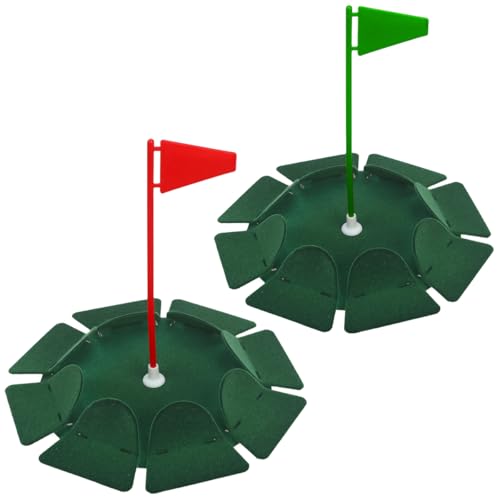
- ✓ Durable metal construction
- ✓ Excellent ball retention
- ✓ Portable and lightweight
- ✕ Not suitable for smooth surfaces
- ✕ May not fit all putters perfectly
| Material | Durable metal covered in light felt |
| Design | All-direction putting cup that catches and holds the ball |
| Portability | Lightweight and portable for use in various locations |
| Set Quantity | 2 cups included for multiple practice spots |
| Non-slip Feature | Designed to stay in place on carpet surfaces, not suitable for slippery solid ground |
| Intended Use | Indoor golf putting practice for office, home, or travel |
That solid metal feel of this all-direction golf practice cup immediately caught my attention. It’s surprisingly lightweight, yet durable enough to withstand repeated shots without bending or breaking.
Covering it in a soft felt makes it gentle on floors but keeps it firmly in place on carpets—no slipping or sliding here.
What really stands out is how well it catches the ball and keeps it in position, no matter the angle of your shot. I tested it from every direction, and it consistently held the ball securely.
It’s perfect for practicing your putting without needing a full green or fancy setup — just set it up in your office, living room, or even while traveling.
Setting up is a breeze; it’s lightweight enough to move around easily. The set includes two cups, so you can keep one at home and the other at work.
This makes practicing more convenient and helps you build muscle memory without the hassle of going to the course.
Just a quick note: avoid using it on super slick surfaces like glass, marble, or tile, as it might slip. But on carpets and similar textured floors, it stays put and performs great.
Overall, it’s a simple but effective tool for sharpening your putting skills anywhere.
What Is the Best Cup Golf Format for Different Skill Levels?
Key aspects of the best cup golf formats include the structure of the game, the level of competition, and the social interaction inherent in various styles. In stroke play, all players complete the full course, and the total number of strokes is counted, making it suitable for more experienced golfers. Conversely, formats like scramble or best ball formats allow teams to play together, with players contributing their best shots, making it a great choice for mixed skill levels as it creates a more relaxed environment.
This impacts how players of different skill levels can engage with the sport. For instance, team formats encourage camaraderie and lessen the pressure on less experienced players, fostering a more inclusive atmosphere. Statistics indicate that participation in team formats can increase retention rates in golf clubs as players often enjoy the social aspect of the game. According to a report by the National Golf Foundation, approximately 43% of new golfers cite social interaction as a primary factor for their continued engagement in the sport.
The benefits of adopting the best cup golf formats include improved player retention, increased enjoyment of the game, and the ability to cater to a wide range of skill levels. This inclusivity not only enhances the experience for newcomers but also allows seasoned players to mentor others, promoting a community spirit within the sport. Moreover, these formats can also help in hosting tournaments that appeal to a broader audience, thus increasing participation and interest in golfing events.
Solutions and best practices for implementing these formats include organizing regular mixed-skill tournaments, providing coaching resources to help beginners understand the rules, and encouraging clubs to host social events that incorporate these diverse formats. Golf clubs can also utilize technology, such as apps that help track scores in different formats, making it easier for players to engage in various styles of play.
How Do Various Cup Golf Formats (Match Play, Stroke Play, and Best Ball) Work?
The various cup golf formats include Match Play, Stroke Play, and Best Ball, each with unique rules and strategies.
- Match Play: In this format, players compete against each other hole by hole, and the player who wins the most holes wins the match.
- Stroke Play: This format involves counting the total number of strokes taken over the entire round, with the player with the lowest score declared the winner.
- Best Ball: In Best Ball, each player in a team plays their own ball, and the best score from the team on each hole is used for the team’s score.
In Match Play, players can strategize based on their opponent’s performance, as they only need to beat the opponent on individual holes instead of focusing solely on total strokes. This format can lead to aggressive play, as players may take risks to win specific holes.
Stroke Play is the most common format in professional golf tournaments, where every stroke counts towards the final score. Players are typically required to complete a fixed number of holes, and ties are usually broken through playoff holes or other methods, emphasizing consistency and accuracy over the entire round.
Best Ball is often used in team events, allowing each player to contribute their best performance on each hole. This format fosters teamwork and can lead to more relaxed play, as players know they have backup support; however, it also requires coordination and strategy among teammates to maximize their chances of winning.
What Are the Key Rules Governing Cup Golf Formats?
The key rules governing cup golf formats can significantly affect the outcome of a tournament and the strategies employed by players.
- Match Play: In match play formats, players compete head-to-head, and the winner is determined by who wins the most holes rather than the overall score. This format allows for more strategic play as players can take risks to win individual holes, and each hole is a new contest.
- Stroke Play: Stroke play is the most common format where the total number of strokes taken over a round determines the winner. This format emphasizes consistency and skill, as every shot counts towards the final score, making it less forgiving of mistakes compared to match play.
- Stableford Scoring: In Stableford scoring, points are awarded based on the number of strokes taken on each hole relative to par. This format encourages aggressive play since a player can still score points even after exceeding par, making it a popular choice for casual tournaments.
- Four-Ball: In the four-ball format, two teams of two players each compete, with each player playing their own ball. The team’s score for each hole is the lowest score of the two players, which allows for one player’s performance to potentially carry the team if the other struggles.
- Foursomes: Foursomes involve teams of two players who alternate hitting the same ball throughout the round. This format requires strong teamwork and communication, as players must strategize together to decide on shot selection and execution.
- Scramble: In a scramble format, all players on a team hit their tee shots, then choose the best shot and all play their next shot from that location. This format is often used in charity tournaments, as it allows for a more relaxed atmosphere and faster pace of play, making it accessible for players of varying skill levels.
- Modified Stableford: The modified Stableford system alters point awards to encourage aggressive play, where players earn points for birdies and eagles, but lose points for bogeys and worse. This format adds a strategic layer, as players may opt to take risks to maximize their points rather than simply aiming for a low score.
How Does Scoring Differ Across Popular Cup Golf Formats?
Scoring in golf can vary significantly depending on the format of play, each offering unique challenges and strategies.
- Stroke Play: In stroke play, each player counts the total number of strokes taken over the course. The player with the lowest total score at the end wins, making it straightforward but requiring consistency and skill across all holes.
- Match Play: Match play involves players competing head-to-head, with each hole played as a separate contest. The player who takes the fewer strokes on a hole wins that hole, and the match continues until one player is ahead by more holes than there are remaining to play.
- Stableford: The Stableford format awards points based on the number of strokes taken on each hole relative to par. This encourages aggressive play, as players can earn more points for scoring well and may choose to abandon a hole if they believe they cannot score competitively.
- Fourball: In fourball, two teams of two players each compete, with each player playing their own ball. The best score from each team on a hole counts toward the team’s score, promoting camaraderie and strategic partnerships.
- Foursomes: This format has two teams of two players, but each team plays only one ball, alternating shots. This requires teamwork and communication, as both players must strategize together to perform well on each hole.
- Scramble: In a scramble, all players on a team tee off on each hole, and the best shot is selected for the next stroke. This format is often used in charity tournaments, as it encourages participation and speeds up play, allowing players of varying skill levels to contribute to the team’s success.
What Strategies Should Players Use to Excel in Cup Golf Formats?
To excel in cup golf formats, players should adopt various strategies that enhance their performance and adaptability to the unique rules of these competitions.
- Understand the Format: Familiarize yourself with the specific rules and structure of the cup format being played, whether it’s match play or stroke play. Each format has distinct strategies; for instance, match play emphasizes head-to-head competition, where winning individual holes is crucial, while stroke play focuses on overall score consistency.
- Practice Short Game Skills: Given that cup formats often hinge on crucial moments, sharpening your short game can make a significant difference. This includes chipping, putting, and other techniques that can help save strokes when under pressure, as many matches can come down to a single putt.
- Course Management: Develop a solid strategy for navigating the course, which includes knowing when to play aggressively and when to take a more conservative approach. Understanding the layout, hazards, and green conditions helps in making informed decisions that can save strokes.
- Team Dynamics: In team formats, like four-ball or alternate shot, effective communication and synergy with your partner are vital. Establish clear roles, discuss strategies before each hole, and support each other’s game to maximize your collective performance.
- Mental Resilience: Cultivating a strong mental game is essential, especially as cup formats can be intense and pressure-filled. Techniques such as visualization, breathing exercises, and maintaining focus can help players stay calm and composed during critical moments of play.
- Adapt to Conditions: Be prepared to adjust your strategy based on changing weather conditions and course conditions. Wind, rain, and greens that are either fast or slow can greatly influence club selection and shot execution, so staying flexible is key.
What Are the Advantages of Participating in Cup Golf Events?
Participating in cup golf events offers various advantages to players and teams.
- Competitive Experience: Engaging in cup golf events provides players with the opportunity to compete against others at various skill levels. This experience not only helps to improve individual skills but also fosters a sense of camaraderie among participants.
- Networking Opportunities: Cup golf events often attract a diverse group of players, including amateurs and professionals, which opens doors for networking. Players can connect with potential sponsors, coaches, and fellow enthusiasts, creating relationships that may benefit their golfing careers.
- Motivation and Goal Setting: The structured nature of cup events encourages players to set specific goals and work towards achieving them. This motivation can lead to increased practice and improvement in their overall game, as well as a greater enjoyment of the sport.
- Team Dynamics: Many cup formats involve team play, which enhances teamwork and communication skills. Players learn to work together, strategize, and support each other, which can contribute to better overall performance and lasting friendships.
- Recognition and Prizes: Participants in cup golf events often have the chance to win awards, trophies, or other prizes. This recognition can boost confidence and provide a sense of achievement, motivating players to continue participating in future events.
- Fun and Social Interaction: Cup golf events create a fun and relaxed atmosphere where players can enjoy the game and socialize with others. This social aspect makes the sport more enjoyable and can lead to lifelong friendships among golf enthusiasts.
How Can Clubs and Organizations Successfully Run Cup Golf Tournaments?
To successfully run cup golf tournaments, clubs and organizations should consider the following key factors:
- Format Selection: Choosing the best cup golf format is crucial for tournament success, as it affects player engagement and competition levels.
- Scheduling: Proper scheduling ensures that all participants can compete while minimizing conflicts with other events.
- Communication: Clear communication with players about rules, schedules, and scoring is essential for a smooth tournament experience.
- Logistics Management: Efficient management of logistics, including tee times, scorekeeping, and equipment, is necessary to facilitate seamless play.
- Prizes and Incentives: Offering attractive prizes can motivate participants and enhance the competitive spirit of the tournament.
- Post-Tournament Feedback: Gathering feedback after the tournament can help improve future events and ensure participants feel valued.
Format Selection: The format of play can significantly influence the tournament’s vibe and competitiveness. Popular formats include match play, stroke play, and stableford scoring, each appealing to different skill levels and preferences of the players.
Scheduling: It’s essential to select dates that avoid conflicts with other local events or holidays. A well-planned schedule allows for adequate playtime and ensures that all participants are available, which can enhance camaraderie and participation rates.
Communication: Establishing clear lines of communication is vital for ensuring that all players understand the tournament rules, format, and any specific regulations. Utilizing emails, social media, and tournament websites can help keep everyone informed and engaged.
Logistics Management: Effective logistics management includes organizing tee times, ensuring the availability of necessary equipment, and having staff ready for scorekeeping and ruling questions. This attention to detail helps create a positive experience for players and minimizes disruptions during the tournament.
Prizes and Incentives: Offering appealing prizes, such as trophies, gift cards, or merchandise, can enhance the competitive atmosphere and encourage participation. Additionally, recognizing various categories, such as longest drive or closest to the pin, can foster engagement among players of all skill levels.
Post-Tournament Feedback: After the tournament, collecting feedback from participants can provide valuable insights into what worked well and what areas need improvement. This feedback is crucial for refining future tournaments and ensuring players feel their opinions are respected and valued.
Related Post: