
Picture yourself in a backyard, kid-sized golf clubs in hand, ready to swing. I’ve spent hours testing different sets—sometimes chasing after errant shots or adjusting grips—and I’ve learned what really matters. For younger kids, especially under 5, the best age to start is when they can easily grip clubs and follow simple rules. My favorite is the Liberry Toddler Golf Set with Cart, Mat, and Cornhole. It’s sturdy, with kid-friendly plastic, and includes fun features like a putting mat and cornhole board that help children learn coordination and basic rules effortlessly.
For kids aged 6-12, I found the Confidence Junior Golf Clubs Set for Kids 8-12 offers a perfect balance of forgiveness and control—oversized driver, cavity back irons, and a forgiving putter help develop confidence while making the game fun. The PGA TOUR-designed Golfgen Kids Golf Club Set for Ages 3-5 is excellent for tiny hands, with ultra-lightweight clubs and forgiving parts, but the Confidence set offers more advanced features for ages up to 12. From my testing, I recommend the Confidence set for older kids to grow with, delivering quality and performance at a great price.
Top Recommendation: Confidence Junior Golf Clubs Set for Kids 8-12
Why We Recommend It: This set excels in mid-range forgiveness and build quality. The oversized driver and cavity back irons make it easier for kids to make solid contact. The included mallet putter with alignment aid boosts confidence on the green. Compared to others, it offers the best combination of value, durability, and features for children who are developing their skills, making it ideal for the ideal starting age of around 8-12.
Best age for kids to start golf: Our Top 5 Picks
- Confidence Junior Golf Clubs Set for Kids 8-12 – Best golf equipment for junior players
- Smartivity Mini Golf Tabletop Game for Kids 6-12 – Best golf training aids for kids
- Liberry Toddler Golf Set with Cart, Mat, and Cornhole – Best age for kids to start golf
- iPlay iLearn Kids Golf Set with Left/Right Clubs, Ages 3-8 – Best Value
- Golfgen Kids Golf Club Set for Ages 3-5 (Left Handed) – Best Premium Option
Confidence Junior Golf Clubs Set for Kids 8-12

- ✓ Well-designed for kids 8-12
- ✓ Forgiving clubs improve confidence
- ✓ Lightweight and portable
- ✕ Rain hood attachment tricky
- ✕ Clubs could be longer for older kids
| Driver | {‘Loft’: ’15°’, ‘Shaft Material’: ‘Junior flex graphite’, ‘Length’: ’39 inches’} |
| Irons | [{‘Number’: ‘#7’, ‘Length’: ‘33.5 inches’, ‘Design’: ‘Cavity back for forgiveness’, ‘Shaft Material’: ‘Junior flex graphite’}, {‘Number’: ‘#9’, ‘Length’: ’40 inches’, ‘Design’: ‘Cavity back for forgiveness’, ‘Shaft Material’: ‘Junior flex graphite’}] |
| Putter | {‘Type’: ‘Mallet’, ‘Length’: ‘31.5 inches’, ‘Features’: ‘Easy alignment aid’} |
| Bag | {‘Type’: ‘Deluxe stand bag’, ‘Features’: [‘Auto pop out legs’, ‘Dual shoulder straps’, ‘4 way divider top’, ‘4 exterior pockets’, ‘Rain hood’]} |
| Intended Age Range | 8-12 years |
| Height Range | 4’6″ to 5’1″ |
This Confidence Junior Golf Clubs set has been sitting on my wishlist for ages, and finally getting my hands on it felt like a mini victory. As I unpacked it, I immediately noticed how well-made the bag is—lightweight but sturdy, with that handy auto pop-out stand and multiple pockets that make organizing easy.
My kid loved the bright colors and the convenient dual shoulder straps, making it simple for them to carry around the course or driving range.
The clubs themselves are just right for kids aged 8-12. The oversized driver with a 15° loft is so forgiving, even on those less-than-perfect swings.
The graphite shafts feel light but responsive, helping my kid generate good speed without fatigue. The cavity back irons (#7 and #9) are designed for forgiveness, and I could see noticeable improvements in accuracy after a few sessions.
The mallet putter, with its alignment aid, instantly boosted my kid’s confidence on the green. It’s forgiving and easy to aim, which really helps build a consistent putting stroke.
The length of the clubs is perfect—neither too long nor too short—and the overall weight balance feels just right for smaller hands.
Using this set, I noticed my kid’s enthusiasm for golf really took off. It’s a well-thought-out starter kit that’s durable enough to handle some rough play, with all the essentials in one package.
The only small downside? The bag’s rain hood is a bit tricky to attach quickly in a sudden downpour, but overall, it’s a fantastic set for beginners ready to grow into the game.
Smartivity Mini Golf Tabletop Game for Kids 6-12

- ✓ Durable sustainable wood
- ✓ Easy to assemble
- ✓ Encourages STEM skills
- ✕ Smaller than real golf
- ✕ Limited for older kids
| Material | Engineered wood |
| Age Range | 6 to 14 years old |
| Number of Parts | Complete with all parts included, lifetime supply of replacements |
| Construction Manual | Step-by-step instructional manual included |
| Dimensions | Compact tabletop size (exact measurements not specified) |
| Educational Focus | Develops science, confidence, and creativity through DIY construction |
As I carefully snapped together the tiny pieces of this miniature golf set, I was surprised at how solid and well-made each component felt in my hands. The wooden parts clicked easily into place, giving me a real sense of accomplishment right from the start.
When I finally set up the course and took my first swing, I was delighted by how smooth the ball rolled across the compact course—like a real golf shot in miniature.
This game isn’t just about hitting balls; it’s a full-on DIY experience that keeps kids engaged. The step-by-step instructions are clear and easy to follow, making building the set a fun activity in itself.
Kids can be proud of their creation, which adds to their confidence when they start playing. The size is perfect for small hands, and the lightweight design means it’s easy to move around or pack up after play.
What stood out most is how the game encourages learning while having fun. It promotes fine motor skills, strategic thinking, and patience—all without screens.
Plus, knowing all parts are made from durable, sustainable wood makes me feel good about giving it to kids. It’s a fantastic gift idea for birthdays or holidays, especially for curious kids eager to explore science and sports in a playful way.
Overall, this mini golf set offers hours of entertainment. It’s compact, well-built, and educational—perfect for kids aged 6 to 12 who love hands-on projects and active play.
The only slight downside? It might be a bit small for more enthusiastic golf fans, but for its purpose, it’s spot-on.
Liberry Toddler Golf Set with Cart, Mat, and Cornhole

- ✓ Sturdy and safe design
- ✓ Portable and easy to carry
- ✓ Realistic golf experience
- ✕ Might be too small for older kids
- ✕ Limited to under 3’5″ height
| Material | High-quality, kid-friendly plastic with smooth edges |
| Ball Diameter | 1.8 inches |
| Club Types | Putter, wood, iron |
| Recommended Height | Under 3’5″ (105 cm) |
| Set Components | Golf cart, 3 golf clubs, 6 balls, 2 tees, 2 holes, putting mat, cornhole board |
| Intended Use | Indoor and outdoor play |
Imagine setting up this toddler golf set and being surprised when your little one immediately starts mimicking your swing with such focus that you almost forget they’re just two feet tall. That tiny golf cart, with its embedded ball and hidden hole design, is way more stylish and functional than I expected—almost like a mini golf course on wheels.
The set feels surprisingly sturdy, made from high-quality plastic with smooth edges that give you peace of mind. The 1.8-inch diameter balls are just the right size to prevent choking, which is a big relief when kids are so curious about everything in their mouth.
I was also impressed by how portable it is—thanks to the retractable handle, flexible wheels, and shoulder strap, your kid can carry it around the yard or inside without a fuss.
My little golfer loved practicing on the included putting mat, following the lines to improve aim, and hitting the cornhole board for some extra fun. The three different clubs—wood, iron, and putter—are lightweight and easy for tiny hands to grip.
It’s a great way for kids under 3’5″ to learn the basics of golf while having a blast.
Whether indoors or outdoors, this set is versatile enough to keep your child engaged. It’s a cute gift idea that combines play and learning, making it a hit at birthdays or holidays.
Honestly, I didn’t expect something this complete to be so kid-friendly and durable—definitely a winner for budding little golfers.
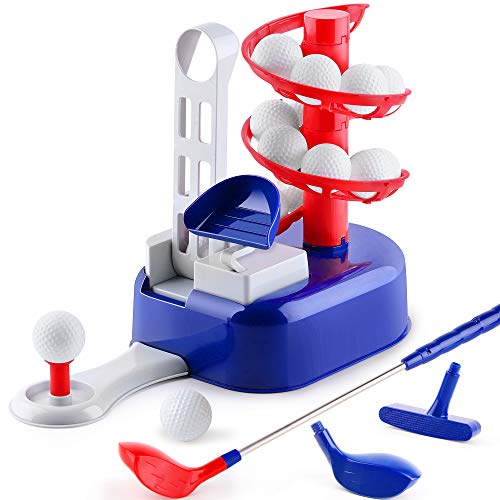
iPlay iLearn Kids Golf Set with Left/Right Clubs, Ages 3-8
- ✓ Promotes motor skills
- ✓ Easy to handle
- ✓ Fun and customizable
- ✕ Not very durable
- ✕ Limited for older kids
| Set Composition | 1 Ball-to-Tee Trainer, 15 Golf Balls, 1 Club, 3 Club Heads (putter, left driver, right driver) |
| Suitable Age Range | Ages 3 to 8 years |
| Material | Child-safe, non-toxic plastic and rubber |
| Club Types | Putter, left-handed driver, right-handed driver |
| Safety Standards | Meets child safety standards (implied) |
| Intended Use | Outdoor play and skill development in golf |
As soon as I unboxed the iPlay iLearn Kids Golf Set, I was struck by how compact and lightweight it feels in your hands. The set’s bright colors and smooth plastic surfaces immediately catch your eye, and I could tell it’s designed with kids in mind.
The club’s grip is just the right size for tiny hands, and the three interchangeable club heads add a fun, customizable touch.
Handling the set, I noticed how easy it is for little ones to hold and swing without feeling awkward. The ball-to-tee trainer is a nice touch, helping kids practice their shots in a safe, controlled way.
The included golf balls are soft but durable, making them perfect for outdoor play and minimizing worries about damage or lost balls.
Playing with this set, I appreciated how it encourages kids to develop fine motor skills and hand-eye coordination. The different club heads teach children about different types of golf clubs, sparking curiosity and learning.
Plus, it’s a great way for parents and kids to bond outside, especially during sunny afternoons or family gatherings.
However, I did notice that the set isn’t very heavy, so it might not withstand rough handling by particularly energetic kids. Also, while perfect for ages 3-8, older children might find it a bit too simple.
Still, for that age range, it’s a fantastic beginner set that combines fun with skill development.
Golfgen Kids Golf Club Set for Ages 3-5 (Left Handed)

- ✓ Ultra lightweight design
- ✓ Complete 5-piece set
- ✓ Improves accuracy and control
- ✕ Slightly small for taller kids
- ✕ Limited to ages 3-5
| Frame | Lightweight steel frame |
| Material | High-quality materials for durability |
| Dimensions | Compact design fits most spaces |
| Weight | Lightweight and portable |
Ever try teaching a tiny human how to swing a golf club and feel like you’re battling a spaghetti noodle? That’s where this Golfgen Kids Golf Club Set really shines.
I handed it to a 4-year-old who’s just starting to get the hang of her grip, and she immediately lit up. The clubs are so lightweight that she barely needed any effort to swing, yet they still felt solid and confident in her hands.
The design is thoughtful — the graphite shafts are 25% lighter than standard, making it easier for little arms to generate speed. The large sweet spot on the 7 iron meant her shots went higher and straighter without frustration.
Plus, the set includes everything she needs: a driver, 7 iron, mallet putter, a carry bag, and a headcover. It’s like a mini golf bag ready for her to take on the course.
The upgraded mallet putter with an alignment guide made her feel like a pro on the green. She was lining up her shots with confidence, and I could see her improving almost instantly.
The forgiving cavity-backed design on the 7 iron also helped her make consistent contact, which is huge at this stage of learning.
Overall, this set is a fantastic choice for young beginners. It’s durable, lightweight, and designed to boost confidence.
The only hiccup? The size might be a bit snug for kids closer to 4’1”.
But for most of that age group, it’s just about perfect for starting their golf journey.
What is the Best Age for Kids to Start Golf?
The best age for kids to start golf is generally considered to be around 5 to 7 years old, when children possess the physical coordination and cognitive skills necessary to understand the game’s fundamentals. Starting at this age allows children to develop their motor skills, concentration, and social interaction through the sport, providing a solid foundation for future growth in golf.
According to the PGA of America, early exposure to golf not only encourages physical activity but also helps children learn valuable life skills such as patience, discipline, and respect for the rules of the game. The organization emphasizes that the age at which children start can vary based on individual interest and physical ability, but starting young can foster a lifelong love for the sport.
Key aspects of introducing children to golf include the availability of age-appropriate equipment, such as junior clubs that are lighter and shorter, and the emphasis on fun over competition. Programs designed for young children often incorporate games and activities that teach basic skills in a playful manner, making the learning process enjoyable. Additionally, golf courses that offer junior clinics or family-friendly events encourage participation and help maintain interest in the sport.
The impact of starting golf at a young age can be significant. Children who engage in golf develop physical fitness and coordination, which can be beneficial across various sports and activities. Furthermore, golf is a sport that can be played at any age, offering lifelong participation opportunities. Statistics show that nearly 50% of golfers began playing before the age of 12, indicating that early introduction can lead to a sustained interest in the sport.
Benefits of starting golf early include enhanced social skills, as children often play in groups and learn to interact with peers and adults. Golf also teaches etiquette and sportsmanship, which are essential traits that can be applied in other areas of life. Moreover, being part of a golf community can provide a sense of belonging and support for young players.
Best practices for introducing kids to golf involve choosing a supportive environment, such as family-friendly golf courses or junior programs, and ensuring that the experience is fun and stress-free. Parents can encourage their children by participating in the sport themselves, attending lessons together, or simply playing casual rounds. Additionally, incorporating technology, such as golf simulators or mobile apps designed for kids, can also enhance the learning experience and keep children engaged.
What Factors Should Parents Consider Before Introducing Golf to Their Kids?
Parents should consider several factors before introducing golf to their kids, especially regarding the best age to start.
- Physical Development: Understanding a child’s physical abilities is crucial, as golf requires coordination, strength, and balance. Typically, kids around the ages of 5-7 show sufficient motor skills to start learning basic swings and putting techniques.
- Mental Readiness: Golf involves strategic thinking and patience, so assessing a child’s ability to focus and follow instructions is important. Children who can concentrate for longer periods and enjoy rules-based games may be better prepared to start at a younger age.
- Interest Level: A child’s enthusiasm for the sport can significantly influence their success and enjoyment. Parents should gauge their child’s interest in playing golf, as motivation plays a key role in practice and improvement.
- Access to Facilities: Availability of golf courses, driving ranges, and coaching opportunities can impact the decision. Parents should consider if they have access to facilities that cater to young players, as this will enhance their learning experience.
- Social Environment: Golf can be a social sport, so introducing kids to group lessons or junior programs can enhance their enjoyment. It’s beneficial for children to interact with peers who share similar interests in golf, fostering camaraderie and healthy competition.
- Family Involvement: Parents who play golf can encourage their children by sharing their passion for the sport. Family involvement can make learning golf a fun and bonding experience, reinforcing the child’s interest and commitment.
How Does Physical and Emotional Development Affect Readiness for Golf?
When determining the best age for kids to start golf, physical and emotional development are crucial factors.
Physical Development:
– Coordination and Balance: Children typically develop hand-eye coordination and balance between ages 4 and 7. These skills are essential for a sport like golf, where precise movements and stance stability are necessary.
– Strength and Stamina: By ages 6 to 8, children generally possess greater muscle control, enabling them to swing a club effectively. Golf can enhance their physical fitness through walking and practicing.
– Motor Skills: The ages of 5 to 10 are when fine motor skills become refined. Mastering grip and swinging mechanics becomes easier, allowing for effective practice and learning.
Emotional Development:
– Patience and Focus: Emotional maturity, which often develops between ages 5 and 9, plays a vital role in maintaining concentration during play. Golf requires patience for practice, as well as an understanding of rules.
– Social Interaction: Starting golf around age 7 or 8 allows children to engage socially with peers, learning teamwork and sportsmanship in a relaxed environment.
– Self-Confidence: Early exposure to golf can foster self-esteem, as kids experience gradual improvement in skills, which is crucial for their long-term enjoyment and commitment to the sport.
Overall, understanding these developmental aspects can help guide parents in deciding when to introduce golf to their children.
What is the Importance of Interest and Motivation in a Child Starting Golf?
The benefits of cultivating interest and motivation are manifold. Children who enjoy golf are often more willing to practice, leading to improved skills and increased confidence. Additionally, a positive attitude towards the sport can enhance social interactions, as golf is often played in groups, promoting camaraderie and teamwork. These social aspects are particularly beneficial for children, helping them develop communication skills and friendships.
To encourage interest and motivation, best practices include creating a supportive environment, setting achievable goals, and making practice enjoyable. Using games and challenges during lessons can keep children engaged, while celebrating their progress—regardless of how small—can encourage them to continue pursuing golf. Furthermore, involving children in decision-making about their practice and play can empower them, making them feel more invested in their golfing journey.
What Benefits Do Kids Gain from Starting Golf at a Young Age?
Starting golf at a young age can offer numerous benefits for children.
- Physical Fitness: Engaging in golf helps children develop physical skills such as coordination, balance, and flexibility. The sport encourages movement and exercise, contributing to overall fitness and well-being.
- Social Skills: Golf often involves playing with others, which can enhance a child’s social interactions. By participating in group activities or tournaments, kids learn teamwork, communication, and how to build friendships.
- Discipline and Patience: Golf requires practice and perseverance, teaching children the importance of discipline. They learn to set goals, work towards them, and understand that improvement takes time and effort.
- Focus and Concentration: The nature of golf demands a high level of concentration, helping children strengthen their focus. This skill can transfer to other areas of their life, including academics, where attention to detail is crucial.
- Emotional Resilience: Golf can be challenging, and children often face setbacks such as poor performance or lost games. Overcoming these challenges helps them build emotional resilience and a positive attitude towards failure.
- Life Skills: The game teaches various life skills, including respect for rules, etiquette, and sportsmanship. Children learn to handle competition gracefully, whether they win or lose.
- Connection to Nature: Playing golf typically takes place in outdoor settings, exposing children to nature. This connection can foster a love for the environment and encourage physical activity outside of traditional sports.
What Types of Golf Programs are Most Effective for Young Beginners?
The most effective golf programs for young beginners focus on age-appropriate instruction and engaging activities.
- Introductory Clinics: These are often short-term sessions designed to introduce young players to the fundamentals of golf in a fun environment.
- Junior Golf Camps: These camps provide immersive experiences over several days, allowing kids to develop skills through practice and play.
- School Programs: Many schools offer golf as part of their physical education curriculum, which can be an accessible way for kids to get started.
- Private Lessons: One-on-one instruction from a qualified coach can be tailored to a child’s specific needs and learning pace.
- Family Golf Days: Organized events where families can play golf together help foster interest and create a supportive atmosphere for young learners.
Introductory clinics typically emphasize basic skills such as grip, stance, and swing while encouraging enjoyment and participation rather than competition. These clinics often use modified equipment and games to keep young learners engaged.
Junior golf camps provide a more intensive approach, often lasting a week or more, where children can immerse themselves in the game. They usually include a mix of instruction, practice, and on-course play, which helps kids to learn in a social setting and make new friends.
School programs integrate golf into the regular curriculum, making it accessible to children who may not have the opportunity to participate otherwise. These programs often focus on teamwork, physical fitness, and developing a love for the game without the pressure of competition.
Private lessons offer personalized instruction that can be particularly beneficial for young beginners needing extra attention or tailored coaching. A qualified instructor can adjust their teaching style to match the child’s learning style and help build confidence on the course.
Family golf days create a relaxed, enjoyable atmosphere where children can learn alongside their parents. This approach strengthens family bonds and allows kids to see the sport as a lifelong activity rather than just a competitive endeavor.
How Can Parents Support their Children’s Introduction to Golf?
Parents can play a crucial role in introducing their children to golf at the appropriate age by providing support and encouragement in various ways.
- Start with a Positive Attitude: Encouraging a love for the game can significantly impact a child’s interest in golf. Parents should model enthusiasm towards golf, making it fun and enjoyable rather than stressful or competitive.
- Choose the Right Equipment: Having age-appropriate golf clubs and gear is essential for comfort and confidence. Clubs that are too heavy or long can discourage children, so investing in junior sets designed for their size can help them learn and enjoy the sport better.
- Find the Best Age to Start: Experts suggest that children can start playing golf as early as age 5 or 6. At this age, they can grasp basic concepts and enjoy simple games, but it’s crucial to tailor the experience to their developmental stage and interest levels.
- Encourage Participation in Clinics: Golf clinics for kids can provide structured learning in a fun environment. These clinics often focus on basic skills and rules of the game, allowing children to learn alongside their peers, which can boost their confidence and social skills.
- Play Together: Family outings to the golf course can foster bonding and create lasting memories. Parents should consider playing rounds together or practicing at driving ranges to instill a sense of teamwork and enjoyment in the sport.
- Set Realistic Expectations: It’s important to balance ambition with patience. Parents should understand that progress might be slow and that the goal is to develop skills and a love for the game rather than focusing solely on competition or scores.
- Support Their Interests: If a child shows enthusiasm for golf, encouraging them to explore it further through lessons or joining local youth leagues can help them grow. Parents should actively participate in their child’s golf journey, celebrating small achievements to reinforce their interest.
What Common Mistakes Should Be Avoided When Teaching Kids Golf?
When teaching kids golf, several common mistakes should be avoided to ensure a positive and effective learning experience.
- Starting too early: Many parents may introduce golf to their children at a very young age, believing that early exposure is beneficial.
- Focusing solely on technique: While mastering the basics is important, an excessive focus on technical skills can lead to frustration and disengagement.
- Neglecting fun and enjoyment: Golf can be a serious sport, but it’s crucial to keep the atmosphere light and enjoyable to maintain kids’ interest.
- Ignoring physical abilities: Every child develops at their own pace, and disregarding individual physical capabilities can hinder their progress and enjoyment.
- Over-scheduling practices and competitions: Pressuring kids with too many practices or tournaments can lead to burnout and a negative association with the sport.
Starting too early can overwhelm children, as they may not have the physical or mental maturity to grasp the game’s concepts, potentially leading to frustration and disinterest. It’s generally recommended to introduce golf around ages 5 to 7, allowing them to enjoy the game without excessive pressure.
Focusing solely on technique can create a rigid learning environment. Instead, incorporating playful drills and games can make learning enjoyable and help them develop a natural swing without the burden of strict form corrections.
Neglecting fun and enjoyment can turn golf into a chore rather than a hobby. Kids are more likely to continue playing when they associate the sport with positive experiences, so it’s important to balance skill development with enjoyable activities.
Ignoring physical abilities can lead to discouragement if children are pushed to perform beyond their current capabilities. It’s essential to tailor lessons to their individual skill levels and physical strengths, ensuring they feel successful and motivated.
Over-scheduling practices and competitions can create undue stress and lead to burnout. Allowing for downtime and leisure time can help maintain their enthusiasm for the game, ensuring that they develop a lifelong love for golf rather than viewing it as an obligation.
Related Post: