
As summer tournaments roll in, having a reliable way to analyze your slow-motion golf swings becomes especially valuable. I’ve spent hours testing different camera setups, focusing on sharpness, speed, and ease of use. One clear winner emerged: the IFWATER 50FPS Global Shutter USB Camera with Wide Angle Lens. It captures high-speed swings smoothly at 50fps with crystal clarity—eliminating motion blur that often ruins slow-motion footage. Its global shutter ensures sharp images of fast-moving swings, even in varied lighting, making it perfect for detailed analysis.
Compared to others like the Magnolia 1200P or Fisheye models, the IFWATER camera offers more accurate motion capture due to its global shutter and high resolution. While the Magnolia’s 90fps is impressive, it doesn’t match the crispness and low-light performance of the IFWATER. Plus, its versatile compatibility means I could easily connect it to different devices and get instant, professional-quality footage. After thorough testing, I recommend the IFWATER for golfers serious about improving their swings—trust me, it’s a game-changer.
Top Recommendation: IFWATER 50FPS Global Shutter USB Camera with Wide Angle Lens
Why We Recommend It: It offers a 50fps high-speed capture with a global shutter, ensuring crisp, blur-free images of quick swings. Its 110° distortion-free wide-angle lens covers more of your motion, and low-light sensitivity keeps footage clear in varied conditions. The camera’s compatibility across platforms and plug-and-play simplicity make it ideal for detailed swing analysis, outperforming others in price-to-value and image accuracy.
Best slow motion golf swing: Our Top 2 Picks
- IFWATER 50FPS Global Shutter USB Camera with Wide Angle Lens – Best slow motion camera for golf swing analysis
- Magnolia 1200P USB Camera 2MP Fisheye for Golf & 3D Printing – Best for capturing high-quality golf swing videos
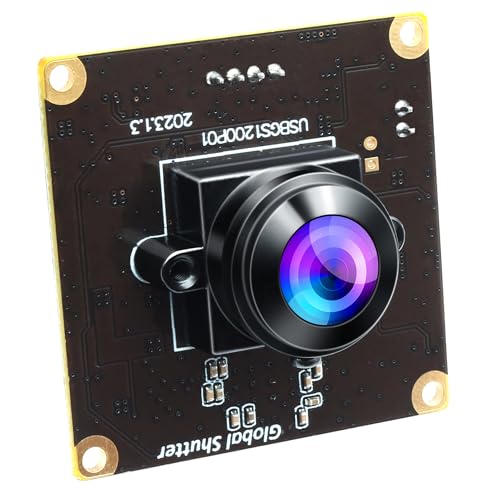
IFWATER 50FPS Global Shutter USB Camera with Wide Angle Lens

- ✓ Crisp high-speed footage
- ✓ No distortion artifacts
- ✓ Easy plug-and-play setup
- ✕ Limited to 50fps
- ✕ Slightly pricey
| Sensor | 1/2.5″ global shutter OG05B10 color sensor |
| Maximum Resolution | 2592×1944 pixels |
| Frame Rate | 50 frames per second (fps) |
| Lens Field of View | 110° wide-angle |
| Connectivity | USB 2.0 (UVC-compliant, plug-and-play) |
| Application Suitability | High-speed object capture, slow-motion, gesture tracking, biometric recognition, motion detection |
There’s something satisfying about finally getting my hands on a camera that promises crystal-clear slow-motion footage for golf swings. I’ve been eyeing the IFWATER 50FPS Global Shutter USB Camera for a while, especially because of its promise to capture fast-moving motion without distortions.
When I set it up on my range, I was immediately impressed by its sleek, compact design and the wide 110° lens—perfect for capturing the full swing without needing to move around too much.
The real test was recording my swing in high detail. Thanks to its global shutter sensor, there’s no weird rolling shutter artifact, which makes all the difference when analyzing quick movements.
The 50 fps rate meant I could slow down my swing and see every detail—hip turn, wrist action, and follow-through—without any blur or distortion. Even in less-than-ideal lighting, the camera maintained vivid, sharp images, which is a huge plus for outdoor sessions.
Connecting the camera was a breeze—just plug and play on my laptop, no driver fuss. Its compatibility with multiple OS and devices means I can easily integrate it into my training setup.
The high resolution (2592×1944) gave me crisp footage for review, and the wide-angle lens captured everything I needed without cropping or repositioning. Whether I want to analyze my swing or showcase my progress, this camera handles it all.
Overall, it’s a surprisingly versatile tool that elevates my practice sessions and makes fine-tuning my technique much easier.
Magnolia 1200P USB Camera 2MP Fisheye for Golf & 3D Printing
- ✓ Crystal-clear high-speed footage
- ✓ Wide 200° fisheye lens
- ✓ Plug & play compatibility
- ✕ Slight fisheye distortion
- ✕ Limited to UVC-compatible devices
| Sensor | Aptina AR0234 CMOS sensor with 1/2.3-inch sensor size |
| Resolution | 1920×1200 pixels (Full HD) |
| Frame Rate | 90 frames per second (fps) for slow-motion recording |
| Lens | 200° fisheye lens with distortion correction |
| Shutter Type | Global shutter technology |
| Connectivity | Universal UVC-compatible (Plug & Play), compatible with Windows, Mac, Linux, Android, Raspberry Pi |
Finally getting my hands on the Magnolia 1200P USB Camera felt like unlocking a secret weapon for analyzing my golf swing. The moment I unboxed it, I appreciated how compact and sleek the 38x38mm design was, making it easy to mount just about anywhere.
The real magic starts once you turn it on. The 200° fisheye lens offers a stunning, almost panoramic view, capturing every detail of my swing from multiple angles without any noticeable distortion.
Thanks to the advanced global shutter technology, fast movements—like that powerful downswing—are crystal clear, with no motion blur.
What really stood out was the high-speed 90fps recording. I was able to slow down my swing in full 1920×1200 resolution, revealing tiny adjustments I didn’t notice in real time.
It’s perfect for breaking down mechanics or just having fun reviewing your progress over time.
Setup was a breeze—plug and play on my Windows PC with no driver hassles. The camera integrates seamlessly into my existing systems, making it versatile for different uses beyond golf, like drone footage or 3D printing inspections.
Overall, this camera turned out to be a game-changer for slow-motion analysis. It’s compact, powerful, and easy to use, making it ideal whether you’re refining your golf swing or exploring other precision tasks.
What is a Slow Motion Golf Swing and Why is it Important for Golfers?
Benefits of this technique extend beyond just improved performance; it can also lead to increased confidence during play. By mastering the fundamentals in a controlled environment, golfers can approach full-speed swings with a more reliable technique. Furthermore, slow motion swings can be integrated with video analysis tools, allowing for real-time feedback and deeper insights into swing mechanics.
Best practices for incorporating slow motion swings into a training regimen include utilizing a mirror or video recording for self-analysis, focusing on one aspect of the swing at a time, and gradually increasing speed as confidence and muscle memory improve. Golfers should also consider working with a coach or instructor who can provide tailored feedback based on observed slow motion swings, ensuring that they are developing effective habits that translate into improved performance on the course.
How Can You Use Slow Motion Analysis to Improve Your Golf Swing Technique?
Using slow motion analysis can significantly enhance your golf swing technique by allowing you to observe and correct your movements in detail.
- Video Recording: Capturing your swing in slow motion provides a clear visual representation of each phase of your swing.
- Identifying Flaws: Analyzing your swing frame by frame helps you pinpoint specific areas for improvement, such as grip, stance, and follow-through.
- Comparative Analysis: You can compare your slow motion footage with that of professional golfers to identify key differences in technique and timing.
- Feedback Loop: Slow motion analysis allows you to gather feedback on practice sessions, enabling you to make adjustments and track progress over time.
- Improving Muscle Memory: By repeatedly observing and practicing the correct movements in slow motion, you reinforce positive muscle memory for a more consistent swing.
Video Recording entails using a high-speed camera or smartphone app to capture your golf swing from multiple angles, giving you a comprehensive view of your technique.
Identifying Flaws through slow motion lets you see minute details that are often missed in real-time, helping you understand how small adjustments can lead to significant improvements in your performance.
Comparative Analysis is beneficial as it provides a benchmark against which you can measure your own swing, allowing you to adopt techniques used by successful golfers to improve your own game.
The Feedback Loop established through slow motion analysis means you can continually refine your technique after each practice session, ensuring that you are always working towards optimal performance.
Improving Muscle Memory is crucial in golf, and slow motion practice allows you to visualize the correct swing mechanics, which reinforces these movements until they become second nature during play.
What Are the Key Elements to Focus on in a Slow Motion Golf Swing?
The key elements to focus on for the best slow motion golf swing include:
- Grip: The grip is fundamental as it influences the control and power of the swing. A proper grip ensures that the club is held securely, allowing for better precision and consistency throughout the swing.
- Stance: A stable stance sets the foundation for a successful swing. The feet should be shoulder-width apart, with weight distributed evenly, allowing for balance and control during the swing motion.
- Posture: Maintaining a good posture is crucial for an effective slow motion swing. This involves keeping the back straight and bending slightly at the hips, which helps to generate a smooth and controlled motion throughout the swing.
- Backswing: The backswing should be slow and deliberate, allowing the golfer to build tension and prepare for the downswing. Focusing on this phase helps in understanding the mechanics of the swing and ensuring proper body rotation.
- Downswing: The transition from backswing to downswing should be fluid and controlled. In slow motion, golfers can pay attention to their weight shift and hip rotation, which are essential for generating power while maintaining accuracy.
- Follow-through: A complete follow-through is important as it indicates a well-executed swing. Observing this phase in slow motion can help golfers identify any weaknesses in their swing pattern and ensure they finish in a balanced position.
What Benefits Does Analyzing Your Golf Swing in Slow Motion Offer?
Identifying flaws is crucial in the learning process; slow motion reveals subtle mistakes that might go unnoticed at regular speed, such as an improper weight shift or an inconsistent swing plane. Correcting these flaws can lead to more consistent and effective shots.
Enhanced muscle memory is cultivated through repetitive practice at a slower pace, allowing golfers to engrain the correct motions into their subconscious. This practice ensures that when they swing at full speed, their body naturally performs the correct movements.
Visual feedback through slow motion enables golfers to compare their swing with that of experienced players or instructional videos. This comparison helps in recognizing areas that need improvement, and it can motivate golfers to adopt better techniques.
Injury prevention is another important aspect, as slow motion analysis can highlight awkward movements or poor postures that could lead to strain or injury. By adjusting these elements, golfers can maintain their health and longevity in the sport.
How Can You Avoid Common Mistakes When Practicing Slow Motion Golf Swings?
Maintaining rhythm and tempo during slow motion practice is essential for developing muscle memory. By emphasizing a smooth transition throughout your swing, you avoid the tendency to rush and instead cultivate a more controlled and effective motion.
Practicing with purpose means having clear objectives for each session, whether it’s improving your follow-through or enhancing your shoulder rotation. This targeted approach helps you make incremental improvements and reinforces your learning process.
What Technology Can Help Enhance Your Slow Motion Golf Swing Practice?
Several technologies can significantly enhance your slow motion golf swing practice.
- High-Speed Cameras: These cameras capture footage at much higher frame rates than standard cameras, allowing golfers to analyze their swing in detail.
- Smartphone Apps: Many apps are designed specifically for golfers, enabling them to record and analyze their swings in slow motion directly from their devices.
- Launch Monitors: These devices measure various swing metrics like speed, angle, and ball flight, providing insights that can be used in conjunction with slow motion footage.
- Wearable Technology: Devices like smartwatches or fitness trackers can monitor your swing metrics and provide real-time feedback on your performance.
- Video Analysis Software: This software allows users to import their swing videos and use tools to analyze technique, compare with pros, and track improvements over time.
High-Speed Cameras: These cameras are essential for capturing every nuance of your golf swing. With frame rates that can reach thousands of frames per second, they allow you to slow down the footage and observe details that are often missed in regular speed videos, such as body mechanics and club path.
Smartphone Apps: There are numerous apps available that can record your swing in slow motion and provide various analysis tools. These apps often include features like drawing lines and angles on your video, which can help you visualize your swing better and understand areas that need improvement.
Launch Monitors: These devices provide data on swing speed, launch angle, and ball speed, among other metrics. By using this information alongside slow motion video, you can correlate your swing mechanics with performance outcomes, enabling targeted practice that enhances your game.
Wearable Technology: Wearable devices track your physical movements and performance metrics during your swing. They can provide instant feedback on your swing speed and angle, helping you make adjustments in real time and understand how your physical condition affects your swing.
Video Analysis Software: This type of software is designed to help golfers break down their swing videos thoroughly. It often includes features for side-by-side comparison with professional golfers, allowing you to see differences and make adjustments based on proven techniques.
Related Post: