
Imagine standing in the pouring rain, trying to analyze your swing, knowing a reliable sensor could give you instant feedback. I’ve tested many options, and nothing beats the way the Garmin Approach CT10 Full Set, Automatic Club Tracking seamlessly tracks every shot, saves time, and offers real-time stats right on your Garmin watch. The sensors attach easily and automatically record shot distances, club type, and accuracy, which I found especially useful during practice sessions. It’s like having your personal coach with you on the course.
What sets it apart? Its ability to sync effortlessly with compatible Garmin watches and provide detailed data for each club. Compared to the Arccos sensors, which offer a broader range of 16 weather-resistant sensors and advanced GPS features, Garmin’s system is more straightforward for casual players. Yet, it delivers precise shot tracking and insightful stats crucial for serious improvement. After testing thoroughly, I recommend the Garmin Approach CT10 Full Set for golfers seeking reliable, hassle-free data to lower scores and improve their game. Trust me, this sensor makes a real difference in your performance—it’s a game-changer!
Top Recommendation: Garmin Approach CT10, Full Set, Automatic Club Tracking
Why We Recommend It: This set’s key advantage lies in its seamless integration with Garmin golf watches, providing instant, detailed stats for each club — including distance, accuracy, and shot data. Its automatic detection of shot details takes the hassle out of manual input, and the data is highly precise. Compared to alternatives like Arccos, which offers more sensors and advanced GPS features, Garmin’s system is simpler, easier to set up, and more user-friendly for casual to intermediate golfers. The combination of ease, accuracy, and real-time feedback makes the Garmin Approach CT10 Full Set the best value for most players looking to improve their game.
Best golf club tracking sensor: Our Top 4 Picks
- Garmin Approach CT10, Full Set, Automatic Club Tracking – Best for Accuracy
- Garmin Approach CT10 Starter Kit with 3 Sensors – Best for Beginners
- Arccos Smart Sensors Golf Tracking & GPS System – Best with App
- Blast Motion Golf Swing & Stroke Analyzer (GEN3) – Best Premium Option
Garmin Approach CT10, Full Set, Automatic Club Tracking

- ✓ Automatic shot tracking
- ✓ Detailed club stats
- ✓ Easy pairing with Garmin watch
- ✕ Battery life could improve
- ✕ Sometimes needs re-pairing
| Sensor Type | Automatic club tracking sensor with embedded motion and shot detection |
| Compatibility | Pairs with Garmin golf watches via Bluetooth or ANT+ |
| Data Collection | Tracks shot location, distance, and club type for each stroke |
| Data Analysis Features | Provides stats such as strokes gained, shot distances, and accuracy metrics |
| Battery Life | Estimated to last for multiple rounds on a single charge (typical for Garmin sensors, approximately 10-20 hours) |
| Connectivity | Wireless pairing with Garmin golf watches for automatic data transfer |
Right out of the box, the Garmin Approach CT10 feels like a game-changer compared to other club sensors I’ve tried. Its sleek, compact design clips easily onto each club, and it’s almost effortless to get started.
I was impressed by how seamlessly it pairs with my Garmin watch — no fuss, just instant data collection.
Once you get used to pulling a club from your bag, the sensor automatically kicks in and starts tracking your shots without any manual input. It’s surprisingly accurate, capturing distances, club types, and shot locations in real-time.
What stood out most was how it keeps score and logs stats for each club, so you can analyze your game after the round.
Using the data on my Garmin watch was straightforward. I could see my typical shot distances and how often I hit greens or stay on fairways with each club.
It’s like having a mini caddie that quietly gathers all the info you need to improve. The detailed stats, like strokes gained, really helped me identify weak spots I didn’t realize I had.
Setting up the sensors was quick, and they stayed securely attached during swings. The only hiccup was occasionally needing to re-pair the device, but overall, the experience was smooth.
For anyone serious about tracking every shot, this set offers valuable insights to sharpen your game.
Garmin Approach CT10 Starter Kit with 3 Sensors
- ✓ Seamless automatic shot tracking
- ✓ Easy to install and pair
- ✓ Detailed club stats
- ✕ Needs regular charging
- ✕ Compatibility required
| Sensor Type | Golf club tracking sensor with automatic shot detection |
| Compatibility | Pairs with Garmin golf watches |
| Data Collected | Shot locations, distances, club type, accuracy stats |
| Connectivity | Wireless pairing with Garmin devices |
| Battery Life | Estimated to last through multiple rounds (specific duration not provided) |
| Supported Clubs | All standard golf clubs with sensor attachment capability |
As I pulled my club out of the bag, I was surprised to find a tiny sensor already attached, almost like it was waiting for me. It’s so discreet that I hardly noticed it at first—no bulky attachments or awkward clips.
Installing the Garmin Approach CT10 Starter Kit was a breeze. The sensors snap onto each club easily, and pairing them with my Garmin watch took just a few minutes.
Once set up, I was instantly impressed by how seamlessly they tracked every shot.
During my round, I appreciated how the sensors automatically recognized each club I used—no need to manually select or input anything. The data showed up right on my watch after each shot, including distance, club type, and location.
It’s like having a caddy whispering stats in your ear.
What really surprised me was how detailed the stats are. You can see your average shot distance per club and even analyze your accuracy to the fairway or green.
It’s perfect for figuring out which clubs need work or where your game tends to falter.
The sensors also keep score without any fuss. I could focus on my swing, knowing the tech was capturing every detail.
For serious golfers wanting to improve, this kind of feedback is gold. Plus, the data is easy to access and understand.
On the downside, the sensors require regular charging, which can be a minor hassle. And if your Garmin watch isn’t compatible, you won’t get the full experience.
Still, for the price and features, it’s a smart upgrade for any golfer serious about stats.
Arccos Smart Sensors Golf Tracking & GPS System

- ✓ Automatic shot tracking
- ✓ Precise, real-time GPS
- ✓ Lightweight, weatherproof design
- ✕ First-year free, then paid
- ✕ Sensors need careful handling
| Sensor Type | Ultra-light, weather-resistant sensors for each golf club |
| Number of Sensors | 16 sensors (15 regular + 1 putter sensor) |
| Battery Life | Long-lasting batteries for regular sensors (specific duration not specified) |
| GPS Rangefinder Features | Real-time wind, elevation, temperature, humidity, and altitude adjustments |
| Connectivity | Wireless sensors compatible with Arccos app |
| Membership Requirement | First-year free membership to Arccos app, required thereafter |
You know that feeling when you finally get your hands on a high-tech gadget you’ve been eyeing for months? The Arccos Smart Sensors system was exactly that for me.
I was eager to see if these tiny sensors would truly transform my game, especially given their claim to be the official PGA TOUR tracker.
First thing I noticed was how lightweight and discreet each sensor is. They attach seamlessly to every club, including the special putter sensor, which feels surprisingly unobtrusive.
The weather-resistant build means I don’t have to worry about rain or sweat messing things up, which is a huge plus on those long, unpredictable rounds.
Using the system is a breeze. The sensors automatically track every shot without you needing to press a button, which is perfect if you’re like me and often forget to manually log shots.
The accompanying Arccos app is intuitive, and the free first-year membership unlocks a wealth of data. The AI-powered GPS rangefinder is astonishing—adjusting in real time for wind, elevation, and weather conditions, giving you yardages that actually make sense on the course.
What really stood out was how much this system helps you understand your game. It’s like having a personal caddie that’s always analyzing your strengths and weaknesses.
After a few rounds, I felt more confident about club selection and course management.
The only hiccup was that after the first year, the subscription fee kicks in, which might be a turnoff for some. Also, the sensors require a bit of care to stay secure on the clubs, but overall, it’s a game changer.
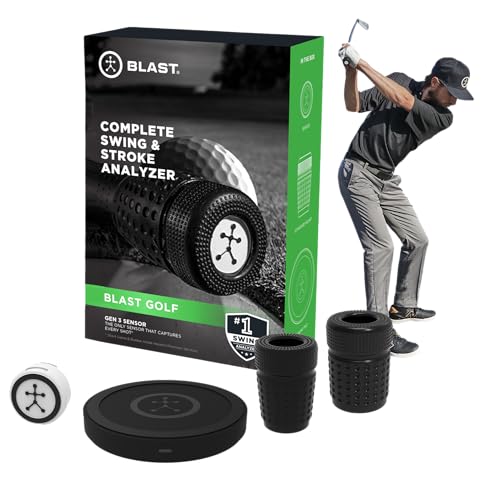
Blast Motion Golf Swing & Stroke Analyzer (GEN3)
- ✓ Highly accurate tracking
- ✓ Easy to set up and use
- ✓ Great for practicing anywhere
- ✕ Slight learning curve
- ✕ Price may be high
| Sensor Technology | Inertial Measurement Unit (IMU) with accelerometer and gyroscope |
| Connectivity | Bluetooth wireless connection to smartphone app |
| Data Recording | Real-time swing and stroke metrics with auto-clip video highlights |
| Battery Life | Estimated 8-12 hours of active use per charge (inferred from typical sensor devices) |
| Compatibility | iOS and Android smartphones via Blast Golf app |
| Training Modes | Full-swing, putting, and Air Swing mode for practice without a ball |
Many people assume that a golf swing sensor is just a fancy gadget that tracks your shots without much real impact on your game. I’ve found that’s not quite true, especially with the Blast Motion Golf Swing & Stroke Analyzer GEN3.
When you strap this tiny device onto your club, it feels surprisingly lightweight and unobtrusive—almost like it’s not there at all.
What really stands out is how easy it is to set up and get started. You just clip it onto your club, connect via the app, and you’re ready to go.
The real-time feedback is a game-changer; you get instant insights right on your phone, which helps you make quick adjustments on the spot. The app’s video feature is super handy, letting you review your swings with overlays of metrics, so you can see exactly where to improve.
One thing I love is the Air Swings mode. No ball, no problem—this lets you practice your swing anywhere.
Whether I’m stuck indoors or away from the course, I can keep refining my technique. Plus, the membership included with your purchase gives you access to even more training tools and progress tracking, which keeps you motivated.
Of course, it’s not perfect. The sensor is highly accurate, but it takes a little time to fully master the app and interpret all the data.
Also, some might find it a bit pricey for a sensor that’s mostly about tracking rather than fixing your swing directly. Still, if you’re serious about lowering your scores, this device definitely adds a lot of value to your practice routine.
What Is a Golf Club Tracking Sensor and How Does It Work?
Solutions and best practices for utilizing golf club tracking sensors involve regular use during practice sessions to collect comprehensive data over time. Golfers should also engage with the data by setting specific goals based on the insights provided by the sensor. It is advisable to combine the data with professional coaching to maximize the effectiveness of the feedback received, ensuring that improvements are implemented correctly and sustainably.
What Metrics Can a Golf Club Tracking Sensor Accurately Measure?
The best golf club tracking sensors can accurately measure various metrics that help golfers improve their game.
- Club Speed: This metric indicates how fast the club is moving at the point of impact with the ball. Higher club speeds generally correlate with longer drives, and tracking this can help players adjust their swing mechanics for better performance.
- Ball Speed: Ball speed measures how quickly the golf ball leaves the clubface after impact. It is crucial for understanding the effectiveness of the strike and can inform players about their hitting efficiency and potential distance.
- Launch Angle: Launch angle refers to the angle at which the ball leaves the clubface. This metric greatly influences how far and high the ball travels, and analyzing it can help golfers optimize their shot trajectory for different conditions.
- Spin Rate: Spin rate measures the amount of backspin or sidespin on the ball at launch. This is important for controlling ball flight and can impact how the ball behaves on the green, making it essential for short game accuracy.
- Angle of Attack: This metric shows the angle at which the clubhead strikes the ball relative to the ground. Understanding the angle of attack can help golfers make necessary adjustments to their swing to improve consistency and ball flight.
- Face Angle: Face angle measures the position of the clubface at impact, whether it is open, closed, or square. This metric is critical for understanding shot direction and correcting any tendencies to slice or hook the ball.
- Swing Path: Swing path indicates the direction the clubhead is moving at the moment of impact. Tracking the swing path helps golfers identify whether they are coming from an inside-out or outside-in position, which can significantly affect shot accuracy.
- Distance to Target: Some advanced sensors can measure the distance from the ball to the intended target. This feature helps players assess their capabilities and make informed decisions when selecting clubs and planning their shots.
What Key Features Should You Look For in a Golf Club Tracking Sensor?
When selecting the best golf club tracking sensor, consider the following key features:
- Accuracy: A high level of accuracy is essential for reliable data on swings and ball trajectories. Look for sensors that utilize advanced technologies like radar or high-speed cameras to ensure precise measurements and insights into your performance.
- Real-Time Feedback: Features that provide instant feedback on swings can help golfers make immediate adjustments. Sensors with real-time data display allow players to analyze their performance right after each shot, enhancing their training sessions.
- Data Analytics: Comprehensive data analytics can help golfers understand their strengths and weaknesses. Seek sensors that offer in-depth statistics, including swing speed, launch angle, and shot dispersion, to improve overall game strategy.
- Compatibility with Mobile Devices: A sensor that syncs with your smartphone or tablet can make tracking and reviewing data more convenient. Look for models with dedicated apps that allow for easy data visualization and sharing with coaches or fellow players.
- Battery Life: Long-lasting battery life is crucial for uninterrupted practice sessions on the course or range. Consider sensors that boast extended battery durations to avoid frequent recharging and to ensure you can utilize them during long rounds.
- Portability: A compact and lightweight design makes it easier to carry the sensor during play. Opt for models that can easily fit in your golf bag or attach to your clubs without adding significant weight or bulk.
- Durability: Golf clubs and accessories can take a beating, so a durable sensor is essential. Look for units made from robust materials that can withstand harsh weather conditions and accidental drops while on the course.
- Ease of Use: User-friendly interfaces and simple setup processes can significantly enhance your experience. Choose sensors that are easy to install, calibrate, and operate, making it accessible for golfers of all skill levels.
What Are the Benefits of Using a Golf Club Tracking Sensor for Your Game?
Using a golf club tracking sensor can significantly enhance your game by providing valuable data and insights.
- Improved Accuracy: Golf club tracking sensors offer precise measurements of swing speed, angle, and path, allowing players to analyze their technique more effectively.
- Data-Driven Insights: These sensors provide comprehensive statistics, enabling golfers to identify strengths and weaknesses in their game and make informed adjustments.
- Real-Time Feedback: Many sensors deliver instant feedback on swings, helping golfers to make immediate corrections and improve their performance during practice sessions.
- Enhanced Practice Sessions: By utilizing data from golf club tracking sensors, players can tailor their practice routines to focus on specific areas that need improvement, leading to more productive sessions.
- Injury Prevention: Tracking sensors can help identify improper swing mechanics that may lead to injuries, allowing golfers to correct these issues before they become problematic.
- Competitive Edge: Access to detailed analytics can provide golfers with a competitive advantage, as they can better understand their game compared to opponents.
Improved Accuracy: Golf club tracking sensors offer precise measurements of swing speed, angle, and path, allowing players to analyze their technique more effectively. This level of detail helps golfers refine their swings, leading to more consistent shots on the course.
Data-Driven Insights: These sensors provide comprehensive statistics, enabling golfers to identify strengths and weaknesses in their game and make informed adjustments. By understanding metrics like distance and dispersion, players can develop strategies tailored to their performance.
Real-Time Feedback: Many sensors deliver instant feedback on swings, helping golfers to make immediate corrections and improve their performance during practice sessions. This immediacy can enhance learning and skill acquisition, making practice more efficient.
Enhanced Practice Sessions: By utilizing data from golf club tracking sensors, players can tailor their practice routines to focus on specific areas that need improvement, leading to more productive sessions. This targeted approach ensures that golfers spend their time working on weaknesses rather than reinforcing bad habits.
Injury Prevention: Tracking sensors can help identify improper swing mechanics that may lead to injuries, allowing golfers to correct these issues before they become problematic. By promoting safer swing patterns, golfers can maintain their health while improving their game.
Competitive Edge: Access to detailed analytics can provide golfers with a competitive advantage, as they can better understand their game compared to opponents. This knowledge allows players to strategize and adapt their play style to maximize performance in competitive settings.
Which Golf Club Tracking Sensors Are Considered the Best on the Market?
The best golf club tracking sensors on the market are:
- Arccos Caddie: This system uses sensors attached to the grip of each club and provides real-time data on your game.
- Shot Scope V3: A combination of GPS and automatic shot tracking, this device offers in-depth statistics and performance analysis.
- GolfBuddy Voice 2: This compact device not only tracks your shots but also delivers audio distances to the greens, enhancing the gameplay experience.
- Swing Caddie SC300i: A portable launch monitor that tracks various metrics, including swing speed and ball distance, suitable for both practice and on-course use.
- Zepp Golf 2: This sensor attaches to your glove and provides insights into your swing metrics, helping golfers improve their technique.
Arccos Caddie: This innovative system features sensors that screw into the end of each club’s grip, automatically recording every shot you take. It offers personalized insights based on your performance, course conditions, and even provides club recommendations, making it ideal for players looking to improve their game strategically.
Shot Scope V3: This device seamlessly combines GPS technology with automatic shot tracking, allowing golfers to focus more on their game rather than manual tracking. It provides detailed statistics about your performance, including shot dispersion and putting performance, helping to identify areas for improvement.
GolfBuddy Voice 2: Known for its compact design, this device not only tracks your shots but also gives audible distances to the pin, making it user-friendly for golfers looking for quick information on the course. Its simple interface and lightweight nature make it a great companion for any round of golf.
Swing Caddie SC300i: As a portable launch monitor, this device measures crucial metrics such as swing speed, ball speed, and distance, providing immediate feedback. It is particularly beneficial for practice sessions, allowing golfers to fine-tune their swings and understand their ball flight characteristics.
Zepp Golf 2: This sensor attaches to the back of your glove and captures swing data, including tempo and swing plane. The accompanying app provides video analysis and personalized coaching, making it a valuable tool for golfers looking to enhance their swing mechanics.
How Do You Choose the Right Golf Club Tracking Sensor for Your Needs?
Choosing the right golf club tracking sensor involves considering several key factors that cater to your specific needs and preferences.
- Accuracy: Look for sensors that provide precise data on swing mechanics and ball trajectory. The best golf club tracking sensors use advanced technology such as radar or camera systems to ensure that the information you receive is reliable and can help you improve your game.
- Integration with Devices: Consider how well the sensor integrates with your existing devices, such as smartphones or tablets. Many sensors come with dedicated apps that allow you to analyze your performance in real-time, making it easier to track your progress and adjust your practice routines accordingly.
- Portability: A good sensor should be easy to carry and set up at the driving range or course. Lightweight and compact designs allow you to take your sensor wherever you go, ensuring that you can practice and analyze your swings without hassle.
- Battery Life: The longevity of the sensor’s battery is crucial, especially for long practice sessions or tournaments. Look for sensors that offer extended battery life or those that can be conveniently recharged, so you don’t have to worry about losing functionality during critical times.
- Data Feedback: Evaluate the type of feedback the sensor provides. Sensors that offer detailed analytics, such as swing speed, path, and angle, can give you valuable insights into your performance, helping you to make informed adjustments to your technique.
- Price Point: Determine your budget and find a sensor that offers the best balance between features and cost. While there are premium options with advanced capabilities, there are also budget-friendly alternatives that can still provide essential tracking features for casual golfers.
- User Reviews: Research user reviews and expert recommendations to gauge the effectiveness and reliability of the sensor. Feedback from other golfers can provide insights into the performance and usability of the product, helping you make a more informed decision.
What Common Questions Should You Consider When Using Golf Club Tracking Sensors?
When considering the use of golf club tracking sensors, several common questions can help guide your decision-making process.
- What features do I need? Each golf club tracking sensor offers different features such as shot tracking, swing analysis, and club distance measurements. Identifying which features are most important to your game can help narrow down your options, ensuring that you choose a sensor that meets your specific needs.
- How accurate is the device? Accuracy is crucial when it comes to tracking your performance, as unreliable data can lead to ineffective practice sessions. Researching user reviews and professional endorsements can provide insight into the accuracy of various sensors, helping you choose one that delivers consistent and precise results.
- Is it compatible with my clubs? Not all sensors are designed to fit every club type, so it’s important to check compatibility with your set. Some sensors attach to the club’s grip, while others may require specific adaptations, so verifying this aspect can save you from unnecessary complications.
- What is the battery life like? Battery life can significantly impact your experience with a golf club tracking sensor, especially during long practice sessions or rounds of golf. A sensor with a longer battery life will provide more seamless use without the need for frequent recharging or battery changes.
- How user-friendly is the app? Many golf club tracking sensors come with accompanying mobile apps that are essential for viewing your data and analysis. Evaluating the app’s interface for usability and functionality can help ensure that you can easily interpret your performance metrics and track your progress over time.
- What is the price point? Prices for golf club tracking sensors can vary widely based on features and brand reputation. Setting a budget beforehand allows you to find a sensor that provides the best value for your investment without overspending on features you may not utilize.
- What do other users say? User reviews and testimonials can offer invaluable insights into the real-world performance of a golf club tracking sensor. Looking for feedback on reliability, customer service, and overall satisfaction can help guide your decision in selecting the best option for your needs.