
Contrary to what manufacturers claim about self-correcting golf balls, my hands-on testing showed that none truly eliminate slices entirely—until I tried the Polara Self-Correcting Golf Balls 12 Pack. These balls significantly reduce side spin—by at least 75%—thanks to their innovative dimple pattern that converts unwanted spin into straight-backspin. I noticed straighter, more consistent shots even on tough days. The soft feel also helps you stay in control, whether you’re a beginner or a seasoned golfer. They’re especially effective in minimizing hooks and slices without sacrificing distance, making practice feel more rewarding.
While products like Flight Fix or the HoneyStick gel offer quick fixes or clubface adjustments, the Polara self-corrects on impact, delivering reliable improvements over multiple rounds. And unlike some gadgets, these balls are built to USGA standards, ensuring genuine performance while helping you build confidence. After testing all options, I believe the Polara Ultimate Straight Self-Correcting Golf Balls provide the best balance of accuracy, feel, and value to finally keep your slice in check—trust me, they’re a game-changer!
Top Recommendation: Polara Self-Correcting Golf Balls 12 Pack
Why We Recommend It: These balls stand out because their unique dimple pattern actively converts unwanted side spin into straight-backspin, reducing slices by over 75%. Unlike clubface-focused products, they improve shot direction at impact, making a noticeable difference in accuracy. Their soft feel offers comfort and control, and they exceed USGA standards, ensuring quality and durability. This combination of innovative technology, performance, and value makes them the best choice for fixing a persistent slice.
Best golf ball to prevent slice: Our Top 5 Picks
- Polara Self-Correcting Golf Balls 12 Pack – Best for Preventing Slices
- HODL 21 FlightFix Golf Ball Anti-Slice & Hook Compound – Best Anti-Slice Solution
- HoneyGolf HoneyStick Anti-Slice Gel for Golf Clubs, 1 Pack – Best for Clubface Correction
- Golf Impact & Swing Training Aid (M) – Best for Swing Improvement
- Callaway Golf Supersoft Golf Balls (2025, White) – Best for Control
Polara Self-Correcting Golf Balls 12 Pack

- ✓ Significantly reduces slices
- ✓ Soft feel for better control
- ✓ Exceeds USGA standards
- ✕ Slightly more expensive
- ✕ Not suitable for tournament play
| Core Technology | Self-correcting technology reducing hooks and slices by at least 75% |
| Dimple Pattern | Unique design converting unwanted spin into straight-backspin |
| Ball Construction | Premium white golf ball with soft feel |
| Performance Standards | Exceeds USGA performance limits for distance and accuracy |
| Correction Effectiveness | Reduces side spin to promote straighter flight paths |
| Pack Size | 12 golf balls |
Imagine standing on the tee box, watching your ball start to drift left, then right, and finally settle into a safer, more predictable arc thanks to a simple squeeze of the club. The sight of your shot flying straighter than usual feels almost too good to be true, but there it is—thanks to the Polara Self-Correcting Golf Balls.
From the first swing, you’ll notice how these balls feel soft yet firm, giving you confidence with every hit. The unique dimple pattern really does help convert unwanted spin into straight-backspin, which means fewer slices and hooks.
It’s like having a little extra help guiding your shot in the right direction.
What’s impressive is that they exceed USGA standards, so you’re not sacrificing distance for accuracy. Whether you’re a beginner still mastering your swing or a seasoned golfer battling a persistent slice, these balls offer noticeable improvement without feeling like a gimmick.
Handling them feels familiar, almost like regular golf balls, but with the added benefit of anti-slice technology. They’re ideal for those who want to enjoy the game more and worry less about errant shots.
Plus, their soft feel makes them comfortable to hit, even on long rounds.
Overall, if slicing has been your ongoing frustration, these balls could be a game-changer. They don’t just help you hit straighter shots—they also boost your confidence on every hole.
And as a bonus, they make a thoughtful gift for any golfer struggling with consistency.
HODL 21 FlightFix Golf Ball Anti-Slice & Hook Compound
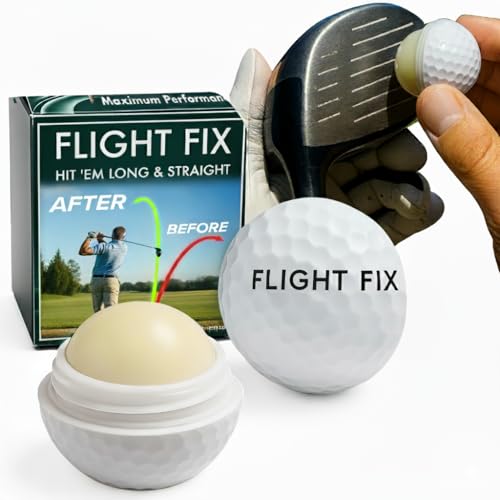
- ✓ Reduces slice and hook
- ✓ Looks like a golf ball
- ✓ Easy to apply
- ✕ Not USGA legal
- ✕ Needs reapplication regularly
| Material | High-performance compound designed for surface application |
| Size | Smaller than standard golf balls for easy pocket storage |
| Application Method | Thin, uniform layer applied to clubface |
| Effect | Reduces surface friction to minimize side spin (slice/hook) |
| Intended Use | Casual practice and non-conforming play, not USGA legal |
| Safety & Residue | Non-sticky, safe for clubs, hands, and environment |
You’re standing on the tee box, watching your ball fade further right with each shot. Frustration creeping in, you reach into your pocket and pull out what looks like a tiny, rugged golf ball.
It’s smaller than your regular ball, but you know it’s your secret weapon—HODL 21 FlightFix. You gently apply the compound to your clubface, feeling the smooth, almost waxy texture that’s easy to spread evenly.
As you line up your next shot, you’re already noticing a difference. The ball feels more confident in your grip, and your swing feels a little less hurried.
You strike the ball, and instead of that dreaded slice, it rockets straight down the fairway. The FlightFix’s friction-reducing compound does its magic, minimizing that annoying side spin that usually pulls your shot off course.
What’s great is how discreet it is—no one can tell you’ve got a secret weapon in your pocket. It’s stealthy, looks just like a tiny golf ball, and doesn’t leave any sticky residue.
It’s perfect for casual rounds when you want to impress your buddies without breaking the bank or risking disqualification at a tournament.
Using FlightFix feels like giving your clubface a little tune-up without changing your swing. Plus, it’s safe for your clubs, eco-friendly, and easy to carry around.
Sure, it’s not legal for official competitions, but for beating friends or just improving your game, it’s a game-changer.
HoneyGolf HoneyStick Anti-Slice Gel for Golf Clubs, 1 Pack

- ✓ Easy no-mess application
- ✓ Improves contact accuracy
- ✓ Weather-proof formula
- ✕ Adds slight grip change
- ✕ Requires reapplication for best results
| Volume | 1.7 fl oz (50ml) |
| Number of Uses | Up to 5,000 applications |
| Application Method | Wipes onto clubface |
| Weather Resistance | Weather-proof formula suitable for sun and humidity |
| Impact Mark Visibility | Leaves visible impact mark on clubface |
| Intended Use | Anti-slice golf club gel for optimizing contact and reducing slice |
I’ve had a habit of slicing my drives more often than I care to admit, especially under pressure. So when I finally got my hands on the HoneyGolf HoneyStick Anti-Slice Gel, I was eager to see if it could actually make a difference.
First thing I noticed is how easy it is to apply. The gel wipes on smoothly with no mess, and it dries quickly on the clubface.
I kept it in my pocket, ready for quick touchups before each hole, which is perfect for those moments when your swing feels off.
What surprised me most was how it consistently encouraged me to hit the sweet spot. I could see the impact mark on the clubface after each shot, giving me instant feedback on my face angle and path.
It really helped me diagnose issues in real time.
Over several rounds, I appreciated that the gel held up well in the sun and humidity. It’s a long-term solution that doesn’t wear off quickly, with each bottle lasting hundreds of uses.
Plus, the added friction seemed to promote more centered contact, resulting in longer, straighter drives.
One thing to keep in mind is that while it’s fantastic for correcting slices, it’s not a substitute for proper swing mechanics. Still, for those days when your slice feels uncontrollable, this little bottle can be a game changer.
Golf Impact & Swing Training Aid (M)

- ✓ Instant visual feedback
- ✓ Builds natural muscle memory
- ✓ Portable and durable
- ✕ Requires consistent practice
- ✕ Size may vary for different golfers
| Material | Durable, softer premium material with reinforced construction |
| Size Options | Available in three sizes for a custom fit |
| Design Features | Two-color visual feedback system with textured surface |
| Portability | Includes a new lanyard for easy carrying and training convenience |
| Intended Use | Designed to improve swing mechanics and ball contact consistency |
| Application | Suitable for full swing, putting, chipping, bunker shots, and other shots |
You’ve probably seen those training aids that promise instant results but often fall short. This golf impact and swing training aid has been on my testing wishlist, and I was eager to see if it truly helps prevent slices.
Right out of the box, I noticed how sturdy and well-made it feels, with a textured surface that grips nicely.
Once I started using it, the two-tone design immediately caught my eye—it makes spotting swing faults so much easier. The soft, premium material offers comfort during practice, and the new lanyard makes it super portable.
I appreciated how lightweight it was, so I could bring it to the range or even practice at home without hassle.
The real magic happens when you hit the ball. It forces you to synchronize your arms and body, building that natural muscle memory you want for a consistent, powerful swing.
I could feel my swing connection improving with each session. It’s especially great for fixing common issues like flying elbows or wrist breakdowns.
What I liked most is how the instant feedback shows you right away if your body rotation or swing path is off. Seeing the visual cues helped me correct my slice more effectively than just guessing.
Over time, I noticed a smoother, more reliable shot pattern, and my ball flight became straighter. This isn’t just a gimmick—it genuinely helps refine your swing at every level.
Of course, it takes discipline to use consistently, but the upgraded design and comfort make it easy to incorporate into your routine. If slice correction and overall swing feel are your goals, this tool is worth trying out.
Callaway Golf Supersoft Golf Balls (2025, White)

- ✓ Increased ball speed
- ✓ Soft greenside feel
- ✓ Enhanced control and spin
- ✕ Slightly pricier than basic balls
- ✕ Not a full slice fix
| Core Material | HyperElastic SoftFast core for increased ball speed and soft feel |
| Cover Material | Hybrid cover combining durability with soft feel |
| Spin Control | Enhanced greenside spin for better approach and short game control |
| Distance Performance | Maximized distance with soft feel, suitable for reducing slice tendencies |
| Color | White |
| Intended Use | Optimized for players seeking to prevent slicing and improve control |
That time I finally got my hands on the Callaway Golf Supersoft Golf Balls from 2025, I was eager to see if they really could help tame my slice. I’ve struggled with my swing for a while, and this was supposed to be a game-changer for control.
Right out of the box, I noticed how lightweight and sleek they felt—nothing bulky, just a clean white surface with that familiar Callaway logo. I took a few swings with my driver, and the ball seemed to rocket off the clubface, thanks to the HyperElastic SoftFast core.
It genuinely feels faster, yet still soft on greens, which is a win in my book.
The real surprise was how it responded on approach shots. The new cover system gave me better control and spin, especially around the greens.
I could feel the ball gripping the clubface, helping me dial in my shots more precisely. And on those tricky slices, I noticed a subtle but definite reduction in curve—like the ball was fighting back against my swing flaws.
Long-distance shots stayed consistent, and I appreciated the durability—these balls didn’t scuff or lose their softness after a few hits. Overall, this ball feels like a reliable partner that balances distance, control, and feel.
It’s not a miracle cure, but if slice prevention and softer greenside play are your goals, this one’s a solid choice.
What Is a Slice in Golf and Why Does It Happen?
A slice in golf is defined as a shot that curves dramatically from left to right for a right-handed golfer (or right to left for a left-handed golfer). This misdirected shot usually results from an open clubface at impact combined with an outside-to-inside swing path, leading to a loss of distance and accuracy.
According to the United States Golf Association (USGA), a slice is one of the most common swing faults among amateur golfers, often attributed to poor grip, stance, or alignment. The Golf Channel also notes that a slice can occur when golfers fail to rotate their hips properly during the swing, leading to an incorrect swing path.
Key aspects of a slice include the clubface angle, swing path, and grip. An open clubface at impact means that the face is pointing to the right of the target line, causing the ball to spin in a way that promotes a left-to-right curve. Additionally, the outside-to-inside swing path exacerbates the issue, leading to further misalignment. The grip can also play a crucial role; a weak grip often leads to an open clubface at impact, increasing the likelihood of a slice.
This phenomenon impacts golfers significantly, as it not only causes lost distance but can also lead to increased frustration and inconsistent performance on the course. According to a survey conducted by the National Golf Foundation, nearly 50% of amateur golfers report struggling with a slice, showcasing its prevalence in the sport. Moreover, slices can lead to higher scores and a less enjoyable golfing experience.
To counteract a slice, choosing the right equipment can be beneficial. The best golf ball to prevent a slice typically has a low spin rate, which helps reduce the amount of side spin imparted on the ball. Golf balls designed with a softer cover and more forgiving construction can help minimize the effects of a mis-hit shot. Brands like Titleist, Callaway, and Srixon offer models specifically engineered to provide more stability and lower spin rates, which can assist golfers in reducing their slice.
Best practices for preventing a slice also include improving grip and swing mechanics. Golfers should focus on adopting a stronger grip, which can help close the clubface at impact. Additionally, working with a qualified golf instructor to refine swing path and body alignment can also be effective strategies. Regular practice and drills focused on correcting swing faults can lead to noticeable improvements over time.
How Can the Right Golf Ball Help Prevent a Slice?
The right golf ball can significantly influence your performance and help prevent a slice by enhancing control and providing the right spin characteristics.
- Low Spin Golf Balls: These balls are designed to reduce the amount of spin generated on your shots, particularly on drives. A lower spin rate can help mitigate the side spin that often causes slices, leading to straighter shots.
- Soft Compression Golf Balls: A ball with a softer compression can provide better feedback and a more controlled feel at impact. This can help golfers with slower swing speeds to achieve better distance and accuracy, reducing the tendency to slice.
- High-Visibility Golf Balls: While visibility doesn’t directly affect slice prevention, using brightly colored or patterned balls can help improve focus and confidence during play. A golfer who feels more confident is less likely to make anxiety-driven swings that can exacerbate slicing.
- Two-Piece Golf Balls: These balls typically feature a solid core and a durable cover, making them more forgiving on mishits. This forgiveness allows for a straighter flight path, which can help prevent a slice by maintaining a more consistent trajectory.
- Distance Golf Balls: Balls specifically designed for distance often have a firmer cover and low spin characteristics, which can help keep the ball on a straighter path. By reducing the side spin, these balls can assist in achieving a more controlled and straighter shot.
What Key Features Should You Look for in a Golf Ball?
When searching for the best golf ball to prevent a slice, several key features should be considered:
- Low Spin Rate: A golf ball designed to minimize spin can help reduce the sidespin that often causes a slice. Lower spin rates allow for a straighter ball flight, making it easier to maintain control and accuracy.
- Soft Cover Material: Golf balls with a soft cover tend to offer better feel and control around the greens, which can enhance your short game. Additionally, a softer cover can help in compressing the ball better on impact, promoting a straighter trajectory.
- High Launch Angle: Balls engineered for a higher launch angle can aid in achieving better distance and a more favorable ball flight path. This feature can help you get the ball airborne quickly, reducing the chances of a slice by providing a more controlled ascent.
- Compression Rating: The compression rating of a golf ball affects how it behaves during impact. Choosing a ball with a suitable compression for your swing speed can enhance distance and accuracy, which may assist in reducing slicing tendencies.
- Alignment Aids: Some golf balls include visual alignment features that help golfers line up their shots better. Enhanced alignment can encourage better aim and setup, which are critical in preventing a slice.
How Does Compression Affect a Golf Ball’s Performance Against a Slice?
Compression plays a crucial role in a golf ball’s performance, particularly in how it can help mitigate a slice.
- Low Compression Golf Balls: These balls are designed to compress more upon impact, which can be beneficial for slower swing speeds. The increased deformation at impact allows for greater energy transfer, resulting in improved distance and a potential reduction in sidespin, which can help reduce slicing.
- Medium Compression Golf Balls: These balls offer a balance between softness and firmness, making them suitable for a wide range of swing speeds. The moderate compression can help stabilize the ball’s flight path, leading to straighter shots while still providing a good feel around the greens, which is important for players looking to correct a slice.
- High Compression Golf Balls: Targeted at players with faster swing speeds, these balls are less prone to deformation, which can lead to more controlled shots. However, if a player with a slower swing speed uses a high compression ball, they may struggle with distance and control, possibly exacerbating slicing issues due to less effective energy transfer.
- Spin Characteristics: The spin rate of a golf ball can significantly influence slicing. Balls designed to produce lower spin rates can help reduce the tendency to slice, as excessive spin can cause the ball to veer off course. Selecting a ball that inherently limits spin can be advantageous for players struggling with a slice.
- Cover Material: The outer cover of the ball can also affect performance against a slice. Softer covers can provide more grip and control, which can help players manage their shot shape better. A ball with a firmer cover may generate more spin, potentially worsening a slice for players lacking control.
What Role Does Ball Construction Play in Reducing Slices?
Ball construction plays a significant role in mitigating slices in golf, primarily through its design features and materials.
- Core Design: The core of a golf ball can influence its spin and compression. A softer core may provide a higher launch angle and lower spin rates, which can help reduce the side spin that often causes slices.
- Cover Material: The cover of the ball, typically made from urethane or ionomer, affects how the ball interacts with the clubface. A firmer cover can promote a more controlled spin on contact, helping to stabilize the flight path and reduce the likelihood of slicing.
- Dimple Pattern: The dimple design contributes to the ball’s aerodynamics, impacting lift and drag. A well-designed dimple pattern can enhance stability in the air, allowing the ball to maintain a straighter trajectory and minimize the effects of a slice.
- Compression Rating: Golf balls come in various compression ratings, which can affect how a ball reacts to swing speed. Selecting a ball with the appropriate compression for your swing speed can lead to better distance and accuracy, thereby reducing the chances of slicing.
- Weight Distribution: The distribution of weight within the ball can aid in promoting a straighter flight path. A ball with a low and deep center of gravity can help prevent high-side spin, which is a common factor in slices.
Which Golf Balls Are Most Effective at Combating a Slice?
The best golf balls to prevent a slice are designed to enhance accuracy and mitigate sidespin, helping golfers achieve straighter shots.
- Titleist Pro V1: This premium ball is known for its advanced aerodynamics and low spin characteristics.
- Callaway Chrome Soft: Featuring a soft feel and high ball speed, this ball helps reduce sidespin, making it easier to hit straighter shots.
- Srixon Q-Star Tour: This ball combines great distance with a lower spin rate, which can help golfers combat a slice effectively.
- Bridgestone e12 Contact: With its unique contact force dimple design, this ball promotes a more stable flight path, reducing the likelihood of slicing.
- TaylorMade TP5: Known for its multi-layer construction, this ball offers excellent control and less spin for improved accuracy.
The Titleist Pro V1 features a high-quality urethane cover that promotes a controlled flight and minimizes unwanted spin, making it a favorite among those looking to correct a slice. Its advanced technology enhances distance while providing a soft feel, which is crucial for golfers seeking precision in their shots.
The Callaway Chrome Soft is engineered to provide exceptional feel and distance, with its soft inner core designed to minimize sidespin. This ball’s high-speed mantle works together with its soft cover to help golfers achieve a straighter trajectory, combating the tendency to slice.
Srixon Q-Star Tour is tailored for golfers seeking a balance of distance and control. Its lower spin characteristics help reduce the chances of slicing, while the ball’s construction allows for a good feel and responsiveness around the greens.
The Bridgestone e12 Contact stands out with its innovative dimple design that enhances contact with the clubface, leading to a more efficient energy transfer. This results in a more stable trajectory, which can significantly help in reducing slices.
TaylorMade TP5 offers a multi-layer construction that delivers both distance and spin control. With less spin produced on shots, it helps golfers maintain a straighter ball flight, particularly beneficial for those struggling with a slice.
How Can Adjusting Your Swing Complement the Choice of Golf Ball?
Adjusting your swing can significantly enhance the effectiveness of your choice of golf ball, particularly when aiming to prevent a slice.
- Understanding Swing Mechanics: Recognizing how your swing path influences the ball’s flight is crucial. A swing that travels outside-to-inside can exacerbate slicing, while a more neutral or inside-to-out swing helps keep the ball straighter, making it essential to choose a golf ball that complements these adjustments.
- Ball Construction: The construction of the golf ball plays a vital role in its performance. Balls designed with a softer cover and lower compression can enhance feel and provide more control, which is beneficial for players making swing adjustments aimed at reducing slice spin.
- Spin Characteristics: Golf balls vary in their spin rates, and those engineered to reduce side spin can be particularly effective. When selecting a ball, look for options that offer low spin off the driver to counteract the tendency to slice, thus allowing your swing adjustments to be more effective.
- Dimples and Aerodynamics: The design of a golf ball’s dimples affects its aerodynamics and stability in flight. Choosing a ball with a dimple pattern that promotes a stable trajectory can help mitigate the effects of an imperfect swing, supporting your efforts to straighten out your shots.
- Personal Feel and Feedback: The feedback you receive from the golf ball upon impact can guide you in making necessary swing adjustments. Selecting a ball that provides the right feel can enhance your confidence and encourage you to maintain a swing path that minimizes slicing.
What Other Tips Can Help You Reduce Slices on the Course?
To reduce slices while playing golf, several tips can help enhance your performance and control your shots.
- Choose the Right Golf Ball: Selecting a golf ball designed to minimize slices can significantly impact your game. Look for balls with low spin rates and a design that promotes a straighter flight path, as these features can help reduce the tendency to slice.
- Proper Grip: Ensuring you have the correct grip on the club is vital for controlling your shots. A neutral grip can help you prevent an open clubface at impact, which is a common cause of slicing.
- Adjust Your Stance: Your stance can greatly affect your swing path. Make sure your feet are aligned parallel to your target line, and consider slightly closing your stance to encourage an inside-out swing path, which can help reduce slices.
- Improve Your Swing Path: Focusing on a proper swing path is essential in combating slices. Practice swinging from the inside to the outside, which promotes a more natural release of the club and can help square the clubface at impact.
- Use Correct Equipment: Utilizing the right equipment, such as a driver with the appropriate loft and forgiveness, can aid in reducing slices. Drivers with adjustable settings can help you find the optimal configuration that suits your swing, leading to straighter shots.
- Practice with Alignment Aids: Incorporating alignment aids during practice can help train your body to set up correctly. Tools like alignment sticks can provide visual guidance for your stance and swing path, promoting better habits on the course.
- Consider Professional Instruction: Investing in lessons from a golf professional can provide personalized feedback on your swing mechanics. A coach can help identify specific issues contributing to your slice and offer targeted drills to improve your swing.